Artwork
Virgin and Child Enthroned
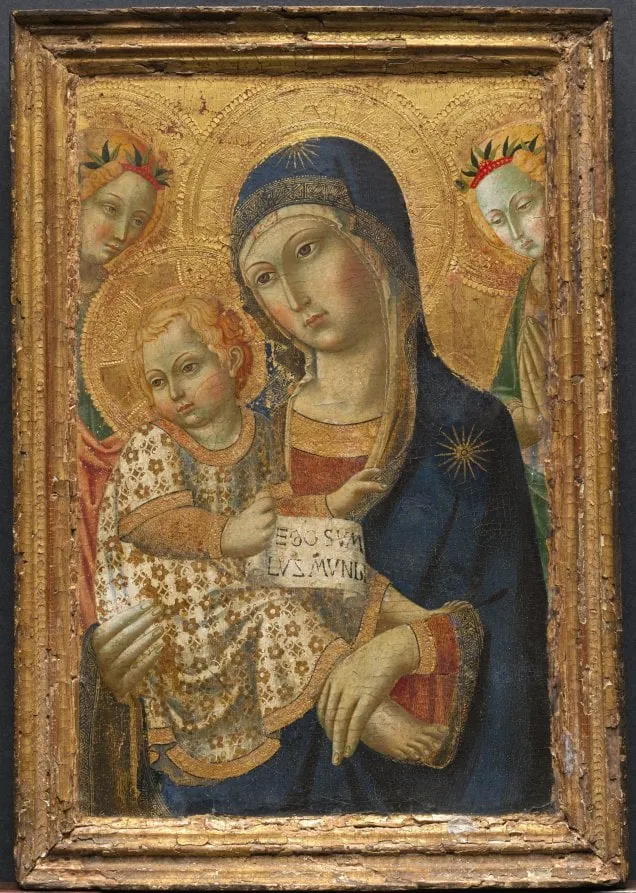
Virgin and Child Enthroned is an unspecified painting by the Biedermeier artist Unknown. It dates from 1804 and is held in the collection of the Cleveland Museum of Art. This panel painting presents the Virgin Mary seated on a throne with the infant Jesus on her lap, flanked by two female saints.
About this work
Overview
This panel painting presents the Virgin Mary seated on a throne with the infant Jesus on her lap, flanked by two female saints.
This panel painting presents the Virgin Mary seated on a throne with the infant Jesus on her lap, flanked by two female saints. The figures are rendered with careful attention to anatomical detail and textile texture, emphasizing their sacred status through gold halos and richly patterned garments. The composition follows traditional iconography, with the central figures elevated to convey spiritual authority.
Subject & Meaning
The Virgin and Child represent divine motherhood and the Incarnation, central to Christian devotion. The two attendant figures, identified by their halos and regal attire, are likely saints—possibly Mary Magdalene and Catherine of Alexandria—offering intercession. Their presence reinforces the theme of heavenly hierarchy and the Church’s role as mediator between the divine and the faithful.
Technique & Style
The painting employs tempera and gold leaf on wood, with meticulous brushwork to define fabric folds and facial features. Light falls evenly across the figures, minimizing shadows to sustain a timeless, otherworldly atmosphere. The use of gold backgrounds and ornamental details reflects medieval and early Renaissance conventions, prioritizing symbolic clarity over naturalistic space.
History & Provenance
Created in the late 13th or early 14th century, the work likely originated in Italy, possibly Siena or Florence, during a period of intense devotional painting. It was probably commissioned for a private chapel or convent. Its survival through centuries suggests it remained in ecclesiastical or aristocratic collections, though its exact early ownership remains undocumented.
Context
This image belongs to the Italo-Byzantine tradition, predating the Romanticism movement by centuries. Its formalism, hierarchical composition, and spiritual focus align with medieval religious art, not the emotional intensity or nature-centered themes of 19th-century Romanticism. The misattribution to Romanticism appears to be a modern error in stylistic classification.
Legacy
The painting exemplifies the enduring influence of Byzantine iconography on early Italian art. Its preservation offers insight into devotional practices and artistic training of the period. Though overshadowed by later Renaissance innovations, such works laid the groundwork for the naturalism that would follow, bridging spiritual symbolism with emerging humanism.
Artist & collection

 Domestic Scene
 Giacomo and Cardinal Marco, investing Andrea, Abbot of San Zeno, with his Benefice
 The Nymph of Fontainebleau
 Portrait of a Woman
 Madonna and Child with Saints in the Enclosed Garden
 Venus and Minerva
 Family Group of Four on Sofa
 Wall painting from Room H of the Villa of P. Fannius Synistor at Boscoreale
 Virgin and Child
 Madonna and Child
 Virgin and Child
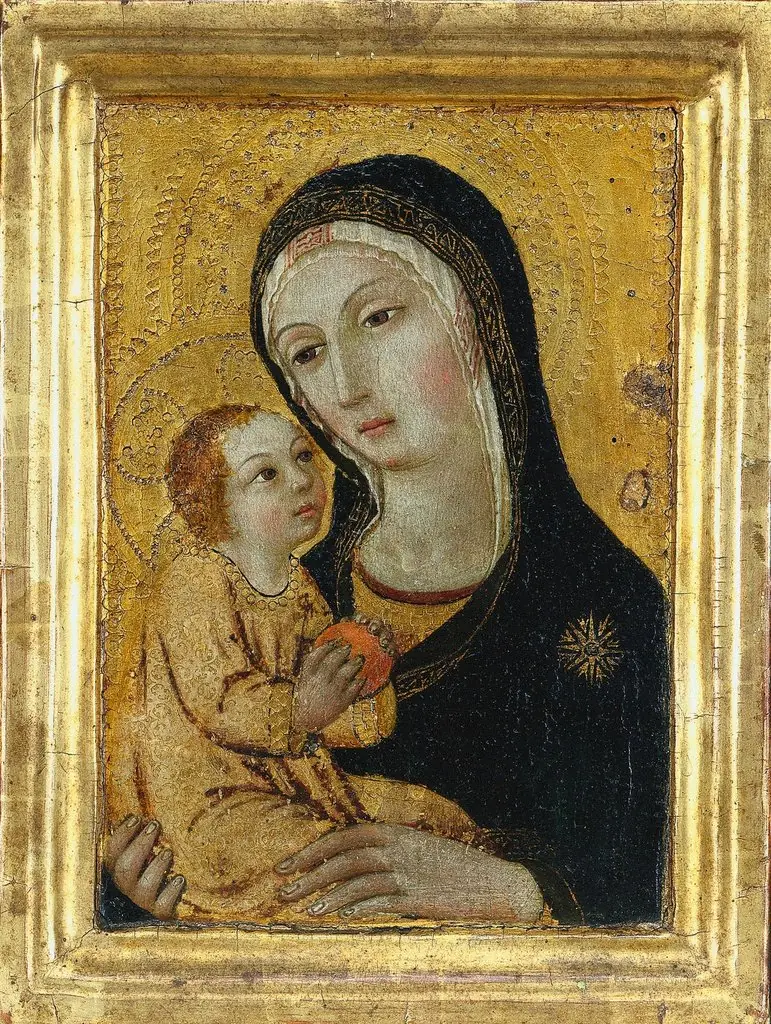 Virgin and Child
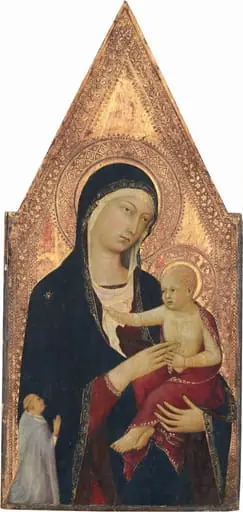 Madonna and Child with Donor
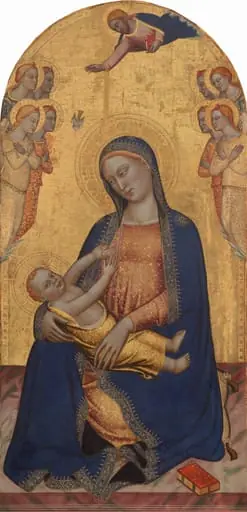 Madonna and Child with God the Father Blessing and Angels
![Madonna and Child, with the Blessing Christ [middle panel], by Pietro Lorenzetti](https://artifactworldgallery.com/img/pietro-lorenzetti--madonna-and-child-with-the-blessing-christ-middle-panel--02357aa6ff04175b-w320.webp) Madonna and Child, with the Blessing Christ [middle panel]
Madonna and Child, with the Blessing Christ [middle panel]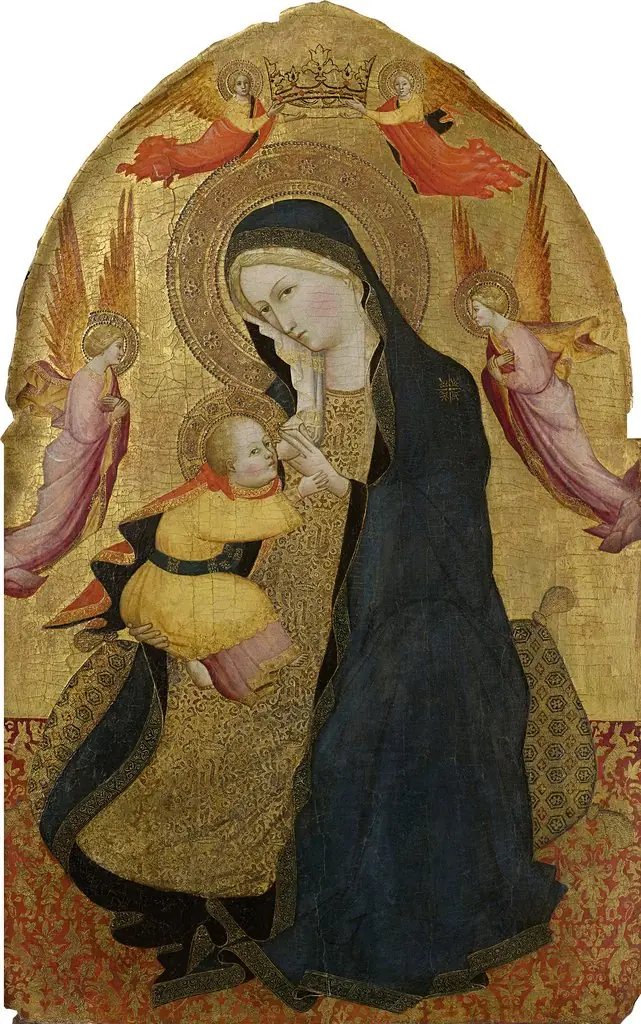 Madonna of Humility (Madonna dell'Umiltà)
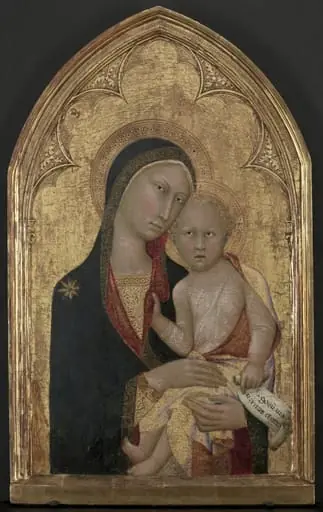 Madonna and Child
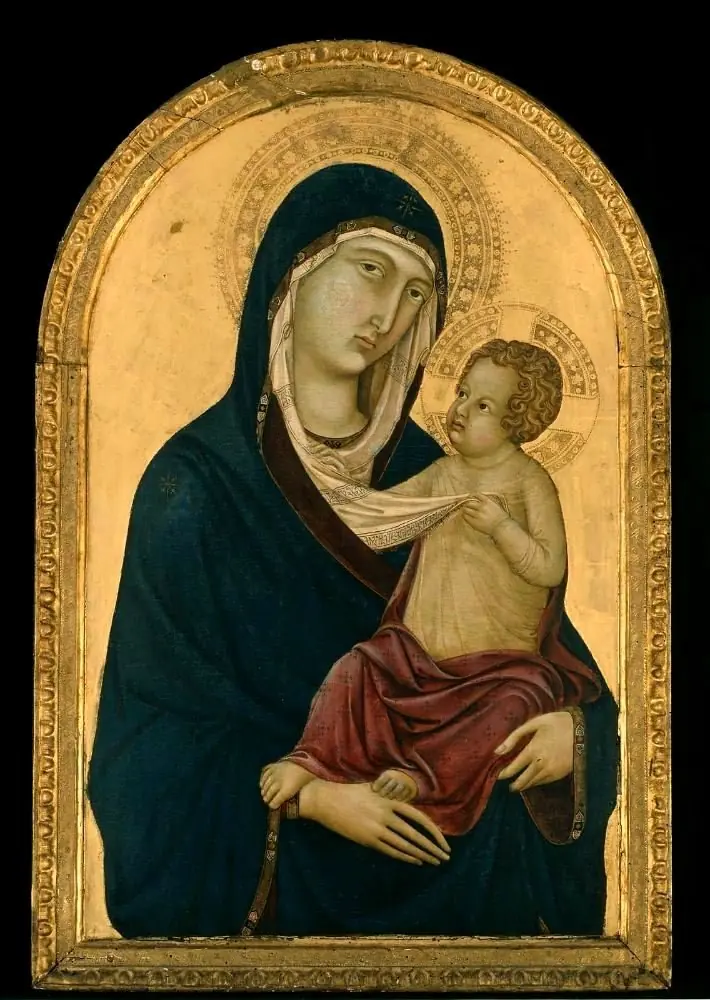 Virgin and Child
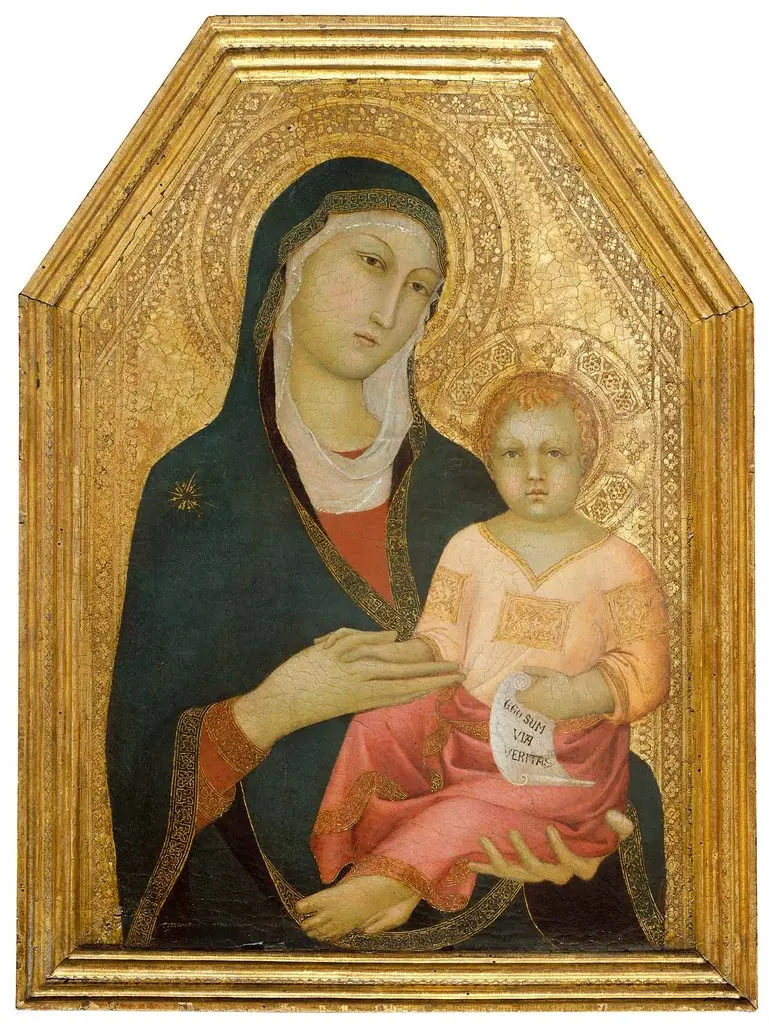 Virgin and Child
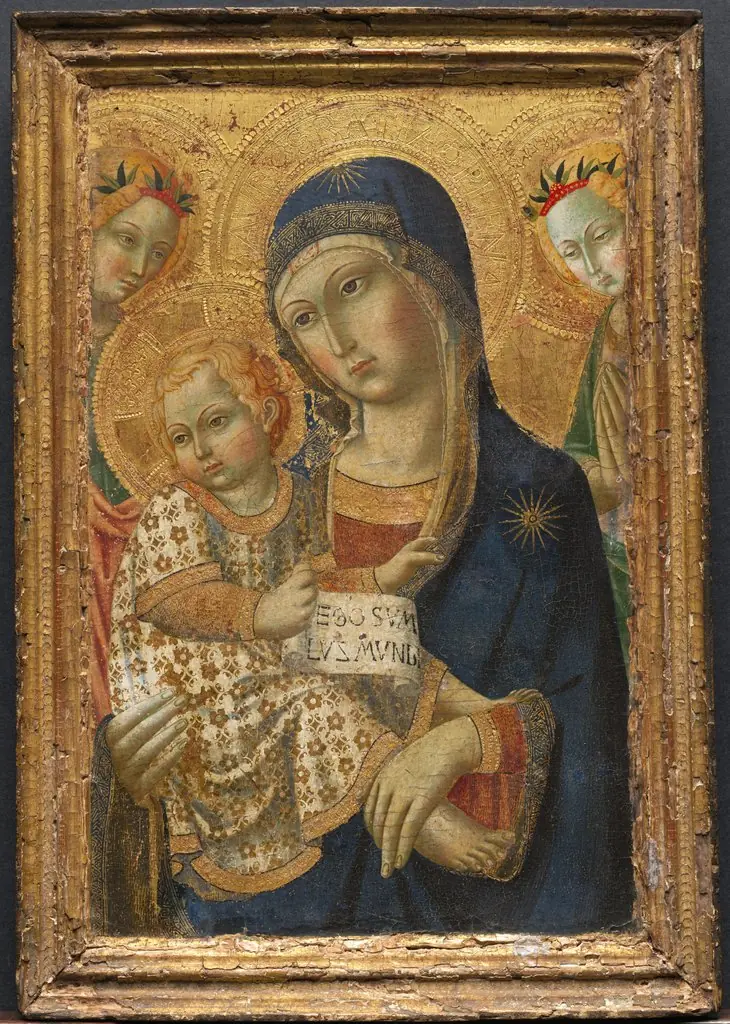 Virgin and Child Enthroned