Artwork
Vishnu as Kurma
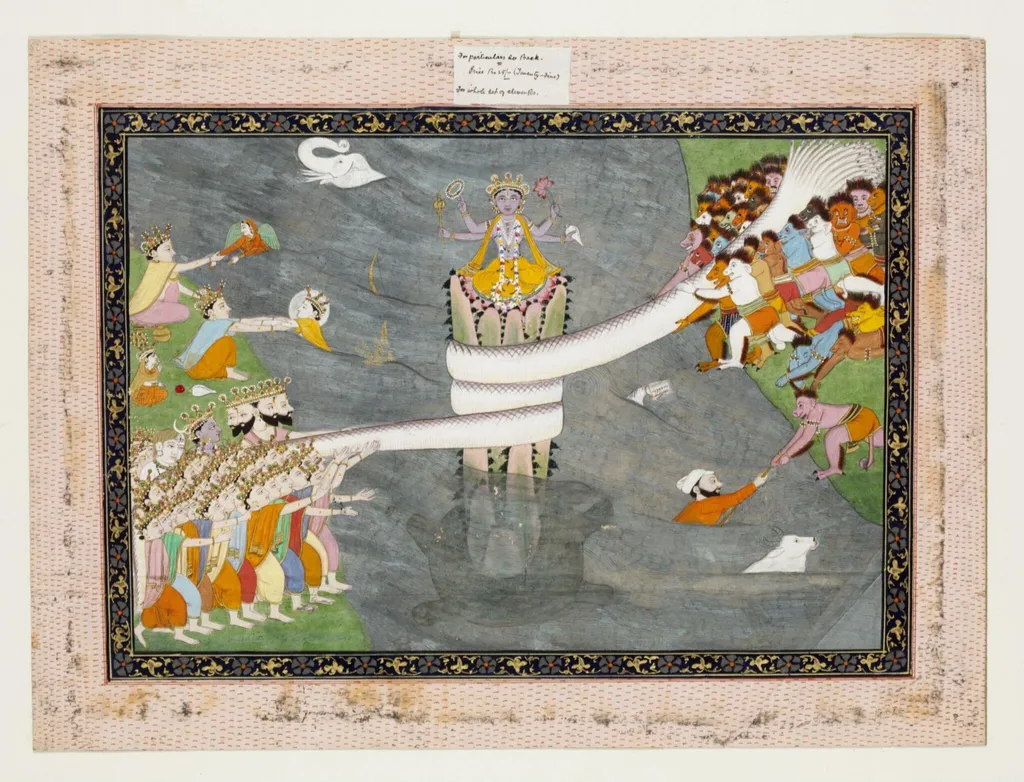
Vishnu as Kurma is a paint painting by the Impressionist artist Unknown. It dates from 1860 and is held in the collection of the Victoria and Albert Museum. The work portrays the Hindu deity Vishnu in his second avatar, Kurma, the tortoise.
About this work
Overview
The work portrays the Hindu deity Vishnu in his second avatar, Kurma, the tortoise. Rendered in vivid hues, the figure sits upon a lotus blossom that crowns the summit of Mount Mandara, itself perched on a massive turtle emerging from the churning Ocean of Milk. The composition captures the mythic episode of the cosmic churn, with divine and demonic forces surrounding the central scene.
Subject & Meaning
In this narrative, Vishnu assumes the role of the stabilising tortoise, supporting the mountain that serves as the churn’s pivot.
In this narrative, Vishnu assumes the role of the stabilising tortoise, supporting the mountain that serves as the churn’s pivot. The four‑armed deity holds a conch, lotus, discus and mace, symbols of creation, purity, protection and power. The surrounding chaos—serpents, deities, and the emergence of fourteen treasures—illustrates the collaborative effort of gods and demons to obtain the elixir of immortality.
Technique & Style
Executed in a traditional Indian painting style, the piece employs bright pigments against a dark watery background, creating strong visual contrast. Intricate border motifs contain swirling patterns and concealed faces, adding depth and movement. The figure’s golden hue and the luminous lotus are rendered with fine brushwork, while the surrounding crowd is depicted in lively, patterned garments.
History & Provenance
The painting belongs to a series that visualises Vishnu’s ten principal incarnations, a theme common in devotional art. Although the exact date and workshop are not recorded, the work reflects the iconographic conventions of later medieval Indian painting, likely produced for a temple or private devotional setting before entering a museum collection.
Context
The scene derives from the Samudra Manthan myth, a central episode in Hindu cosmology describing the churning of the primordial ocean to obtain amrita, the nectar of immortality. The inclusion of the serpent Vasuki as a rope and the appearance of fourteen ratnas (treasures) align with textual sources from the Puranas, underscoring the painting’s narrative fidelity.
Artist & collection

 Domestic Scene
 Giacomo and Cardinal Marco, investing Andrea, Abbot of San Zeno, with his Benefice
 The Nymph of Fontainebleau
 Portrait of a Woman
 Madonna and Child with Saints in the Enclosed Garden
 Venus and Minerva
 Family Group of Four on Sofa
 Wall painting from Room H of the Villa of P. Fannius Synistor at Boscoreale
 Untitled
 Four Princes in Procession Visit a Sage, page from a copy of the Ramayana
 Shurpanakha demands vengeance, from the "Shangri" Ramayana
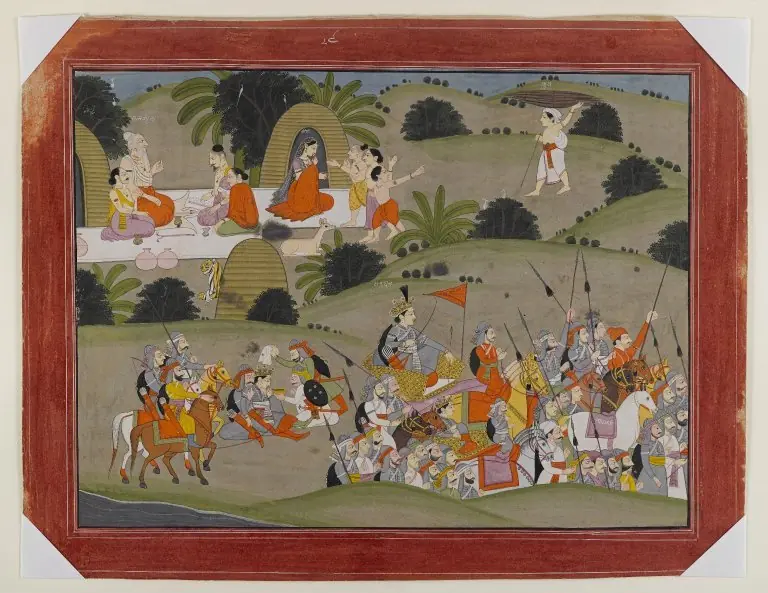 Battle between Lava and Rama's brother, Shatrughna, near the hermitage of Valmiki
 Untitled
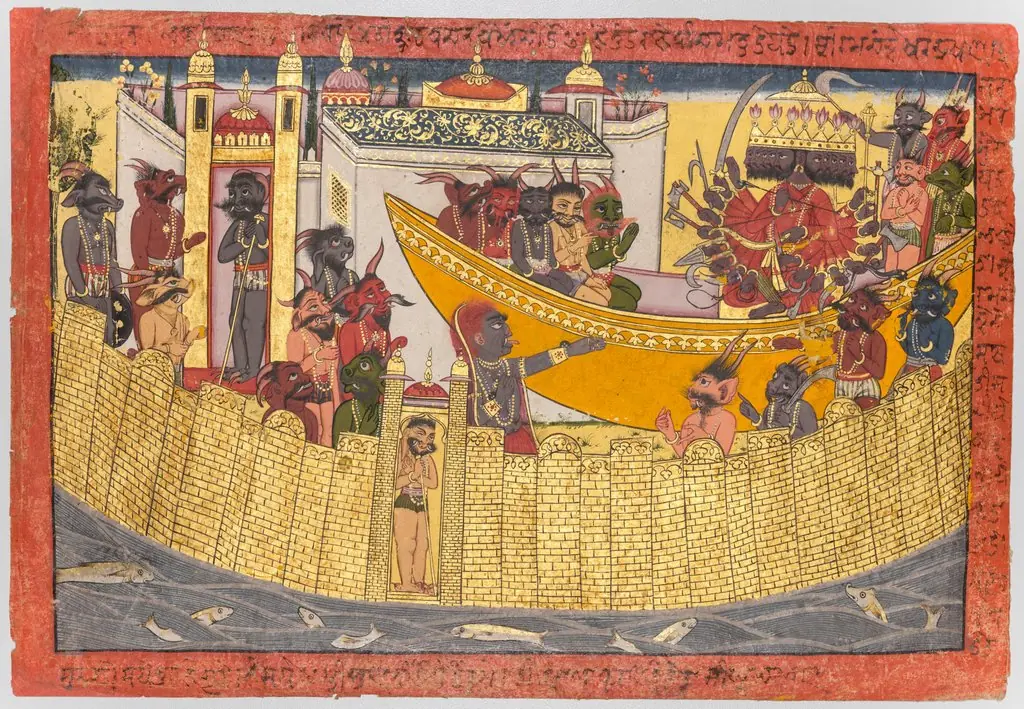 Ravana’s sister Shurpanakha complains that Lakshmana cut off her nose and ears, from Chapter 31 of the Aranya Kanda (Book of the Forest) of a “Shangri” Ramayana (Rama’s Journey)
 Rukmini
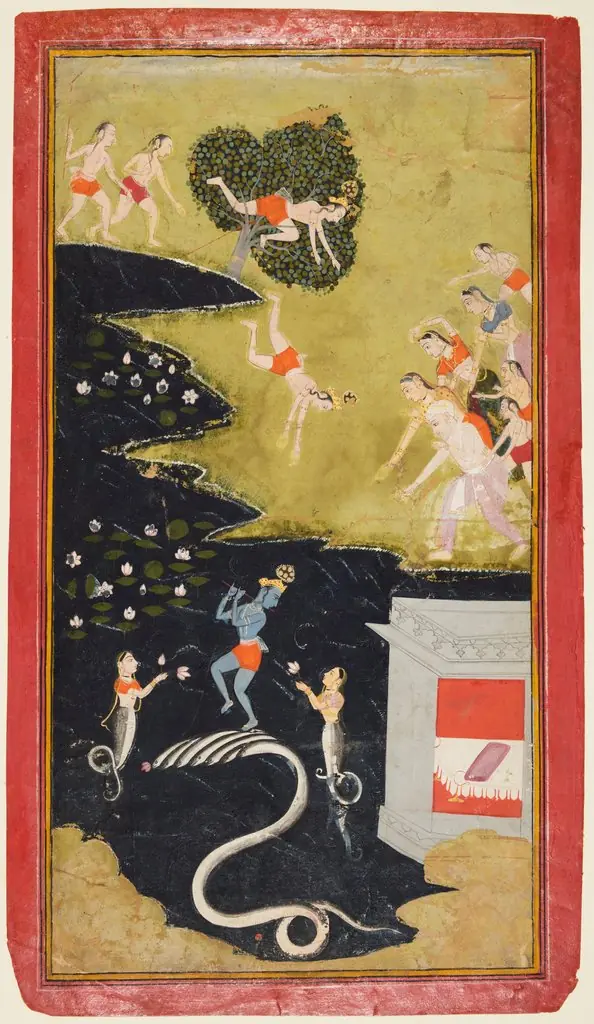 Krishna Quells the Serpent Kaliya, from a Bhagavata Purana
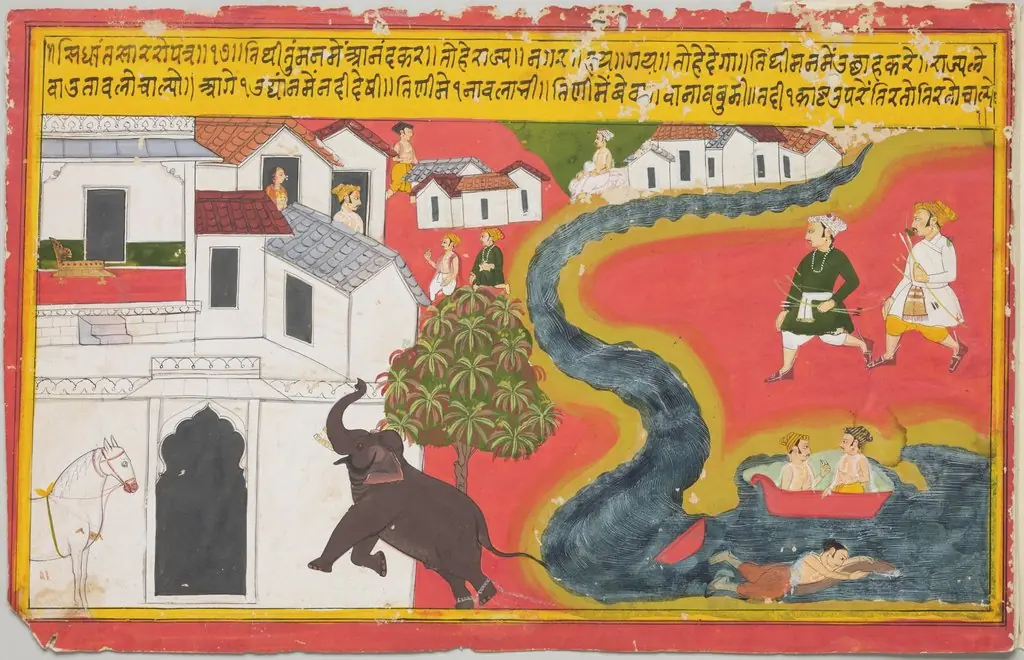 Worship of the Gods (16 of 17)
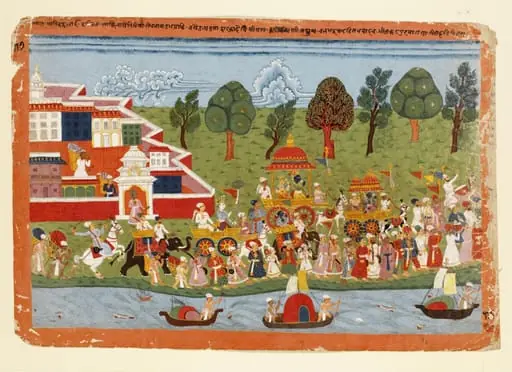 Krishna and Balarama