Artwork
Weaving and Spinning
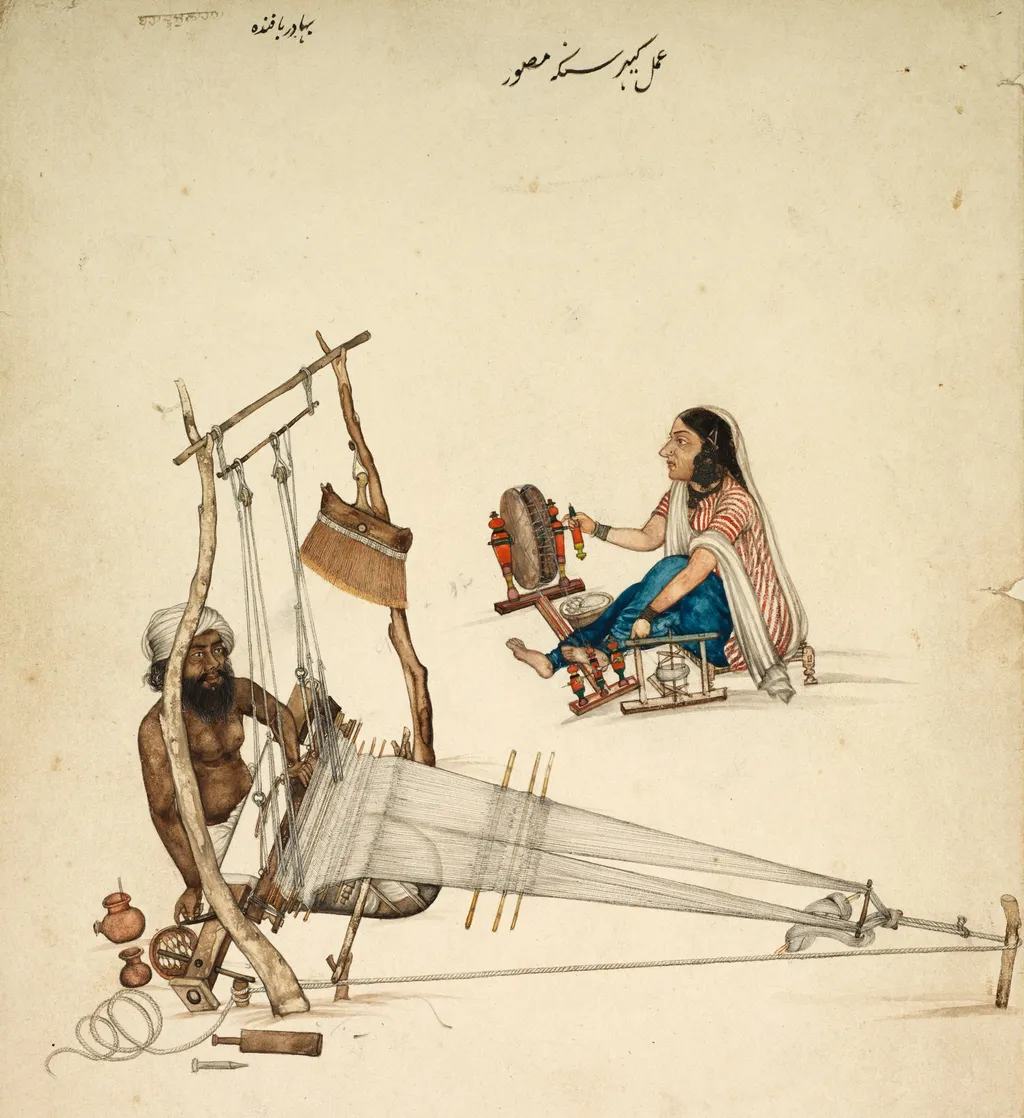
Weaving and Spinning is an unspecified painting. It dates from 1860 and is held in the collection of the Cleveland Museum of Art. The canvas presents a domestic interior where two figures are occupied with textile production.
About this work
Overview
Opposite him, a woman on a low stool, dressed in a striped shirt, blue trousers and a white headscarf, works a spinning wheel.
The canvas presents a domestic interior where two figures are occupied with textile production. A bearded man, seated on the floor and wrapped only in a white cloth around his waist, operates a loom. Opposite him, a woman on a low stool, dressed in a striped shirt, blue trousers and a white headscarf, works a spinning wheel. The plain backdrop isolates the activity, emphasizing the manual processes of weaving and spinning.
Subject & Meaning
The work captures a moment of everyday labor, highlighting the collaborative nature of fabric creation. By portraying both loom and spinning wheel together, the painting underscores the interdependence of male and female roles in traditional textile workshops, offering a quiet observation of routine craftsmanship rather than a narrative scene.
Technique & Style
The artist employs a restrained palette, allowing the vivid reds, whites and blues of the woman's clothing to stand out against the subdued surroundings. Careful rendering of the loom’s mechanisms and the spinning wheel’s spokes demonstrates a focus on material detail, while the simplified background creates a clear visual hierarchy that directs the viewer’s attention to the hands and tools.
History & Provenance
The painting’s origin, date and creator are not specified in the available information. It is catalogued under the title “Weaving and Spinning” and is identified as a genre piece that documents quotidian activity, suggesting it may belong to a tradition of 19th‑century realist or ethnographic works.
Context
Depictions of textile work have long served as visual records of cultural practices, especially in societies where weaving and spinning are communal or familial tasks. This image aligns with that tradition, offering insight into attire, equipment and the spatial arrangement of a workshop, thereby contributing to the visual anthropology of domestic labor.
Artist & collection
