Artwork
Well-guarded Infant
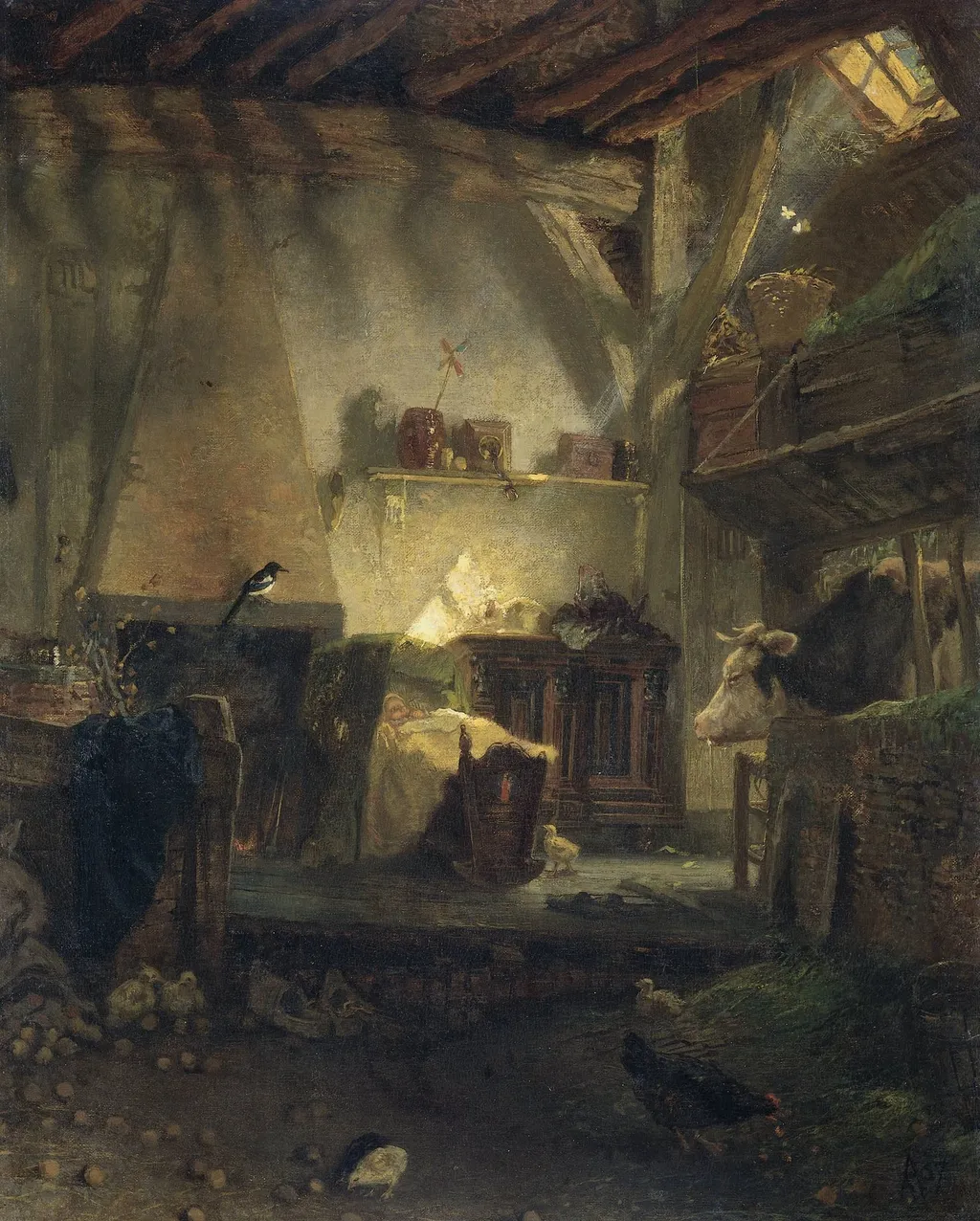
Well-guarded Infant is an unspecified painting by the Realist artist Unknown. It dates from 1867 and is held in the collection of the Rijksmuseum.
About this work
Overview
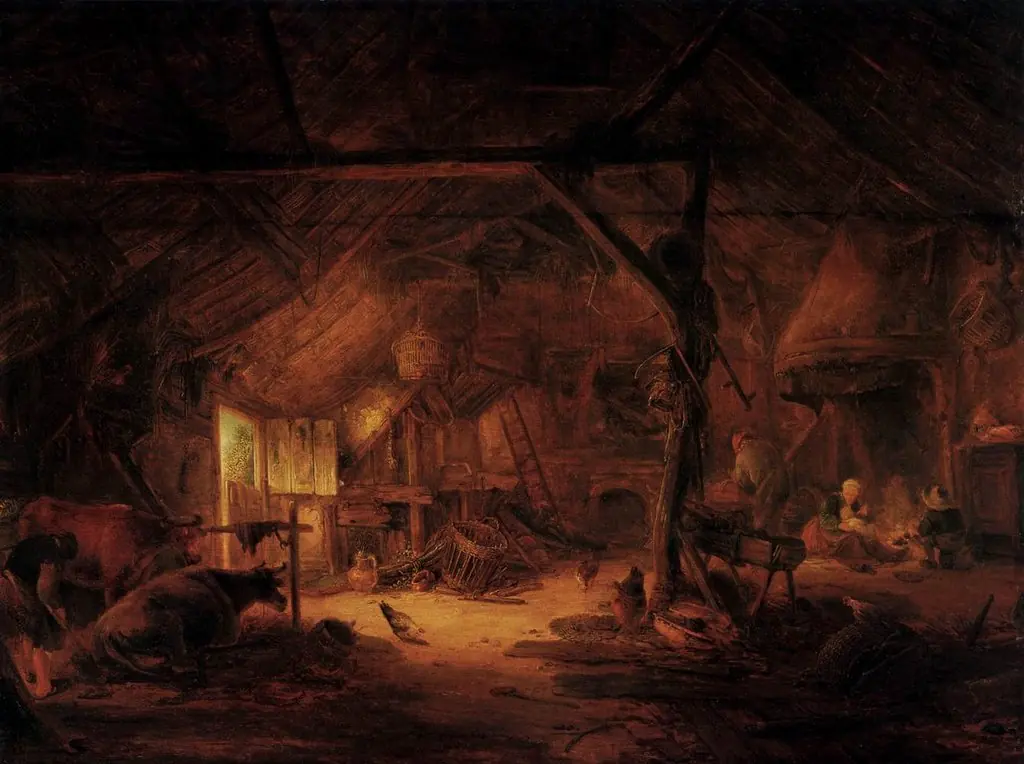
Well-guarded Infant is a painting depicting a serene interior of a farmhouse, where a baby lies in a cradle illuminated by sunlight streaming through a roof window. The scene is populated only by animals: a cow to the right and chickens on the floor, creating an unusual stillness.
Subject & Meaning
The subject is a common, everyday moment of rural domestic life, emphasizing the quiet, protected nature of the infant's environment. The absence of human figures underscores the self-sufficiency of the scene, focusing attention on the baby's tranquility and the animals' mundane activities.
Technique & Style
The use of sunlight through the roof window employs chiaroscuro, creating a sense of depth and highlighting the cradle. The overall style conveys simplicity and honesty, avoiding ornateness in favor of a straightforward, observational approach to capturing daily life.
History & Provenance
The artist of 'Well-guarded Infant' remains unknown. The painting's style and subject matter align with works housed in the Rijksmuseum, suggesting a potential affinity with Dutch interior scenes of everyday life from a similar period.
Context
This work can be contextualized within a tradition of Dutch paintings that valorize quiet, domestic moments. Its emphasis on light, everyday life, and the absence of grandeur reflects themes common in Dutch Golden Age art, though its simplicity distinguishes it from more elaborate works of the era.
Legacy
While not attributed to a known artist, 'Well-guarded Infant' contributes to the broader appreciation of everyday life depictions in art. Viewers drawn to its simplicity may find parallels in other, similarly understated works within the Rijksmuseum's collection.
Artist & collection

 Domestic Scene
 Giacomo and Cardinal Marco, investing Andrea, Abbot of San Zeno, with his Benefice
 The Nymph of Fontainebleau
 Portrait of a Woman
 Madonna and Child with Saints in the Enclosed Garden
 Venus and Minerva
 Family Group of Four on Sofa
 Wall painting from Room H of the Villa of P. Fannius Synistor at Boscoreale