Artwork
South Kensington Museum, Exhibition of paintings, North Court, north-east corner
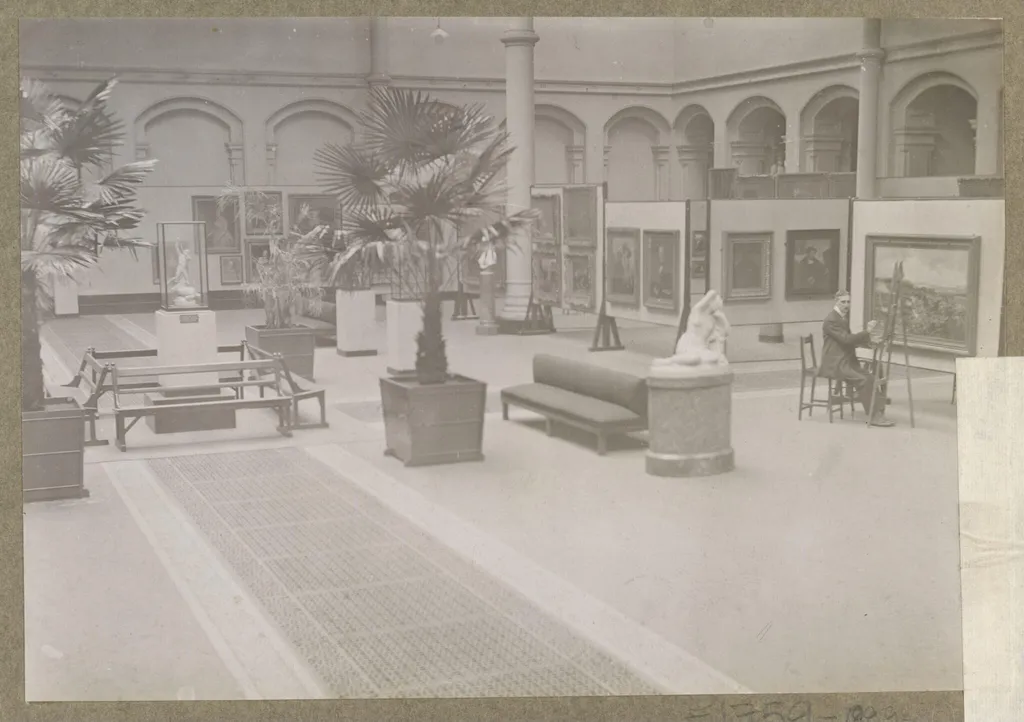
South Kensington Museum, Exhibition of paintings, North Court, north-east corner is a photographic photography by V&A. It dates from 1915 and is held in the collection of the Victoria and Albert Museum. This black-and-white photograph, taken by the South Kensington Museum in 1915, captures the north-east corner of the North Court.
About this work
This black-and-white photo shows the South Kensington Museum’s North Court in 1915. Taken by the V&A itself, it’s part of an old effort to document the building for students.
The shot captures the museum’s own history. These photos were meant to teach architecture and design, not just look pretty.
Want to see more early museum photography? Look up the Victoria and Albert Museum.
Overview
This black-and-white photograph, taken by the South Kensington Museum in 1915, captures the north-east corner of the North Court.
This black-and-white photograph, taken by the South Kensington Museum in 1915, captures the north-east corner of the North Court. It was produced as part of an institutional effort to systematically document the museum’s architecture and exhibition spaces. The image serves both as a record of spatial arrangement and as educational material for students of design and architecture, reflecting the museum’s early commitment to using photography as a tool for study rather than display.
Subject & Meaning
The photograph focuses on the architectural layout of the North Court, revealing the arrangement of galleries, structural details, and display fixtures of the time. Its purpose was not aesthetic but functional: to preserve a visual archive of how art and design objects were presented within the museum’s evolving interior. The image thus becomes a document of institutional practice, revealing priorities in curation and spatial organization during the early 20th century.
Technique & Style
The photograph is executed in a straightforward, documentary style typical of early institutional photography. Sharp focus, even lighting, and a centered composition prioritize clarity over artistic expression. The absence of human figures emphasizes the architecture and display systems, reinforcing its role as a reference image. The use of gelatin silver print technology reflects standard practices of the period for archival reproduction.
History & Provenance
The image was produced by the museum’s own staff as part of a broader initiative begun in the 1850s to collect photographic records of art, architecture, and design. Originally managed by the National Art Library, these photographs were assembled to support academic study and public education. This particular image remains within the V&A’s collection, continuing its original function as a historical resource.
Context
In the early 20th century, photography was increasingly recognized as a legitimate medium for scholarly documentation. The South Kensington Museum’s program aligned with broader European efforts to use visual archives to democratize access to design knowledge. This photograph reflects a time when museums saw themselves as centers of learning, where images served as teaching aids alongside physical objects.
Legacy
The photograph contributes to one of the most comprehensive institutional photographic archives in Britain. Its preservation underscores the V&A’s longstanding role in shaping the use of photography within museology. Today, such images are studied not only for their content but also as artifacts of photographic practice, revealing how institutions constructed visual knowledge in the pre-digital era.
Artist & collection
Artist
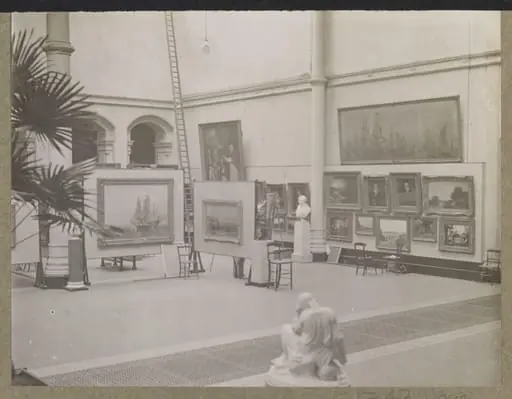
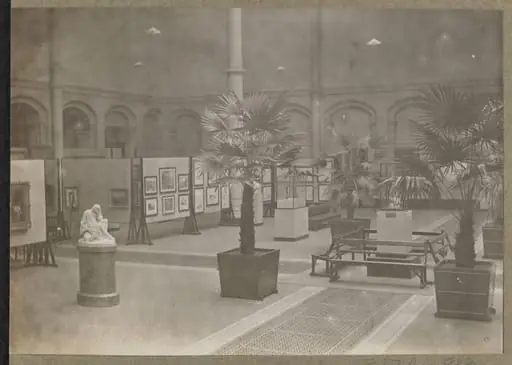
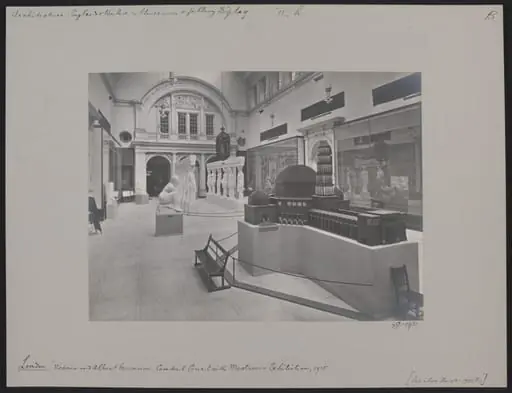
These black-and-white photos feel like a time-stamp on a museum wall. A photographer once climbed the scaffolding in 1915 to shoot the Victoria and Albert’s North Court from three directions, capturing empty frames…

 Photograph, Victoria and Albert Museum, Central Court (Gallery 43) showing Ivan Meštrović sculpture exhibition, gelatin silver print, 1915
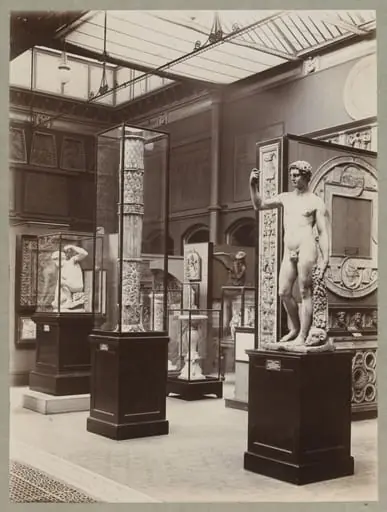 South Kensington Museum, Interior of North Court showing marble statues including statue of Jason and Narcissus
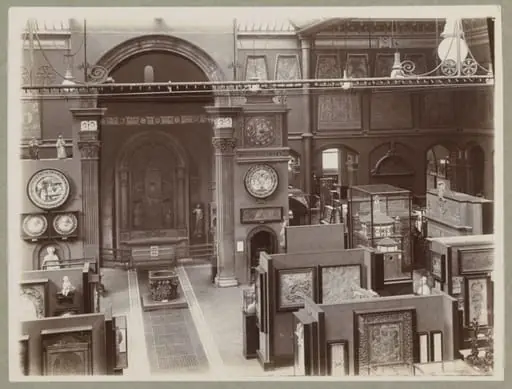 South Kensington Museum, Interior of North Court
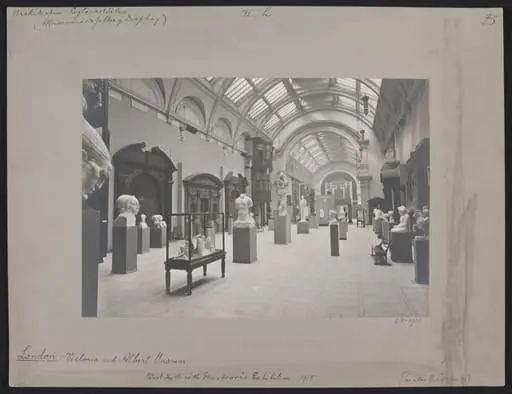 Victoria and Albert Museum, West Hall (Gallery 48) showing Ivan Meštrović sculpture exhibition, looking west
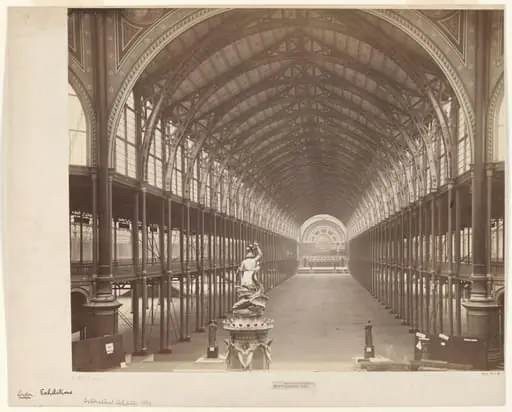 Interior view of the Nave, looking west, International Exhibition, South Kensington