Artwork
Bather and Child (La baigneuse à l'enfant)
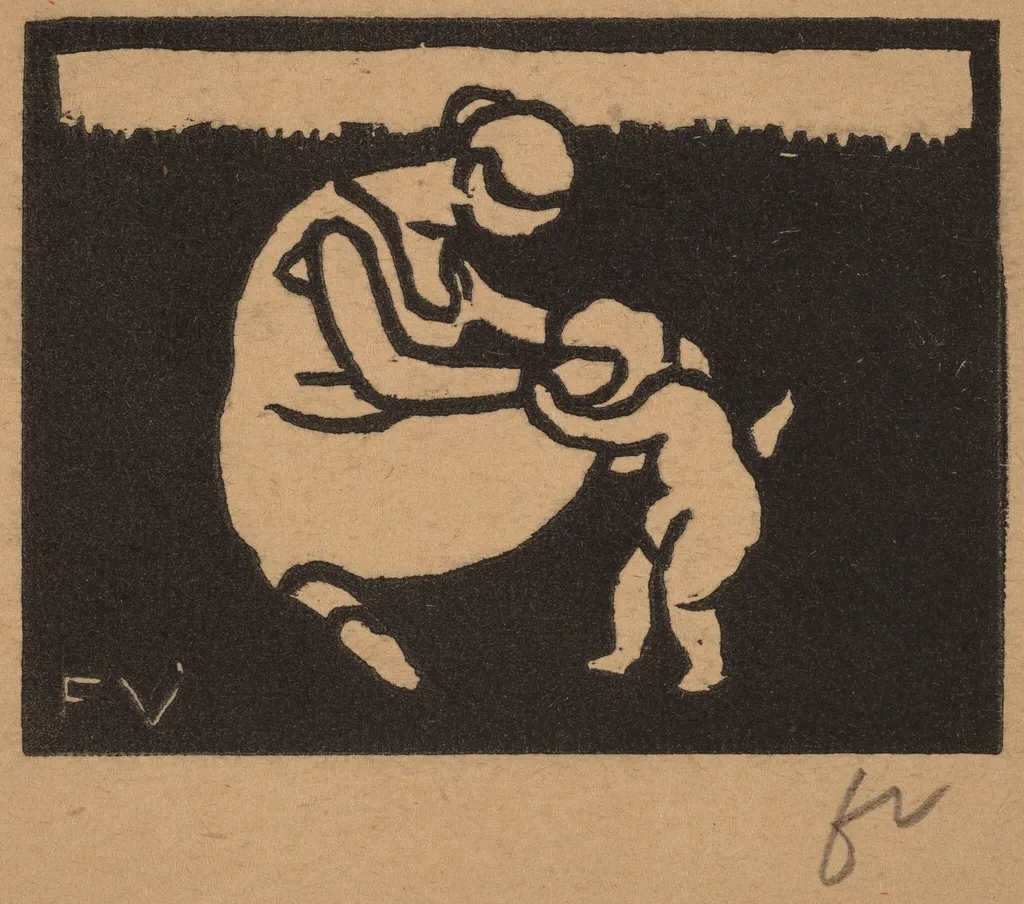
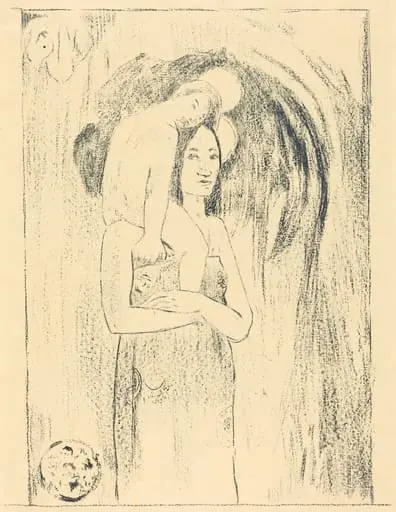
Bather and Child (La baigneuse à l'enfant) is an ink print by the Impressionist artist Félix Vallotton. It dates from 1893 and is held in the collection of the National Gallery of Art.
About this work
Overview
Félix Vallotton, a Swiss artist active in France, produced this woodcut in 1893 as part of his engagement with printmaking during the 1890s.
Félix Vallotton, a Swiss artist active in France, produced this woodcut in 1893 as part of his engagement with printmaking during the 1890s. Executed in black ink on brown wove paper, the work exemplifies his shift toward simplified forms under the influence of Les Nabis. Unlike painted compositions, the woodcut’s directness and reproducibility aligned with contemporary interests in accessible, graphic art. Vallotton’s technique emphasized clarity over ornament, distinguishing his prints from more decorative contemporaries.
Subject & Meaning
The scene depicts a woman bathing a young child in a shallow tub, a domestic moment rendered without sentimentality. The child’s relaxed expression contrasts with the mother’s firm grip, suggesting care without idealization. Vallotton avoids narrative embellishment, presenting the act as a quiet, unadorned reality. The focus on everyday intimacy reflects a broader interest in private life, common among artists of the period who sought to elevate ordinary subjects through formal restraint.
Technique & Style
Vallotton carved the image directly into a woodblock, using sharp, angular lines to define forms with minimal detail. The black ink on brown paper enhances contrast, making the figures emerge with graphic clarity. His style rejects gradation and texture, favoring flat planes and bold contours. This approach, influenced by Japanese prints and Nabi aesthetics, prioritizes structure over illusion, reducing the scene to its essential shapes while preserving emotional resonance through composition.
History & Provenance
Created in 1893, this woodcut emerged during Vallotton’s most productive period in printmaking, following his association with Les Nabis. It was likely produced for private circulation or inclusion in illustrated journals, common outlets for prints at the time. The work entered public collections in the 20th century, where its formal rigor attracted attention from curators interested in modern graphic art. No record of early ownership survives, but its survival reflects its status as a representative example of Vallotton’s print oeuvre.
Context
In the 1890s, Parisian artists sought alternatives to academic painting, turning to printmaking for its immediacy and democratic potential. Vallotton’s woodcuts responded to this shift, embracing simplicity and emotional detachment. His work intersected with Symbolist and Nabi ideals, yet retained a detached realism uncommon among peers. The emphasis on everyday subjects, like bathing rituals, aligned with broader cultural interests in domestic life, while the medium itself challenged traditional hierarchies between fine and applied art.
Legacy
Vallotton’s woodcuts, including this one, influenced later generations of printmakers by demonstrating how minimal means could convey psychological depth. His rejection of painterly effects in favor of structural clarity helped redefine the woodcut as a serious artistic medium. Though less celebrated than his paintings, these prints remain central to understanding his contribution to modern graphic art, particularly in how they bridged illustration and fine art without compromising formal discipline.
Own this work as a print
Artist & collection
Artist
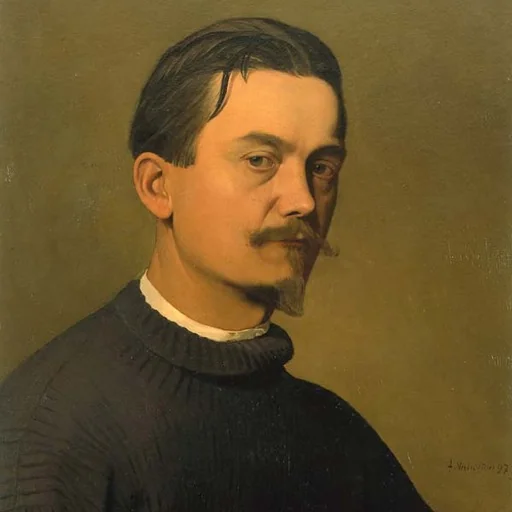
Félix Édouard Vallotton (French: ; December 28, 1865 – December 29, 1925) was a Swiss and French painter and printmaker associated with the group of artists known as Les Nabis.

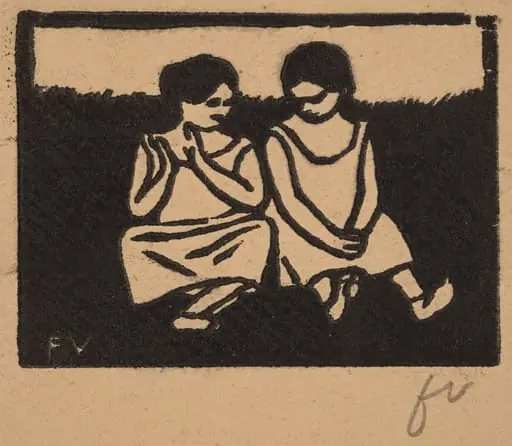 Two Girls in Chemises (Deux fillettes en chemise)
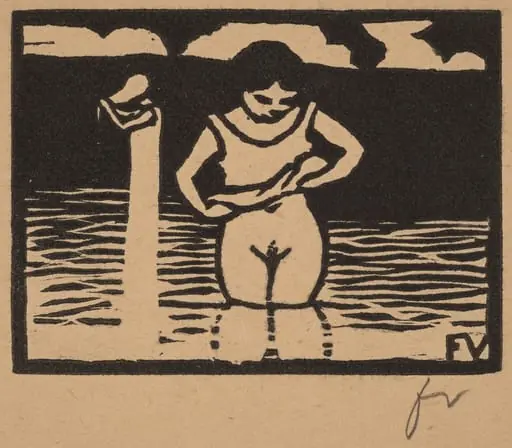 Girl Lifting Her Chemise (Fillette enlevant sa chemise)
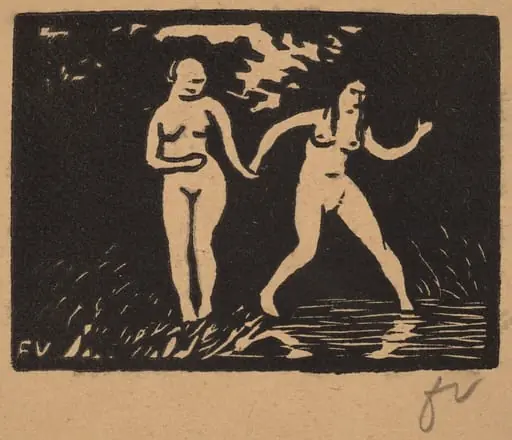 Entering the Water (L'entrée dans l'eau)
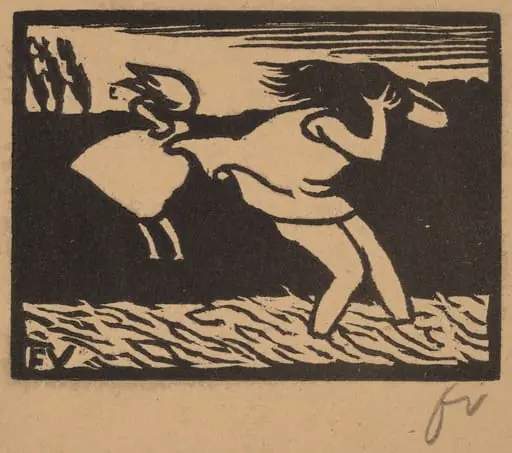 Bathers Caught in a Storm (Les baigneuses surprises par l'orage)
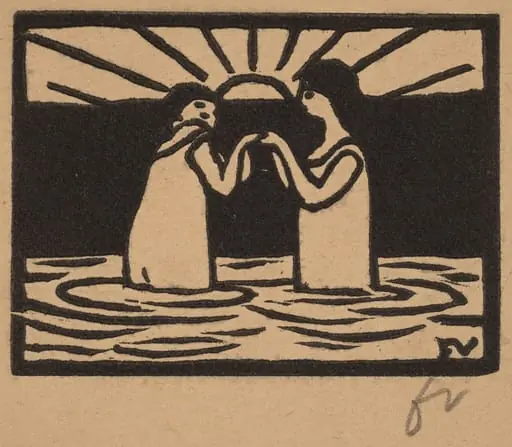 Playing in the Sun (Jeux au soleil)
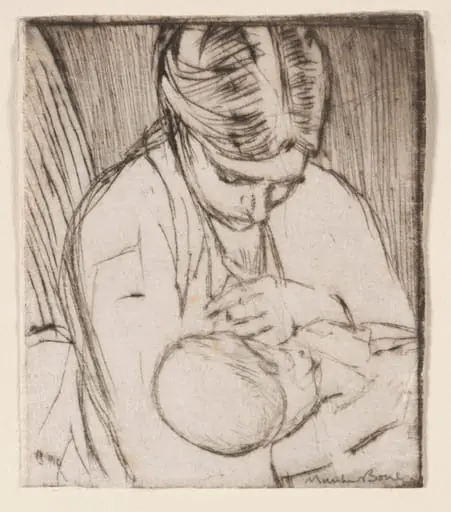 Gertrude and Stephen, No. 6
 Ia Orana Maria (We Greet Thee, Mary)