Artwork
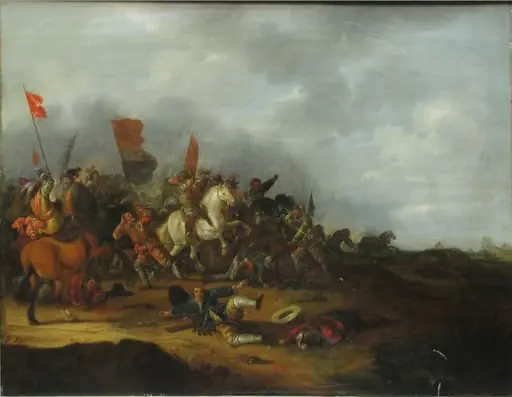
Luptă de cavalerie lângă pietre antice (în Reg. Inv.: Luptă de cavalerie între pietre antice) (pandant: Luptă lângă o cetate, în Reg. Inv: Atac dintr-o cetate)
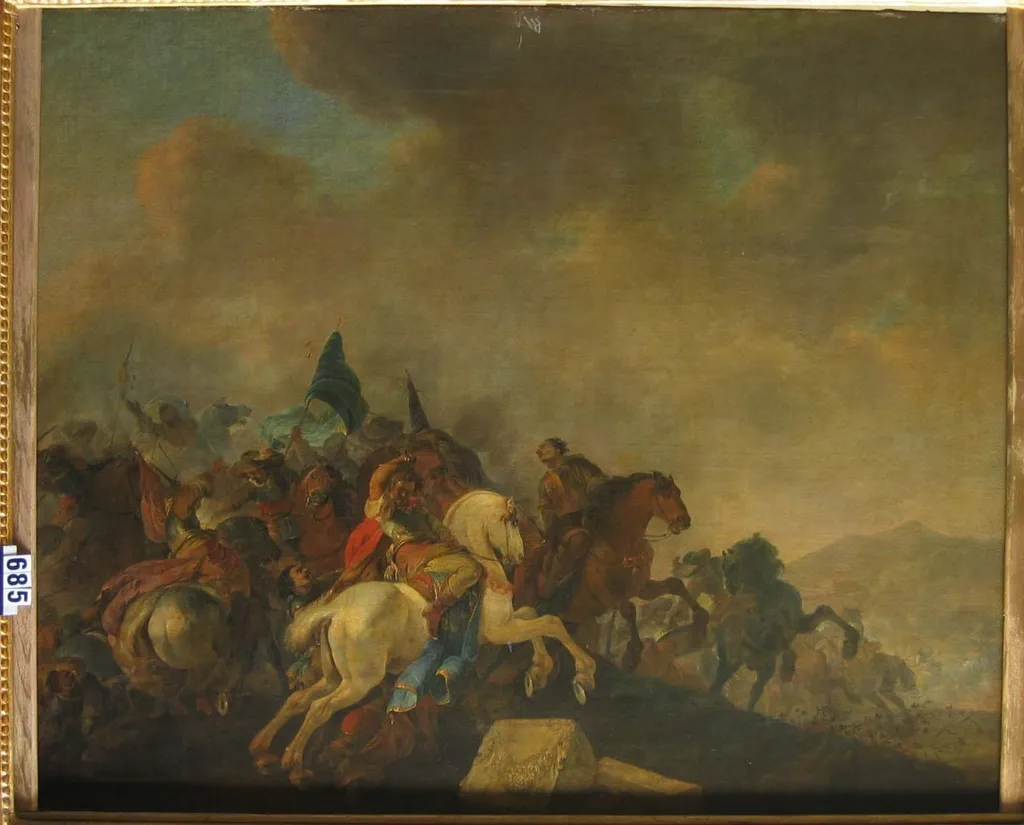
Luptă de cavalerie lângă pietre antice (în Reg. Inv.: Luptă de cavalerie între pietre antice) (pandant: Luptă lângă o cetate, în Reg. Inv: Atac dintr-o cetate) is a print by the Baroque artist Herman, zis Stillheid Van Lin. It is held in the collection of the Brukenthal National Museum. This painting depicts a dynamic cavalry engagement amid ancient stone ruins.
About this work
Overview
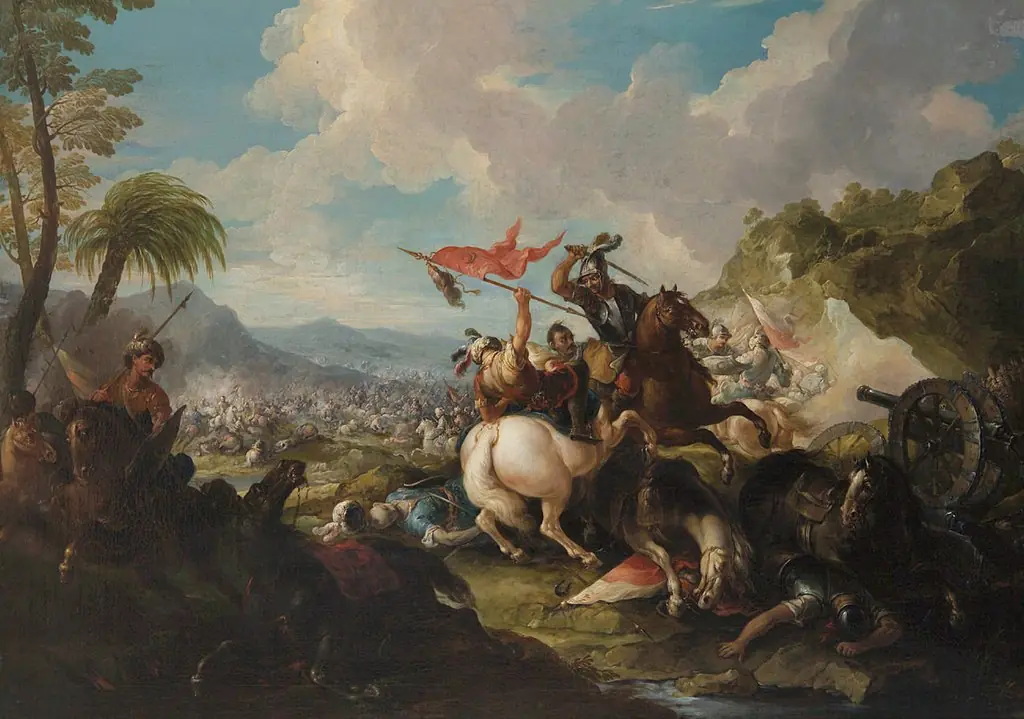
The scene is filled with motion—horses in full gallop, riders in red and blue uniforms, and clouds of dust rising from the ground.
This painting depicts a dynamic cavalry engagement amid ancient stone ruins. The scene is filled with motion—horses in full gallop, riders in red and blue uniforms, and clouds of dust rising from the ground. The background hints at a distant hill or settlement, barely defined, while the foreground dominates with turbulent energy. The composition avoids clear narrative resolution, focusing instead on the visceral immediacy of conflict.
Subject & Meaning
The subject is a mounted skirmish, likely drawn from historical or mythological sources, though no specific event is identified. The lack of identifiable leaders or flags suggests a generalized portrayal of warfare rather than a documented battle. The ancient stones in the background may imply the passage of time or the ruinous legacy of conflict, adding a layer of temporal contrast to the immediate violence.
Technique & Style
The artist employs chiaroscuro to model form and depth, using dark shadows to define the musculature of horses and the folds of uniforms. The muted sky and earth tones recede, allowing the riders to emerge with intensity. Brushwork is loose yet purposeful, capturing motion through blurred limbs and swirling dust. The palette is restrained, emphasizing tone over color to heighten dramatic tension.
History & Provenance
The work is part of a pair, its companion depicting an assault from a fortified city. Both were likely created in the 17th century, a period when such battle scenes were popular among collectors seeking dramatic, morally ambiguous imagery. The registration numbers suggest institutional ownership, possibly from a European collection that acquired such works during the Baroque era.
Context
In the 17th century, cavalry battles were a favored subject in Northern and Southern European art, reflecting both military interests and the influence of classical antiquity. The inclusion of ancient stones may reference Roman ruins, common in landscapes of the time as symbols of fallen empires. These works often served as allegories for the chaos of war, not as historical records.
Legacy
Though not widely known today, this painting exemplifies a genre that influenced later military and Romantic-era depictions of warfare. Its emphasis on movement, shadow, and atmospheric tension aligns with broader Baroque tendencies. The pairing with its companion piece underscores a deliberate thematic contrast—open field versus fortified siege—offering a nuanced view of conflict in early modern visual culture.
Artist & collection
Artist
Herman Van Lin's paintings often featured intense battle scenes. One interesting aspect of his work is the pairing of paintings, like "Luptă lângă o cetate" and its pandant "Luptă de cavalerie lângă pietre antice",…

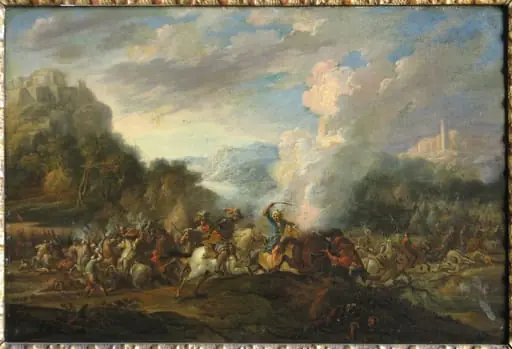
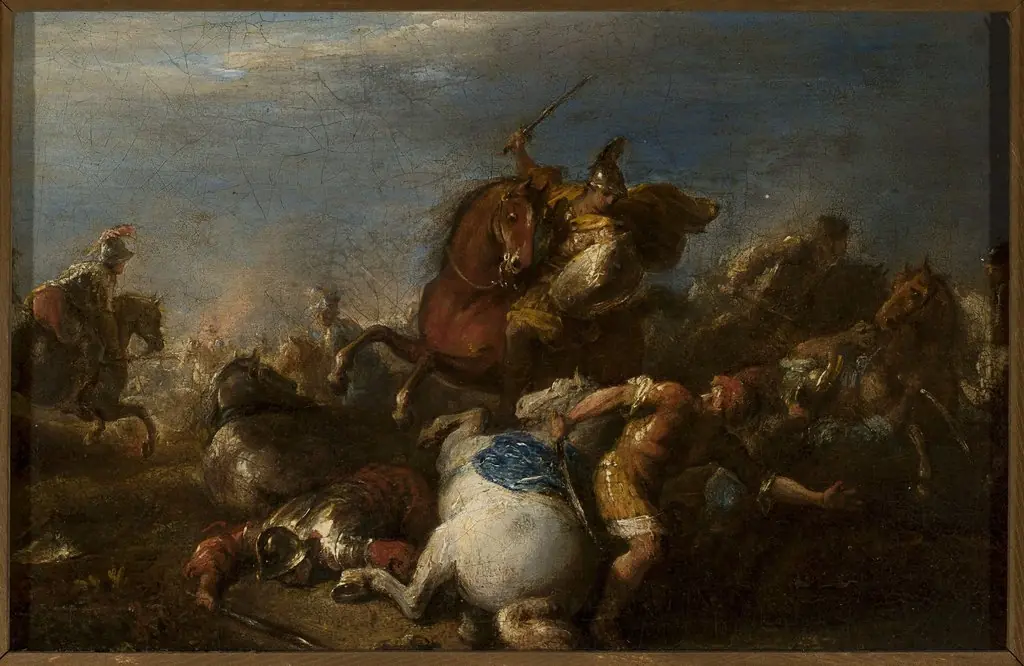
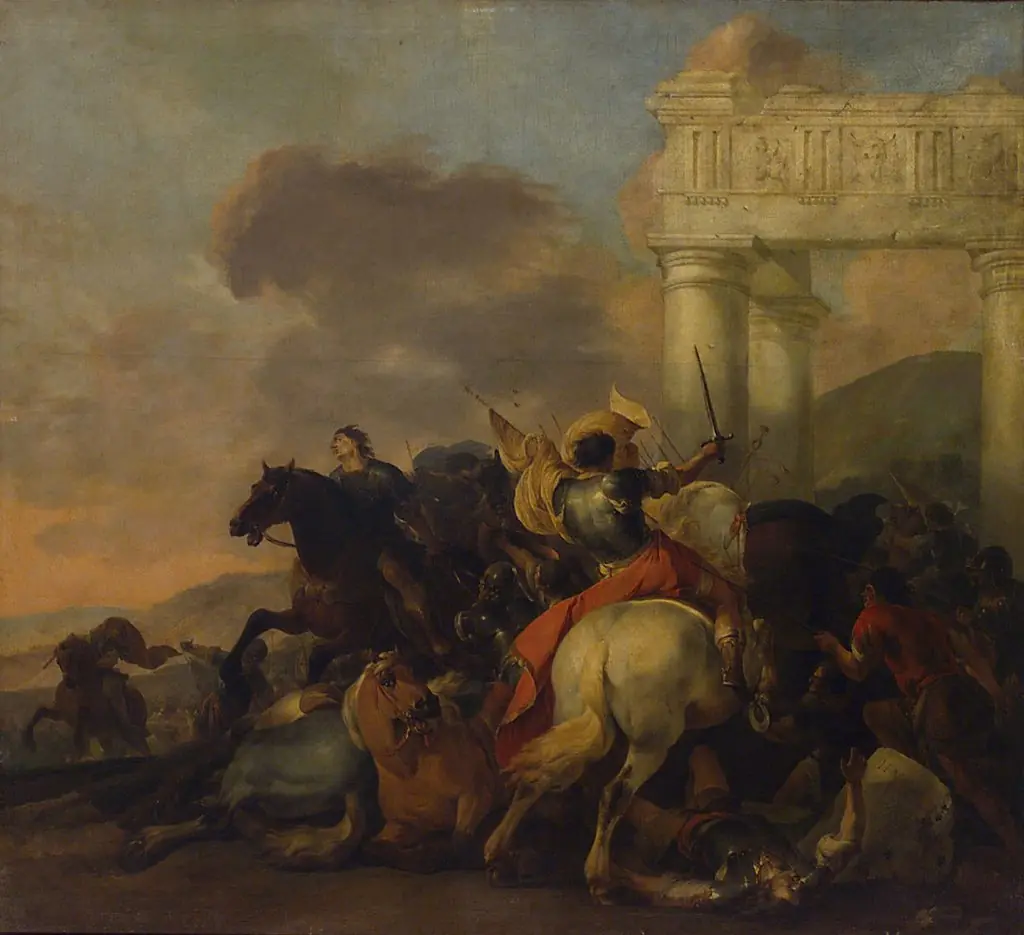
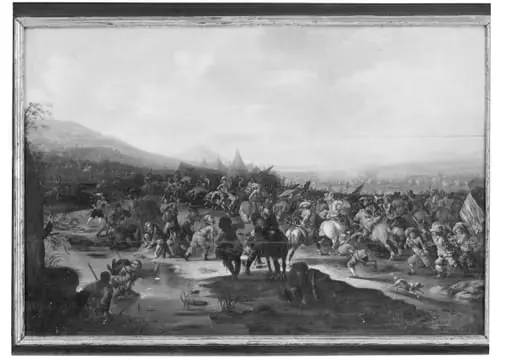
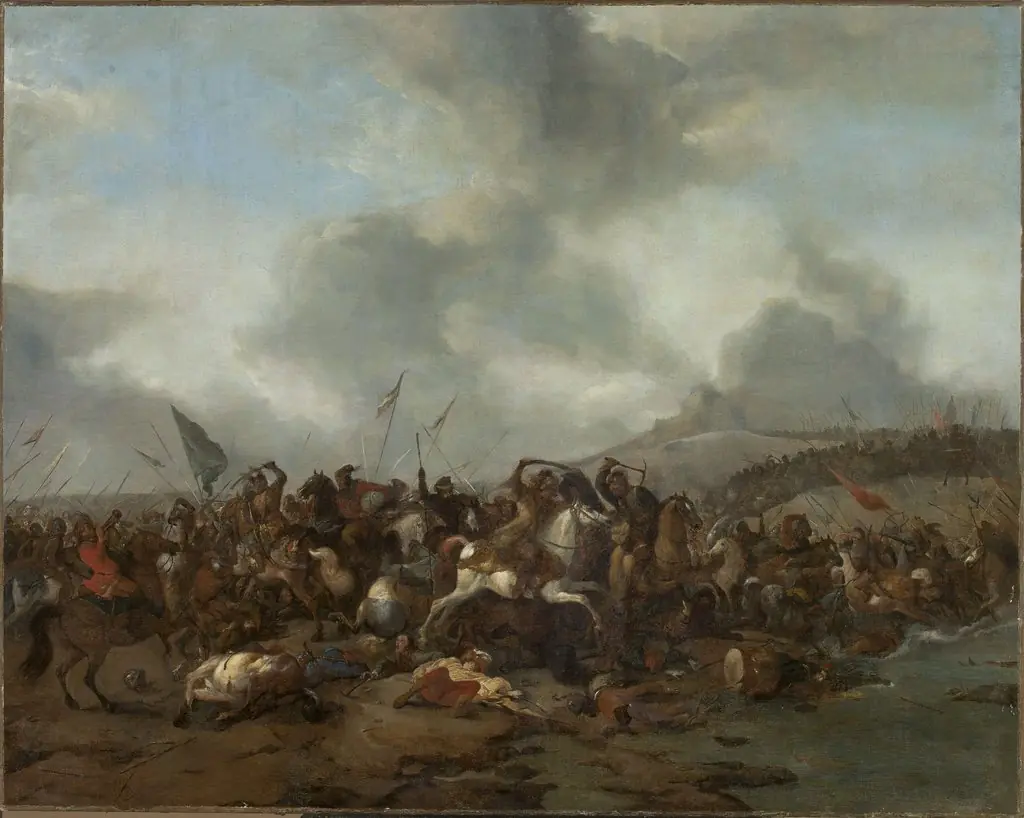
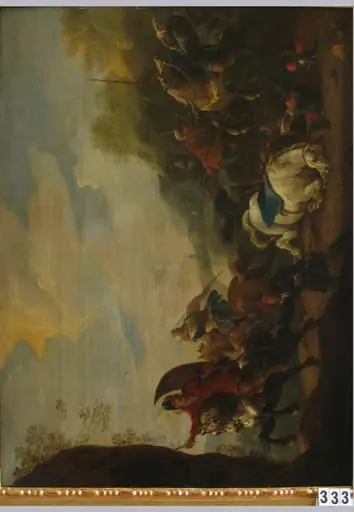
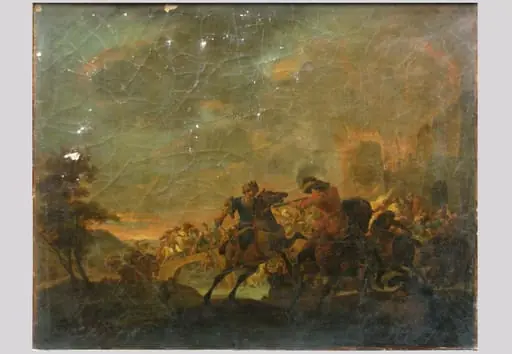 Luptă lângă o cetate (în Reg. Inv.: Atac dintr-o cetate) (pandant: Luptă de cavalerie lângă pietre antice, în Reg. Inv.: Luptă de cavalerie între pietre antice)
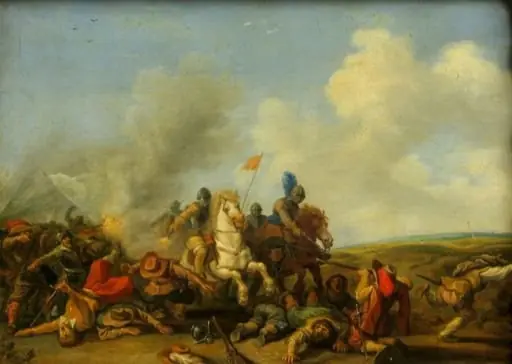 Luptă de cavalerie și infanterie
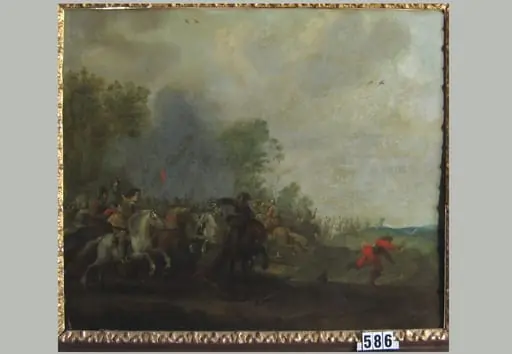 Luptă de cavalerie la marginea codrului
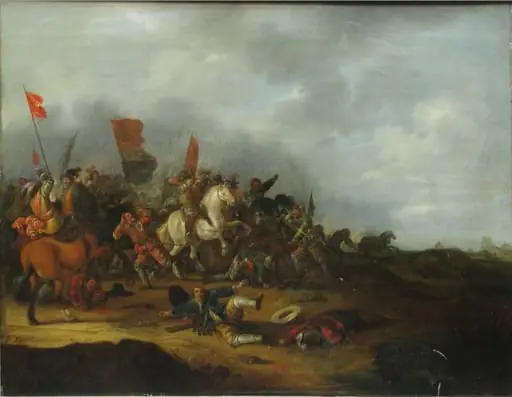 Luptă între cavalerie și pedestrime
 Societate veselă cu vânat (pandant: Societate cu vânat)