Artwork
Jacques Delille
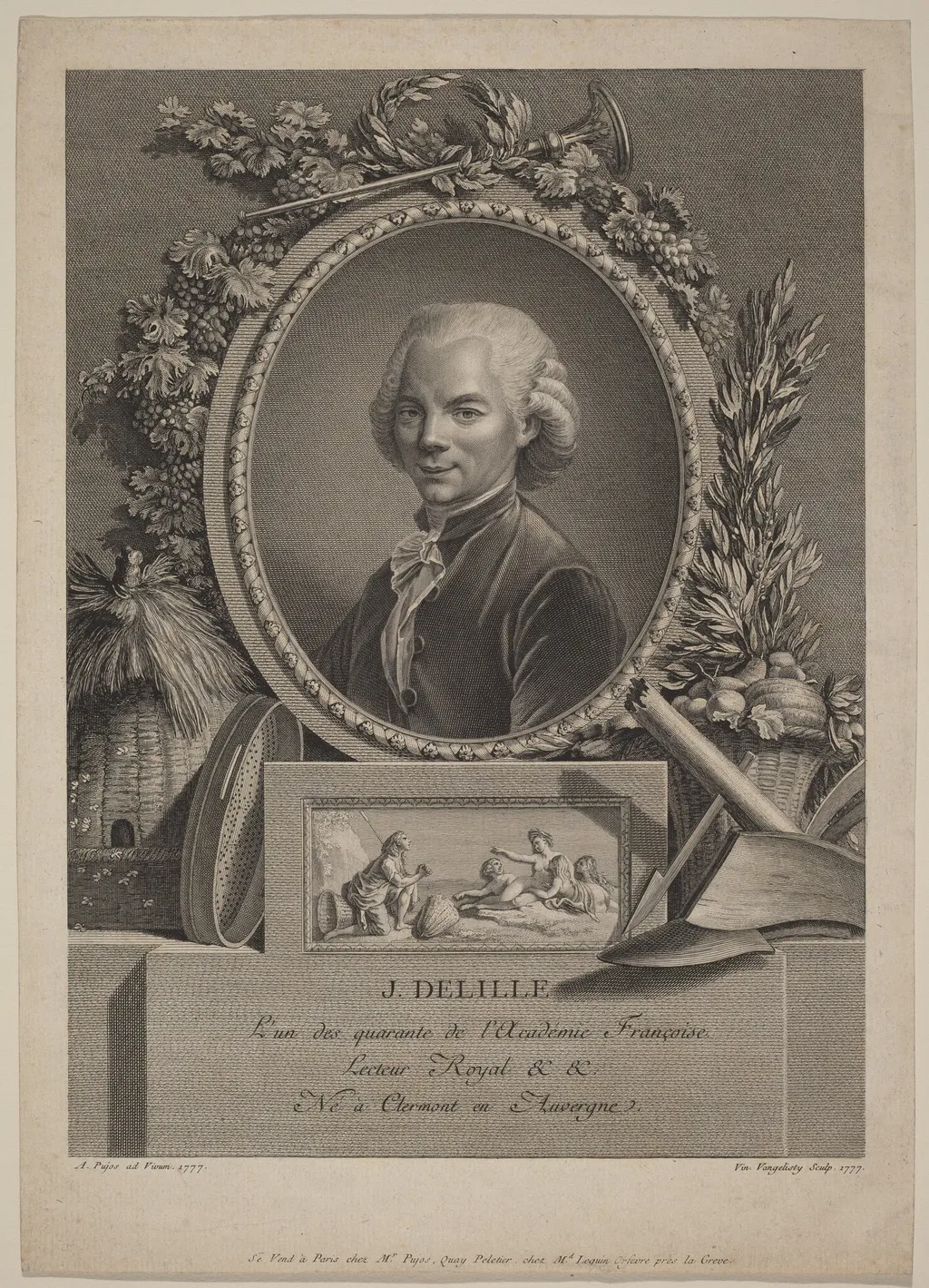
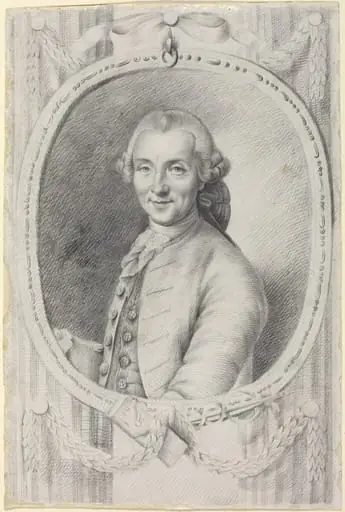
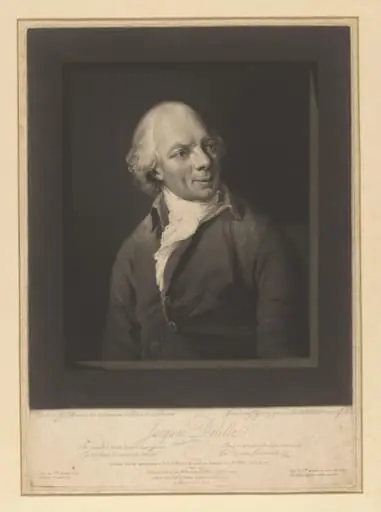
Jacques Delille is an ink print by the Romanticist artist Vincenzo Vangelisti. It dates from 1777 and is held in the collection of the National Gallery of Art.
About this work
Overview
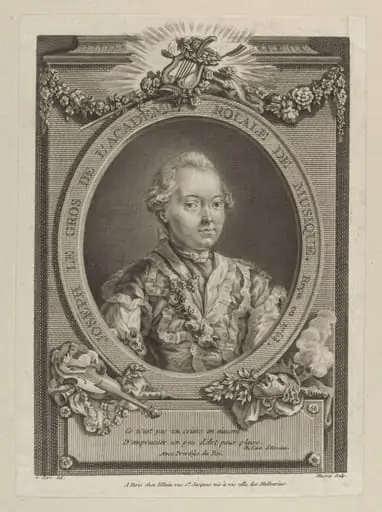
This 1777 print, executed in engraving with etching on laid paper, presents a portrait of the French poet Jacques Delille. The image is rendered in black and white, showing the subject in a formal pose with a cravat and powdered wig, surrounded by an ornamental oval frame that incorporates foliage, floral motifs, and scrollwork.
Subject & Meaning
Delille, celebrated for his French translations of Virgil’s *Georgics*, is identified in the lower inscription as a member of the French Academy. The inclusion of a violin, a harp, and a miniature landscape scene beneath the portrait alludes to his literary interests in nature and his association with the musical arts.
Technique & Style
The print combines line engraving with etching, allowing both precise, controlled lines and softer tonal areas. Laid paper provides a subtle texture that enhances the delicate rendering of the decorative border and the fine details of the subject’s attire and facial features.
History & Provenance
The work was produced by Vincenzo Vangelisti, an Italian engraver born around 1740. After training in Florence and Paris under Ignazio Hugford and Johann Georg Wille, Vangelisti settled in Milan, where he taught at the Brera Academy and later directed its School of Engraving. The portrait reflects his mature period in the late 1770s.
Context
Portrait prints of literary figures were common in the Enlightenment, serving both as commemorations and as means of disseminating the likenesses of cultural leaders. Vangelisti’s depiction of Delille aligns with this tradition, presenting the poet within a decorative frame that emphasizes his intellectual and artistic affiliations.
Artist & collection

Artist
Vincenzio Vangelisti (c. 1740–1798) was an Italian engraver. He was born at Florence. He visited Paris when young, where he became a pupil of Ignazio Hugford and Johann Georg Wille. Emperor Leopold II of Austria invited…