Artwork
An Allegory of Sculpture
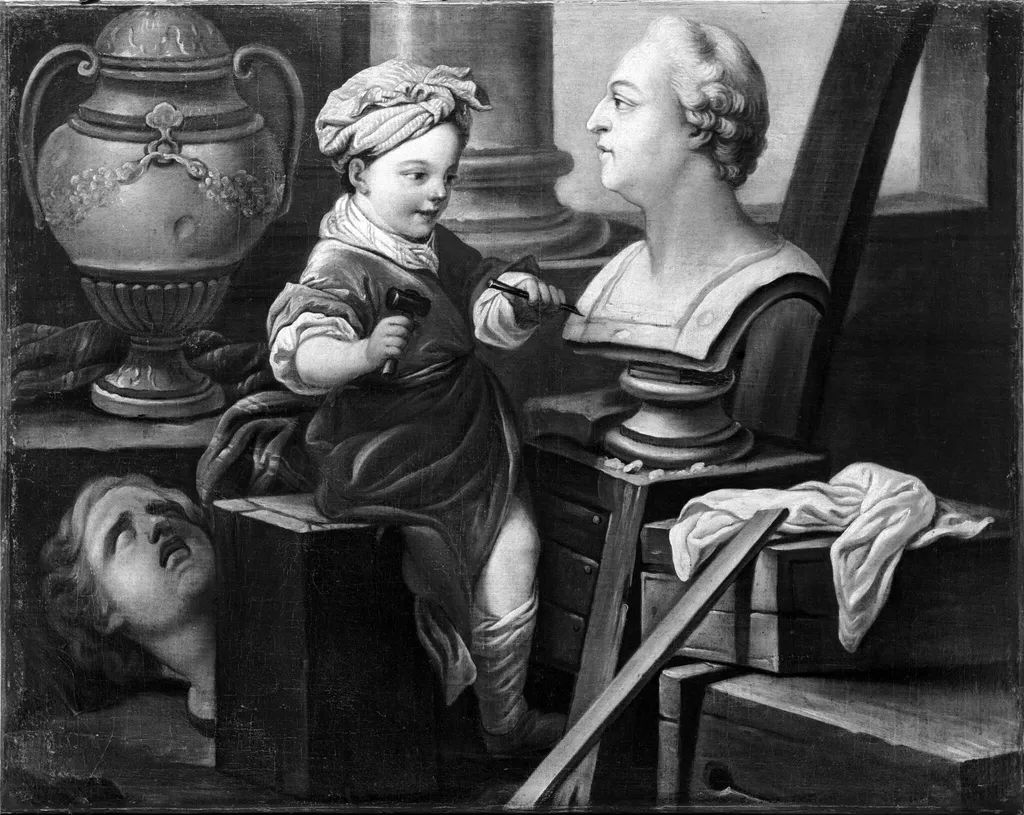
An Allegory of Sculpture is an oil painting by the Rococo painting artist Carle Vanloo. It dates from 1750 and is held in the collection of the Victoria and Albert Museum.
About this work
Overview
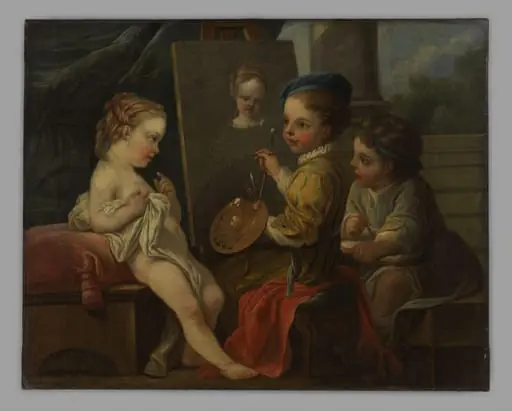
An Allegory of Sculpture is an oil painting by Carle Vanloo, created as a decorative panel for Madame de Pompadour's Salon de Compagnie at Bellevue. It is one of four allegorical works depicting children embodying artistic disciplines, though this piece uniquely features a female figure.
Subject & Meaning
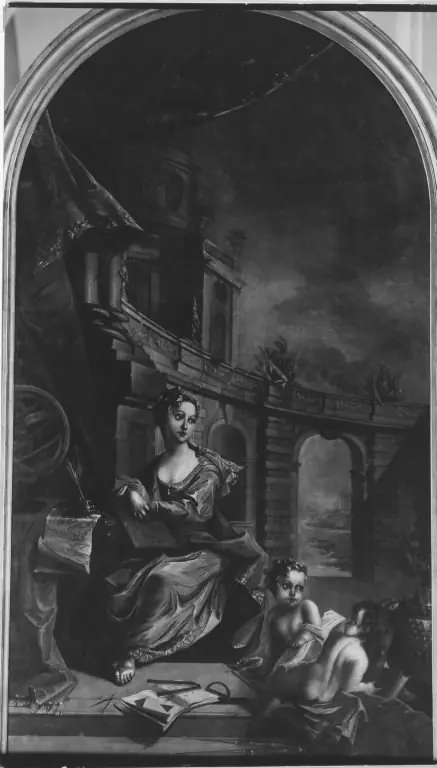
The painting symbolizes Sculpture through a focused female figure surrounded by sculptures and tools, actively engaged with a hammer and chisel. The scene conveys the creative process and technical aspects of sculpture.
Technique & Style
Vanloo employed chiaroscuro to enhance the piece's depth and focus. The work exemplifies mid-18th-century French decorative art's penchant for detailed, playful, and slightly antiquated settings, highlighting the artist's skill in rendering textures and lighting.
History & Provenance
Originally designed for Madame de Pompadour's castle at Bellevue, the painting was part of a decorative set. Its current location is not specified here, but it remains a notable example of Vanloo's work for the French aristocracy.
Context
Created during Vanloo's successful period in Paris, the painting reflects his training in Rome and Paris, blending Italian influences with French decorative tastes popular among the elite, such as Madame de Pompadour.
Legacy
While the painting's direct influence is not outlined, it represents Vanloo's contribution to 18th-century French art, also reflecting his role as an educator to subsequent notable artists.
Own this work as a print
Artist & collection
Artist
French painter Carle Vanloo made grand oil paintings in the late 18th to mid 19th century.