Artwork
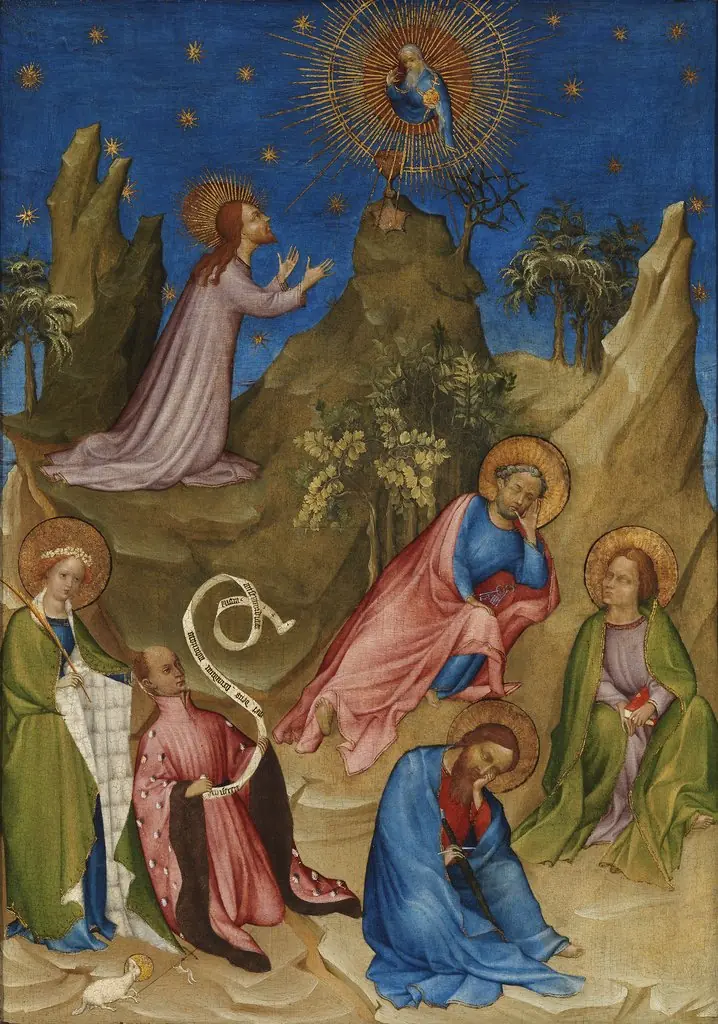
Scenes from the Passion of Christ: The Agony in the Garden [left panel]
![Scenes from the Passion of Christ: The Agony in the Garden [left panel], by Andrea di Vanni, tempera, 1384](https://artifactworldgallery.com/img/andrea-di-vanni--scenes-from-the-passion-of-christ-the-agony-in-the-garden-le--2bad16de75eee8eb-w1024.webp)
Scenes from the Passion of Christ: The Agony in the Garden [left panel] is a tempera painting by the Byzantine icon painting artist Andrea di Vanni. It dates from 1384 and is held in the collection of the National Gallery of Art.
About this work
Overview
Created around 1384, this tempera on panel work forms the left panel of a diptych illustrating the Passion of Christ. Attributed to the Sienese painter Andrea di Vanni, the piece presents a narrative moment from the biblical episode of Christ’s agony in the garden.
Subject & Meaning
The composition centers on a solitary figure of Christ kneeling in prayer atop a hill, his posture conveying solemn contemplation. Below him, three figures lie asleep, evoking the disciples’ inability to stay awake. In the distance, mounted soldiers advance, foreshadowing the imminent arrest.
Technique & Style
Executed in egg tempera, the painting employs the luminous, fast‑dry medium typical of late‑fourteenth‑century Italian panel painting. A gilded background and ornamental frame create a sense of spatial depth while reinforcing the work’s devotional character.
History & Provenance
The panel belongs to a larger series of Passion scenes likely commissioned for a private chapel or confraternity. Its attribution to Andrea di Vanni rests on stylistic parallels with other documented works by the artist in Siena during the same period.
Context
During the late Trecento, Sienese artists favored narrative clarity and rich coloration, often integrating gold leaf to signify sacred space. This work reflects those conventions, aligning with contemporary theological emphasis on Christ’s human suffering and divine purpose.
Legacy
The painting exemplifies the transitional aesthetics between Gothic ornamentation and early Renaissance naturalism, influencing subsequent Sienese painters who continued to explore tempera’s expressive possibilities in religious storytelling.
Artist & collection

![Scenes from the Passion of Christ: The Agony in the Garden, the Crucifixion, and the Descent into Limbo [entire triptych], by Andrea di Vanni](https://artifactworldgallery.com/img/andrea-di-vanni--scenes-from-the-passion-of-christ-the-agony-in-the-garden-th--1ebebae2d86a2ec2-w320.webp)
![Scenes from the Passion of Christ: The Descent into Limbo [right panel], by Andrea di Vanni](https://artifactworldgallery.com/img/andrea-di-vanni--scenes-from-the-passion-of-christ-the-descent-into-limbo-rig--9eb5d32175c31b6f-w320.webp)
![Scenes from the Passion of Christ: The Crucifixion [middle panel], by Andrea di Vanni](https://artifactworldgallery.com/img/andrea-di-vanni--scenes-from-the-passion-of-christ-the-crucifixion-middle-pan--abe5469a28e77ac7-w320.webp)