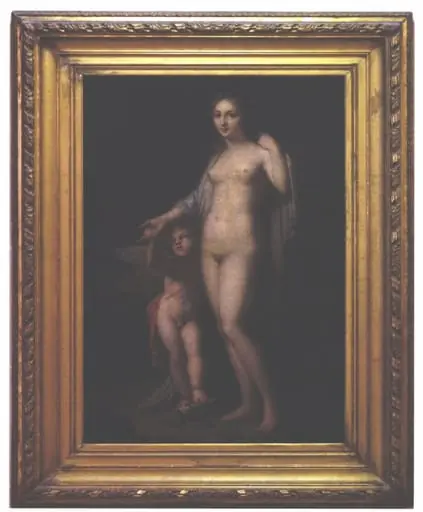
Artwork
Venus și Amor
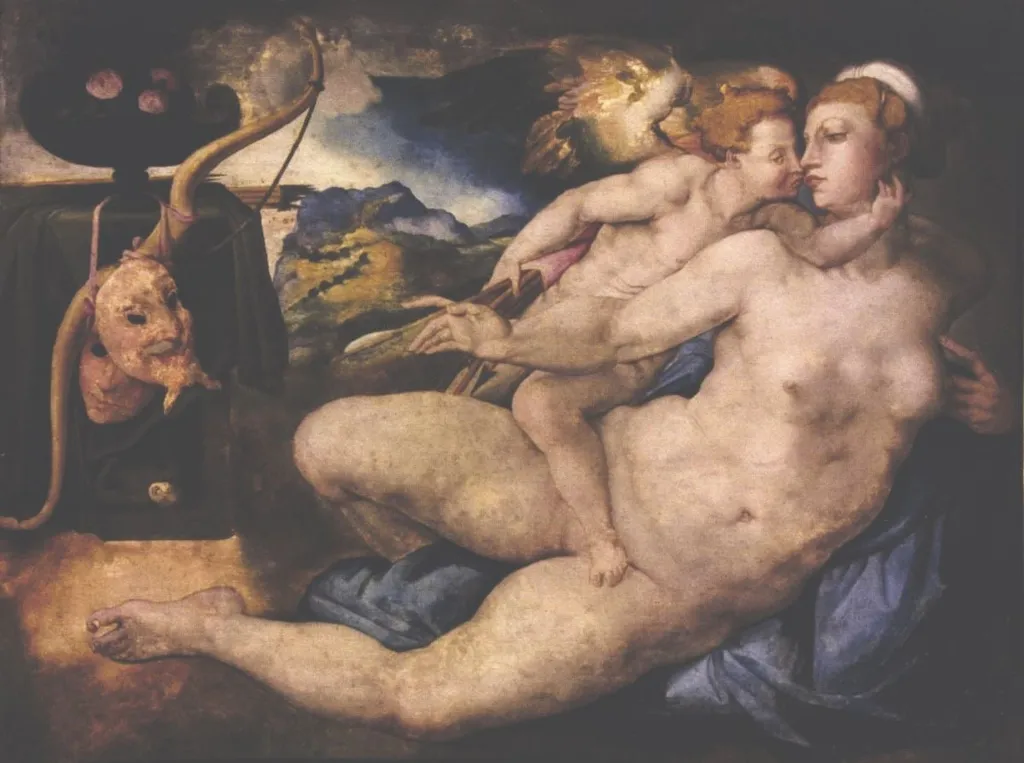
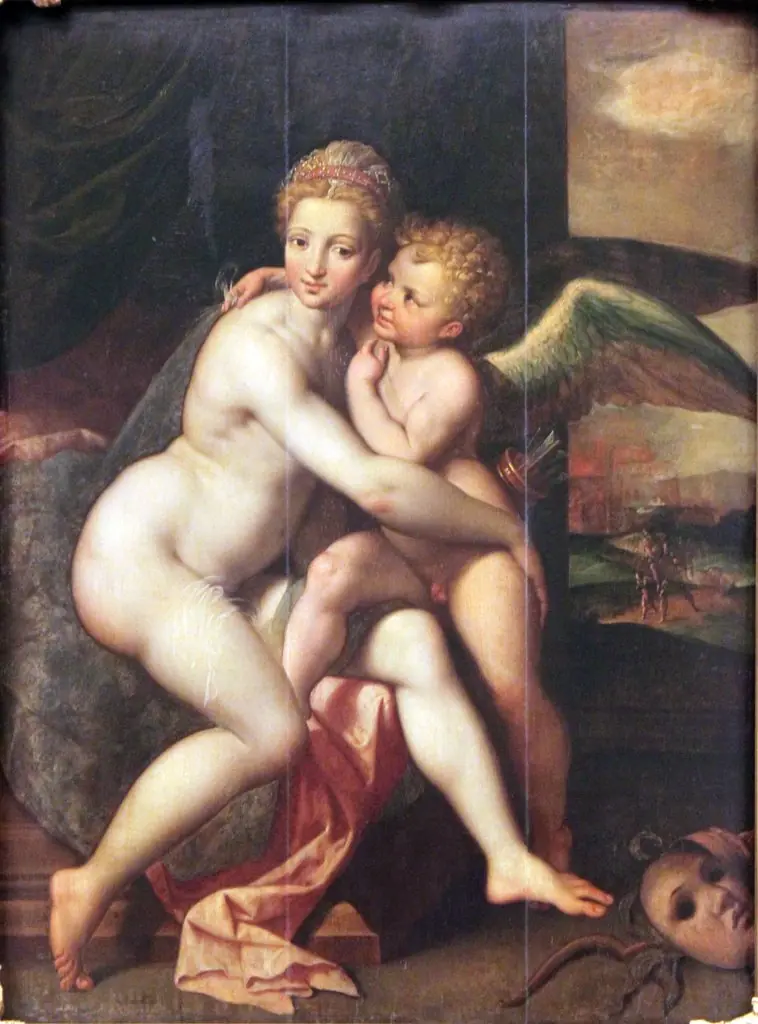
Venus și Amor is an unspecified painting by Giorgio Vasari. It dates from 1552 and is held in the collection of the National Museum of Art of Romania.
About this work
Overview
Giorgio Vasari's painting 'Venus și Amor', created around 1552, is a work from the Italian Renaissance. It exemplifies the artist's skill as a painter, architect, and art historian, showcasing his Mannerist style.
Subject & Meaning
The painting depicts Venus, the goddess of love, and her son Cupid. Venus is shown seated on a rock, holding a mirror, while Cupid gazes at her reflection. The scene is set against a dark, ominous sky, with a mask and a horned creature adding to the complex symbolism.
Technique & Style
The artist's use of chiaroscuro creates a striking contrast between light and dark, highlighting Venus's skin against the somber background. Bold contrasts draw attention to specific parts of the composition, demonstrating Vasari's mastery of Mannerist techniques.
Context
The work reflects the Renaissance interest in classical themes and mythology, reinterpreting ancient subjects in a contemporary context. Vasari's style, characterized by refined elegance and complex compositions, was influential in the development of Mannerist art.
Artist & collection

Artist
Giorgio Vasari (30 July 1511 – 27 June 1574) was an Italian Renaissance painter, architect, art historian, and biographer known for his work Lives of the Most Excellent Painters, Sculptors, and Architects, considered…