Artwork
Father, Son, and Donkey
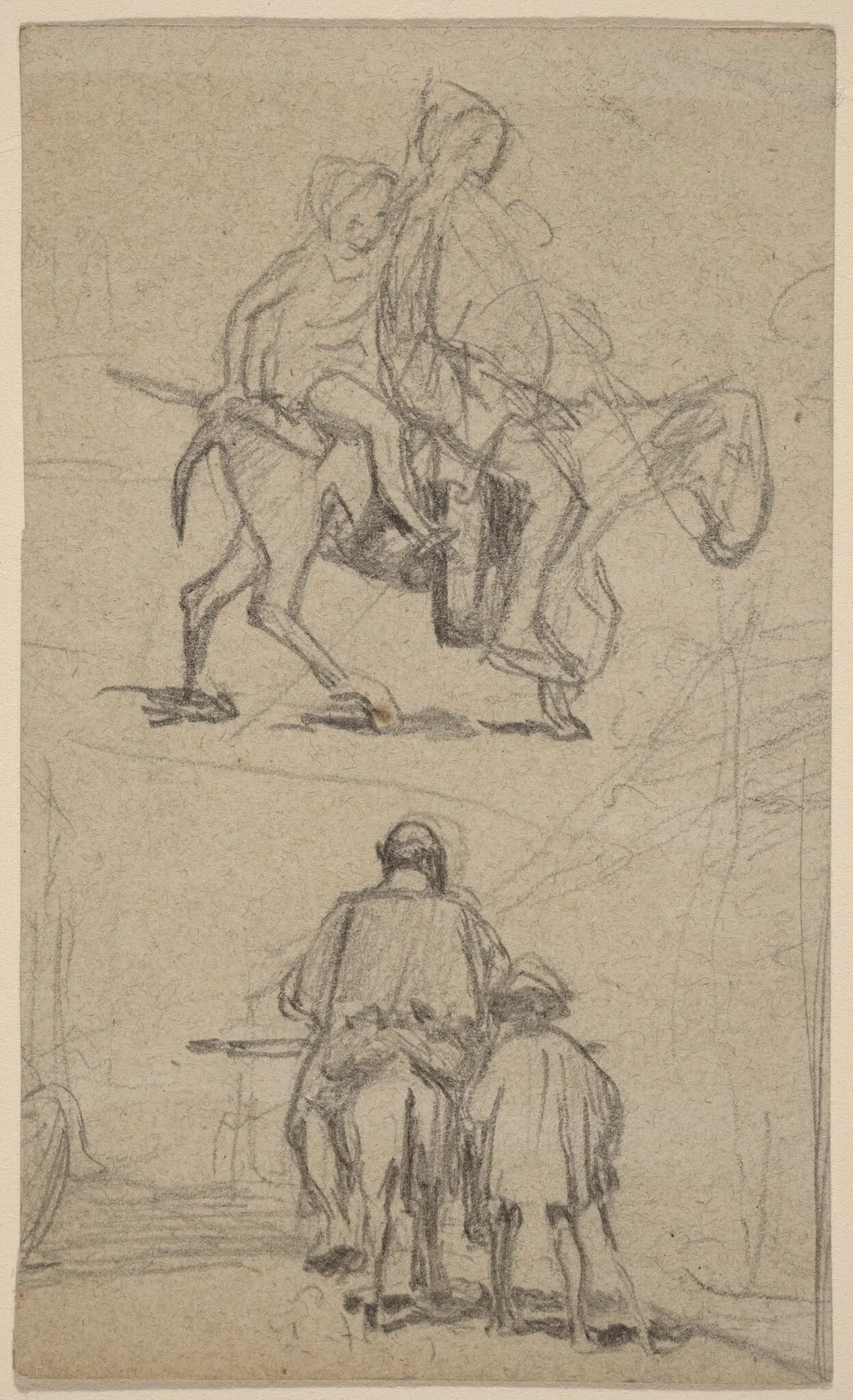
Father, Son, and Donkey is a graphite drawing by the Impressionist artist Elihu Vedder. It dates from 1859 and is held in the collection of the National Gallery of Art.
About this work
Overview
Created circa 1859, this graphite drawing on wove paper presents a compact group of travelers—a father, his son, and a donkey—rendered in a concise, linear manner. The work belongs to the early period of Elihu Vedder, an American artist later noted for his symbolist paintings and book illustrations.
Subject & Meaning
The composition shows two figures mounted on donkeys, positioned side by side, with a third donkey and rider suggested in the background. The arrangement evokes a simple narrative of a familial journey, emphasizing the relationship between the elder and the child as they move together through an undefined landscape.
Technique & Style
Vedder employs a restrained graphite technique, using swift, unshaded strokes that highlight form and motion rather than surface detail. The paper’s texture is visible, and the lines remain loose and gestural, creating a sense of immediacy that captures the fleeting dynamics of travel.
History & Provenance
The drawing is an early example of Vedder’s draftsmanship, produced before his later fame as an illustrator of Edward FitzGerald’s *Rubaiyat of Omar Khayyam*. It reflects his initial interest in narrative and allegorical subjects, and it remains a documented piece within collections that trace his development from student sketches to mature symbolist works.
Artist & collection

Artist
Elihu Vedder (26 February 1836 – 29 January 1923) was an American symbolist painter, book illustrator and poet from New York City.

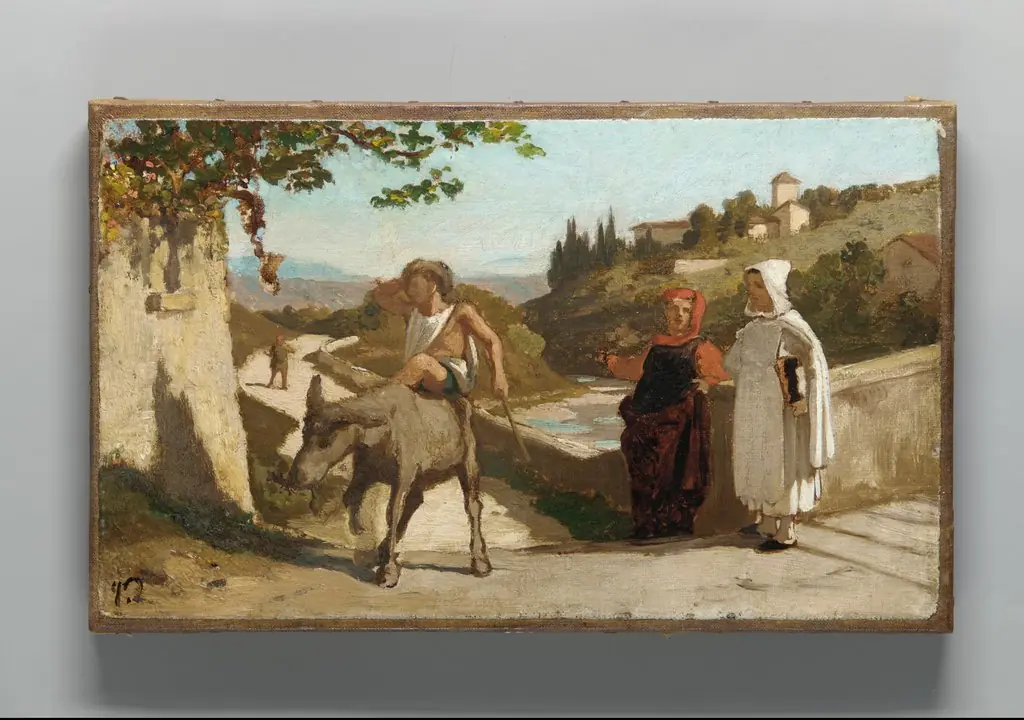 The Fable of the Miller, His Son, and the Donkey
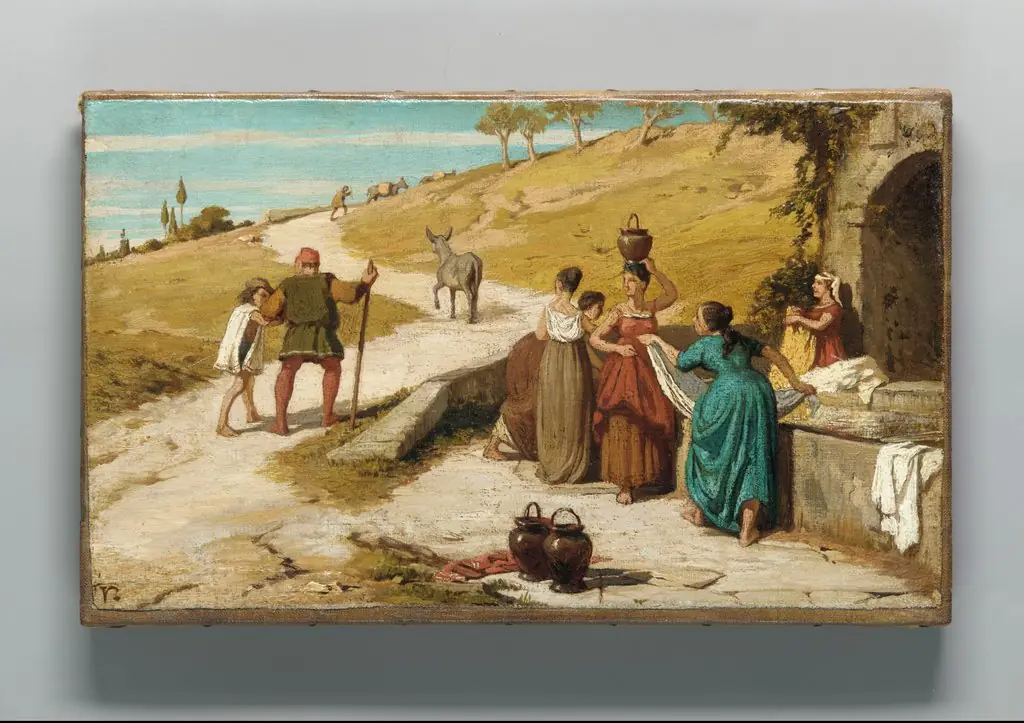 The Fable of the Miller, His Son, and the Donkey
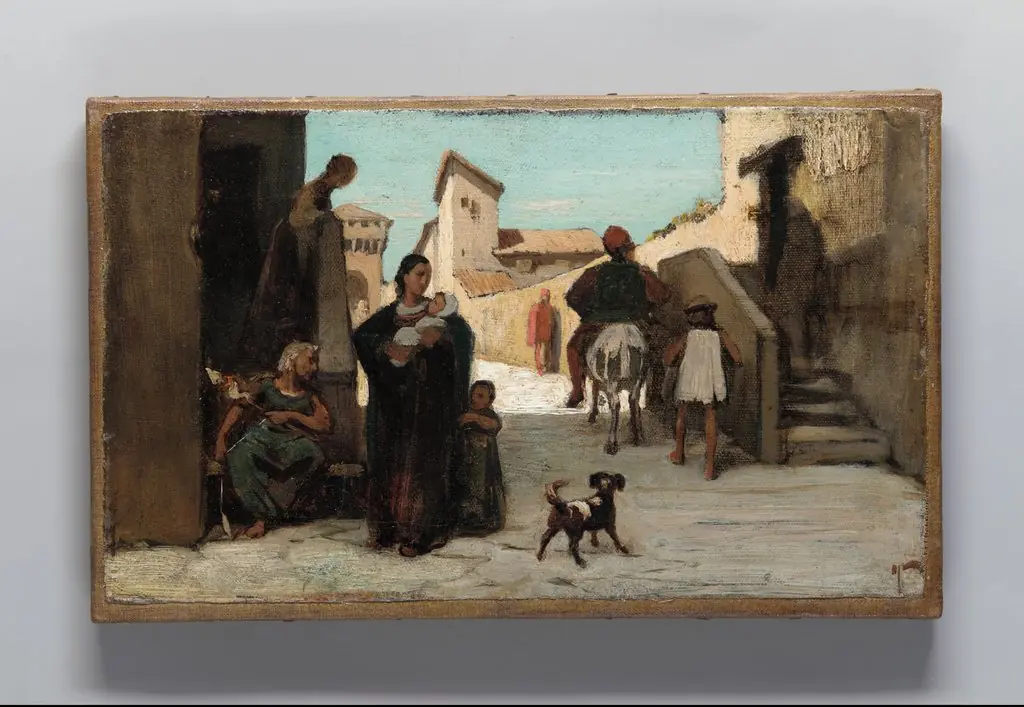 The Fable of the Miller, His Son, and the Donkey
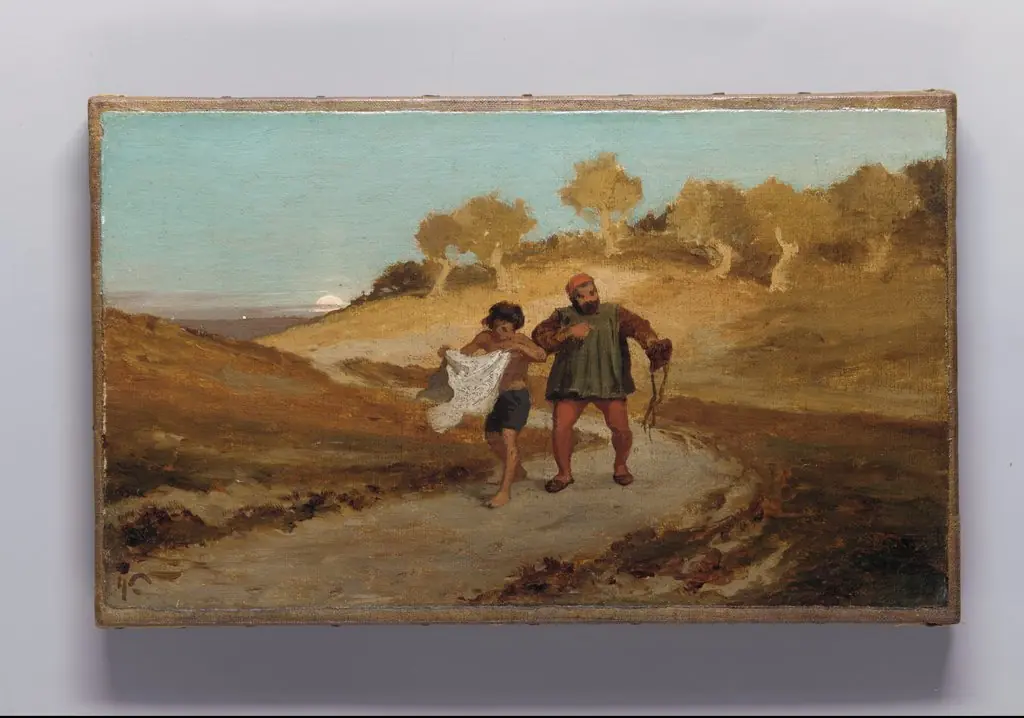 The Fable of the Miller, His Son, and the Donkey
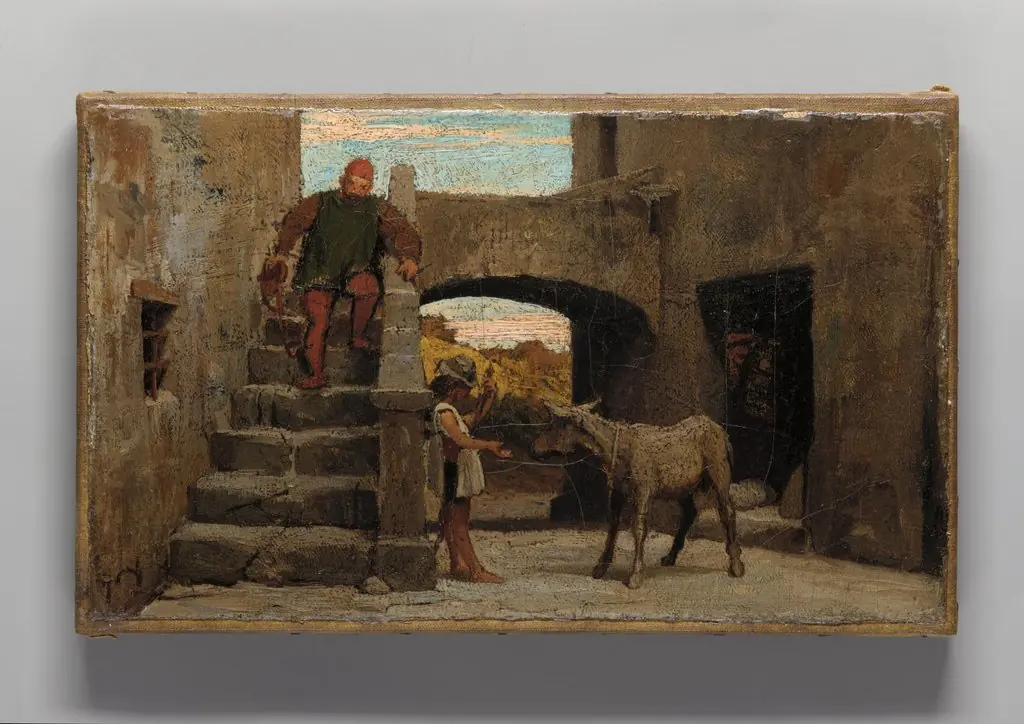 The Fable of the Miller, His Son, and the Donkey
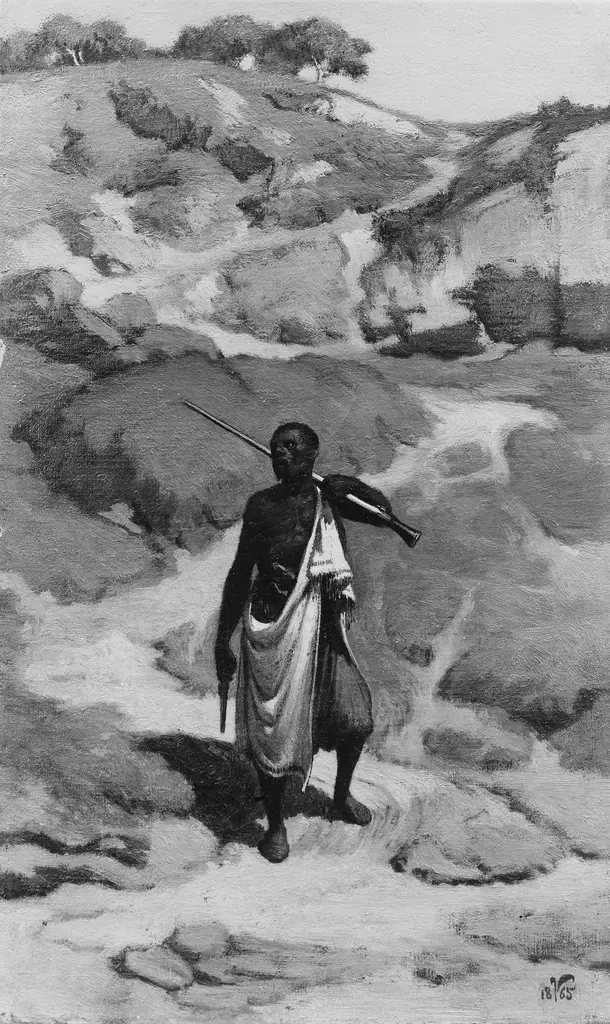 The African Sentinel
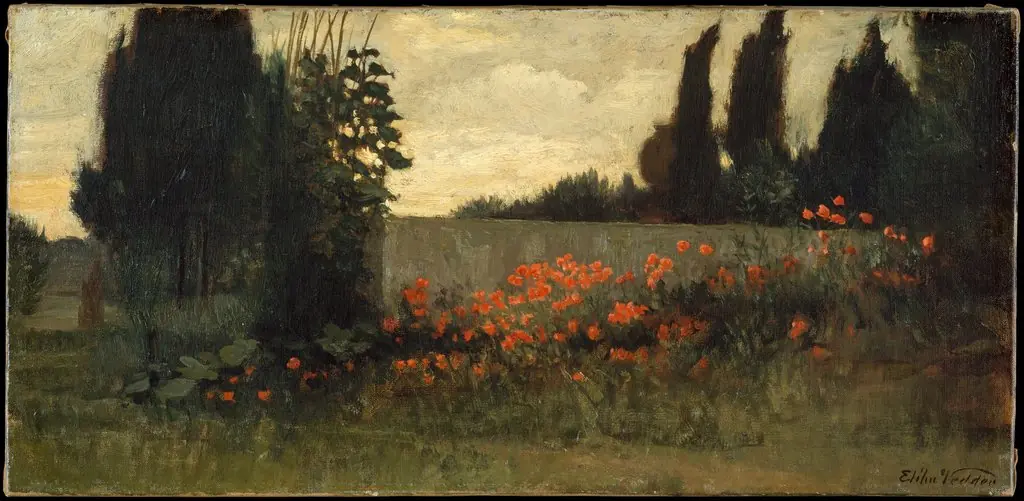 Cypress and Poppies
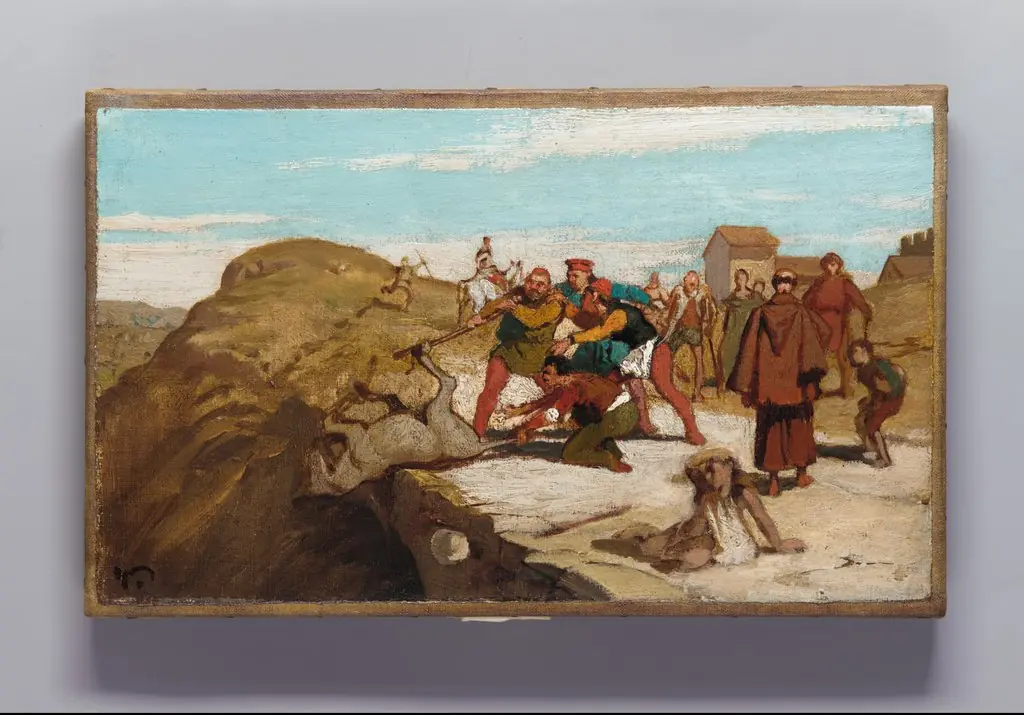 The Fable of the Miller, His Son, and the Donkey
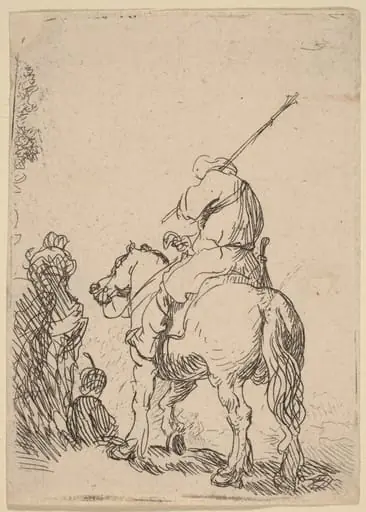 Turbaned Soldier on Horseback
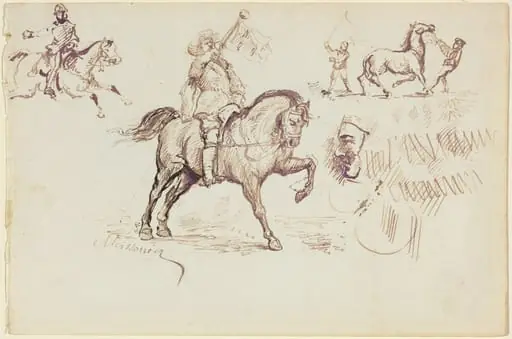 The Herald of Murcia and Other Studies (recto)
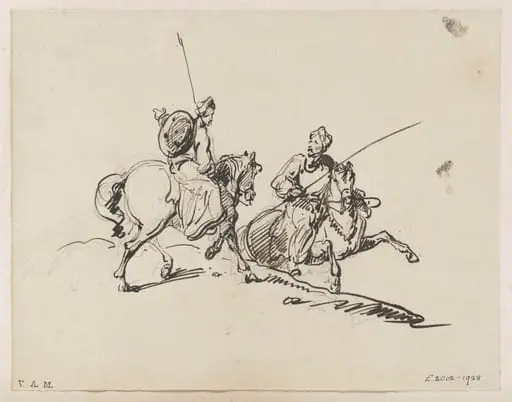 Two turbaned horsemen
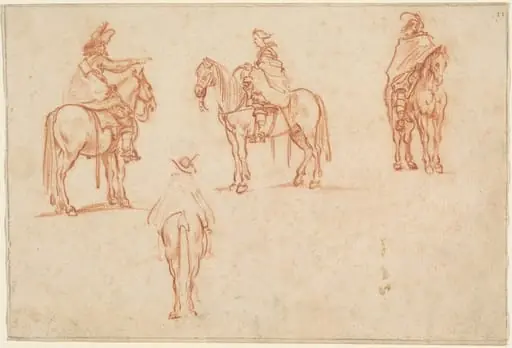 Study of Four Horsemen
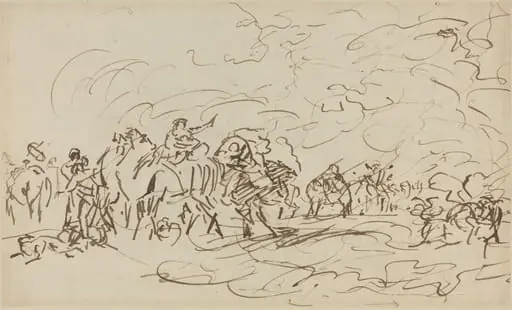 Sandstorm in the Desert Overtaking a Caravan
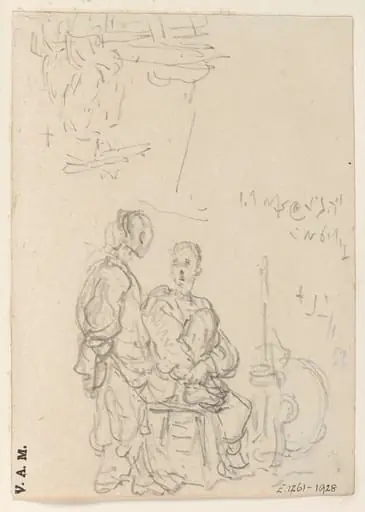 Two Chinese figures with barber's equipment
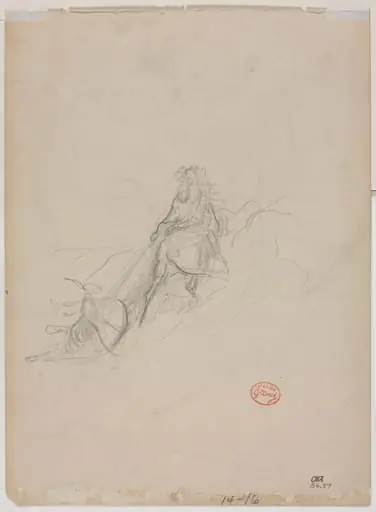 Sketch of Hunting Scene (verso)
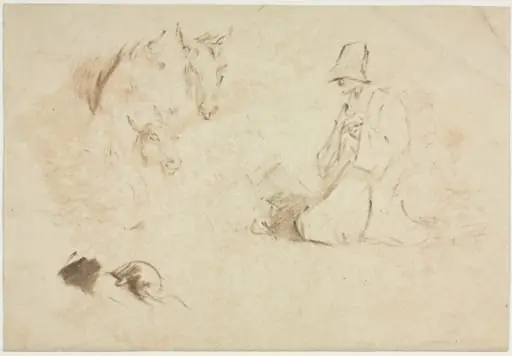 Sketches: Figures and Animals
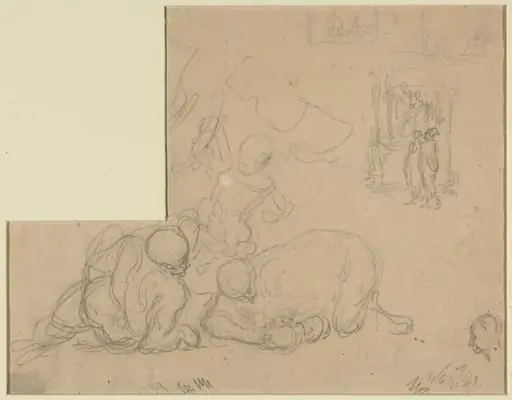 Sheet of Studies with Two Large Men on the Ground
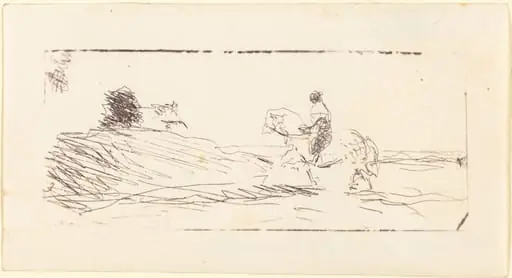 Carte-de-visite with Horseman (La Carte de visite au cavalier)