Artwork
Cunună de flori
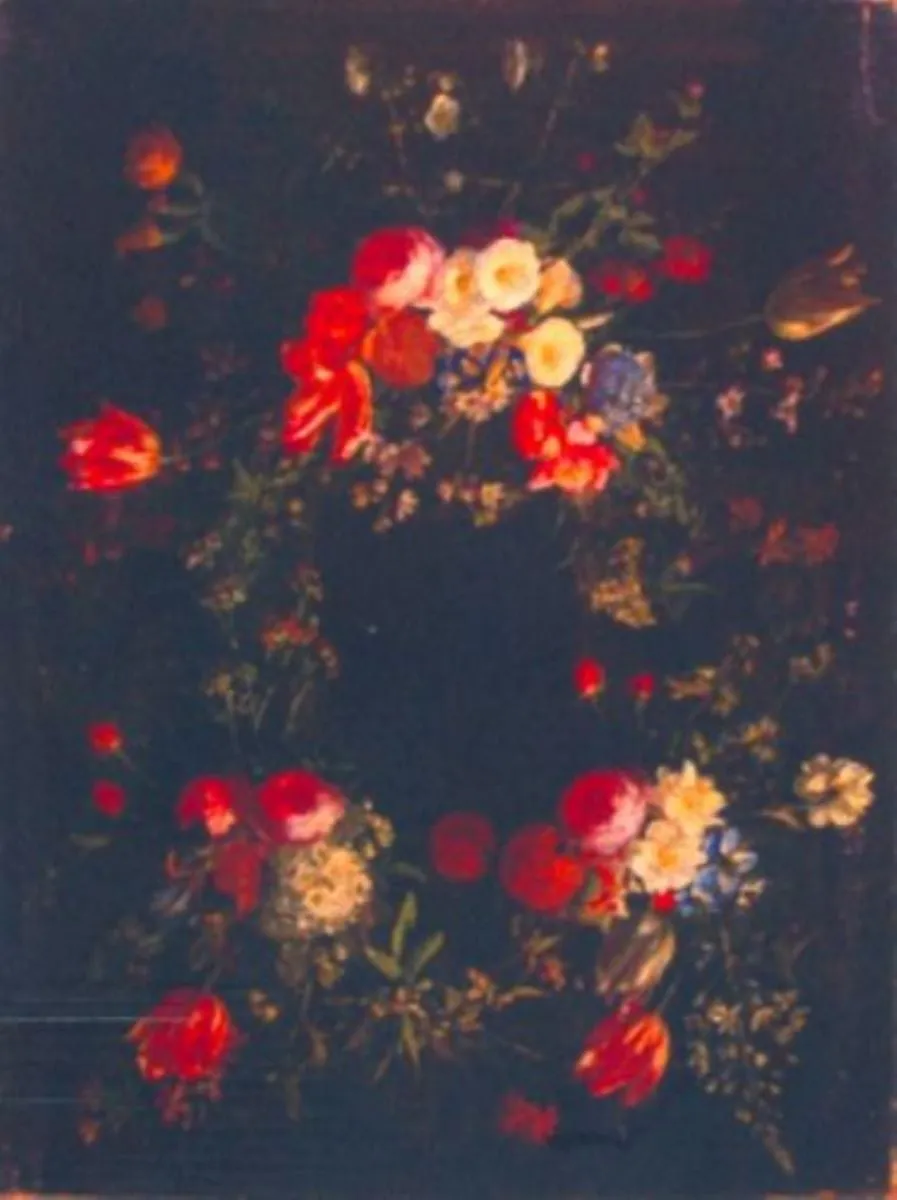
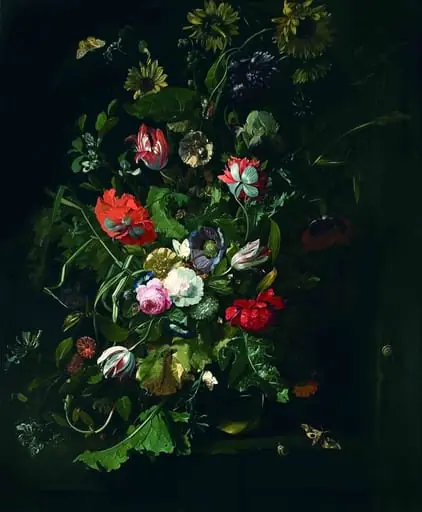
Cunună de flori is an unspecified painting by the Baroque artist Gaspar Pieter Verbrugghen. It dates from 1675 and is held in the collection of the Brukenthal National Museum.
About this work
Overview
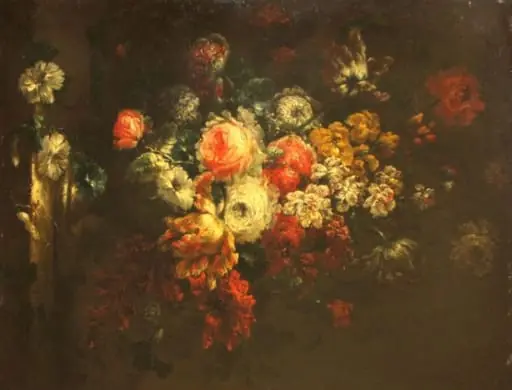
Created in 1675, *Cunună de flori* by Gaspar Pieter Verbrugghen presents a densely packed bouquet set against a deep, almost black background.
Created in 1675, *Cunună de flori* by Gaspar Pieter Verbrugghen presents a densely packed bouquet set against a deep, almost black background. The composition is dominated by vivid red and yellow blossoms, interspersed with occasional blue and white‑centered flowers, all tangled together in a lively, informal cluster. Green foliage and slender stems emerge sporadically, offering brief relief from the intense chromatic mass.
Subject & Meaning
The work celebrates the fleeting beauty of floral abundance, arranging a variety of blossoms in a seemingly spontaneous burst rather than a formal arrangement. By juxtaposing bright petals with a dark void, Verbrugghen emphasizes the transitory nature of life’s vibrancy against the constancy of darkness, inviting contemplation of mortality and renewal through the language of nature.
Technique & Style
Verbrugghen employs a strong chiaroscuro, allowing light to appear to emanate from behind the flowers, which gives them a luminous, almost ethereal quality. Thick, confident brushstrokes render the petals with textured vigor, while the background remains smooth and unmodulated, heightening the contrast. The palette’s saturated reds, yellows, and occasional blues reflect the dramatic sensibilities of the late Baroque period.
History & Provenance
The painting was executed in the latter half of the 17th century, a time when Flemish artists often explored still‑life subjects with heightened realism. Documentation traces its ownership through several private collections in the Low Countries before it entered a public museum inventory in the early 20th century, where it remains catalogued as a representative example of Verbrugghen’s oeuvre.
Context
*Cunună de flori* belongs to a broader tradition of Baroque floral still‑lifes that used opulent color and dramatic lighting to convey both sensual pleasure and moral allegory. Flemish painters of the era frequently employed such compositions to demonstrate technical skill and to appeal to patrons interested in the symbolic language of flowers, a practice that aligns Verbrugghen with his contemporaries.
Artist & collection
Artist
Gaspar Pieter Verbrugghen wasn’t some fancy court painter—he ran a busy workshop in Brussels where apprentices churned out flower wreaths for the city’s churches.

 Ghirlandă de flori cu lalele
 A Festoon of Roses hanging from a Blue Ribbon, with Butterflies and Insects
 Flower garland
 Buchet de flori cu trandafir alb; pandant: Buchet de flori cu trandafiri roșii
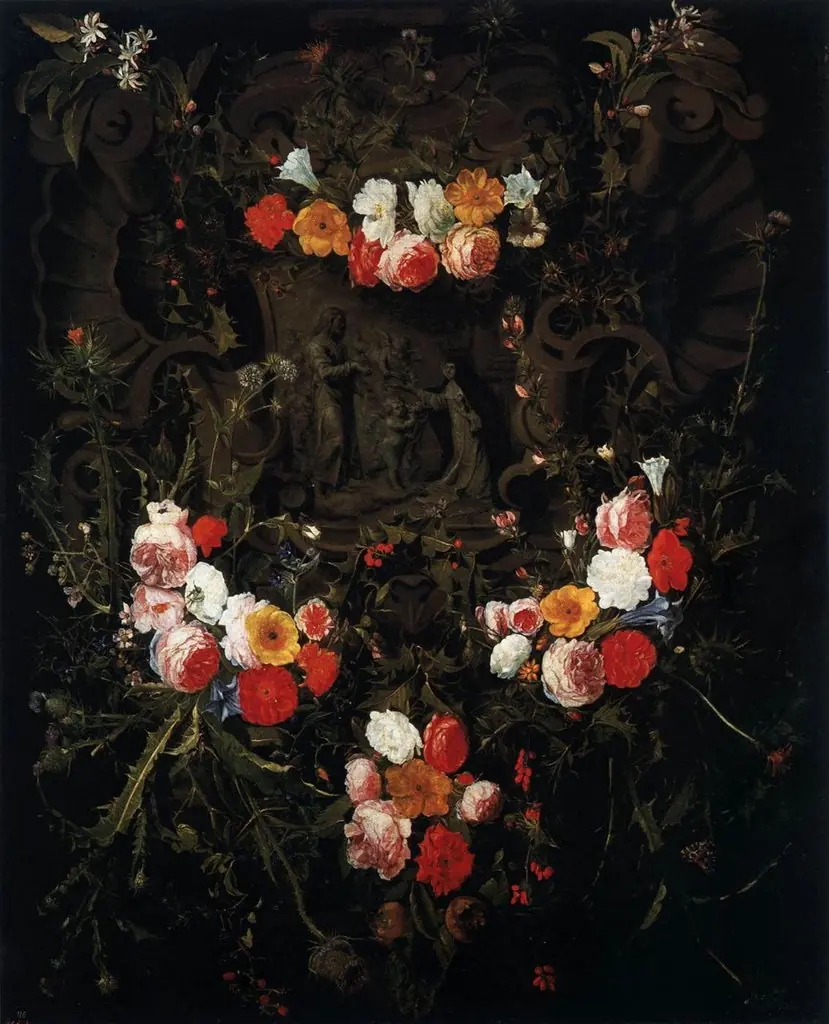 The Child Christ and St Theresa in a Flower Garland
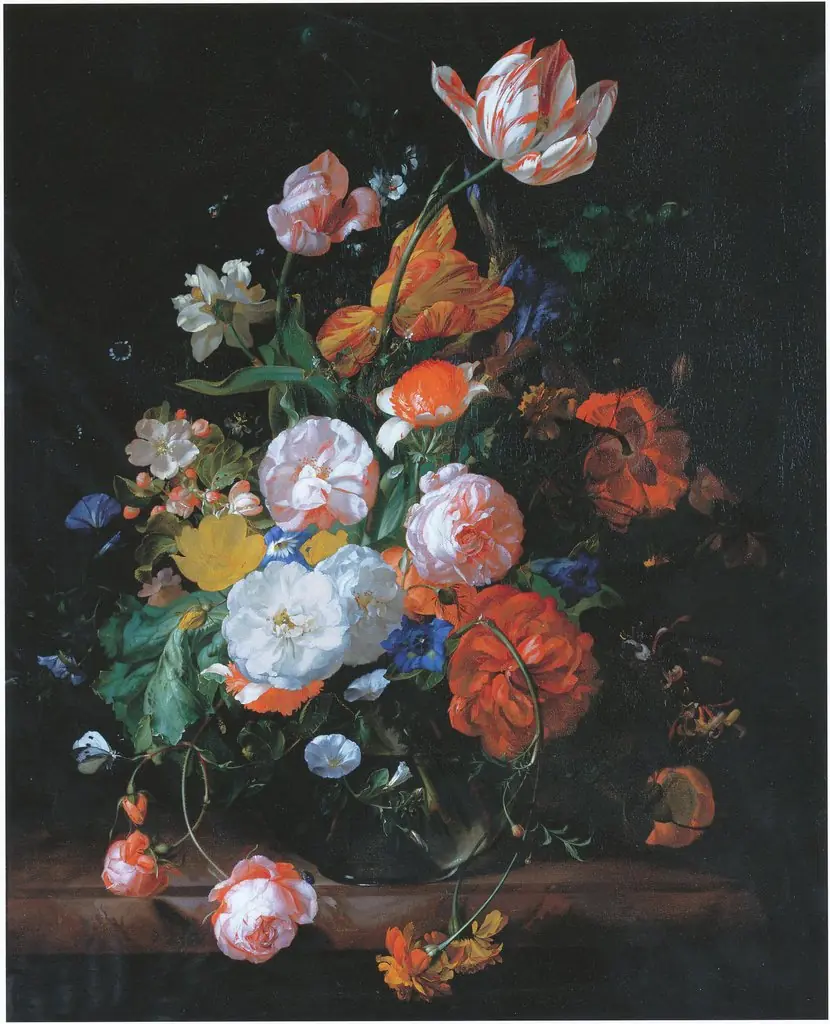 Roses, tulips and other flowers in a glass vase on a marble ledge
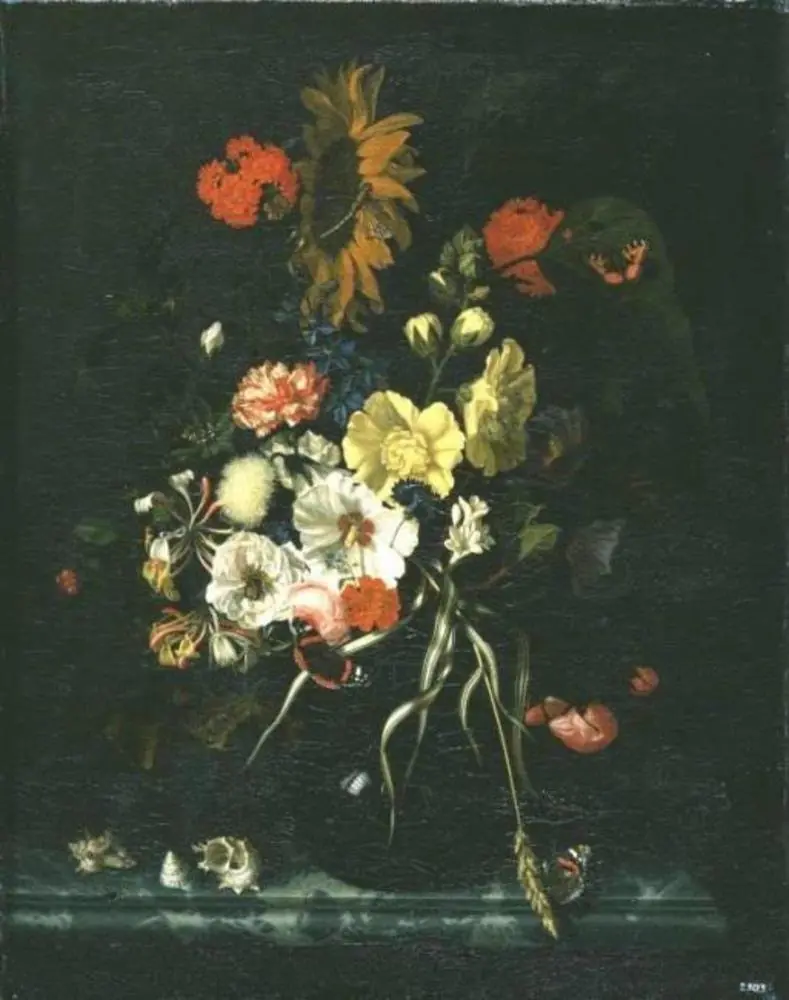 Flowers with a sunflower in a glass vase with shells
 Buchet de flori într-un vas
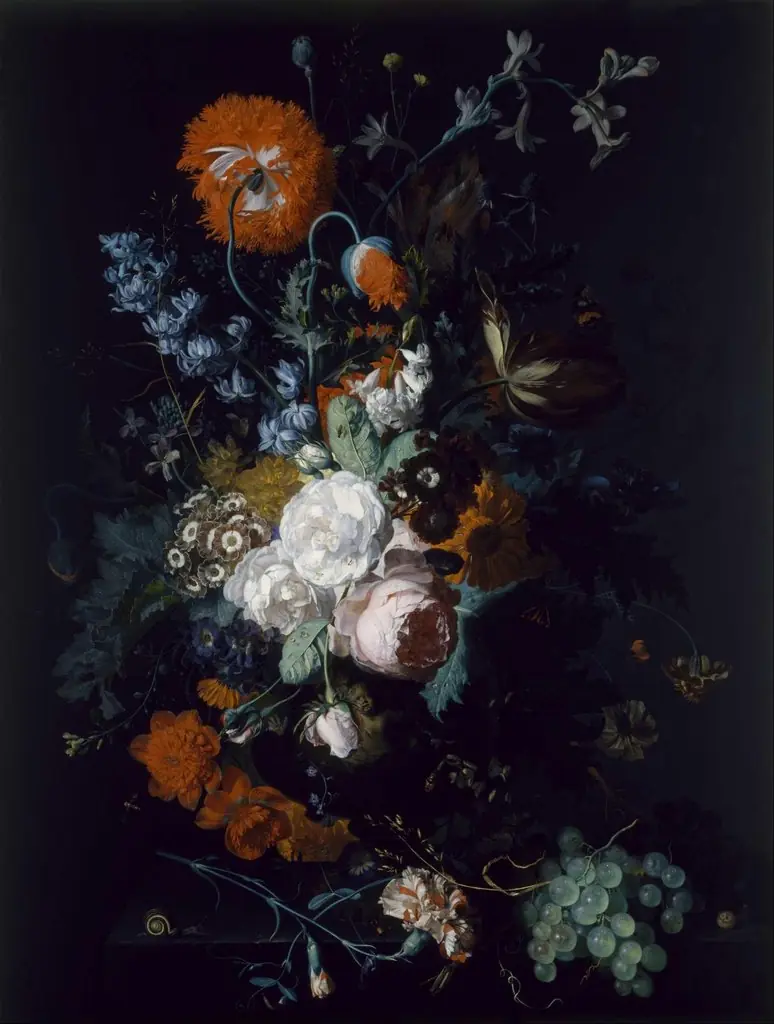 Still Life of Flowers and Fruit
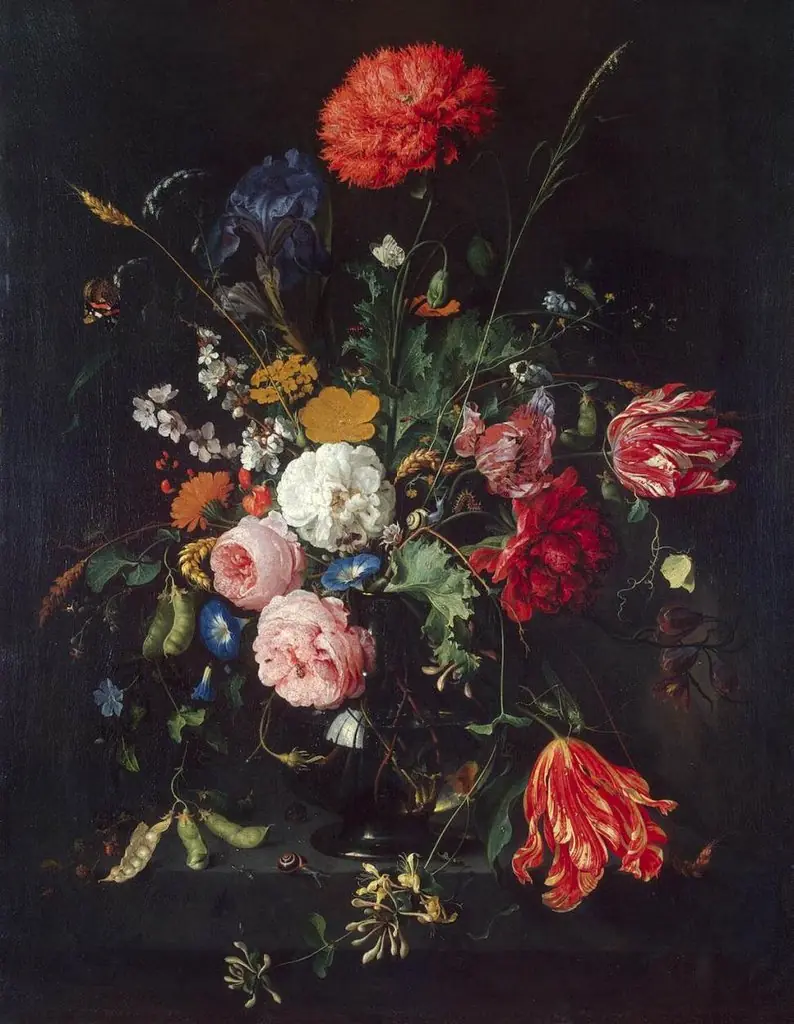 Flowers in a Vase