Artwork
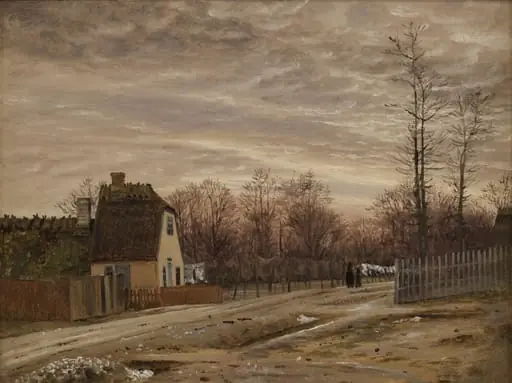
Evening after a Thaw. Taarbæk, North of Copenhagen
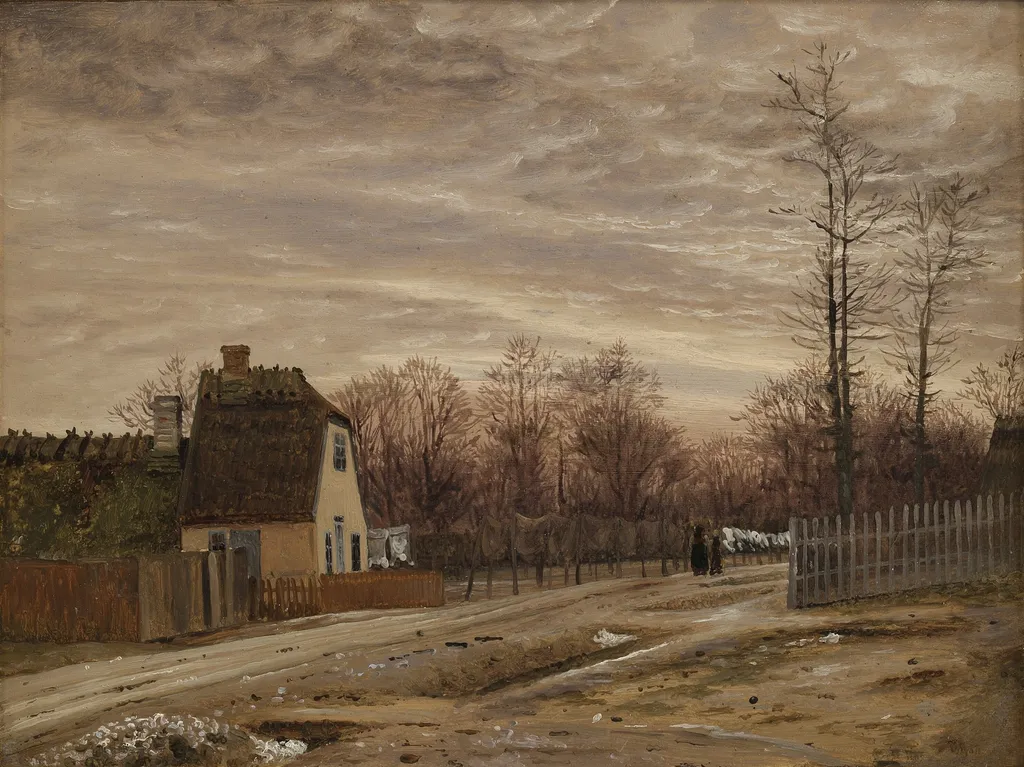
Evening after a Thaw. Taarbæk, North of Copenhagen is an unspecified painting by Vilhelm Kyhn. It dates from 1850 and is held in the collection of the Statens Museum for Kunst.
About this work
Overview
Kyhn, a landscape painter committed to traditional methods, avoided the emerging avant-garde trends of his time.
Painted around 1850 by Vilhelm Kyhn, *Evening after a Thaw. Taarbæk, North of Copenhagen* is a quiet coastal scene from Denmark’s post-Golden Age period. Kyhn, a landscape painter committed to traditional methods, avoided the emerging avant-garde trends of his time. This work reflects his dedication to observing and recording the natural world with restrained precision, focusing on the subtle transitions of light and season in rural Denmark.
Subject & Meaning
The painting captures a still moment in a coastal village after winter’s retreat. A modest house with a brown roof and yellow walls stands near a dirt path, surrounded by a low fence. Bare trees and a muted sky suggest the lingering chill of winter, while faint orange tones in the clouds hint at the sun’s return. The scene conveys neither drama nor narrative, but rather a contemplative stillness, honoring the quiet rhythms of rural life.
Technique & Style
Kyhn employed visible, deliberate brushwork to render texture in the earth, bark, and sky, avoiding smooth academic finishes. The palette is restrained—dominated by grays, browns, and soft beiges—with only subtle warm accents suggesting the fading light. Compositionally, the painting balances horizontal planes of land, sea, and sky, reinforcing its calm tone. His technique prioritizes atmospheric truth over idealization, aligning with Danish landscape traditions of the era.
History & Provenance
Created during Kyhn’s early career, the painting reflects his deep engagement with the Danish coastline near Taarbæk, a region he frequently painted. Though not widely exhibited internationally, it remained within Danish collections, valued for its fidelity to local topography and seasonal change. Kyhn’s consistent focus on native landscapes ensured his work was preserved as part of Denmark’s regional artistic heritage.
Context
In mid-19th century Denmark, landscape painting was shifting toward naturalism, yet Kyhn held to the earlier, more composed style of the Golden Age. While contemporaries experimented with light and color influenced by French realism, Kyhn emphasized topographical accuracy and emotional restraint. His work resonated with a national interest in documenting the Danish countryside as a cultural anchor amid industrial change.
Legacy
Kyhn’s paintings, including this one, contributed to a sustained Danish tradition of landscape observation rooted in local specificity. Though less known abroad, his work influenced later generations of Danish artists who valued quiet realism over spectacle. *Evening after a Thaw* remains a representative example of how Danish painters documented seasonal change with dignity and understated emotion.
Own this work as a print
Artist & collection
Artist
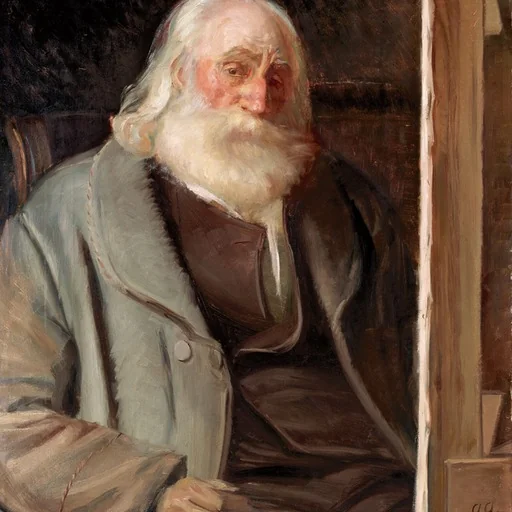
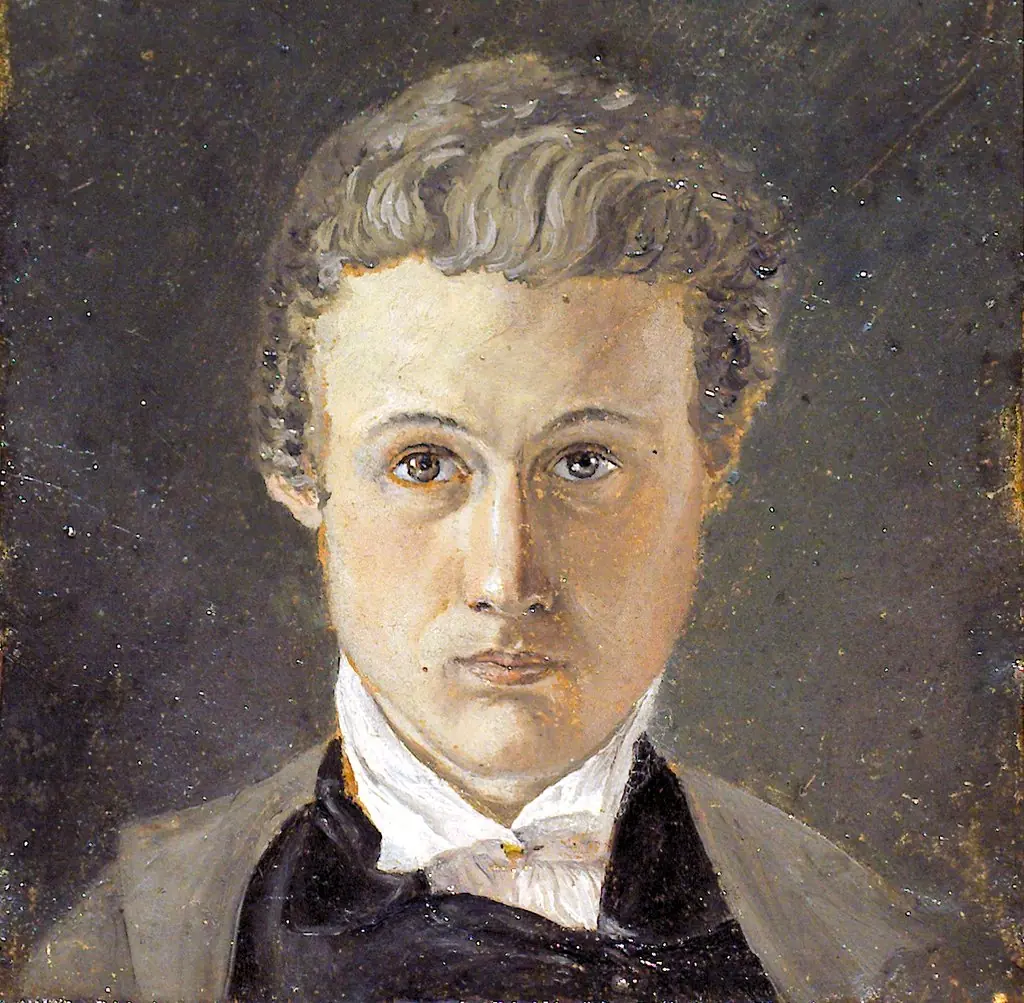
Peter Vilhelm Carl Kyhn (March 30, 1819 – May 11, 1903) was a Danish landscape painter who belonged to the generation of national romantic painters immediately after the Danish Golden Age and before the Modern Breakthrough.

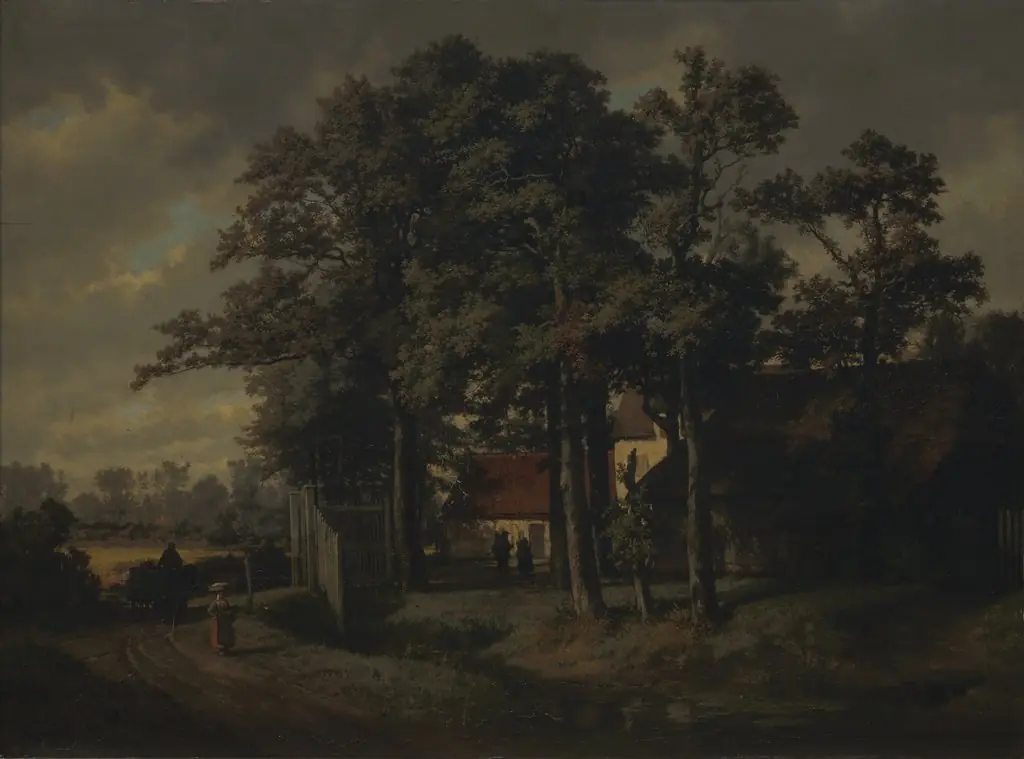 Farm in Merksem
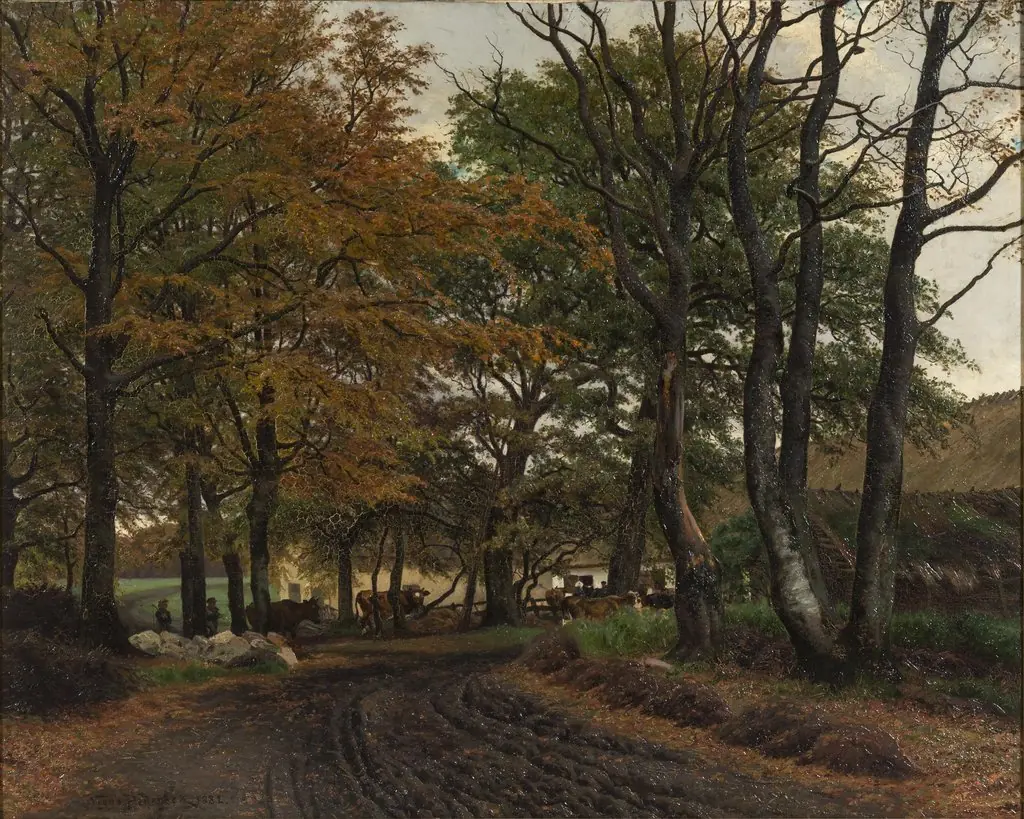 En opkørt vej under gamle træer
 Cottage Scenery
 Gandish Cottage, Suffolk
 Farmyard
 A Sealand Village. Winter
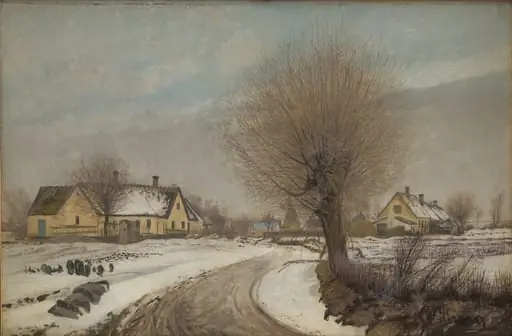 A Sealand Village. Winter
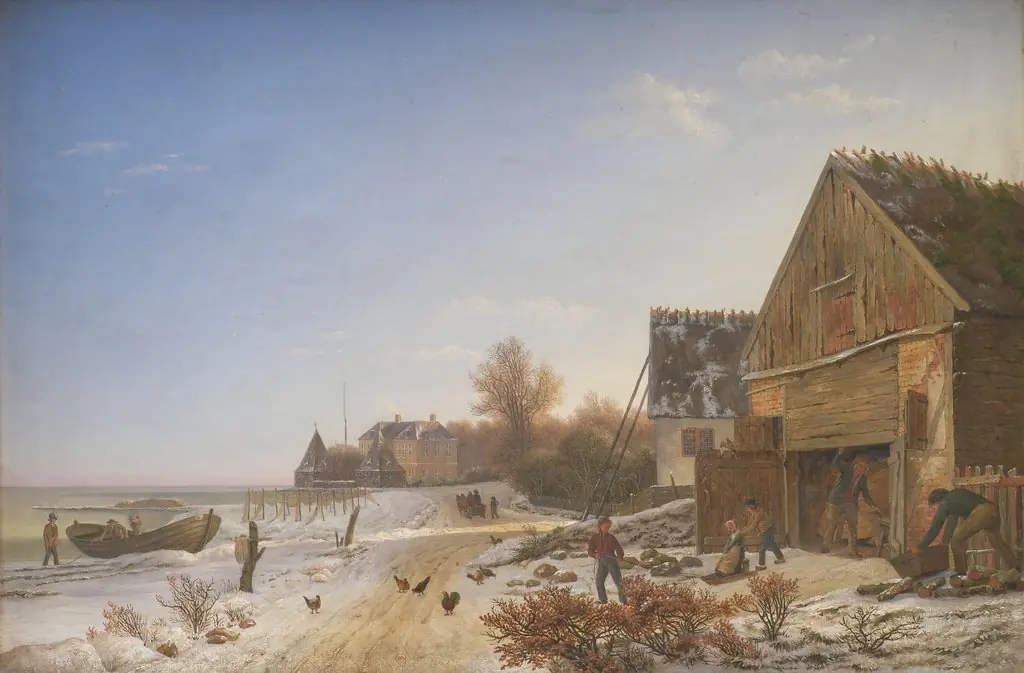 Strandvejen ved Vedbæk. Vintereftermiddag
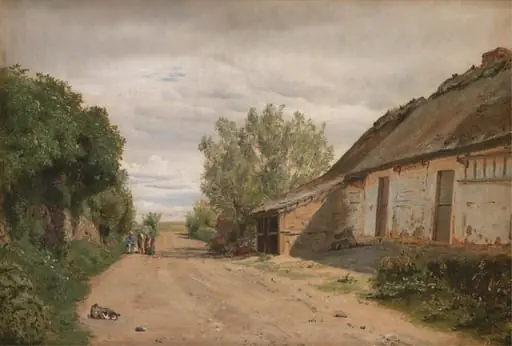 The Outskirts of the Village of Vejby. By the Roadside the Painter J.Th. Lundbye Sketching
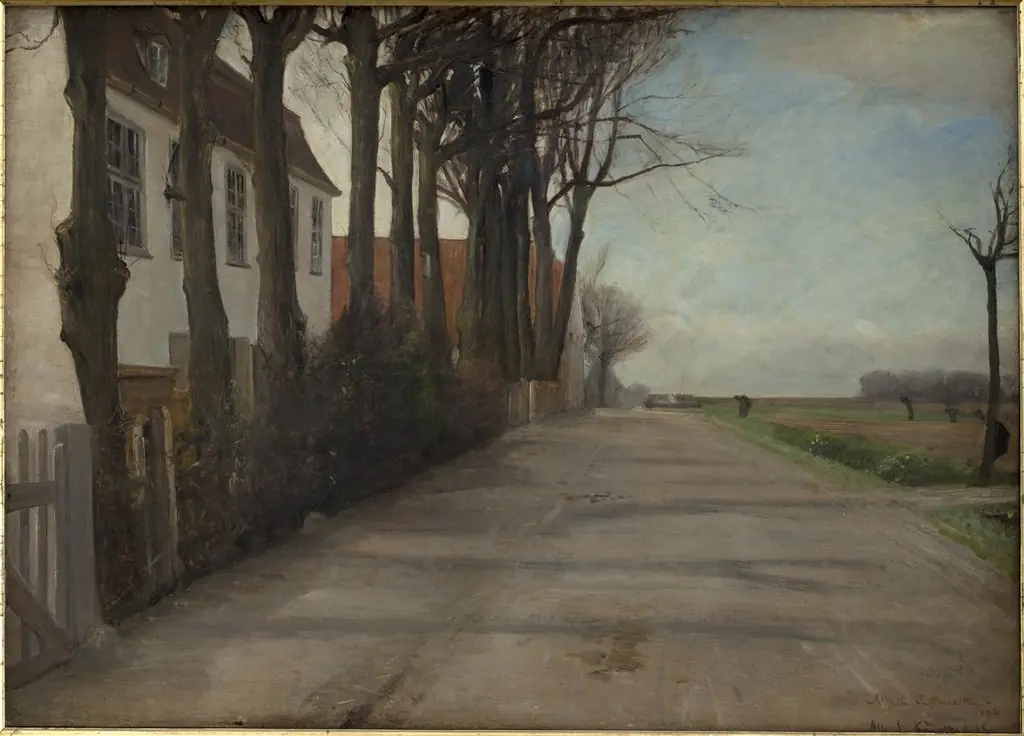 The Road Leading past "Store Godthaab", a Country House near Copenhagen
 Winter Landscape
 Evening after a Thaw. Taabæk, North of Copenhagen