Artwork
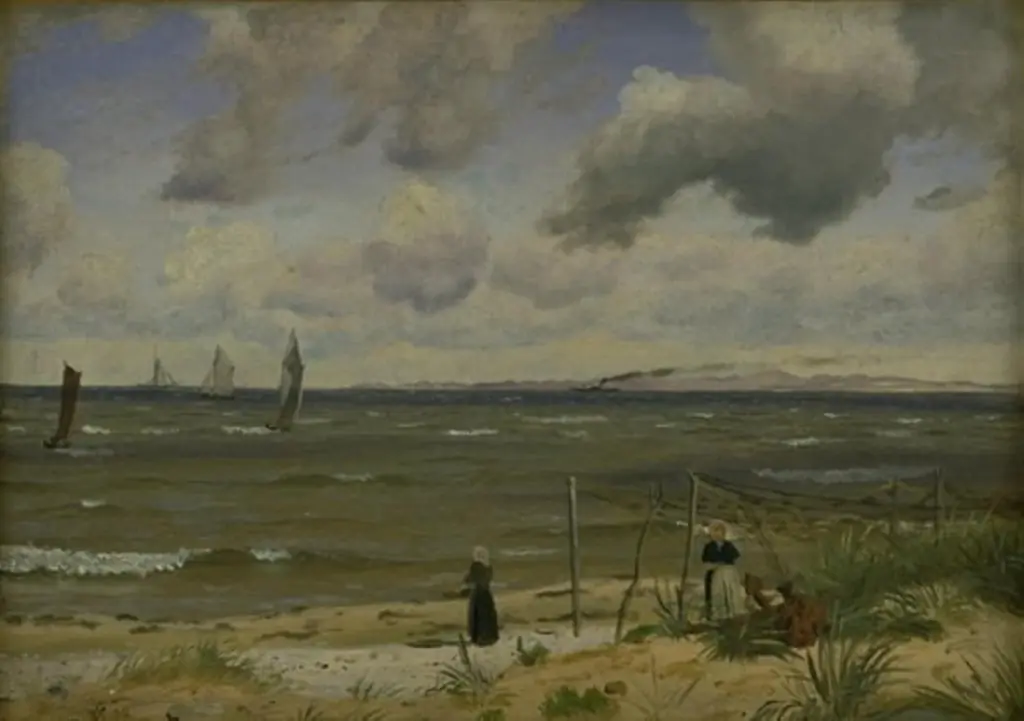
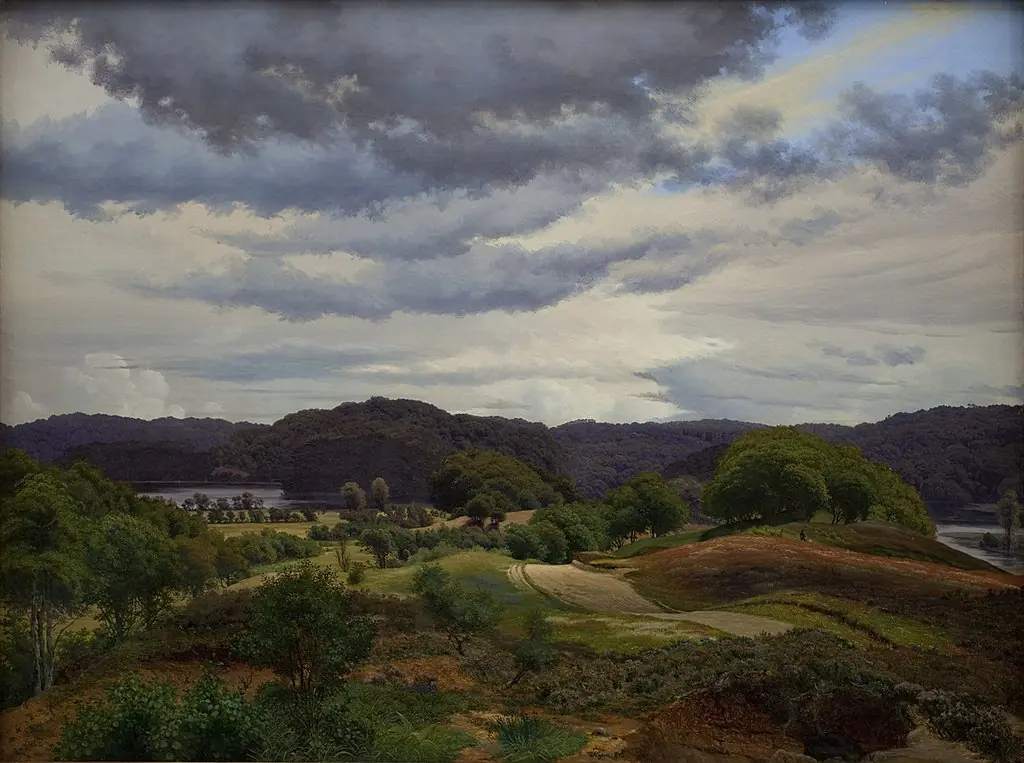
The Fiord at Hadsund, Jutland. Cloudy Weather
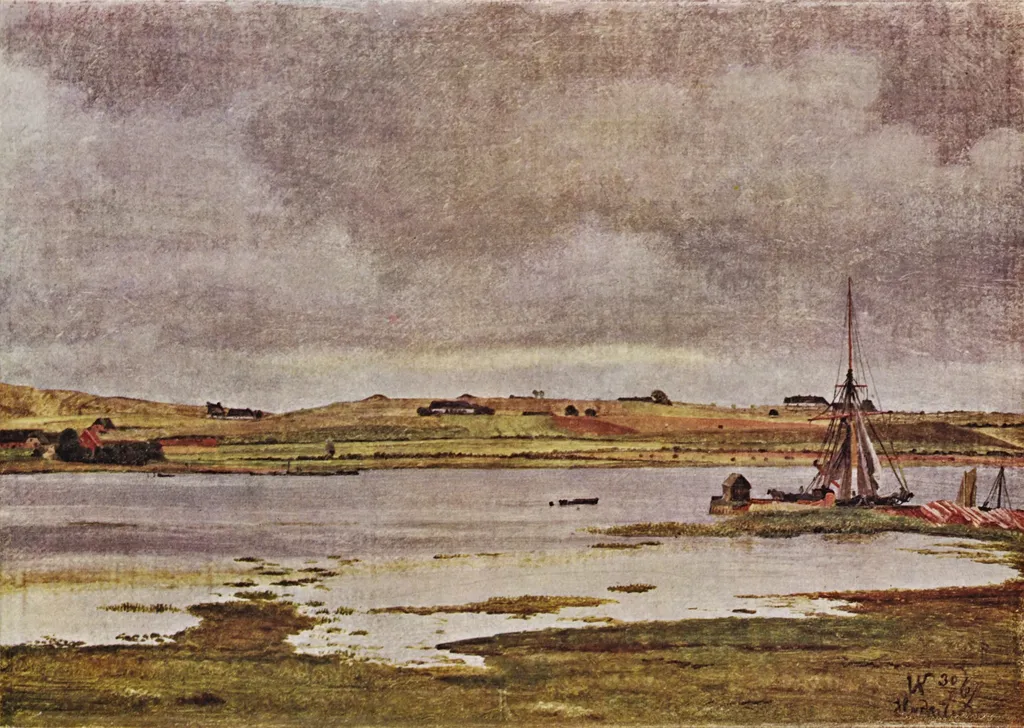
The Fiord at Hadsund, Jutland. Cloudy Weather is an oil painting by Vilhelm Kyhn. It dates from 1867 and is held in the collection of the Statens Museum for Kunst.
About this work
Overview
Vilhelm Kyhn’s 1867 oil on canvas presents a quiet stretch of Denmark’s Mariager Fjord under a cloud‑filled sky. A horse‑drawn wagon and a small sailing vessel occupy the foreground, while gentle hills and scattered buildings recede into the misty distance, establishing a balanced, tranquil composition that captures a moment of everyday life along the water.
Subject & Meaning
The work juxtaposes human activity with the natural landscape, suggesting a harmonious coexistence between rural labor and maritime travel. The overcast atmosphere lends a subdued mood, emphasizing the modest scale of the figures against the expansive fjord and hinting at the steady rhythm of 19th‑century Danish coastal communities.
Technique & Style
Kyhn employs a restrained palette and chiaroscuro to model forms, allowing light and shadow to delineate the wagon, ship, and distant terrain. The handling of oil paint is smooth yet attentive to surface texture, reinforcing the realistic yet idealized tone typical of post‑Golden Age Danish landscape painting.
History & Provenance
Created during a period when Kyhn upheld traditional landscape conventions, the painting reflects his resistance to newer artistic movements. It entered the national collection of Statens Museum for Kunst, where it remains part of the museum’s representation of mid‑19th‑century Danish scenery.
Own this work as a print
Artist & collection
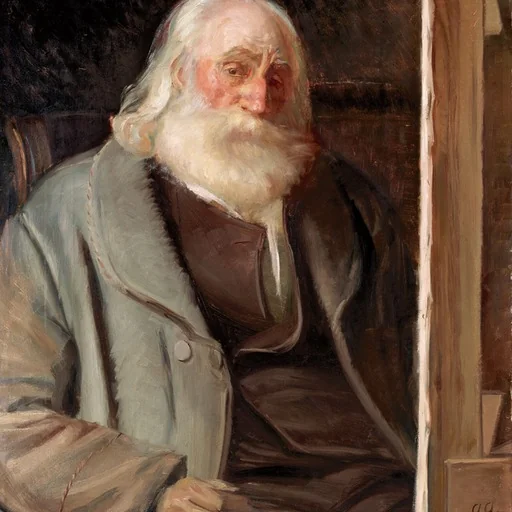
Artist
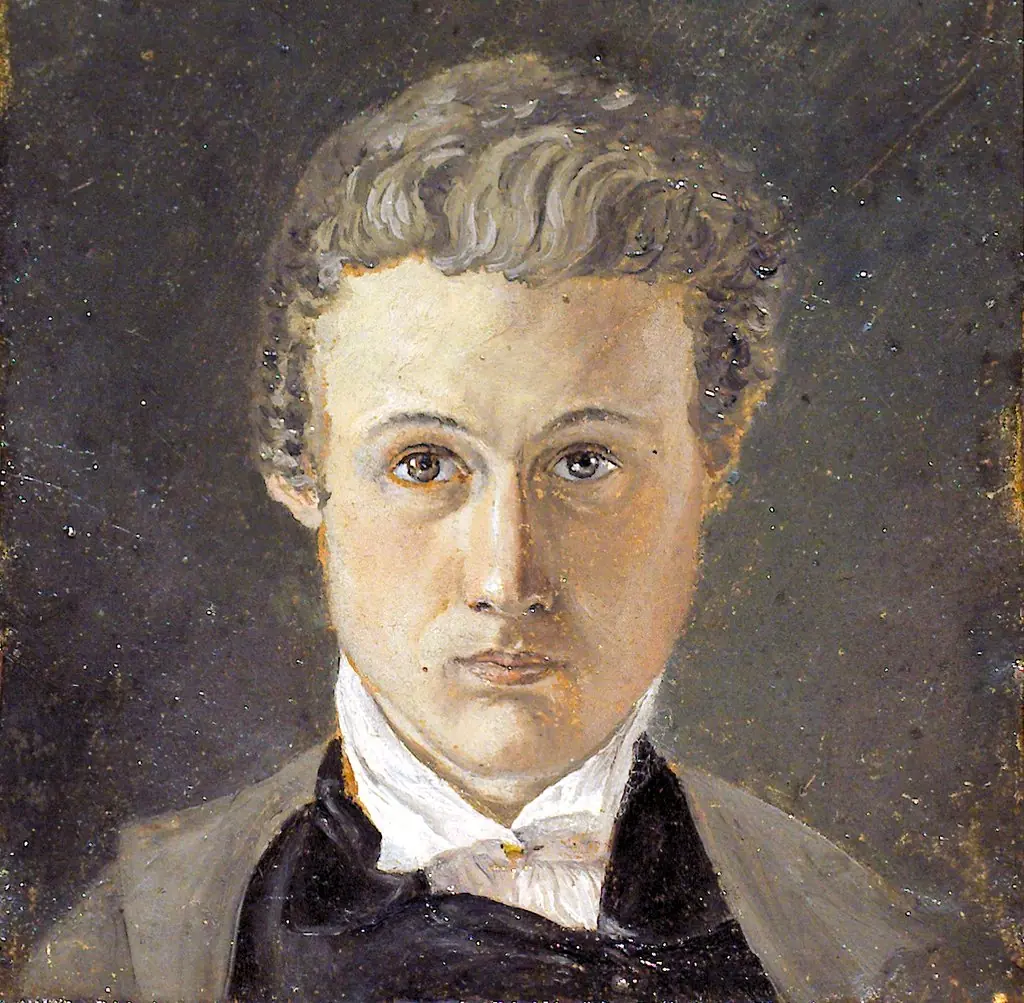
Peter Vilhelm Carl Kyhn (March 30, 1819 – May 11, 1903) was a Danish landscape painter who belonged to the generation of national romantic painters immediately after the Danish Golden Age and before the Modern Breakthrough.