Artwork
Head of a Peasant Woman with Green Shawl
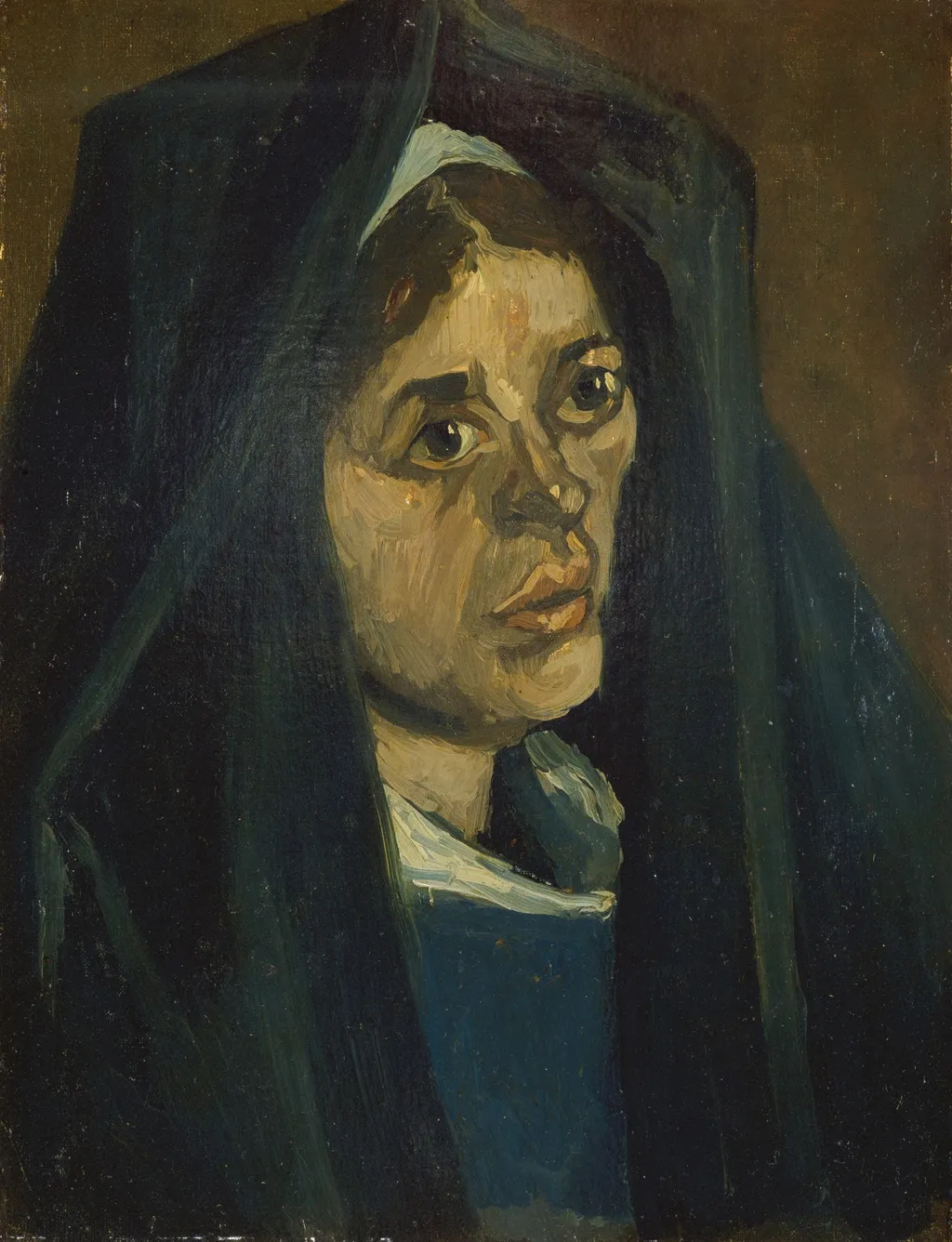
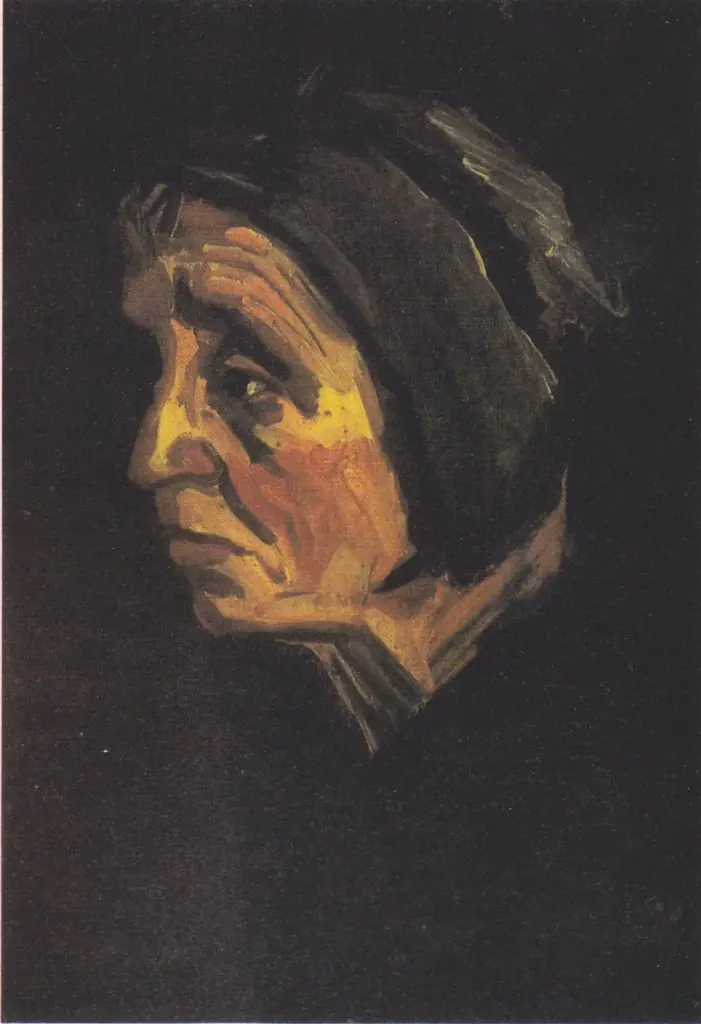
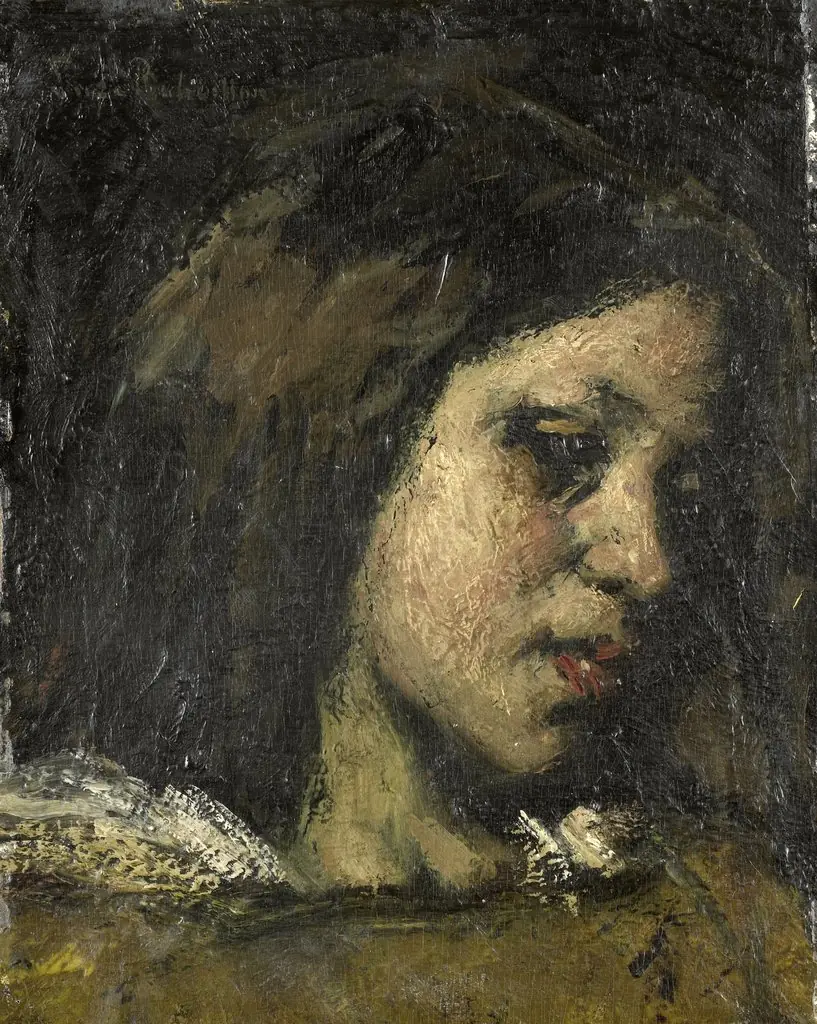
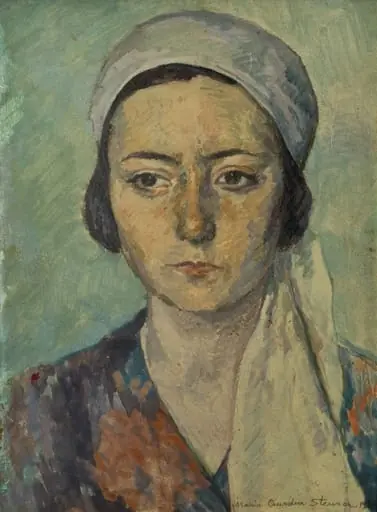
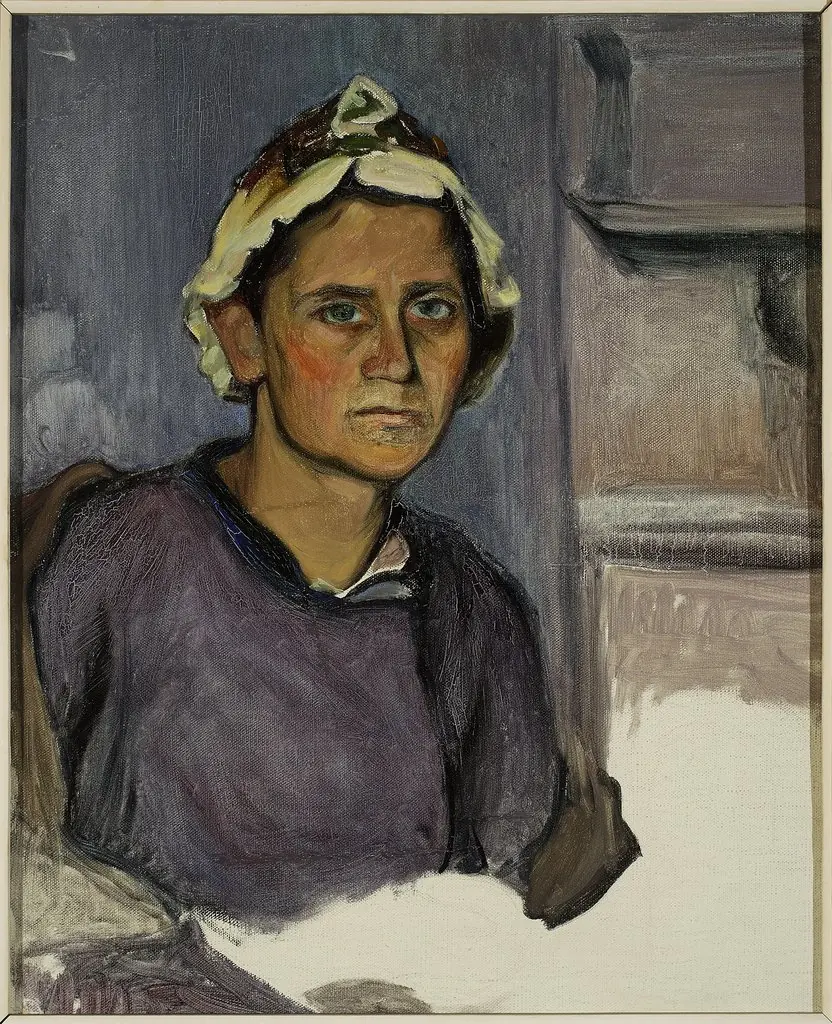
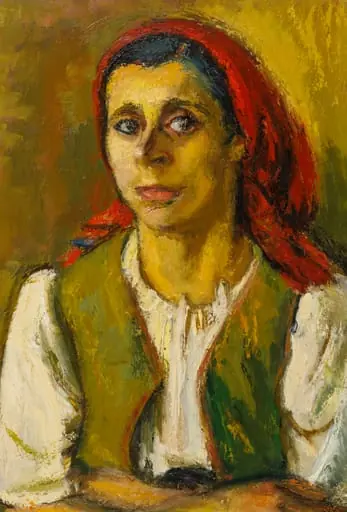
Head of a Peasant Woman with Green Shawl is an oil painting by the Post-Impressionist artist Vincent van Gogh. It dates from 1885 and is held in the collection of the Museum of Fine Arts of Lyon.
About this work
Overview
The composition is tightly framed, focusing on the subject’s solemn presence against a muted brown wall.
Painted in 1885, this oil portrait captures the upper torso and head of a peasant woman, rendered in thick, textured brushwork characteristic of Van Gogh’s early style. The composition is tightly framed, focusing on the subject’s solemn presence against a muted brown wall. The work belongs to the collection of the Museum of Fine Arts in Lyon, where it remains as part of a broader study of rural life in the Netherlands during the 1880s.
Subject & Meaning
The subject is a working-class woman, her identity unrecorded but her dignity emphasized through direct, unidealized portrayal. Her downward gaze and closed mouth suggest introspection or exhaustion, common themes in Van Gogh’s depictions of laborers. The green shawl and blue dress, worn and practical, reflect her social condition. The absence of narrative detail invites quiet contemplation rather than storytelling.
Technique & Style
Van Gogh applied oil paint in dense, tactile layers, using impasto to model the contours of the face and shawl. The brushstrokes are deliberate and directional, building volume without smooth blending. Colors are restrained—ochres, greens, and blues—avoiding decorative effects. The heavy texture of the paint reinforces the physicality of the subject, grounding her in a tangible, unromanticized reality.
History & Provenance
The painting was completed during Van Gogh’s time in Nuenen, Netherlands, where he focused on peasant subjects before moving to Paris. It remained in private hands until acquired by the Museum of Fine Arts in Lyon in the 20th century. Its provenance is well-documented, with no significant gaps, and it has been consistently exhibited as part of early Van Gogh studies.
Context
Created during a period when Van Gogh was deeply influenced by Jean-François Millet and Dutch realism, this work reflects his commitment to portraying rural laborers with empathy. He painted dozens of similar portraits in Nuenen, often using local residents as models. The somber palette and unadorned composition align with his belief in art as a moral act, not mere decoration.
Legacy
Though less known than his later works, this portrait exemplifies Van Gogh’s foundational approach to human subjectivity through paint. Its emphasis on texture and emotional restraint influenced subsequent generations of realist and expressionist painters. The painting remains a quiet testament to his early dedication to capturing the dignity of ordinary lives.
Own this work as a print
Artist & collection
Artist
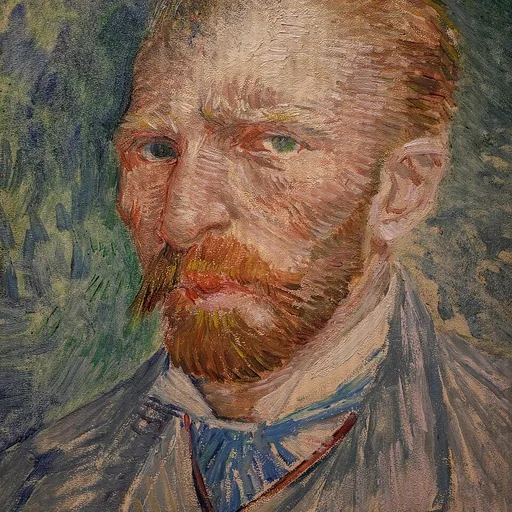
Vincent Willem van Gogh was a Dutch Post-Impressionist painter who is among the most famous and influential figures in the history of Western art.