Artwork
Ravine
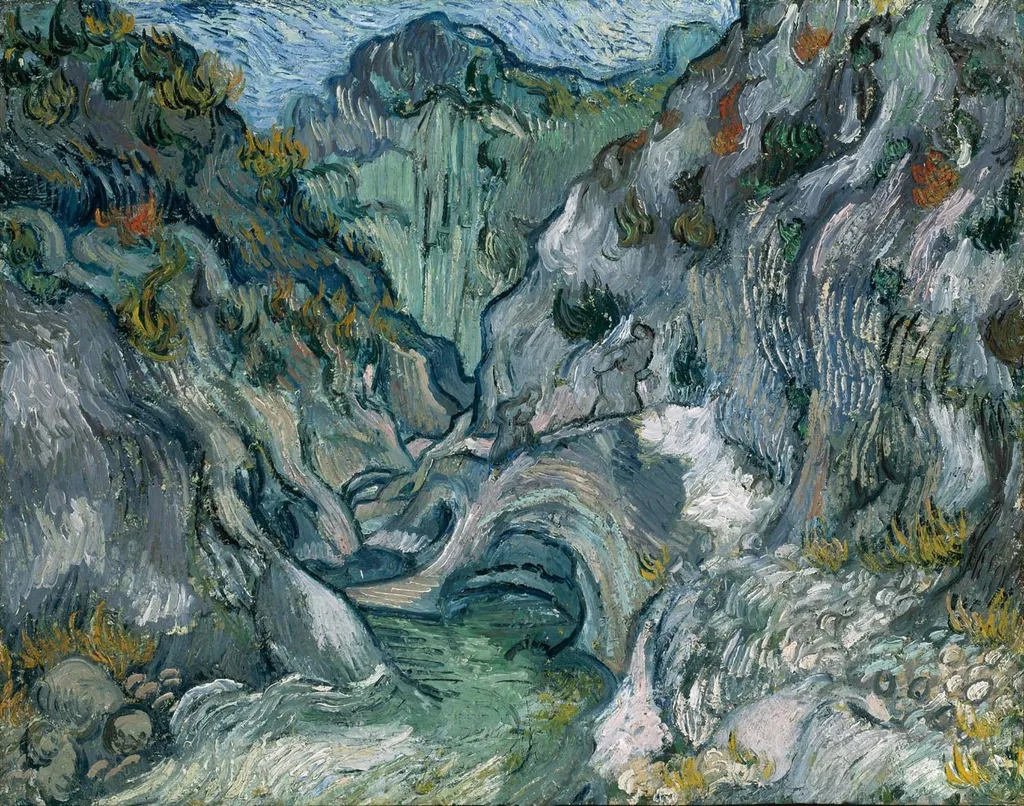
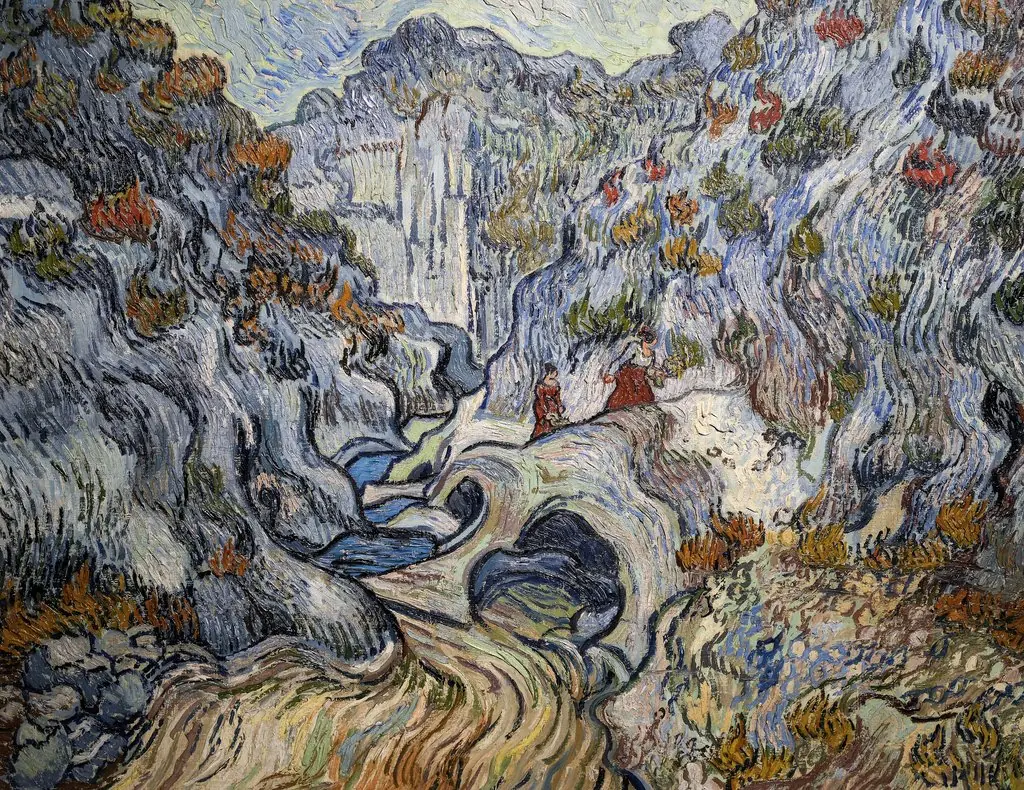
Ravine is an oil painting by the Post-Impressionist artist Vincent van Gogh. It is held in the collection of the Museum of Fine Arts Boston.
About this work
Overview
The Ravine, created in 1889 by Vincent van Gogh, is an oil painting from his prolific final year, produced during his stay at the Saint-Paul Asylum near Saint-Rémy-de-Provence.
Subject & Meaning
Depicting a winding stream through a rocky ravine flanked by tree-covered cliffs, the painting captures a natural, somewhat melancholic landscape. Van Gogh found inspiration in such wild, challenging settings.
Technique & Style
Executed in shades of blue and green with accents of yellow and orange, the work reflects Van Gogh's Post-Impressionist approach. Notably, an earlier painting, Wild Vegetation, was later discovered beneath the visible layer.
History & Provenance
Sent to Paris the following spring, The Ravine was admired by Paul Gauguin, who offered a trade. It is now part of the Boston Museum of Fine Arts' permanent collection, recently displayed in Gallery 244.
Context
Part of a series from Van Gogh's intense creative period at Saint-Paul Asylum, The Ravine showcases his ability to find beauty in rugged, natural landscapes despite his personal challenges.
Legacy
While specific legacy details are not highlighted, its presence in a major museum collection and exchange of praise with a contemporary artist underscore its recognized value within Van Gogh's oeuvre.
Own this work as a print
Artist & collection
Artist
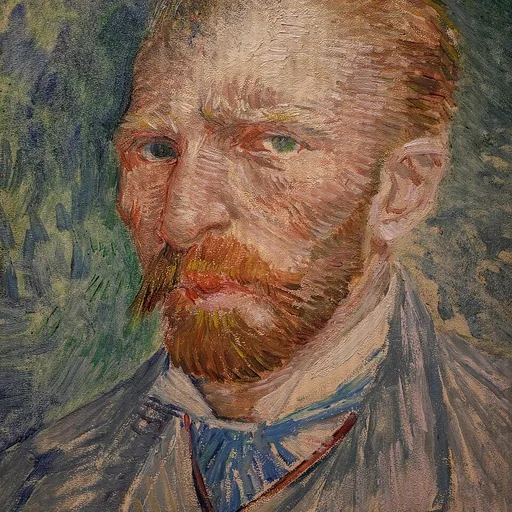
Vincent Willem van Gogh was a Dutch Post-Impressionist painter who is among the most famous and influential figures in the history of Western art.

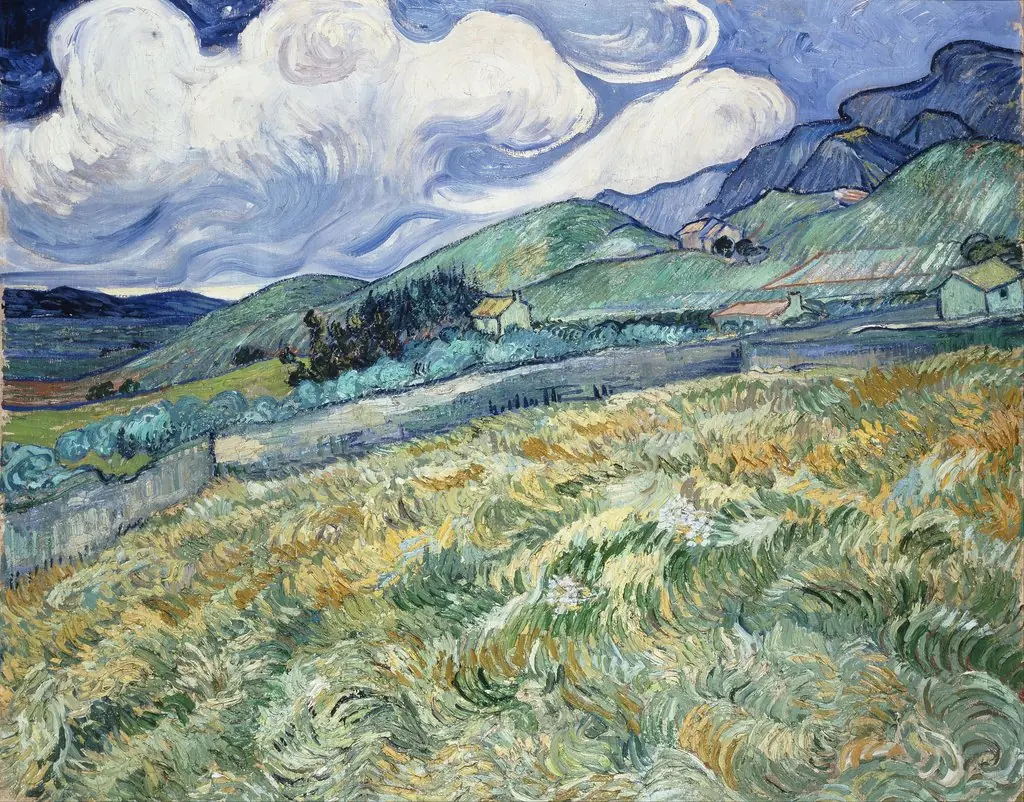 Mountainous Landscape Behind Saint-Paul Hospital
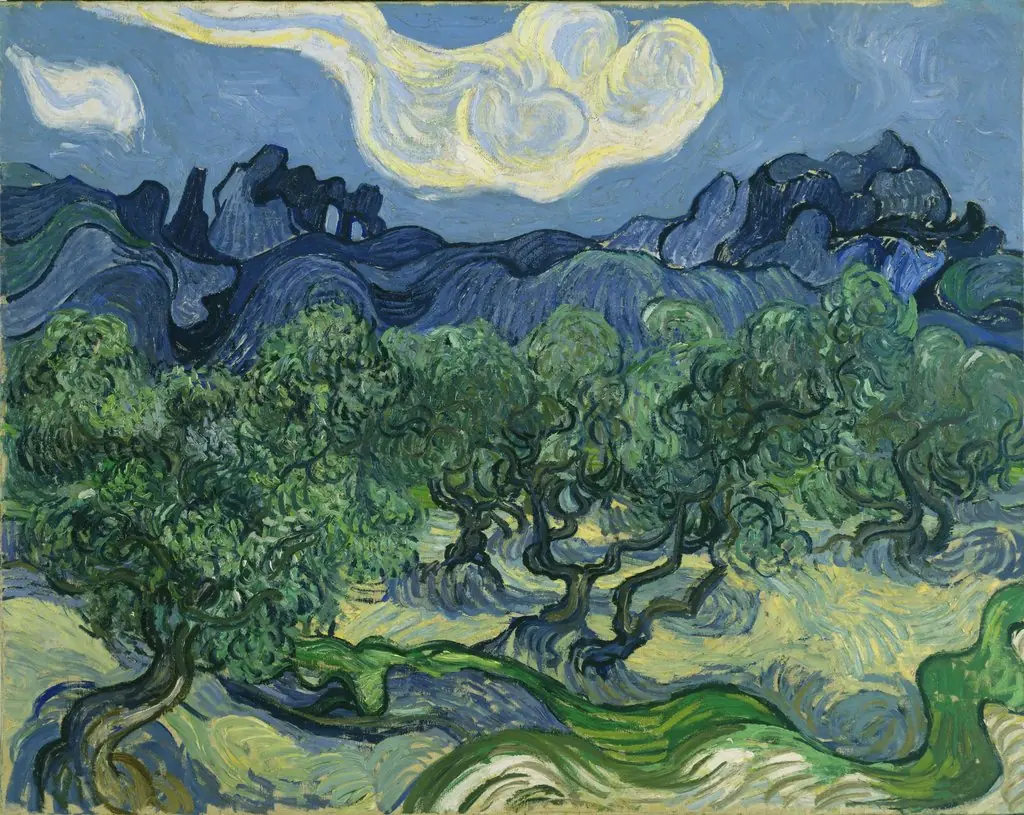 The Olive Trees
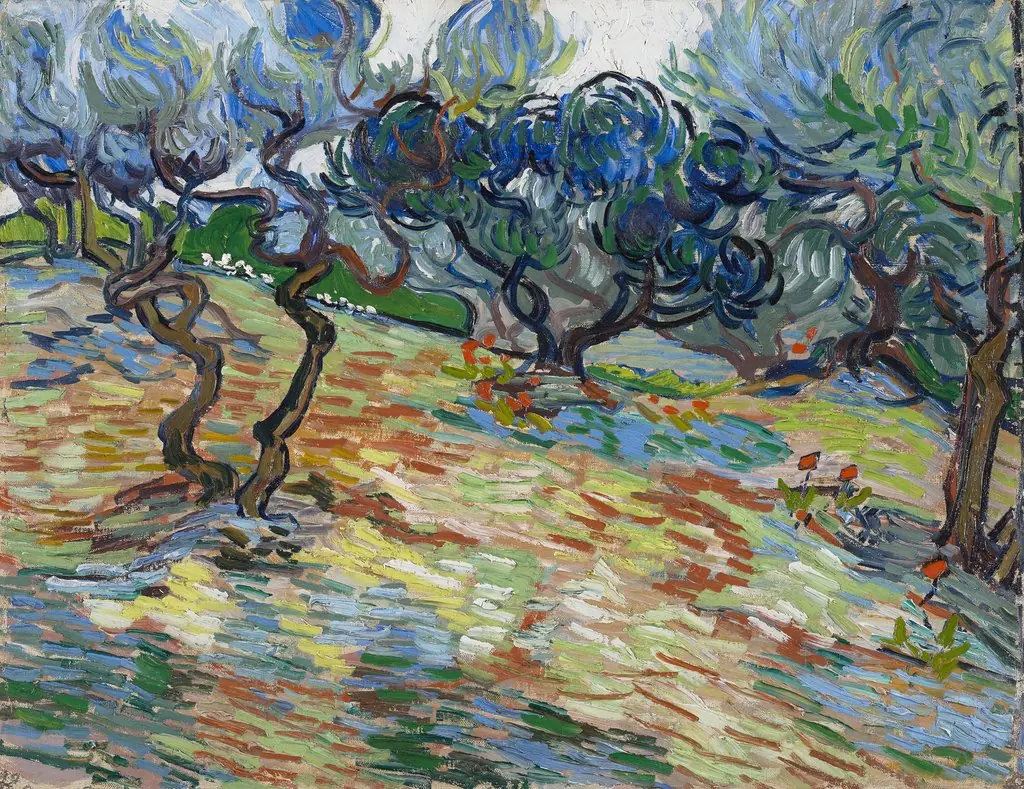 Olive trees
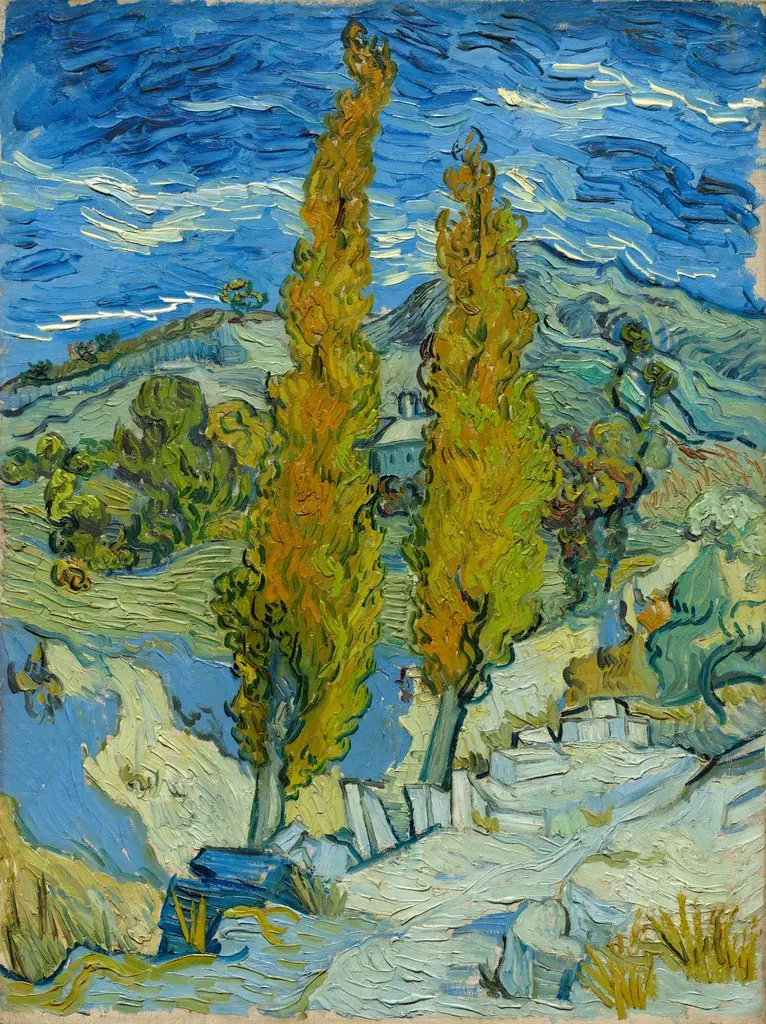 Two Poplars in the Alpilles near Saint-Rémy
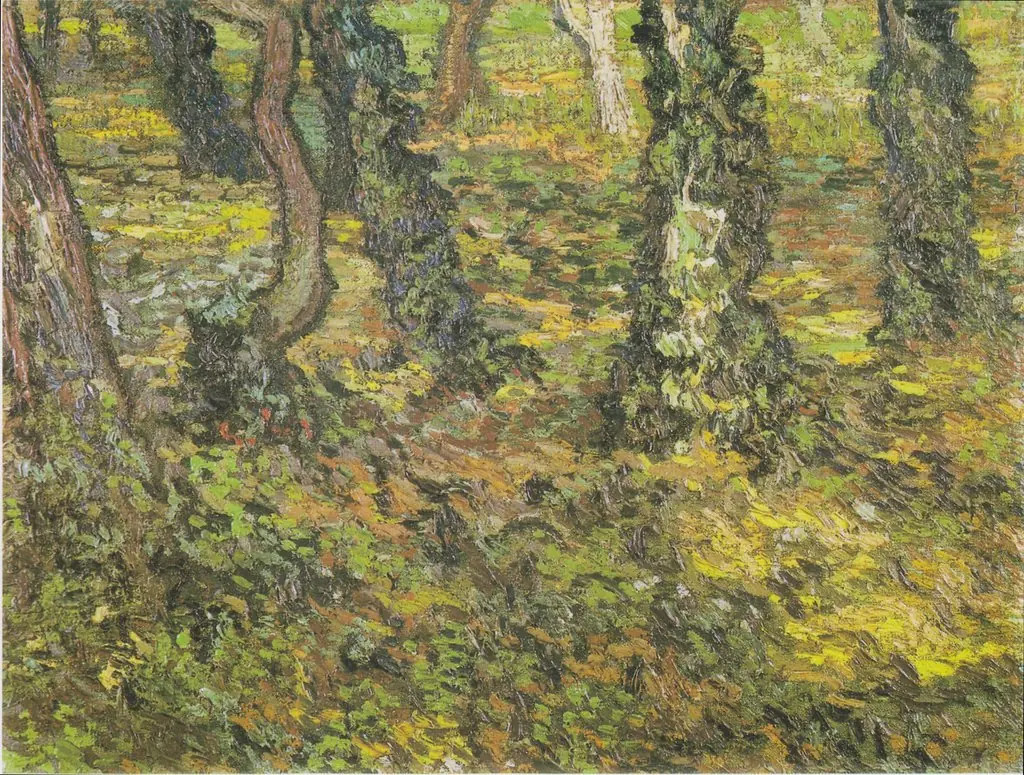 Tree Trunks with Ivy
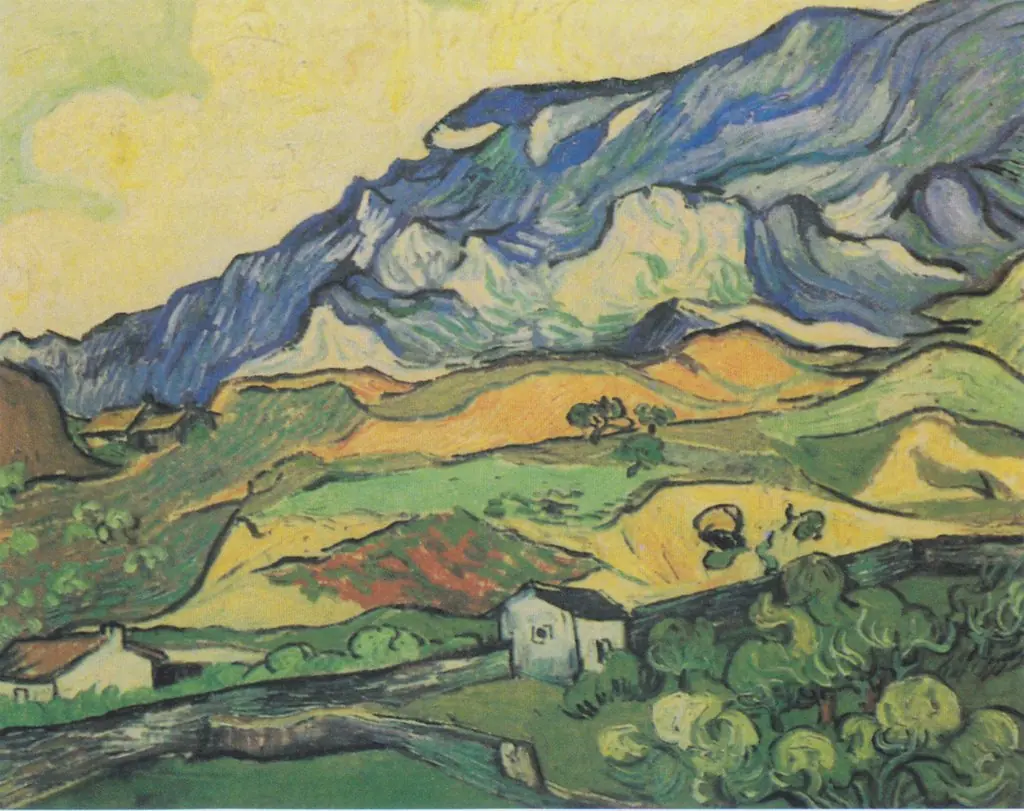 "Les Alpilles", mountain-landscape at Saint-Rémy
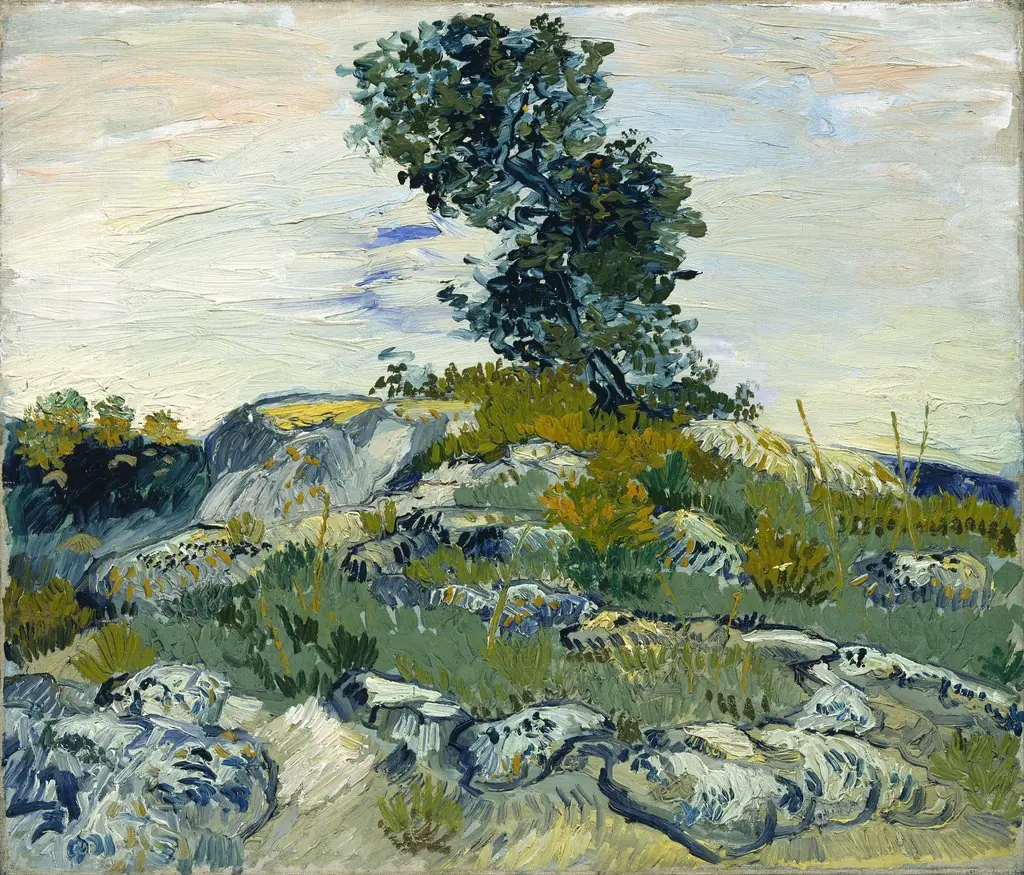 Rocks
Rocks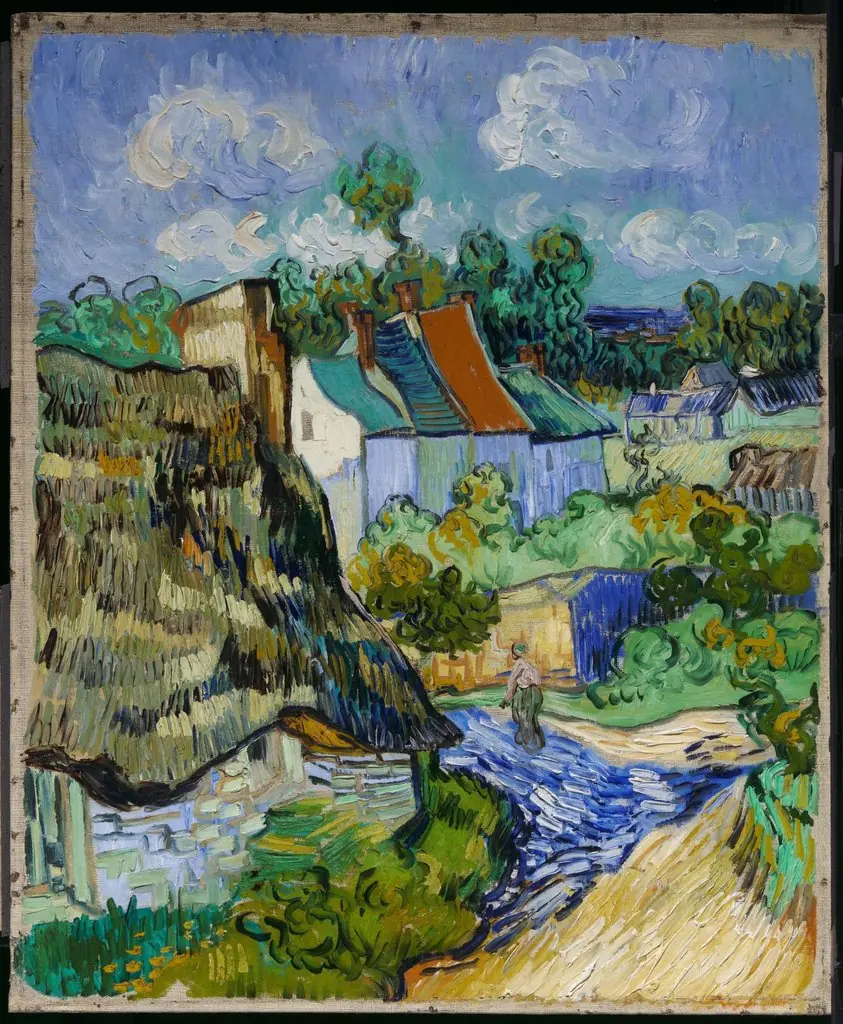 Houses in Auvers
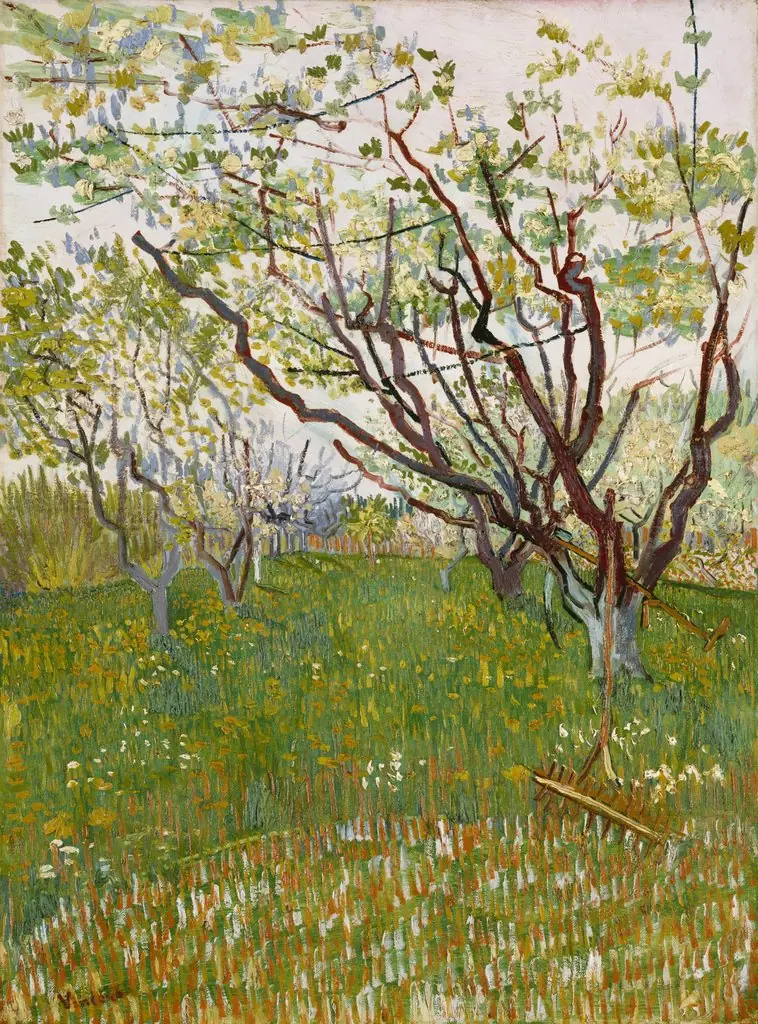 The Flowering Orchard
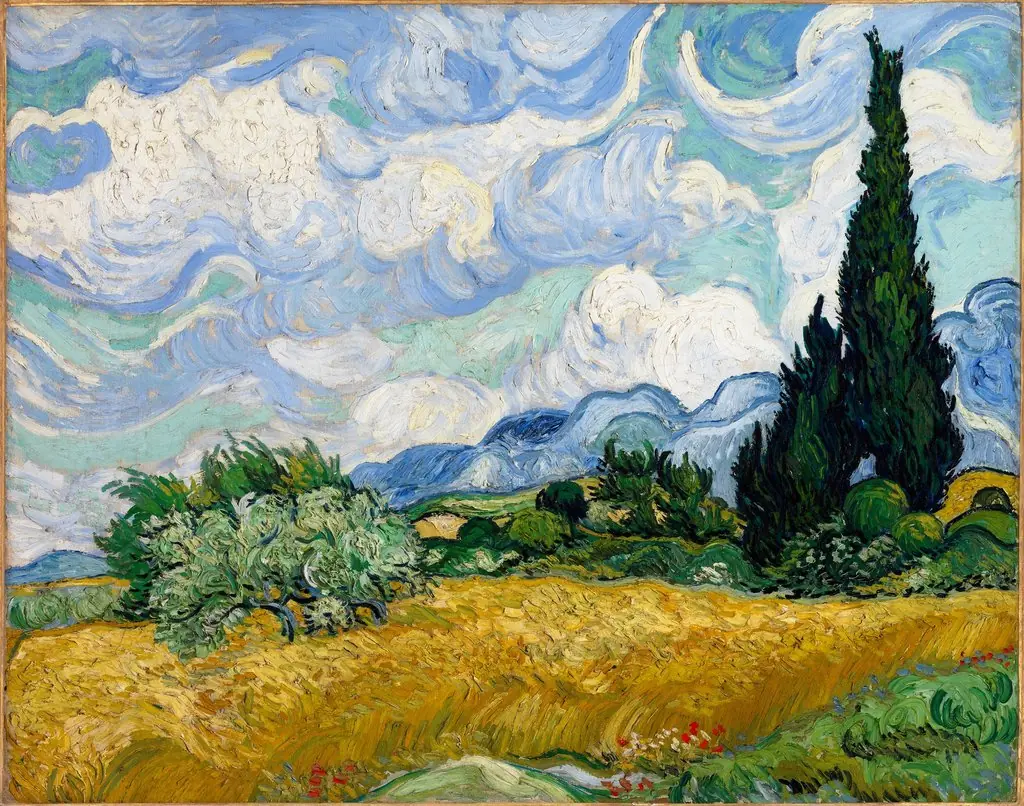 Wheat Field with Cypresses
 Enclosed Wheat Field with Rising Sun
 Les Peiroulets Ravine