Artwork
Balconul
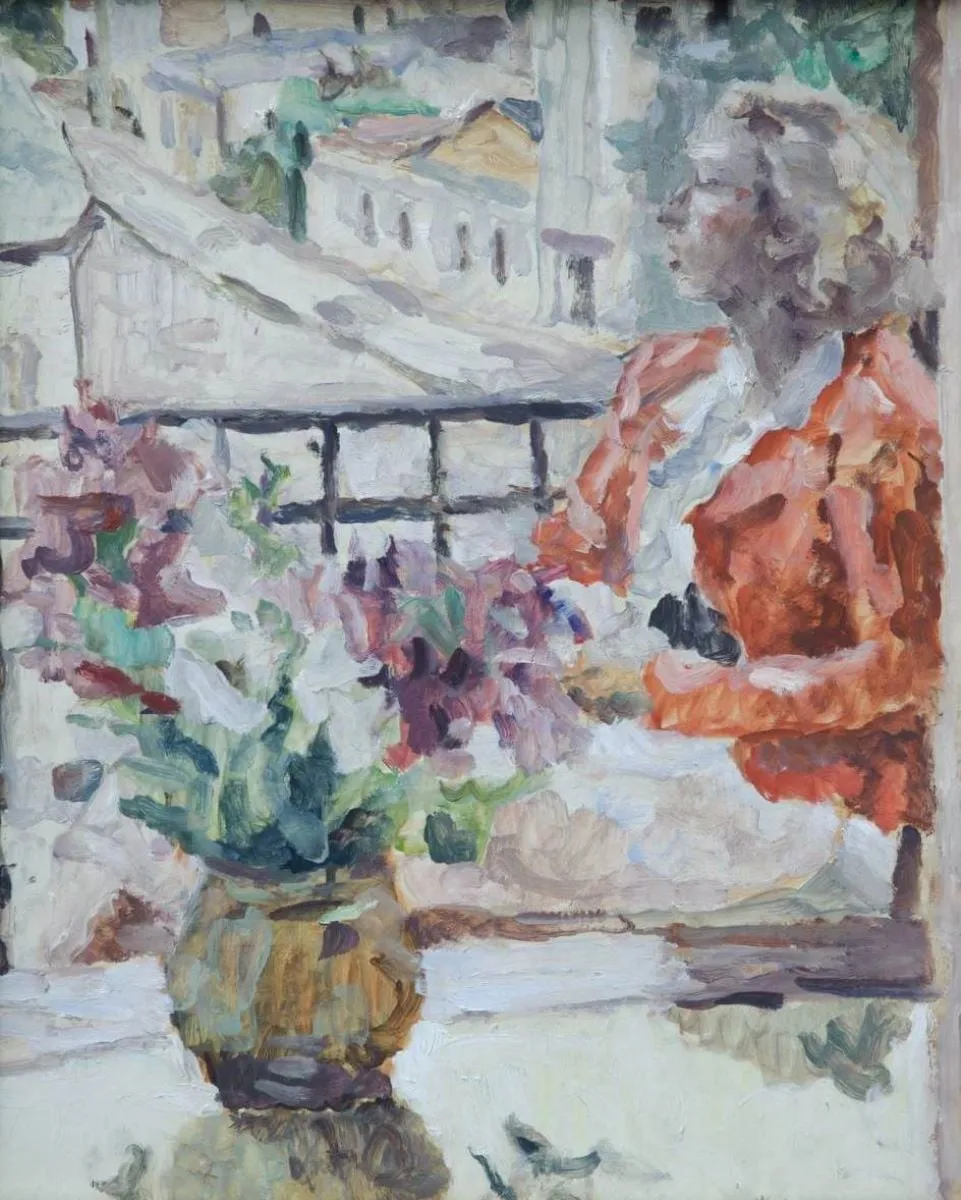
Balconul is an unspecified painting by Anatol Vulpe. It dates from 1936 and is held in the collection of the National Museum of Art of Romania.
About this work
Overview
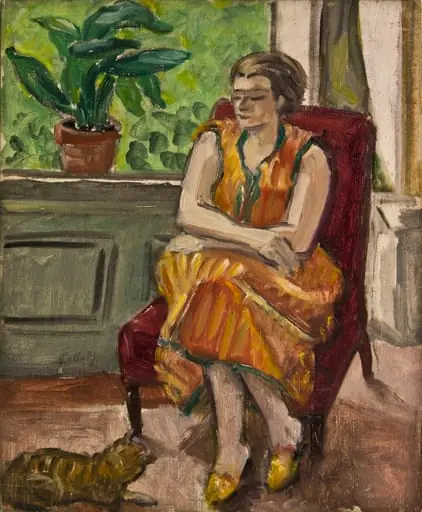
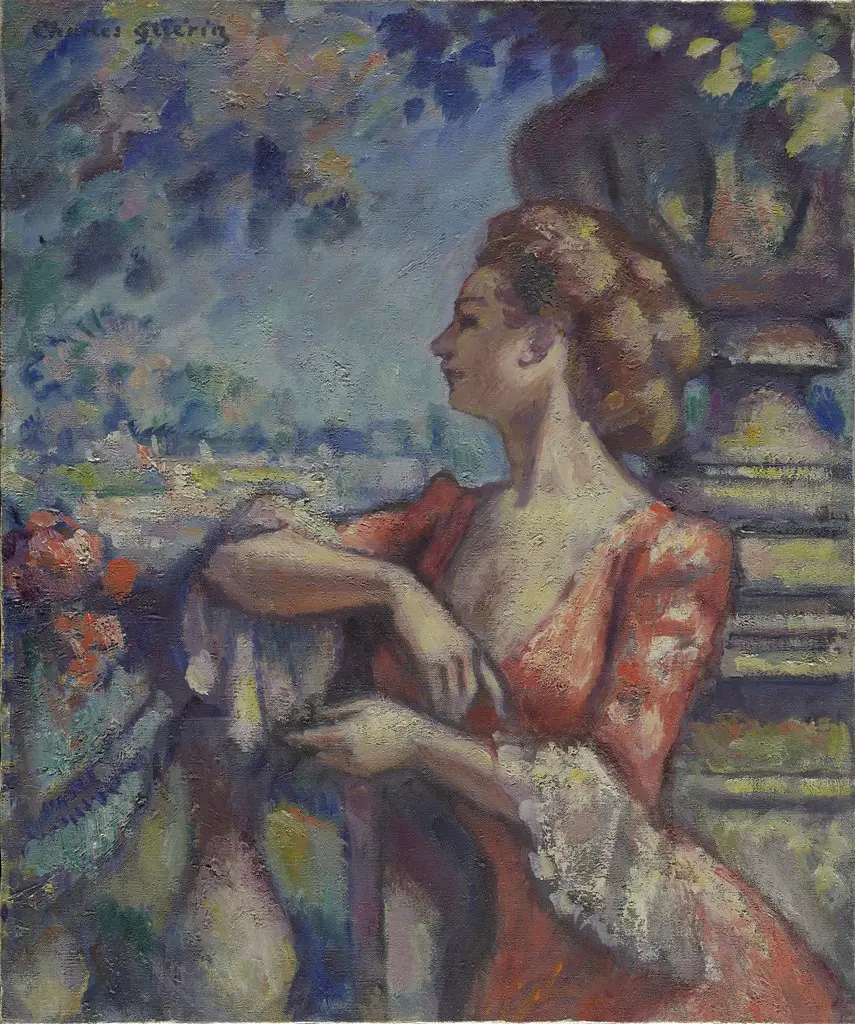
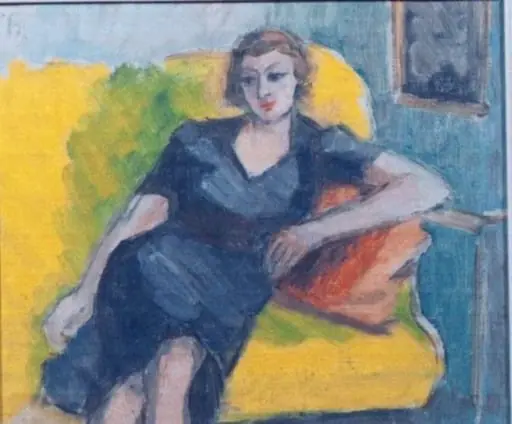
The composition centers on a woman in an orange dress, her gaze directed outward, away from the viewer.
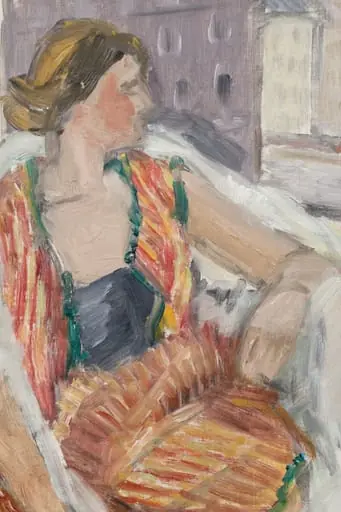
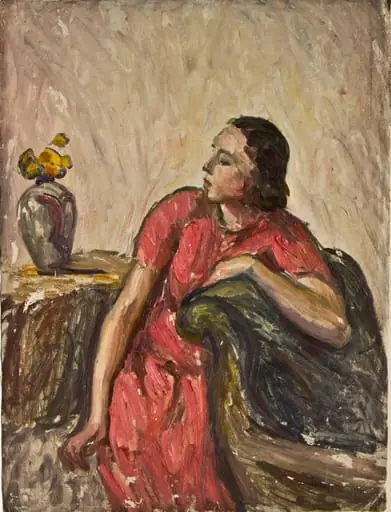
Anatol Vulpe’s *Balconul* (1936) depicts a solitary figure seated on a balcony. The composition centers on a woman in an orange dress, her gaze directed outward, away from the viewer. A vase of flowers rests nearby, adding a secondary focal point. The background dissolves into soft, indistinct architectural forms, creating a contrast between the sharp clarity of the foreground and the blurred environment beyond.
Subject & Meaning
The painting captures a moment of quiet introspection or distraction. The woman’s averted gaze and relaxed posture suggest contemplation or absorption in an unseen scene. The balcony setting—often a liminal space between private and public realms—may imply themes of observation, solitude, or transient experience. The vibrant dress and flowers introduce a counterpoint to the muted surroundings, hinting at emotional or symbolic weight beneath the surface.
Technique & Style
Vulpe employs a restrained yet expressive palette, with the woman’s orange dress dominating the composition through its saturated hue. Brushwork varies: precise in the figure and vase, looser and more diffuse in the background, where architectural details dissolve into abstraction. This selective focus directs attention to the foreground while creating spatial depth. The handling of light and shadow reinforces the interplay between clarity and ambiguity.
History & Provenance
Completed in 1936, *Balconul* reflects Vulpe’s engagement with interwar European painting, though its specific exhibition history remains undocumented. The work has likely passed through private collections, as is common for pieces of this period. Its current ownership and display context are not widely recorded, leaving gaps in its provenance. Further research may clarify its reception and circulation in the decades following its creation.
Context
The painting emerges from a period marked by experimentation in European art, where representational and abstract tendencies coexisted. Vulpe’s approach aligns with broader trends that emphasized mood and atmosphere over narrative clarity. The balcony motif recurs in modernist works, often evoking themes of modernity, urban life, or psychological distance. *Balconul* participates in this dialogue, though its precise influences and contemporaries require deeper study.
Artist & collection
Artist
Romanian painter Anatol Vulpe’s work Balconul from 1936 shows quiet, orderly scenes that feel like frozen moments in everyday life.