Artwork
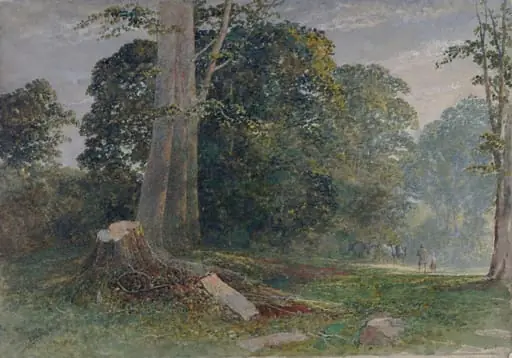
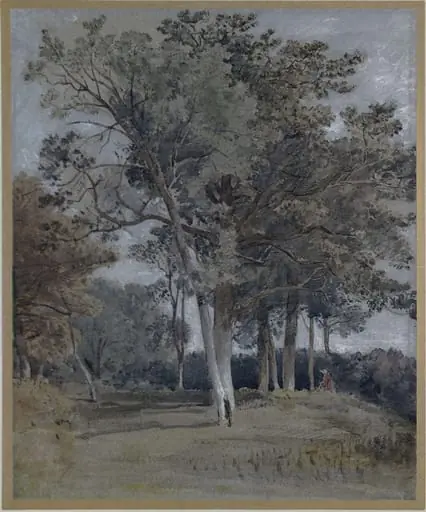
A wood with a group of figures
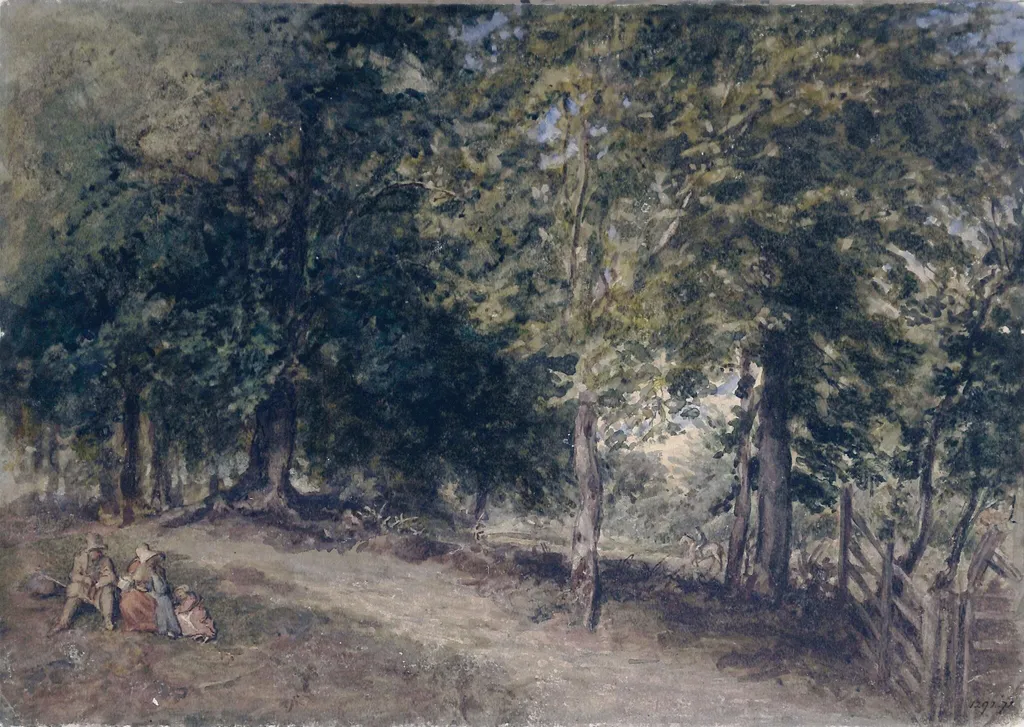
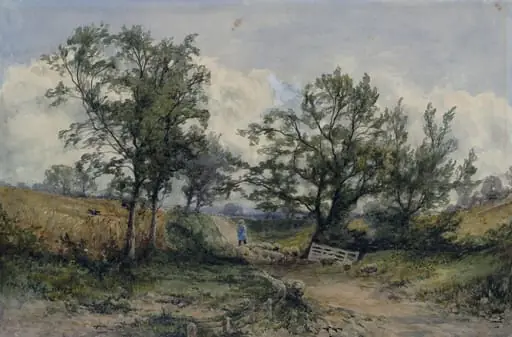
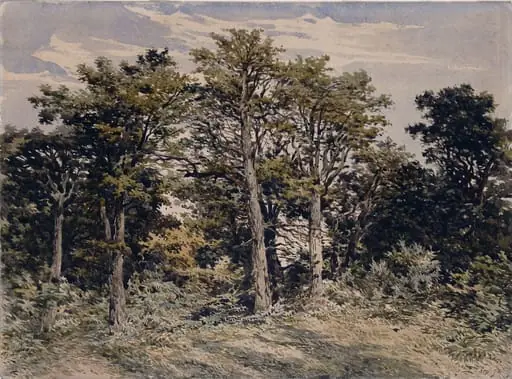
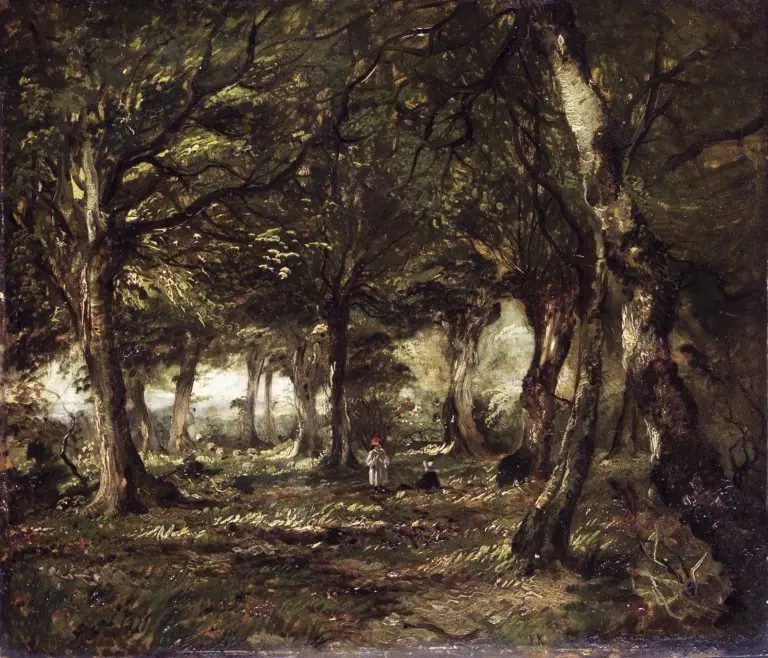
A wood with a group of figures is a watercolor work on paper by the Romanticist artist Thomas Charles Wageman. It dates from 1815 and is held in the collection of the Victoria and Albert Museum.
About this work
Overview
The composition centers on a winding dirt path cutting through dense trees, with light breaking through the canopy in scattered patches.
Thomas Charles Wageman’s watercolour depicts a quiet woodland scene, rendered in soft, translucent layers. The composition centers on a winding dirt path cutting through dense trees, with light breaking through the canopy in scattered patches. The overall tone is subdued and contemplative, emphasizing atmosphere over narrative detail. The medium’s fluidity allows for gentle transitions between hues, reinforcing the scene’s tranquil mood.
Subject & Meaning
Three small figures are grouped near a fallen log in the foreground, their postures suggesting rest, inquiry, and stillness. Their scale relative to the towering trees implies human insignificance within nature’s vastness. No clear action or story is presented; instead, the scene invites quiet reflection. The figures blend into the landscape, reinforcing a sense of harmony rather than disruption.
Technique & Style
Wageman employed loose, fluid brushwork typical of watercolour, allowing pigments to bleed and blend naturally on the paper. The greens and browns are layered thinly, creating depth without heavy definition. Highlights on moss and bark emerge through reserved paper rather than opaque paint, enhancing the sense of dappled light. The sketchy handling evokes immediacy, as if the scene were observed in passing.
History & Provenance
The work is attributed to Thomas Charles Wageman, a 19th-century British artist known for landscape watercolours. While specific acquisition details are not widely documented, the piece aligns with the period’s interest in intimate natural scenes. It likely originated from private commissions or exhibitions common among amateur and professional watercolourists of the era.
Context
Created during the height of Romanticism, the painting reflects a cultural shift toward valuing nature as a source of emotional and spiritual resonance. Unlike grand landscapes, this work focuses on quiet, unremarkable moments—small figures, filtered light, and unassuming terrain. Such subjects were favored by artists seeking to capture the subtle, transient qualities of the natural world.
Legacy
Wageman’s watercolour exemplifies a quiet strand of British landscape art that prioritized atmosphere over drama. While not widely exhibited today, it contributes to the broader understanding of 19th-century watercolour practice, where technical restraint and natural observation were prized. Its influence endures in the continued appreciation for intimate, light-sensitive landscape studies.
Own this work as a print
Artist & collection
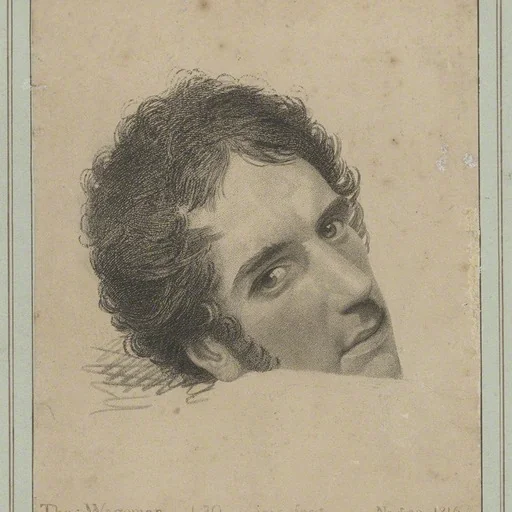
Artist
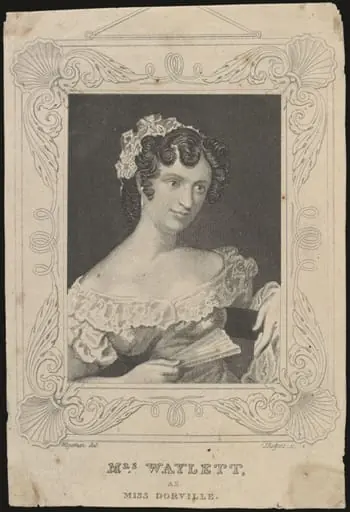
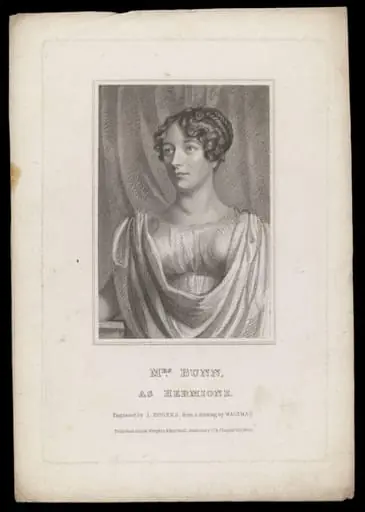
Thomas Charles Wageman (1787 – 20 June 1863) was a British painter, engraver and writer.