Artwork
Album of Landscapes: Leaf 7
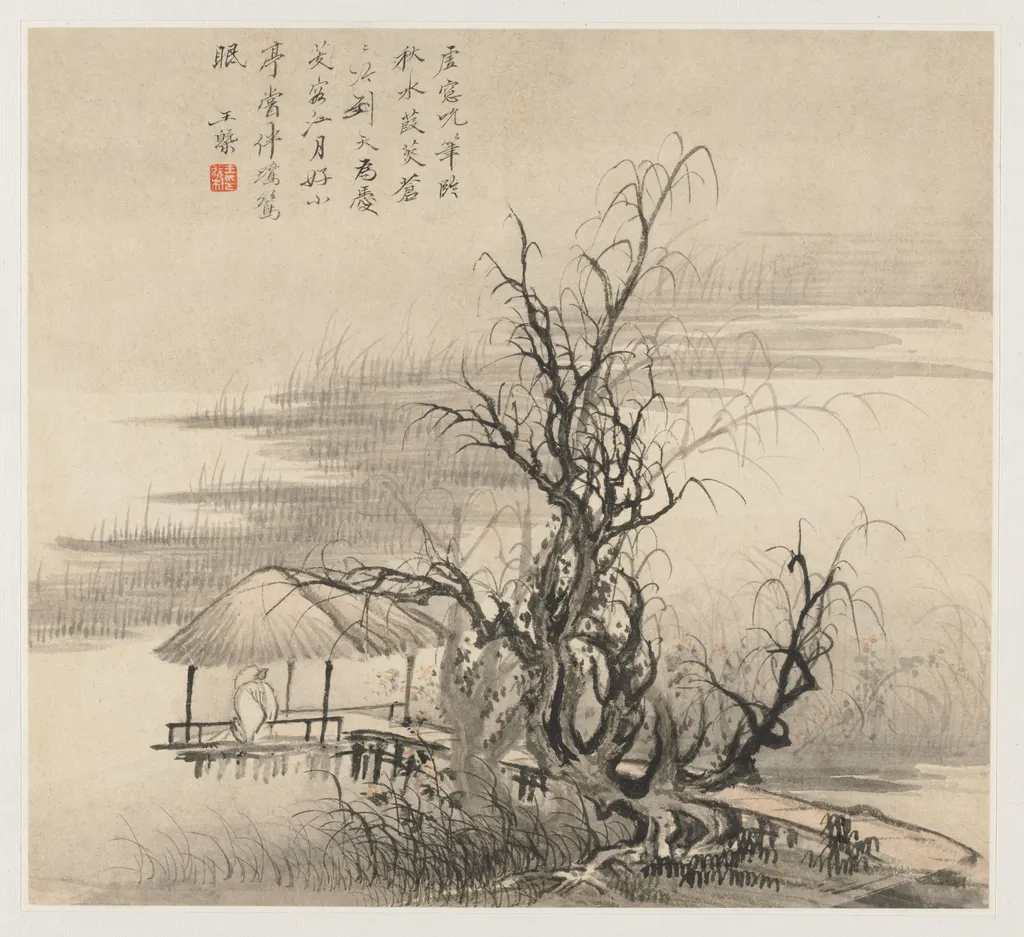
Album of Landscapes: Leaf 7 is an unspecified painting by the Qing dynasty painting artist Wang Gai. It dates from 1689 and is held in the collection of the Cleveland Museum of Art.
About this work
Overview
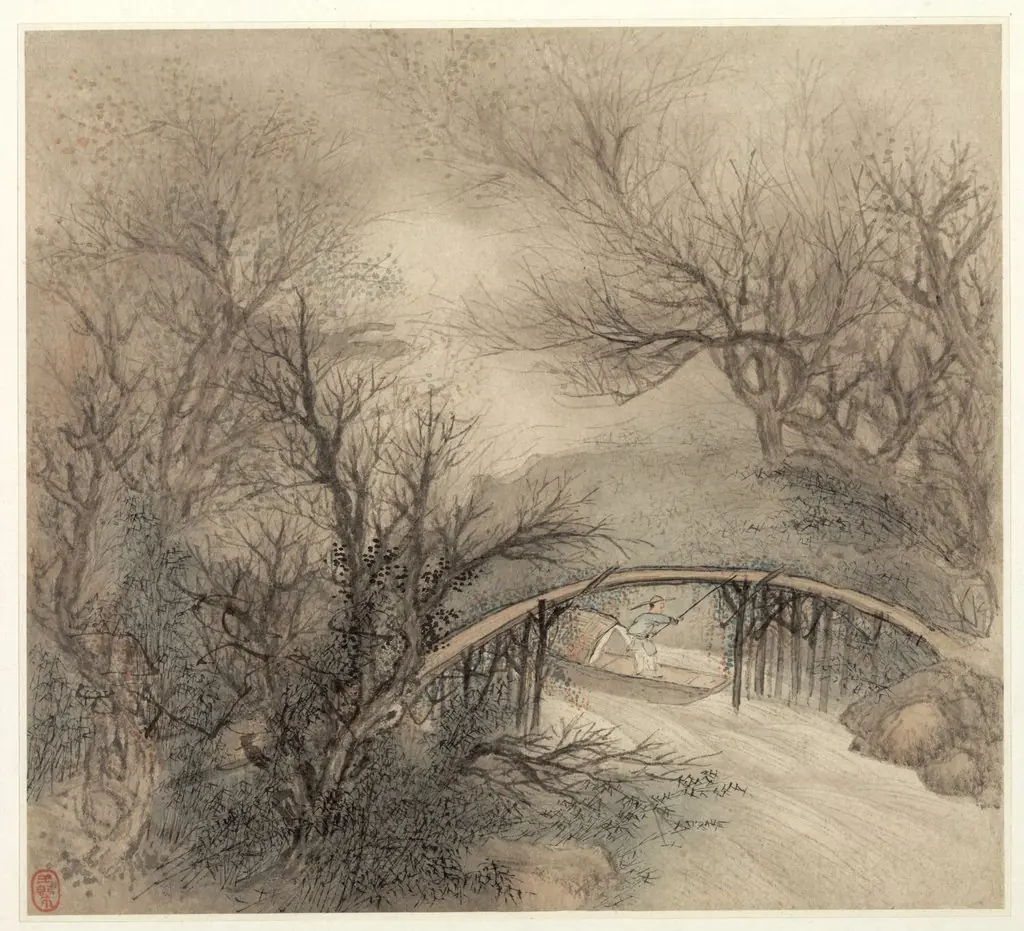
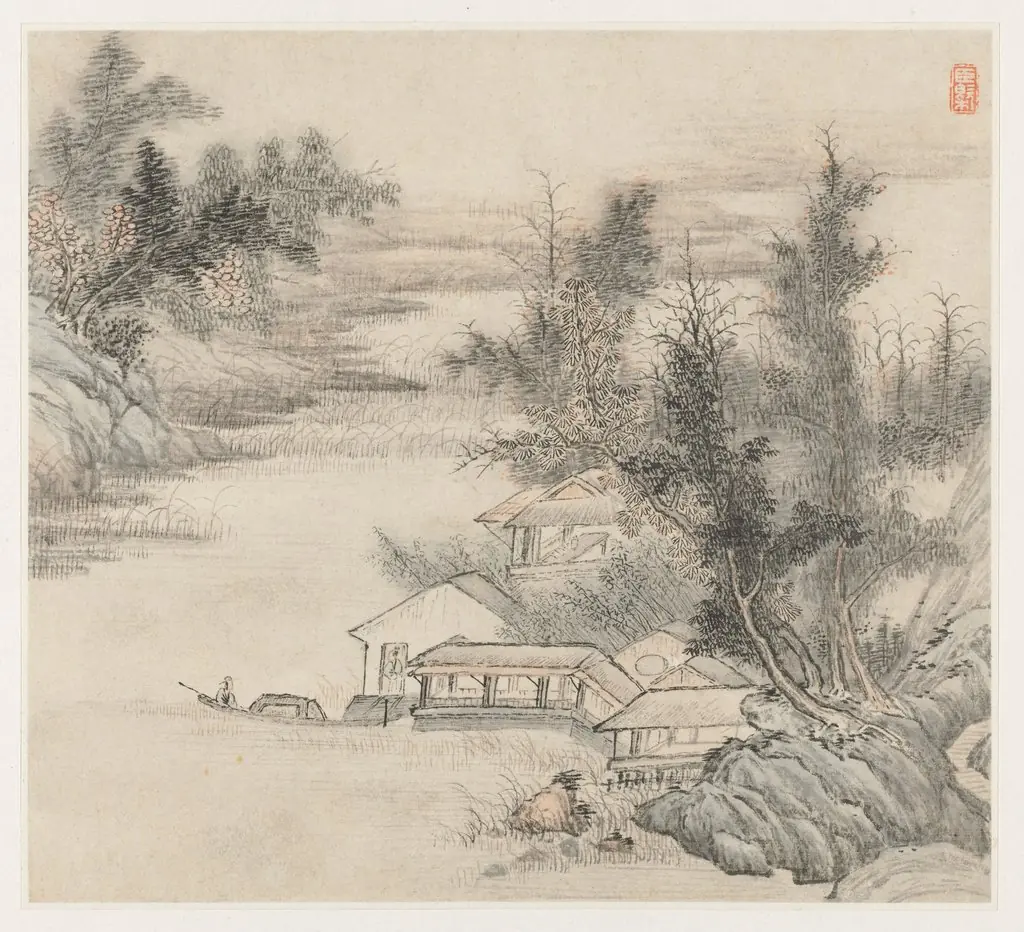
Album of Landscapes: Leaf 7, painted by Wang Gai in 1689, is a modestly sized landscape on paper now in the collection of the Cleveland Museum of Art. The work presents a solitary, contorted tree set before a tranquil waterway crossed by a simple wooden bridge, with distant hills and a faint suggestion of village life receding into muted tones.
Subject & Meaning
The composition centers on the lone tree, its bare, twisting limbs reaching outward, evoking a sense of resilience amid an otherwise quiet environment. The bridge and the barely hinted village beyond suggest human presence, yet the overall atmosphere remains one of stillness, inviting contemplation of nature’s endurance and the subtle interplay between the natural and the cultivated.
Technique & Style
Wang Gai employs rapid, sketch‑like brushwork to convey the movement of the branches and the gentle ripple of water. A restrained palette of grays and browns dominates, with only a faint touch of color near the bridge, heightening the contrast between the tree’s stark form and the subdued background. The economy of line creates a sense of immediacy while preserving a calm, almost empty space.
History & Provenance
Created during the late seventeenth century, the painting entered the Cleveland Museum of Art’s holdings as part of its Asian art acquisitions, though the precise path of ownership before its museum accession remains undocumented in publicly available records. Its inclusion reflects the institution’s broader effort to represent Qing‑era Chinese landscape traditions.
Context
Wang Gai worked within the literati tradition that valued personal expression over meticulous realism. The emphasis on a solitary tree and a sparse setting aligns with contemporary Chinese aesthetic ideals that prized simplicity, atmospheric suggestion, and the conveyance of the artist’s inner state through minimal means.
Artist & collection