Artwork
A Prunus in the Moonlight
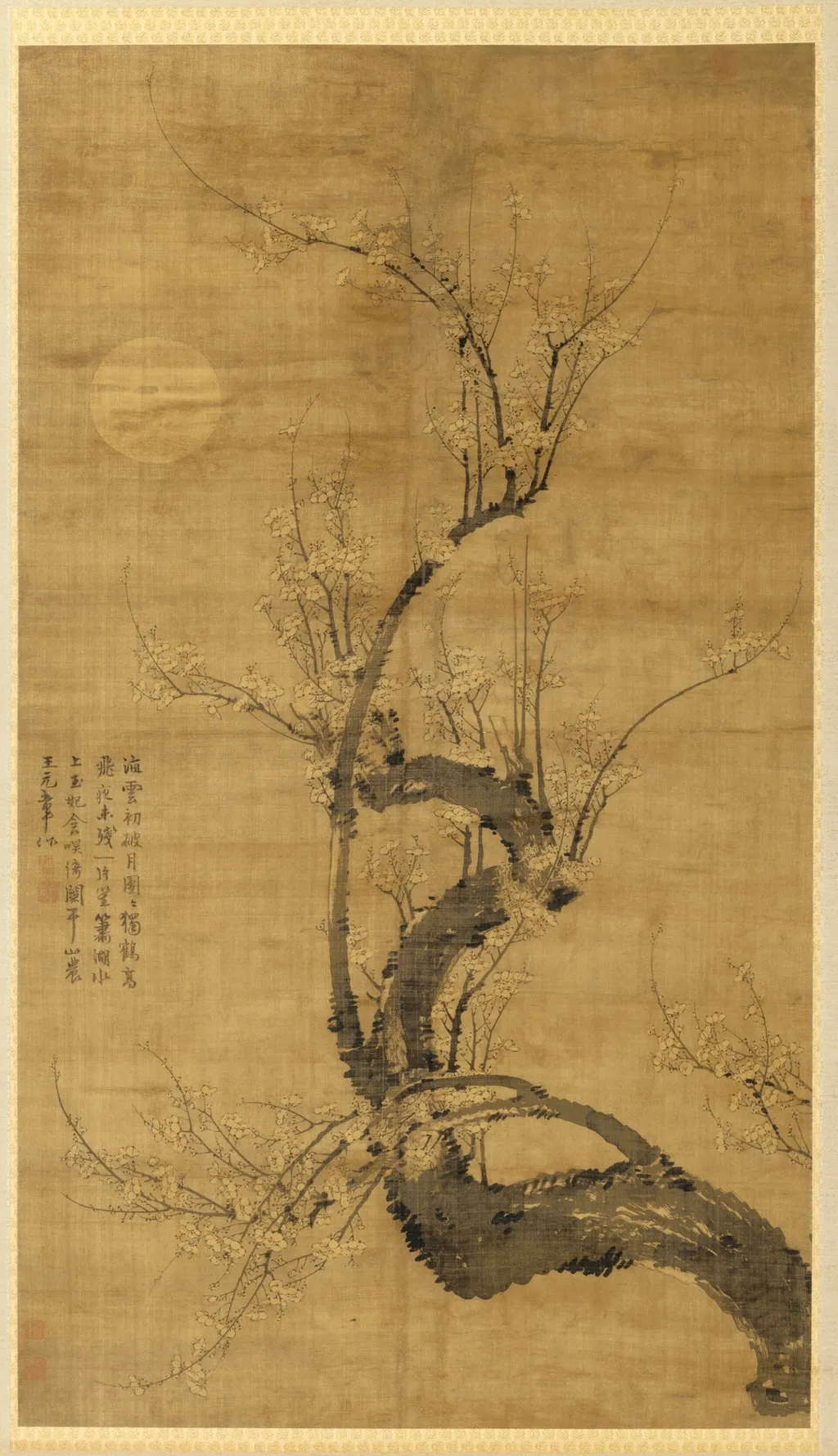
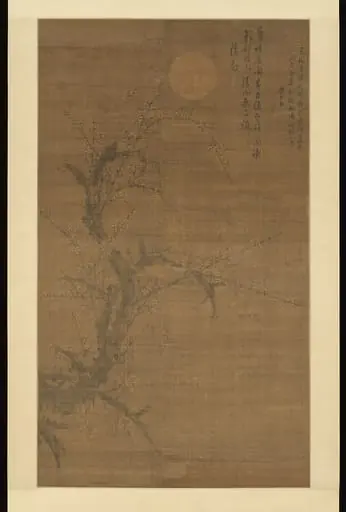
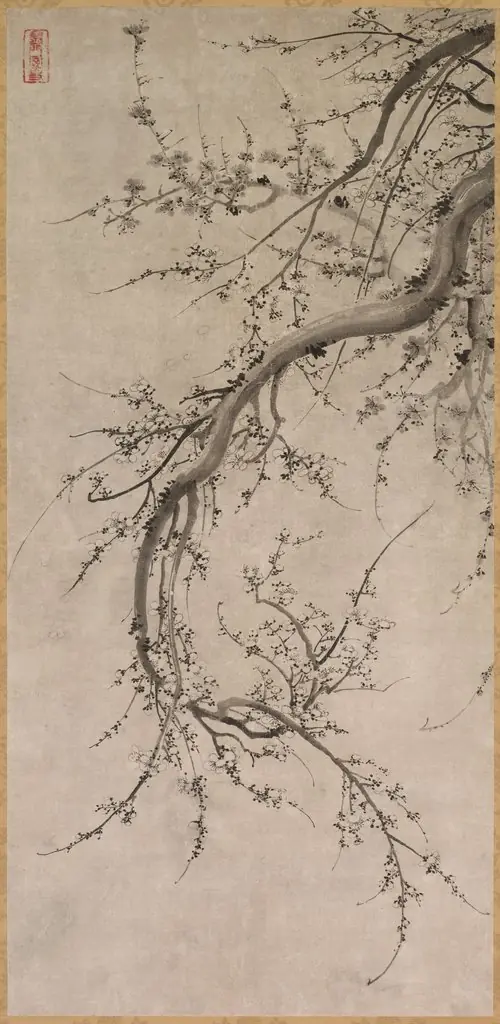
A Prunus in the Moonlight is an unspecified painting by the Ming dynasty painting artist Wang Mian. It dates from 1349 and is held in the collection of the Cleveland Museum of Art.
About this work
Overview
Created by the Yuan dynasty artist Wang Mian in 1349, A Prunus in the Moonlight is a painting held in the collection of The Cleveland Museum of Art. This work exemplifies Wang Mian's celebrated focus on plum blossoms, a subject for which he was particularly renowned. The composition centers on a solitary plum tree, rendered with a distinctive style that captures its essence under a nocturnal sky.
Subject & Meaning
In Chinese culture, the plum blossom (prunus) often symbolizes resilience, purity, and renewal, as it blooms in the harshness of late winter, heralding spring.
The painting portrays a bare plum tree, its delicate white blossoms subtly illuminated against a pale, soft background. Its branches twist sharply, with a dark trunk contrasting the lighter tones. A faint crescent moon appears in the upper left, while a river curves beneath the tree. In Chinese culture, the plum blossom (prunus) often symbolizes resilience, purity, and renewal, as it blooms in the harshness of late winter, heralding spring.
Technique & Style
Wang Mian employed simple ink lines to define the tree's form, allowing the surrounding space to remain largely unadorned. This minimalist approach draws attention to the intricate structure of the branches and the vitality of the blossoms. The stark contrast between the dark ink of the tree and the ethereal, empty background emphasizes the subject's presence and the delicate beauty of its form, characteristic of literati painting.
Context
Wang Mian, active during the Yuan dynasty, was recognized both as a painter and a poet, dedicating much of his artistic output to plum blossom imagery. This particular painting was completed in 1349, near the end of the Yuan period. Beyond his artistic pursuits, Wang Mian briefly served as a military adviser to Zhu Yuanzhang, who would later establish the Ming dynasty, situating the artist at a pivotal moment of political transition.
Legacy
Wang Mian's artistic contributions and his persona extended beyond his lifetime. His presence in The Scholars, an influential eighteenth-century Chinese novel, indicates his enduring cultural significance. This literary portrayal suggests that Wang Mian was remembered not only for his distinctive plum blossom paintings but also as a figure of historical and intellectual interest centuries after his death.
Artist & collection

Artist
Wang Mian (Chinese: 王冕; pinyin: Wáng Miǎn; Wade–Giles: Wang Mien; 1287–1359), courtesy name Yuanzhang (元章), also known as Zhushi Shannong, was a Chinese painter and poet active during the Yuan dynasty.