Artwork
Autumn Landscape with Boats
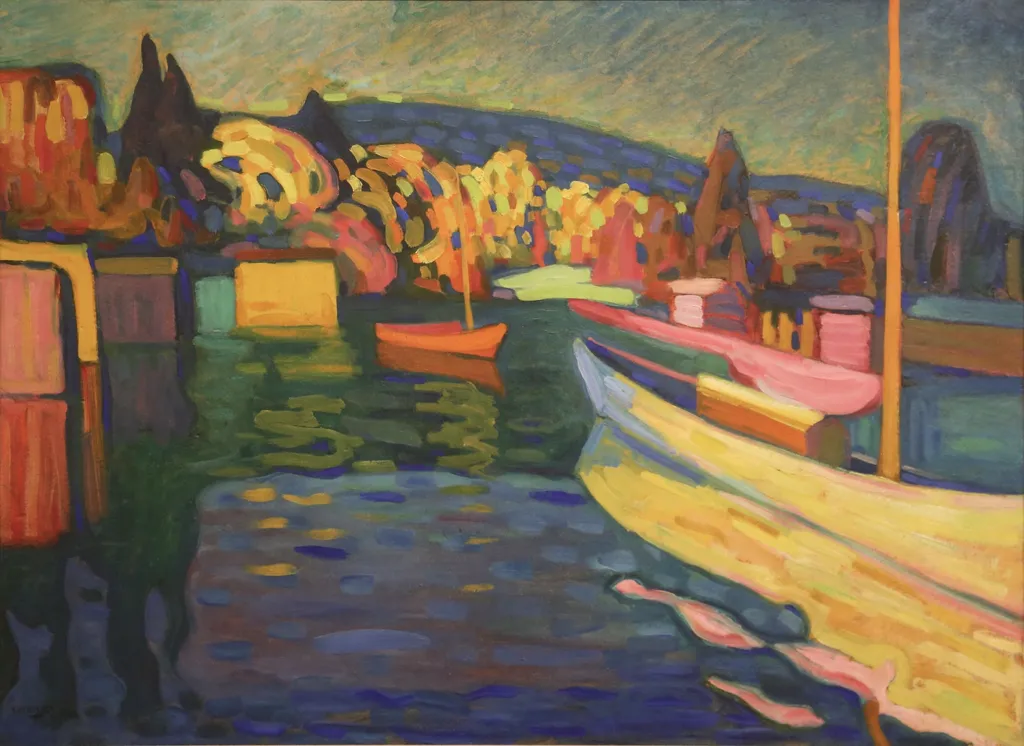
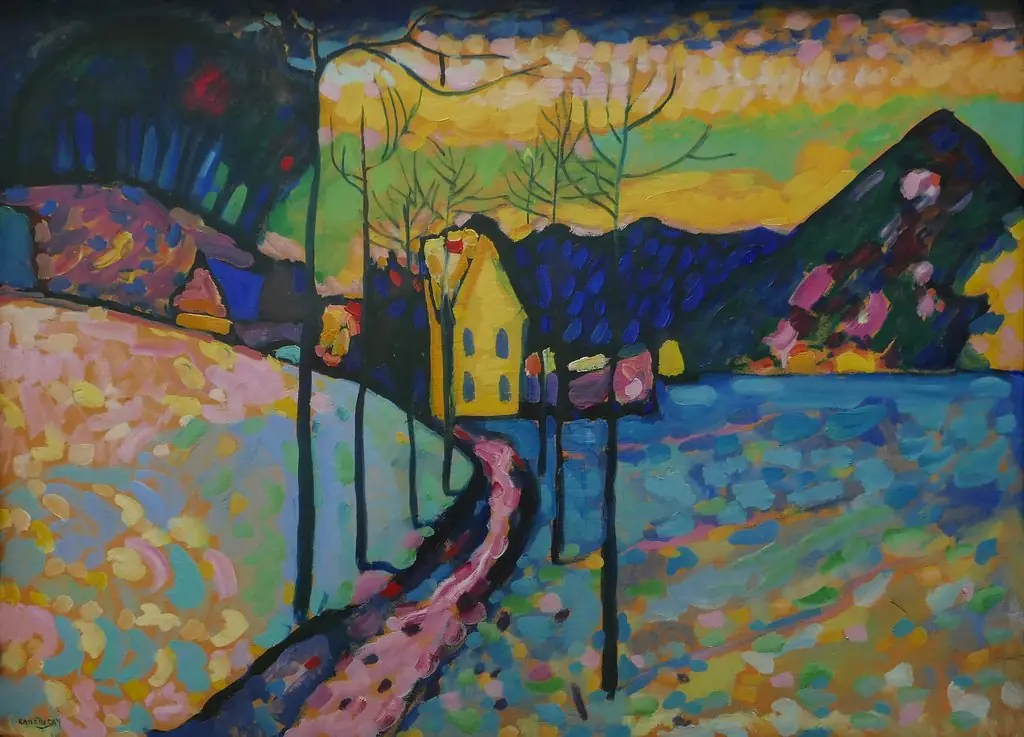
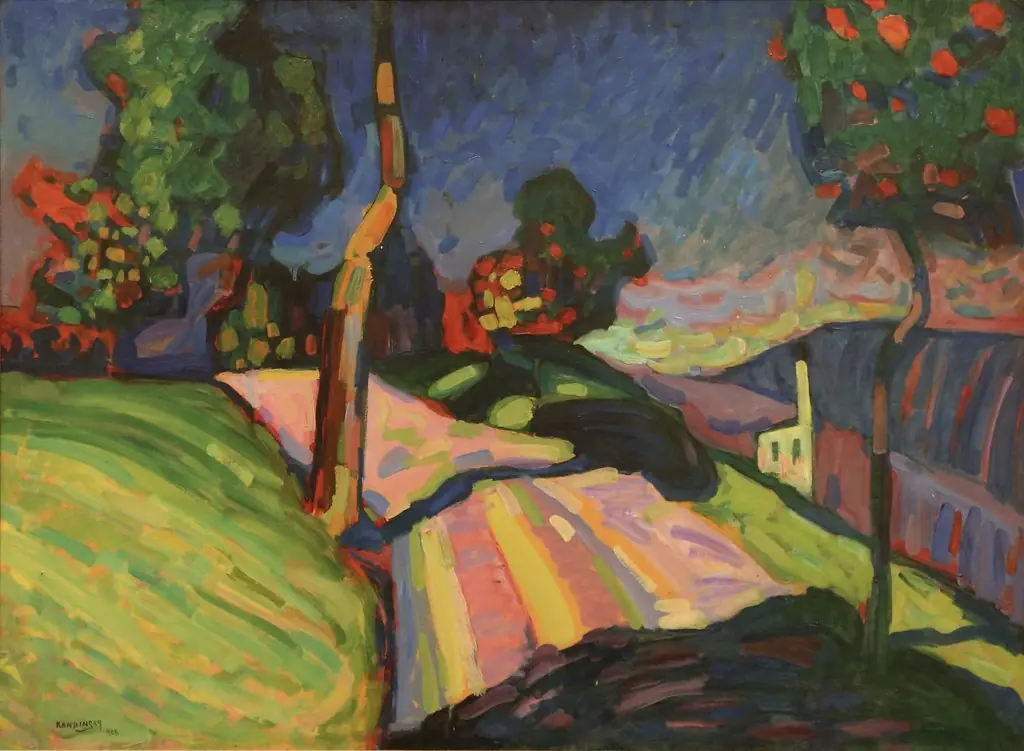
Autumn Landscape with Boats is an oil painting by Wassily Kandinsky. It dates from 1908 and is held in the collection of the Kunsthaus Zürich.
About this work
Overview
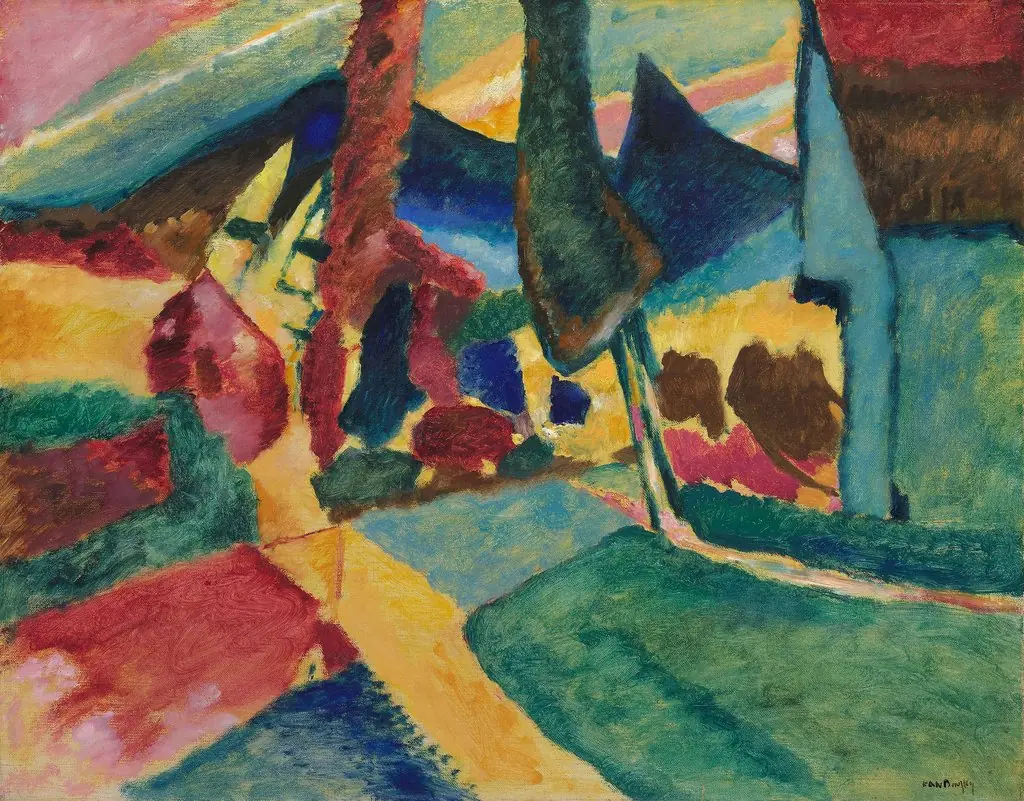
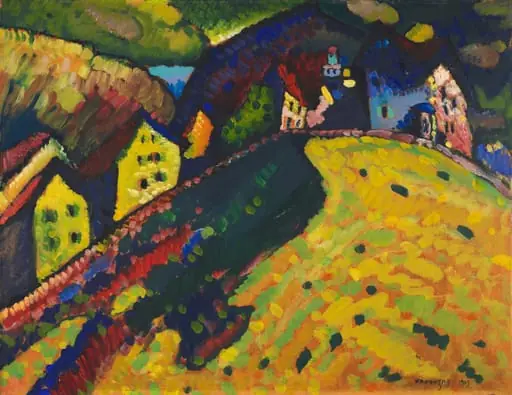
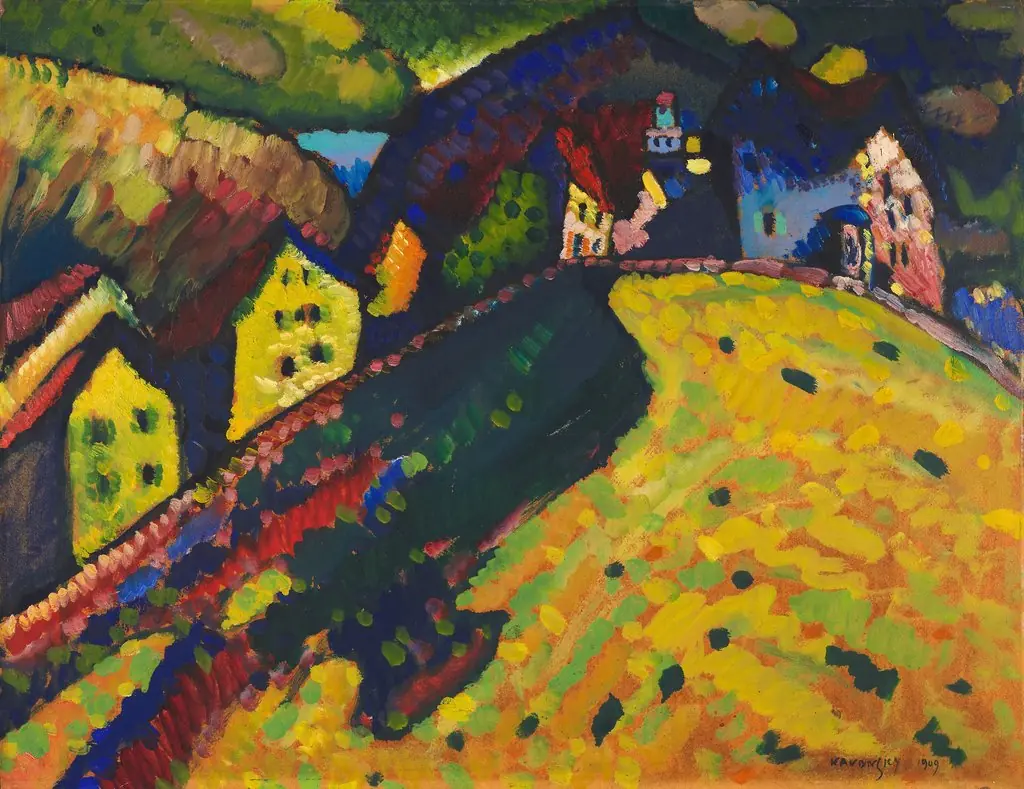
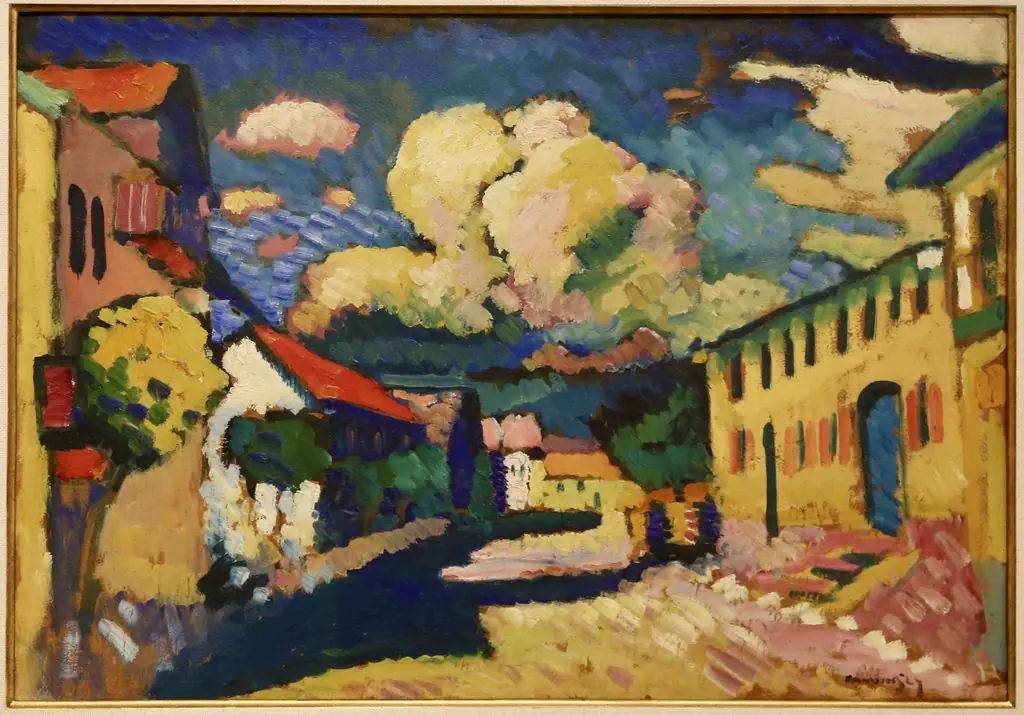
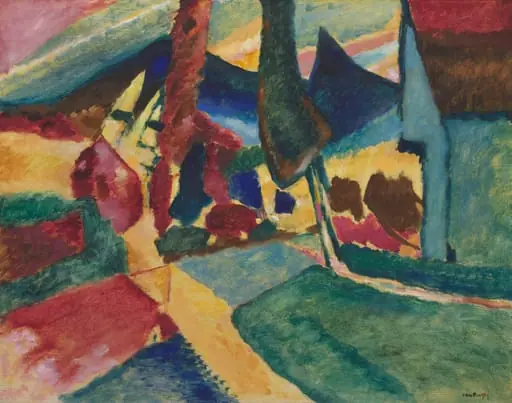
Wassily Kandinsky’s 1908 oil painting *Autumn Landscape with Boats* presents a tranquil river scene framed by autumnal foliage. The canvas captures a handful of vessels drifting on calm water beneath trees rendered in warm oranges and yellows, conveying a seasonal atmosphere characteristic of early 20th‑century German landscape painting.
Subject & Meaning
The work focuses on a quiet riverside setting, where the interplay of light on water and the rustling of colored leaves suggest a moment of peaceful transition. The modest inclusion of boats adds a narrative element, hinting at human activity within the natural environment without overt symbolism.
Technique & Style
Kandinsky employs bold, expressive brushwork, especially in the foliage, where loose strokes convey movement of wind through the leaves. A palette of vivid, saturated hues contrasts with the muted browns and grays of the boats, creating depth and a dynamic visual rhythm that anticipates his later experiments with abstraction.
History & Provenance
Created during Kandinsky’s formative years in Munich, the painting reflects his academic training under Anton Ažbe and at the Academy of Fine Arts, prior to his association with Gabriele Münter. It entered the collection of the Kunsthaus Zürich, where it remains part of the museum’s holdings.
Context
The canvas belongs to the broader German artistic climate of the late Belle Époque and early interwar period, a time when landscape painting still held a prominent place before the rise of full abstraction in Kandinsky’s oeuvre. It illustrates the transitional phase between representational work and the artist’s subsequent non‑objective style.
Own this work as a print
Artist & collection
Artist
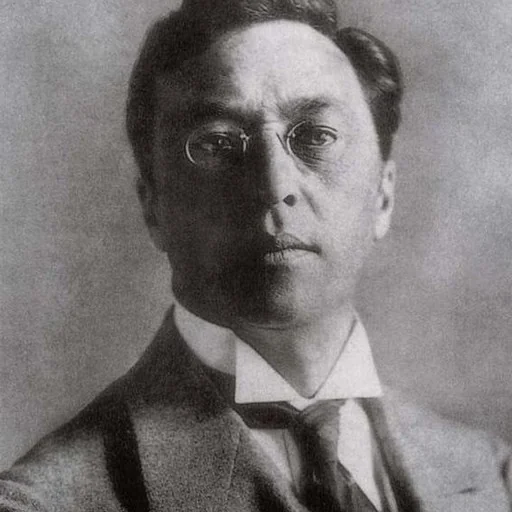
Wassily Wassilyevich Kandinsky (16 December 1866 – 13 December 1944) was a Russian painter and art theorist active in Germany during the late Belle Époque and Interwar eras.