Artwork
Eight Views of the Xiao and Xiang Rivers
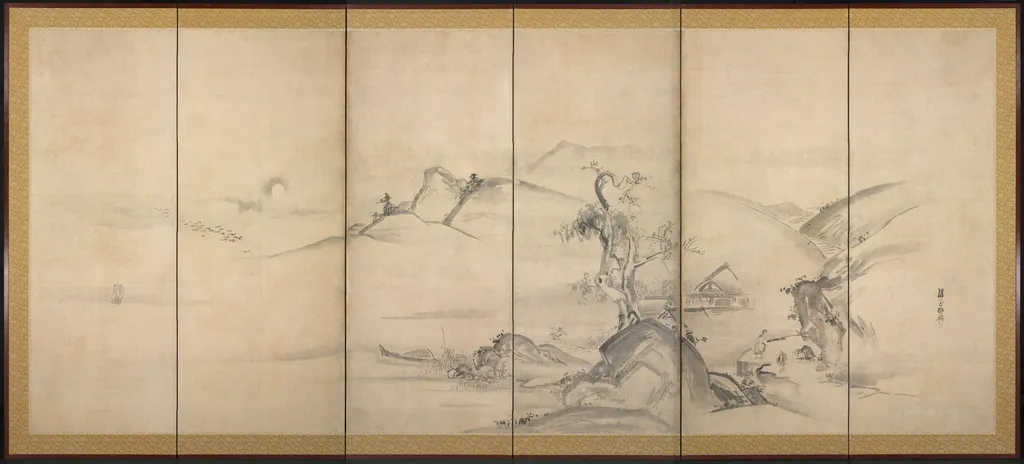
Eight Views of the Xiao and Xiang Rivers is an unspecified painting by the Rococo painting artist Watanabe Shikō 渡辺始興. It dates from 1732 and is held in the collection of the Cleveland Museum of Art.
About this work
Overview
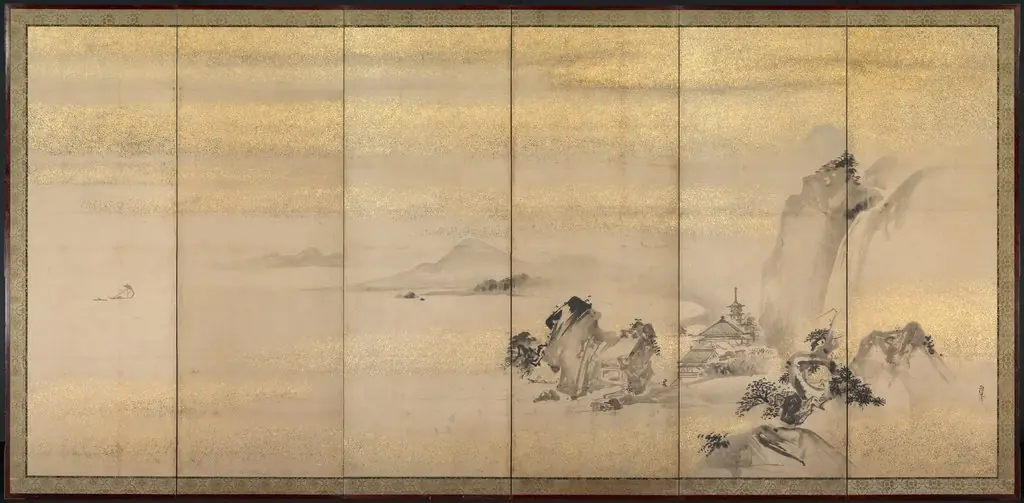
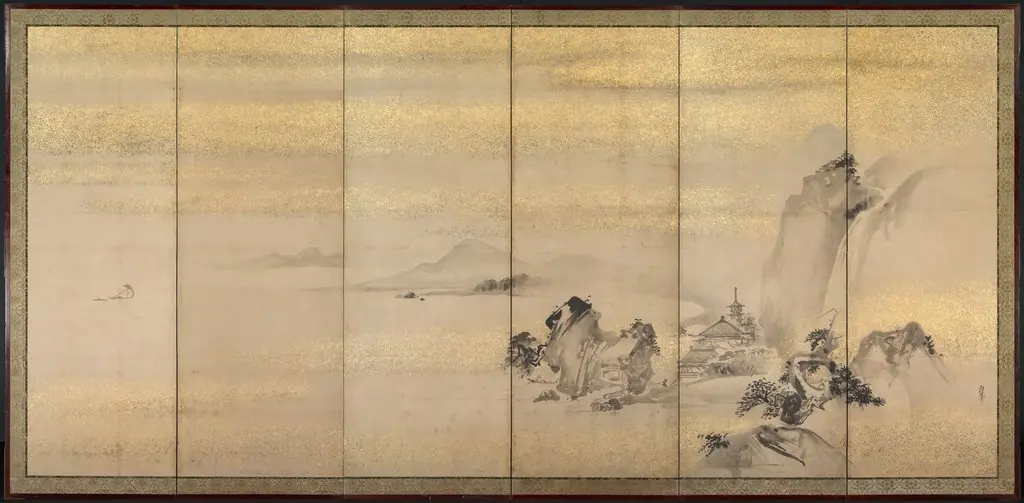
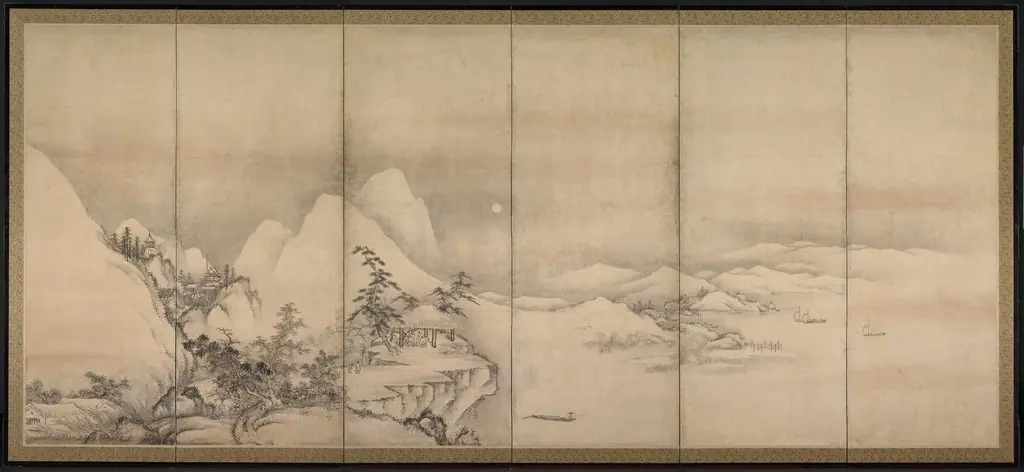
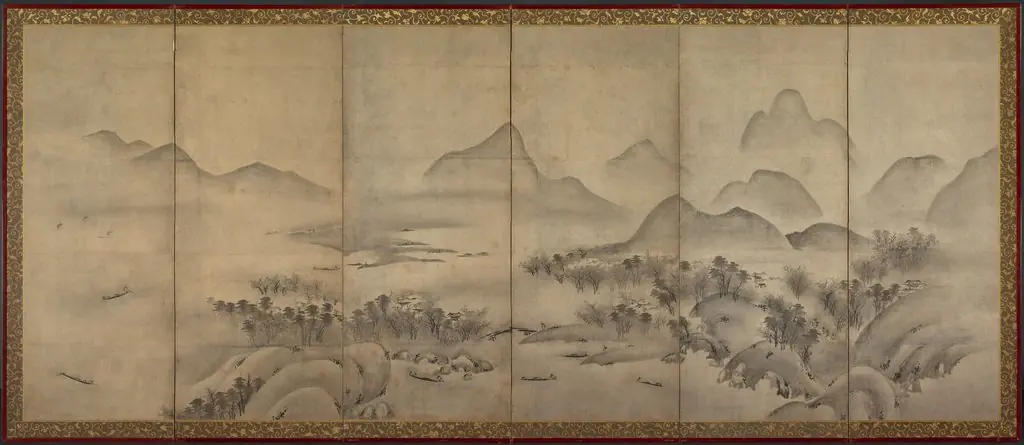
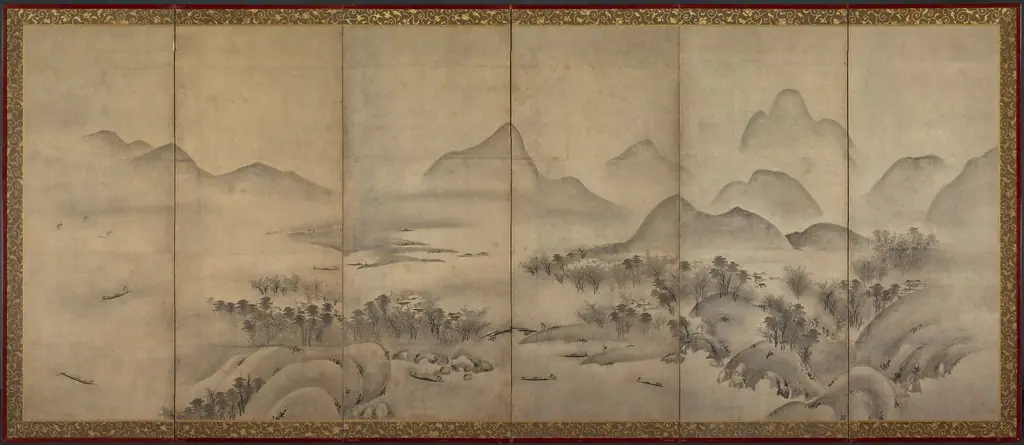
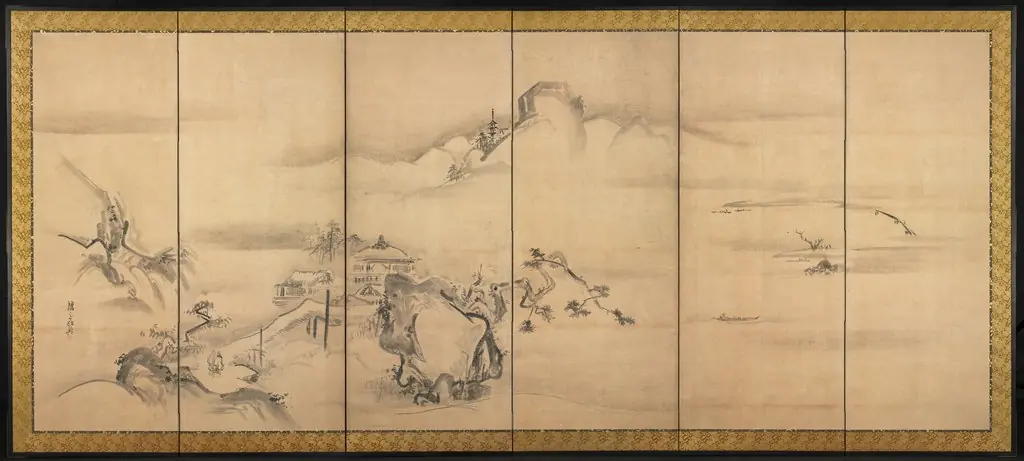
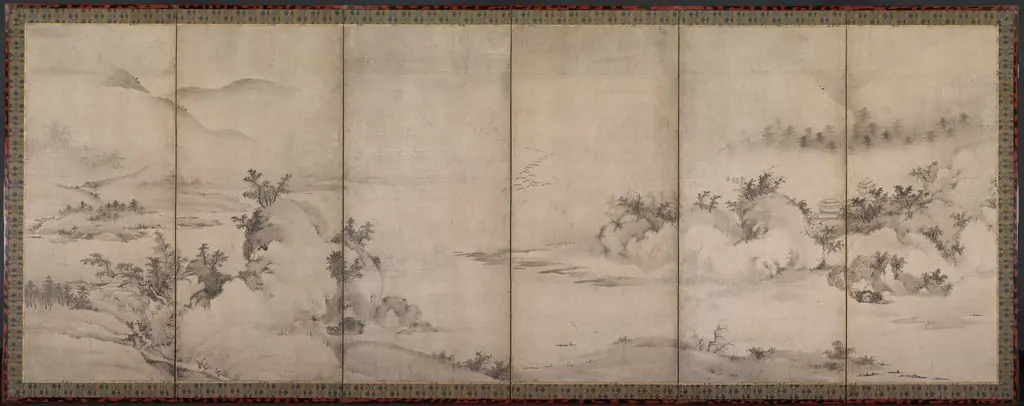
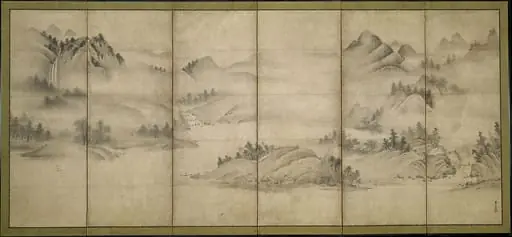
Created in 1732 by the Japanese painter Watanabe Shikō, this ink painting titled *Eight Views of the Xiao and Xiang Rivers* is part of the collection at the Cleveland Museum of Art. The work presents a tranquil riverscape rendered in monochrome, inviting the viewer to contemplate a moment of stillness within a broader natural setting.
Subject & Meaning
The composition depicts a gently flowing river flanked by misty hills, a solitary boat, and modest structures perched on rocky outcrops. Sparse human figures near the shore suggest quiet activity, while the winding trees emphasize the harmony between cultivated and wild elements, reflecting traditional Chinese landscape ideals of balance and contemplation.
Technique & Style
Watanabe Shikō employs restrained brushwork, using varying ink tones to model depth and atmosphere. Thin, fluid lines define the cliffs and foliage, while broader washes suggest mist and sky. The limited palette of grays creates a sense of distance, allowing the viewer’s eye to travel across the layered landscape without distraction.
History & Provenance
The painting entered the Cleveland Museum of Art’s holdings as part of its Asian art acquisitions, though the precise path from 18th‑century Japan to the United States is not fully documented. Its presence in a major American institution underscores the growing interest in Edo‑period ink works among Western collectors during the 20th century.
Artist & collection
Artist
Watanabe Shikō painted delicate, ink-washed scenes on folding screens and scrolls in early-18th-century Japan.