Artwork
Obweebetuck
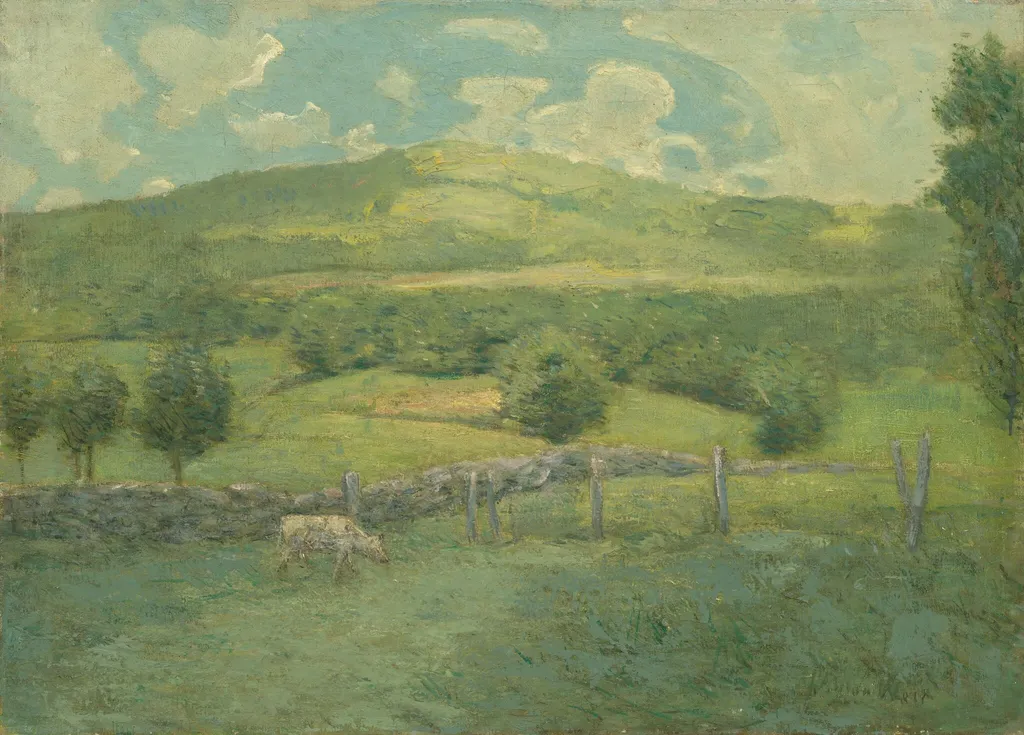
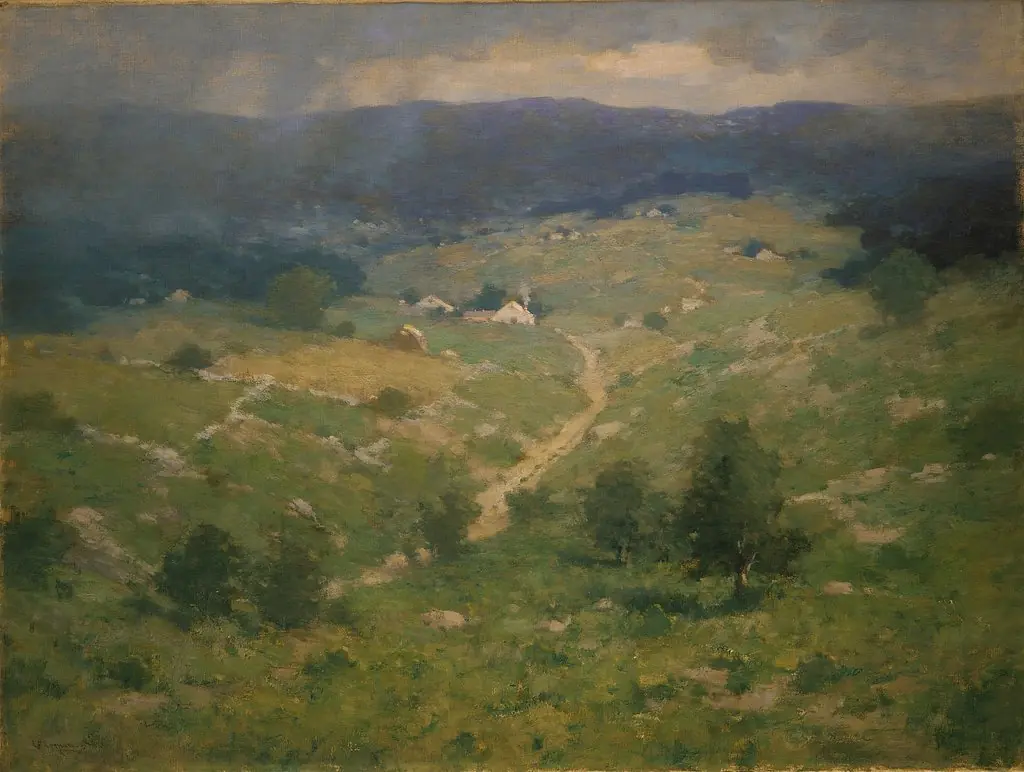
Obweebetuck is an oil painting by the American Impressionist artist Julian Alden Weir. It dates from 1908 and is held in the collection of the National Gallery of Art.
About this work
Overview
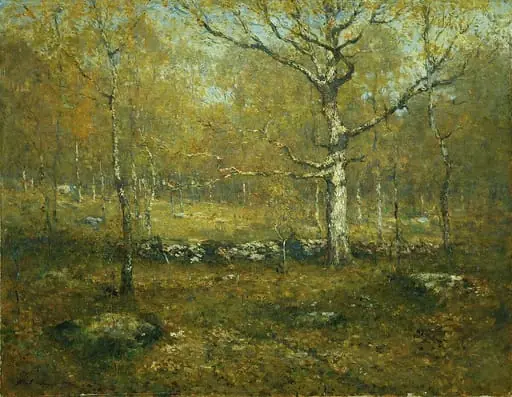
Julian Alden Weir’s oil on canvas, titled Obweebetuck, dates from around 1908. Executed in the artist’s Connecticut surroundings, the work captures a quiet forest scene where a solitary figure rests upon a tree stump, enveloped by the dappled light of the woods.
Subject & Meaning
The composition presents a woman in a flowing white dress, seated with her back to the viewer. Surrounded by dense trunks and a carpet of warm brown and green foliage, the figure appears contemplative, suggesting a moment of repose within nature’s secluded interior.
Technique & Style
Weir employs a looser brushstroke than his earlier realist training, applying paint thickly in places to create a tactile surface. The impasto treatment of foliage and bark adds texture, while brighter, more saturated hues convey the filtered sunlight, reflecting a broader shift among American painters toward expressive color and surface.
History & Provenance
Created near Weir’s Connecticut home, where he frequently painted the local woodlands, Obweebetuck exemplifies his late‑career evolution. The painting has remained in private collections since its inception, with no record of exhibition beyond occasional regional shows in the early twentieth century.
Context
The work emerges at a time when American artists were moving away from strict academic detail, embracing impressionistic influences. Weir’s integration of textured brushwork and luminous color aligns with this transition, positioning the piece within the broader narrative of early twentieth‑century American landscape painting.
Own this work as a print
Artist & collection