Artwork
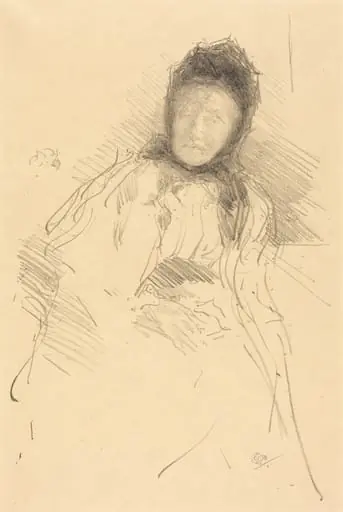
Countess of Huntingdon
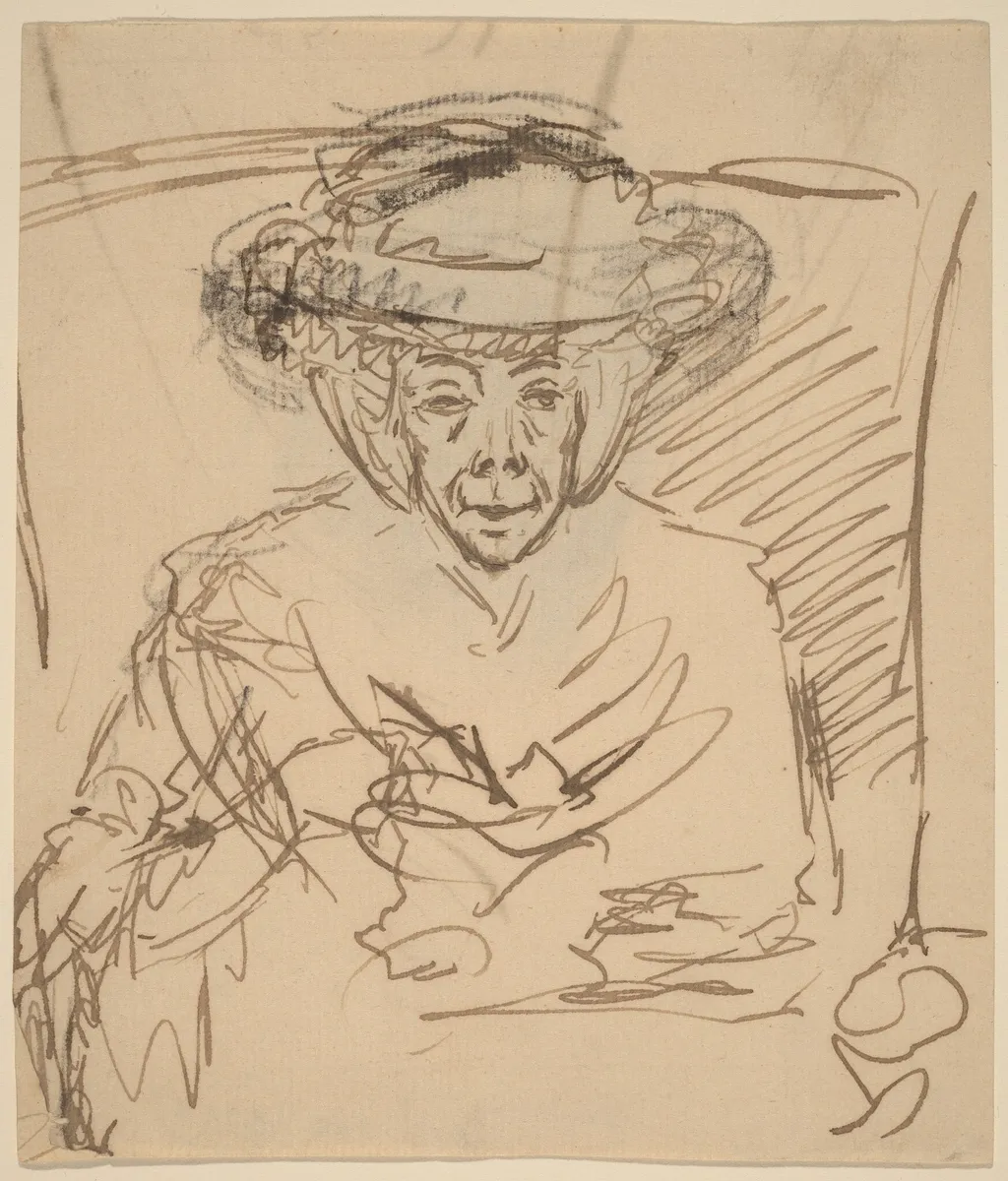
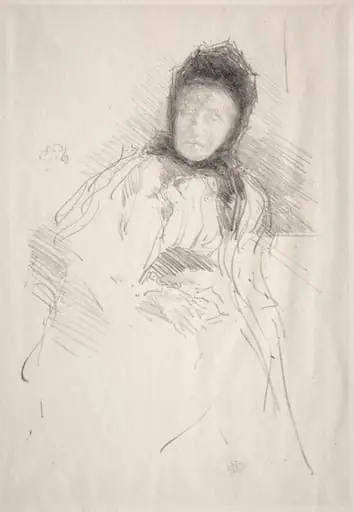
Countess of Huntingdon is an ink drawing by the Romanticist artist Benjamin West. It dates from 1785 and is held in the collection of the National Gallery of Art.
About this work
The painting is called Countess of Huntingdon.
It's a portrait made with pen and brown ink on paper.
The artist, Benjamin West, was active during the second half of the 18th century and early 19th century, which is interesting because this was a time of change in art styles.
To learn more about this style, look up the movement: Romanticism.
Overview
Created in 1785, this drawing by Benjamin West depicts Selina Hastings, Countess of Huntingdon. Executed in pen and brown ink, with possible graphite underdrawing, it is a portrait on laid paper. West, known primarily for historical paintings, here turned to intimate portraiture, capturing a prominent religious figure of his time with restrained elegance and careful observation.
Subject & Meaning
Selina Hastings, Countess of Huntingdon, was a key patron of the Methodist movement and a central figure in 18th-century evangelical circles.
Selina Hastings, Countess of Huntingdon, was a key patron of the Methodist movement and a central figure in 18th-century evangelical circles. The portrait reflects her status and spiritual authority rather than personal emotion. West’s focus on her composed demeanor and modest attire underscores her role as a moral and religious leader, aligning the image with the values of piety and quiet influence she embodied.
Technique & Style
West employed fine pen lines to define facial features and drapery, using ink washes for subtle tonal variation. The use of laid paper suggests a deliberate choice for its textured surface, enhancing the delicacy of the medium. The style is precise yet unembellished, reflecting a transitional approach between formal portraiture and the emerging emphasis on individual character seen in late 18th-century British drawing.
History & Provenance
The drawing was made during West’s tenure as a leading portraitist in London, where he enjoyed patronage from aristocratic and religious figures. It likely originated as a preparatory study or a gift to the Countess or her associates. Its survival in private collections until entering a public institution indicates continued recognition of its historical and artistic value within elite circles.
Context
In the 1780s, British portraiture was shifting from grandeur to psychological nuance. West, though trained in classical history painting, engaged with this trend through intimate works like this. The Countess’s prominence in evangelical networks placed her at the intersection of religion, politics, and culture, making her portrait a document of social influence beyond mere likeness.
Legacy
This drawing exemplifies West’s versatility beyond large-scale historical subjects. It remains a rare surviving example of his work in graphic media and offers insight into the visual culture of religious leadership in Georgian England. Its preservation contributes to understanding how portraiture served as both personal record and public statement among the elite.
Artist & collection

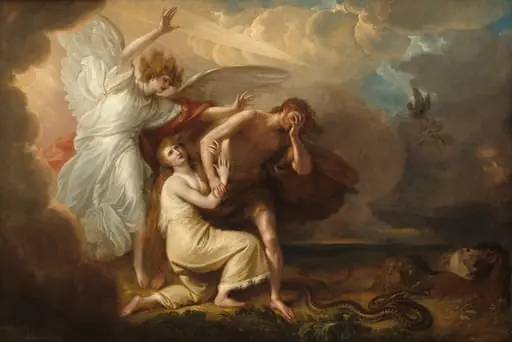 The Expulsion of Adam and Eve from Paradise
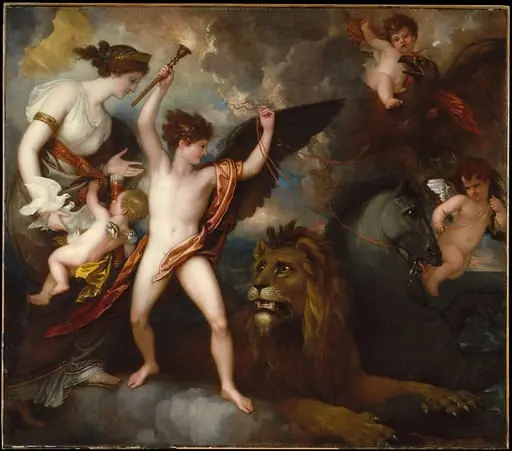 Omnia Vincit Amor, or The Power of Love in the Three Elements
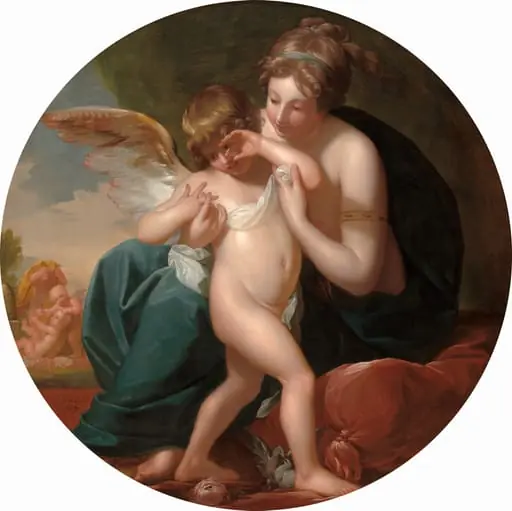 Cupid, Stung by a Bee, Is Cherished by his Mother
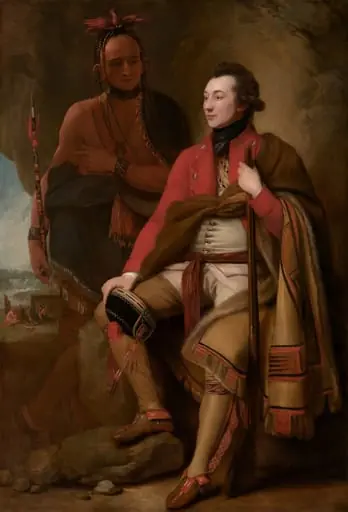 Colonel Guy Johnson and Karonghyontye (Captain David Hill)
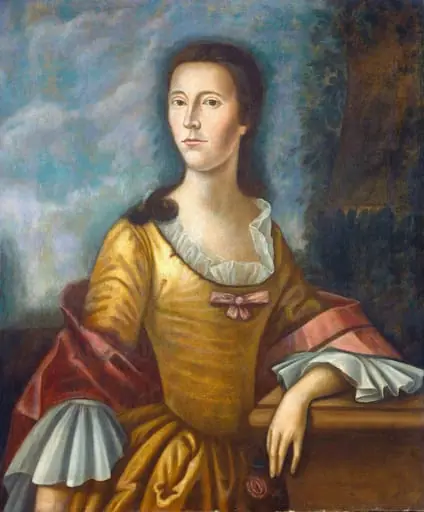 Mary Bethel Boude (Mrs. Samuel Boude)
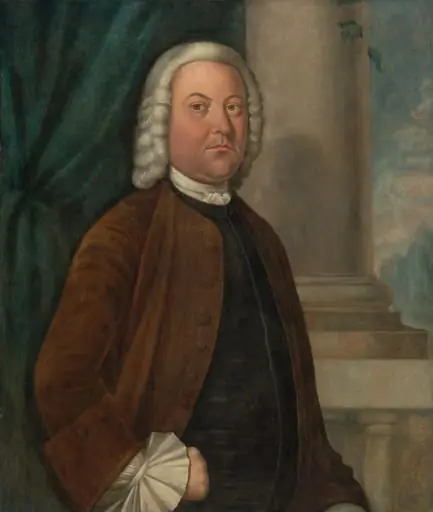 Dr. Samuel Boude
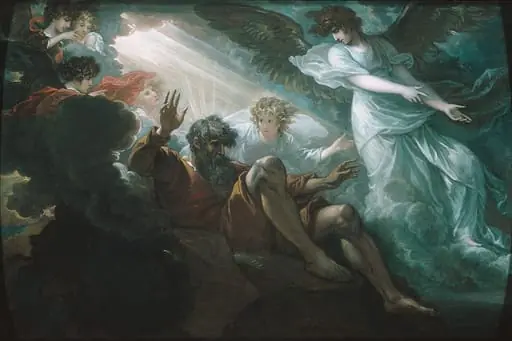 Moses Shown the Promised Land
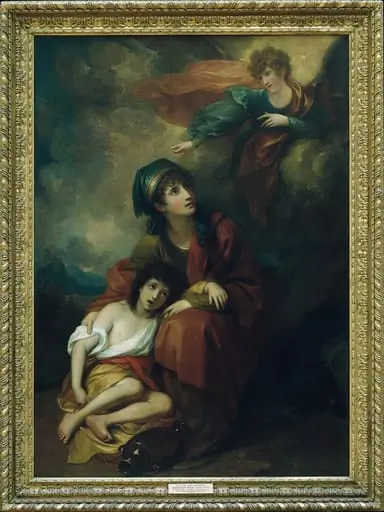 Hagar and Ishmael