Artwork
View of the interior of the Shakespeare Gallery
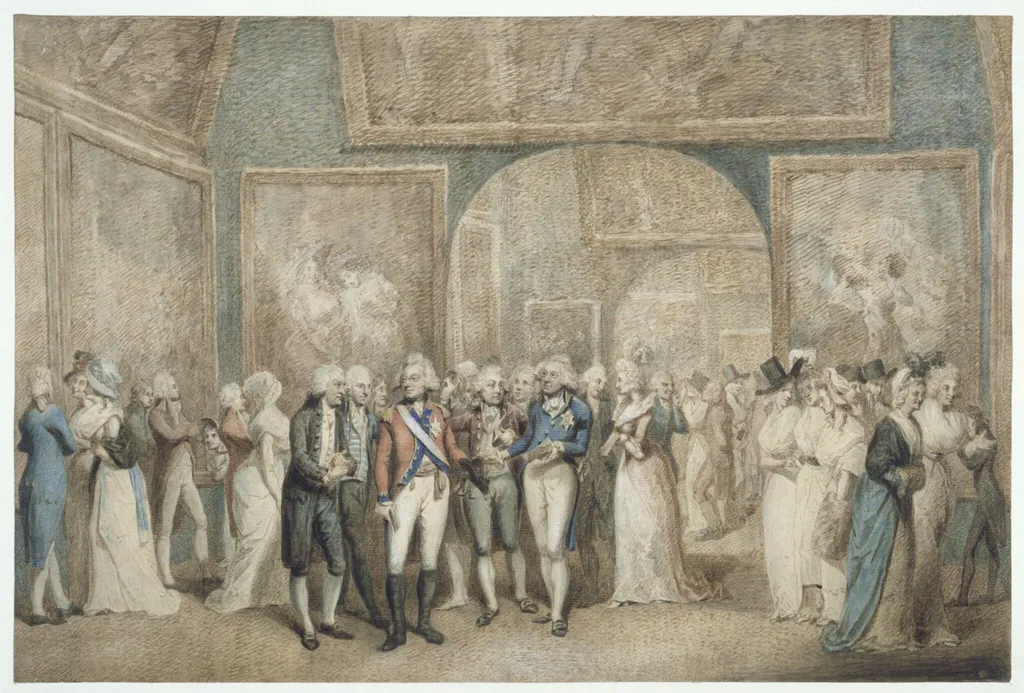
View of the interior of the Shakespeare Gallery is a watercolor work on paper by the British Romanticist artist Francis RA Wheatley. It dates from 1790 and is held in the collection of the Victoria and Albert Museum. Francis Wheatley’s watercolour captures the interior of John Boydell’s Shakespeare Gallery in London, opened in 1789.
About this work
Overview
The work records a moment of cultural significance: the gallery’s public debut, showcasing newly commissioned oil paintings inspired by Shakespeare’s plays.
Francis Wheatley’s watercolour captures the interior of John Boydell’s Shakespeare Gallery in London, opened in 1789. The work records a moment of cultural significance: the gallery’s public debut, showcasing newly commissioned oil paintings inspired by Shakespeare’s plays. Wheatley, known for his depictions of London street life, used the medium’s immediacy to document the gathering of artists, patrons, and aristocracy present at the event.
Subject & Meaning
The scene depicts a gathering of prominent figures from London’s artistic and social circles, including members of the royal family, Sir Joshua Reynolds, and Georgiana Cavendish. The presence of these individuals underscores the gallery’s role as a hub of elite cultural patronage. Wheatley’s composition frames the space not merely as an exhibition hall but as a stage for social performance, reflecting the intersection of art, status, and public spectacle in late 18th-century Britain.
Technique & Style
Wheatley employed watercolour for its speed and clarity, allowing him to capture the architecture and figures with precision without the drying time of oils. The delicate washes define the gallery’s interior, while fine linework outlines the attendees. His approach is observational rather than idealized, emphasizing the spatial arrangement and the varied postures of the crowd, aligning with his broader interest in documenting contemporary life with documentary accuracy.
History & Provenance
The watercolour was created as a record of the Shakespeare Gallery’s opening, commissioned by John Boydell, the print publisher and gallery’s founder. It likely served as a personal memento or promotional aid for Boydell’s broader Shakespeare project, which included engravings and a new edition of the plays. The work remained within Boydell’s circle and later entered institutional collections, preserving its connection to one of the most ambitious cultural ventures of its time.
Context
Boydell’s Shakespeare Gallery emerged during a surge of national interest in Shakespeare as a cultural icon. The project sought to elevate British art by commissioning major painters to interpret the plays, then disseminating them through prints. This initiative coincided with the rise of public exhibitions and the commercialization of art, positioning the gallery as both a museum and a marketplace, where high culture met public commerce.
Legacy
Though the Shakespeare Gallery eventually declined financially and closed, its influence endured in the popularization of Shakespearean imagery and the model of artist-led cultural enterprises. Wheatley’s watercolour remains a rare visual record of this venture, offering insight into how art was exhibited, consumed, and socially negotiated in Georgian London. It stands as a document of a moment when art, publishing, and aristocratic patronage converged.
Artist & collection
Artist
Francis Wheatley made delicate watercolors and prints of everyday life and Irish scenery in the late 1700s.

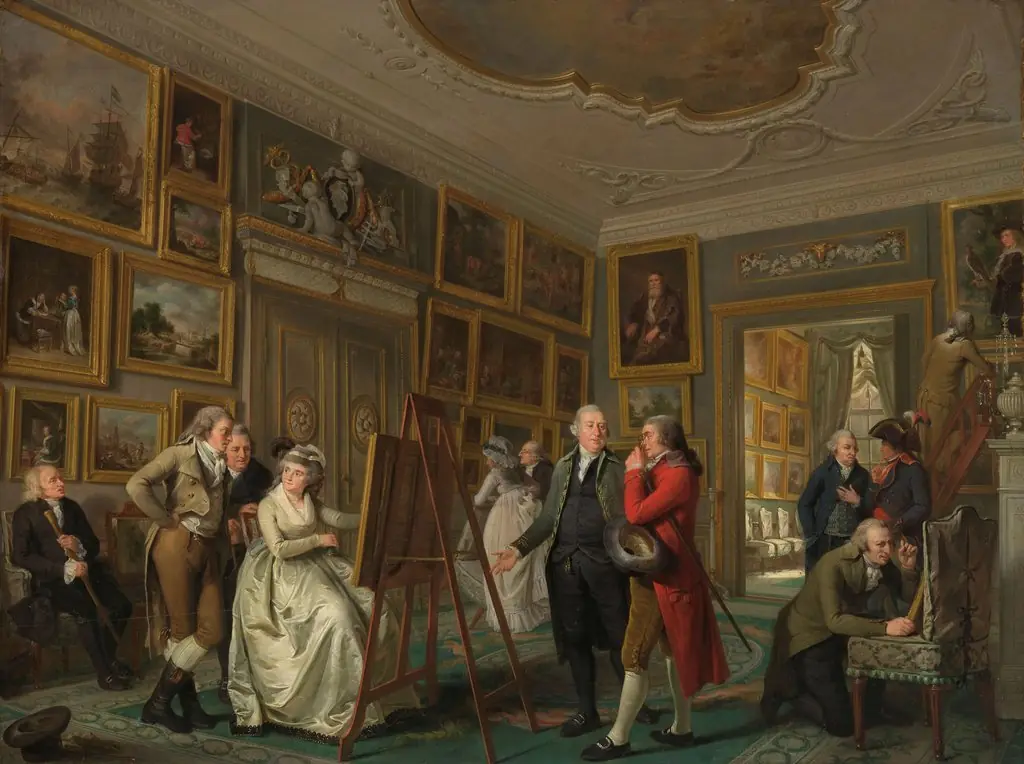 The Art Gallery of Jan Gildemeester Jansz
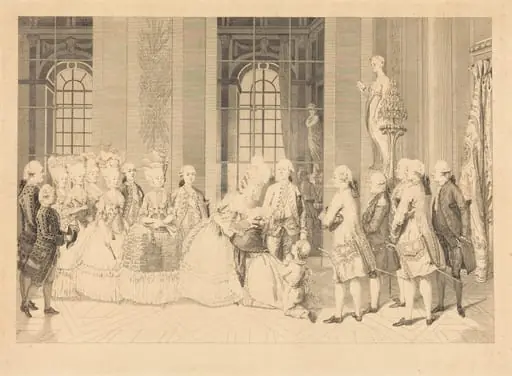 La Reine annonçant à Mme Bellegarde, des Juges, et la liberté de son mari en mai 1777
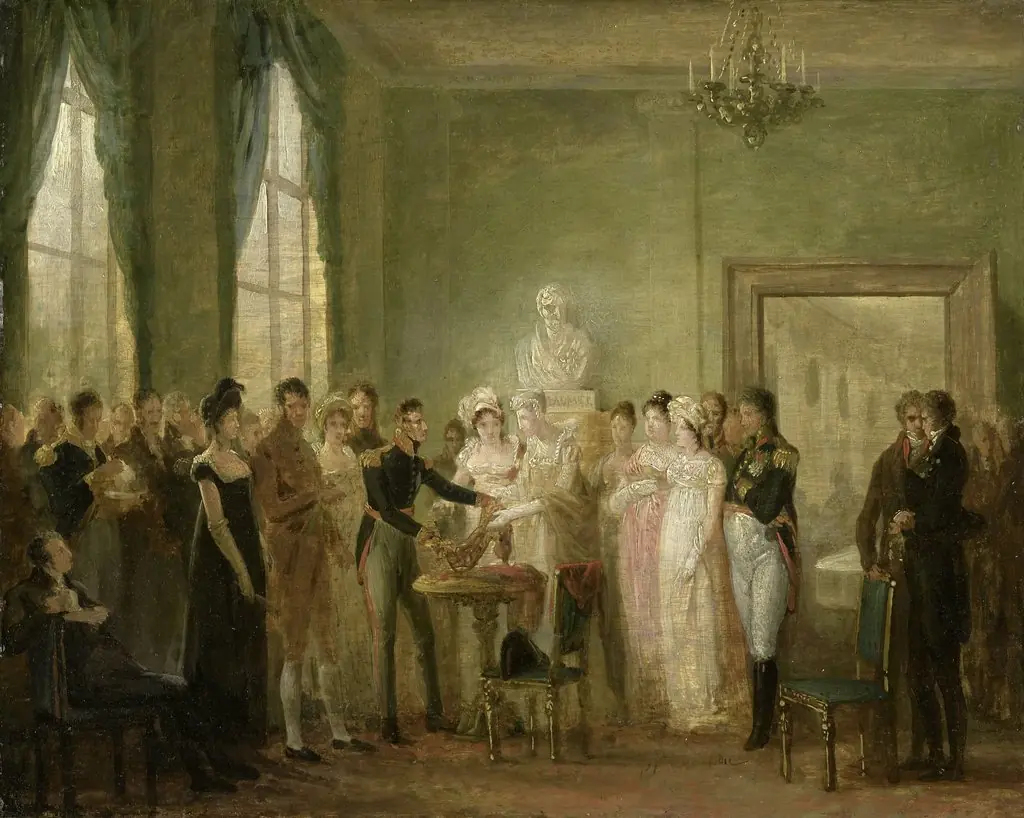 An Unidentified Historical Subject
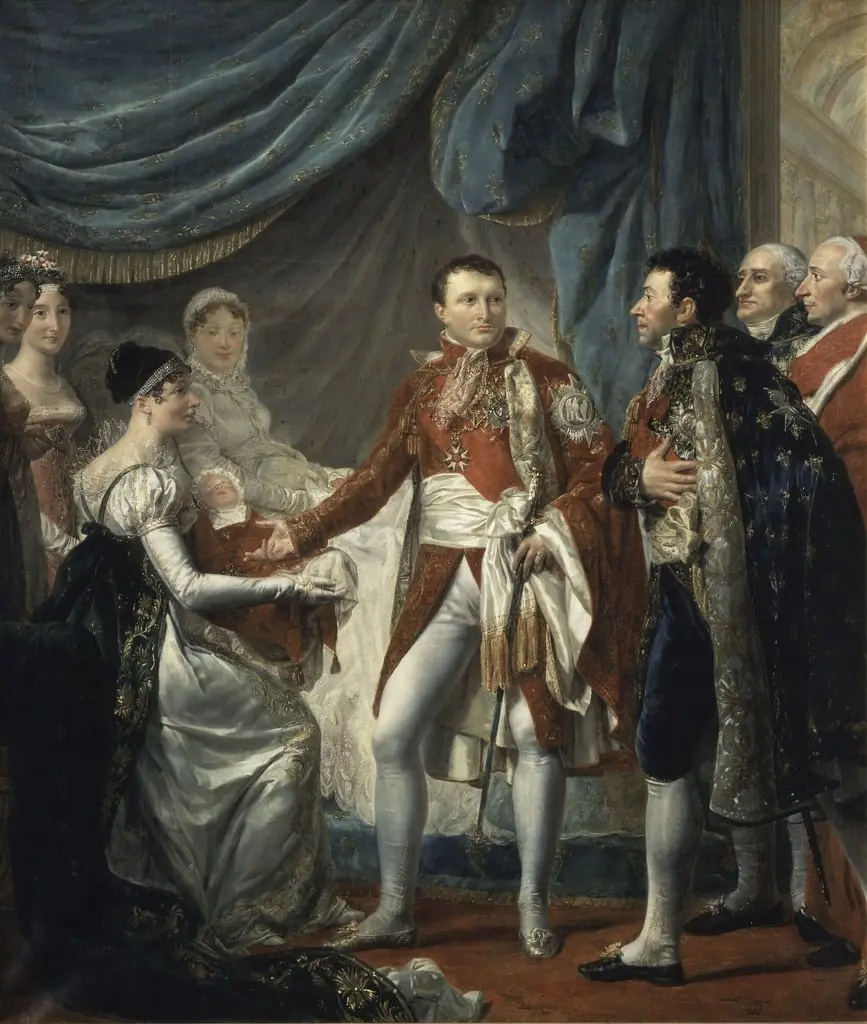 Napoleon I presents the King of Rome to the dignitaries of the Empire, March 20, 1811
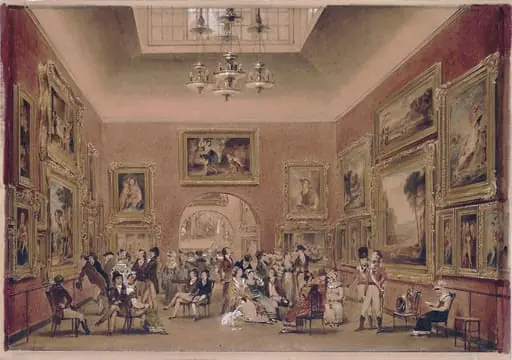 The Interior of the British Institution
 Engelsk dans i København
 The Elector's family
 H Beard Print Collection
 The Empress Eugénie Receiving the Diplomatic Corps after the Birth of the Imperial Prince
 The Guilty Couple
 The Royal Academy of Arts
 Fete at the Chateau de Versailles in 1745 on the occasion of the marriage of the Dauphin