Artwork
Peach Blossom
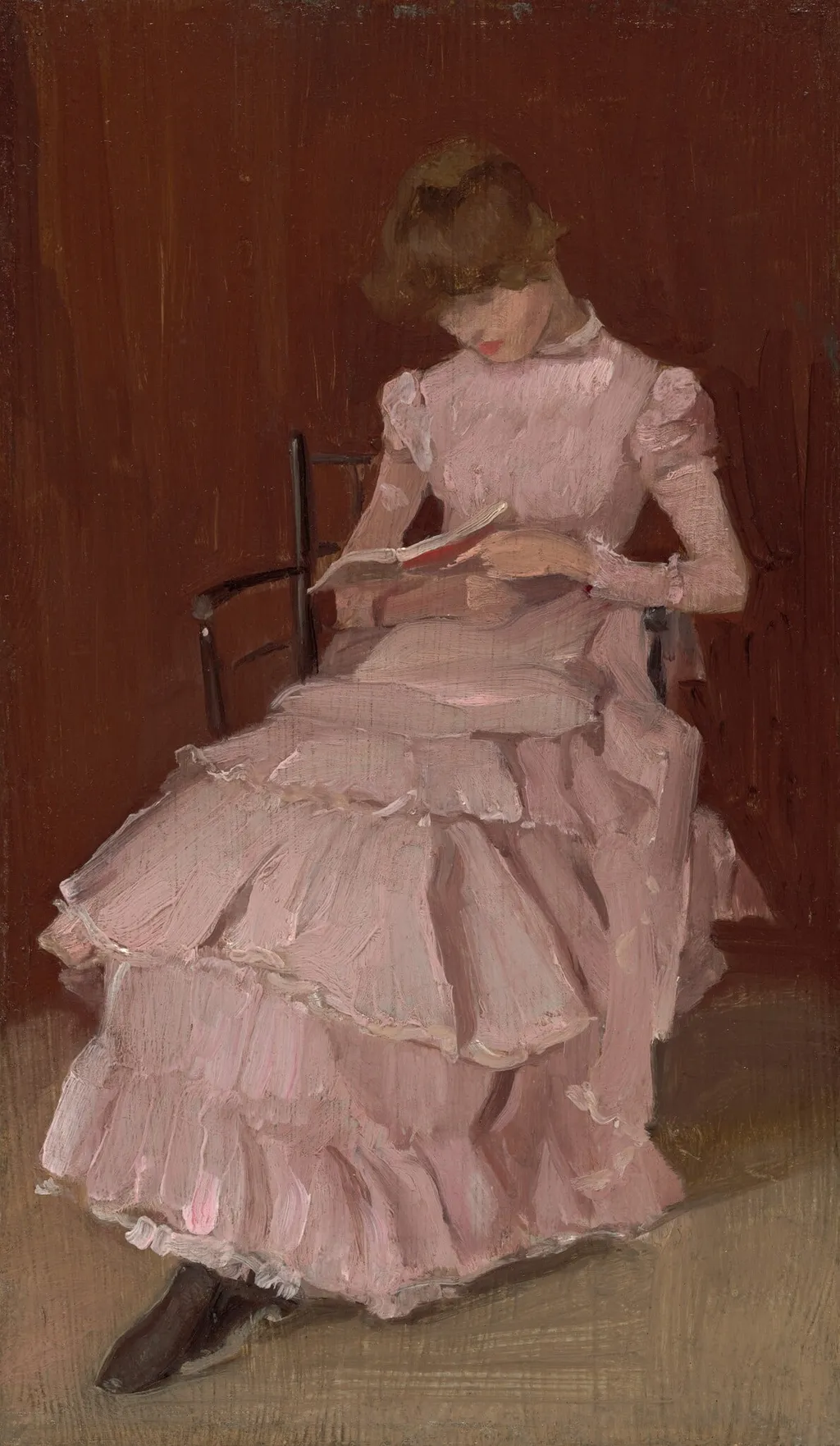
Peach Blossom is an oil painting by the Impressionist artist Beatrix Godwin Whistler. It dates from 1892 and is held in the collection of the National Gallery of Art.
About this work
Overview
Peach Blossom, executed in oil on a wooden panel around 1892, is a modestly sized work by British painter Beatrix Godwin Whistler. The composition centers on a handful of peach blossoms arranged in a simple glass vessel that rests on a plain wooden tabletop. The painting captures a fleeting moment of light touching the delicate petals, evoking the subtle fragrance of the flowers.
Subject & Meaning
The work presents an intimate still‑life, focusing solely on the transient beauty of peach blossoms. By isolating the flowers in a clear glass, Whistler emphasizes their fragility and the quiet contemplation they inspire. The subdued setting suggests a private, domestic atmosphere, inviting viewers to pause and sense the gentle perfume that the visual cues imply.
Technique & Style
Whistler employed a refined brushwork characteristic of her small‑scale panel paintings, allowing for precise rendering of the petals’ translucency. The oil medium on wood provides a smooth surface that enhances the luminous quality of the light falling on the blossoms. Her palette is restrained, using soft pinks and muted earth tones to convey delicacy without overt dramatization.
History & Provenance
Created while Whistler resided in London, Peach Blossom reflects the artist’s preference for modest, domestic subjects during the late nineteenth century. The painting has remained within private collections before being documented in recent scholarship, which notes its similarity to other floral pieces by Whistler now held by the National Gallery of Art in Washington, D.C.
Context
During the 1890s, British artists increasingly explored intimate still‑lifes as a counterpoint to grand historical narratives. Whistler’s focus on everyday objects and natural motifs aligns with this trend, highlighting a personal, quiet aesthetic. Her choice of wood panels rather than canvas was typical for small, detailed works intended for private enjoyment.
Artist & collection