Artwork
Cameo, No.I
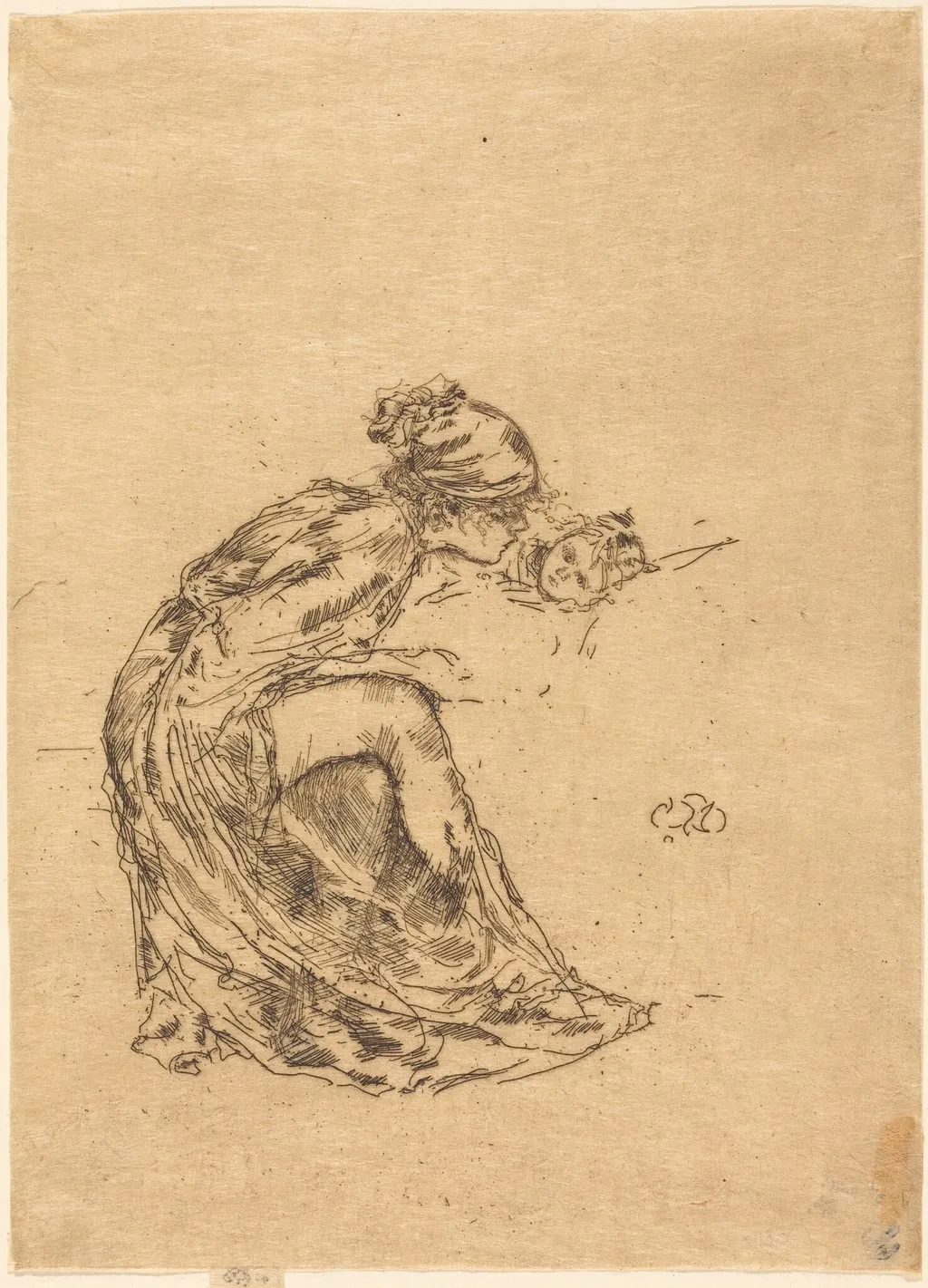
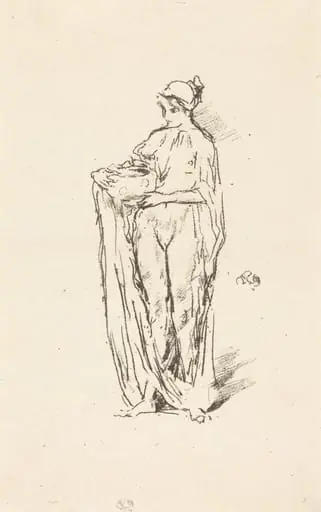
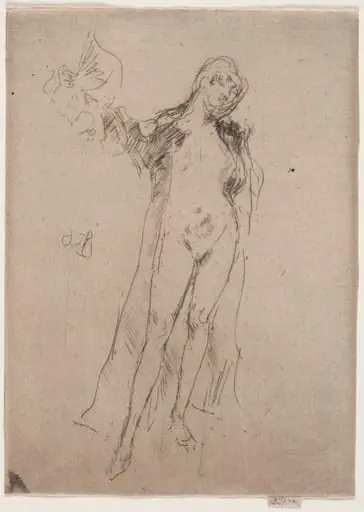
Cameo, No.I is an ink print by the Romanticist artist James McNeill Whistler. It dates from 1868 and is held in the collection of the National Gallery of Art. Cameo, No.
About this work
Overview
Cameo, No.I is an 1868 etching by James McNeill Whistler, created on Asian wove paper. This print exemplifies Whistler's adherence to the 'art for art's sake' philosophy, prioritizing aesthetic refinement.
Subject & Meaning
The etching depicts a nude figure seated in a relaxed, cross-legged pose with back turned to the viewer. The composition conveys intimacy and vulnerability through subtle, nuanced representation.
Technique & Style
Whistler employed a range of etching techniques to capture the figure's form, emphasizing soft curves and delicate skin folds. Side illumination creates depth and volume, enhancing the sense of quiet intimacy.
History & Provenance
Part of a series showcasing Whistler's technical prowess in restrained portraiture and figure studies, Cameo, No.I reflects his late 19th-century work in Britain as an American expatriate artist.
Context
Created within the broader context of the 'art for art's sake' movement, the piece rejects sentimentality and moralizing, aligning with Whistler's artistic principles.
Legacy
As a work by Whistler, Cameo, No.I contributes to the legacy of a pivotal figure in late 19th-century art, notable for his contributions to both painting and printmaking.
Artist & collection
Artist
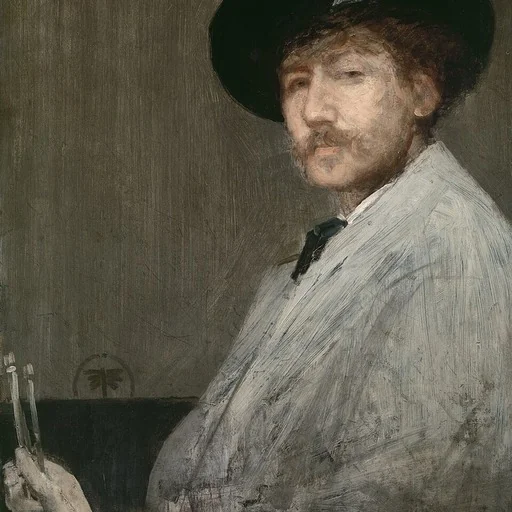
James Abbott McNeill Whistler was an American painter in oils and watercolor, and printmaker, active during the American Gilded Age and based primarily in the United Kingdom.

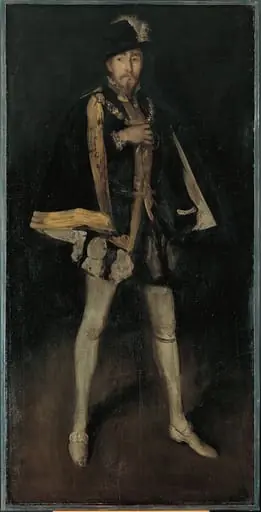 Arrangement in Black, No. 3: Sir Henry Irving as Philip II of Spain
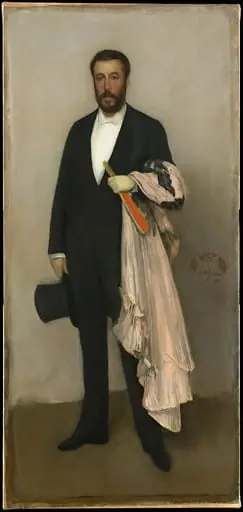 Arrangement in Flesh Colour and Black: Portrait of Theodore Duret
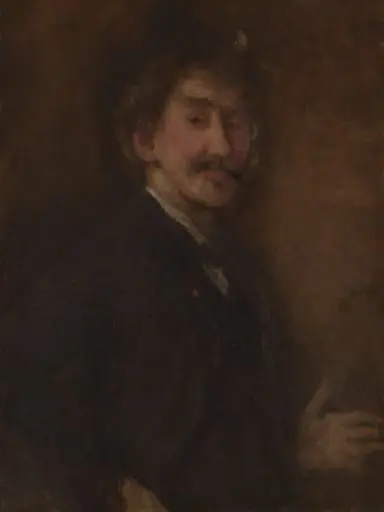 Gold and Brown: Self-Portrait
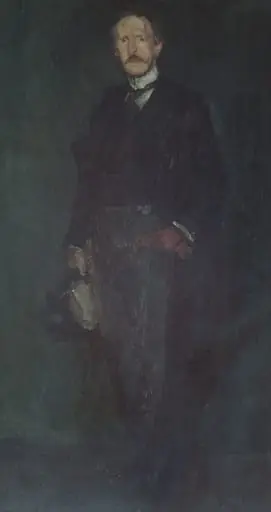 Edward Guthrie Kennedy
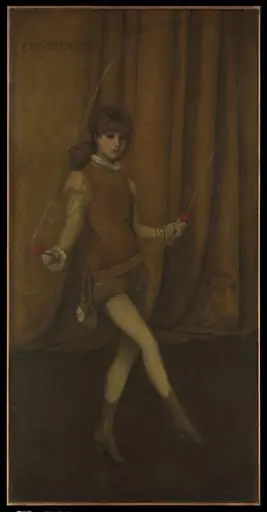 Harmony in Yellow and Gold: The Gold Girl—Connie Gilchrist
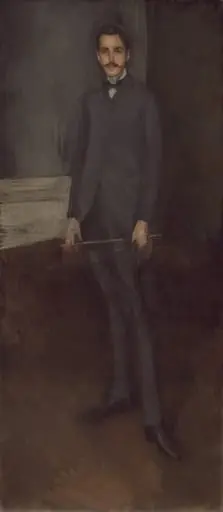 George W. Vanderbilt
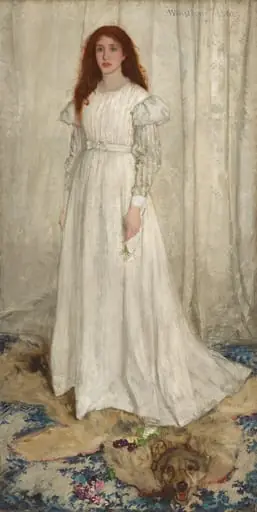 Symphony in White, No. 1: The White Girl
 Henry Irving as Philip II of Spain