Artwork
Conversation Under the Statue, Luxembourg Gardens
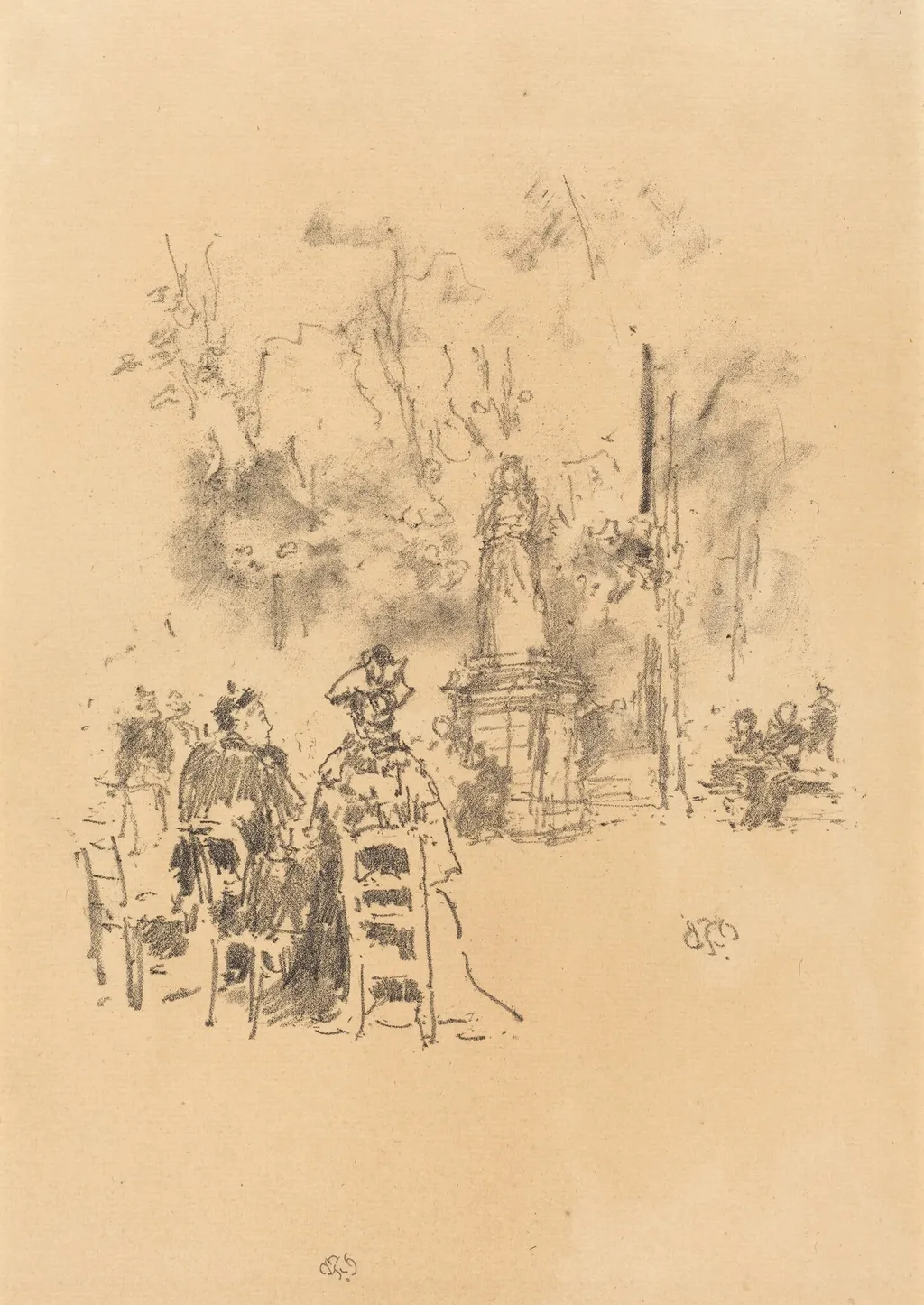
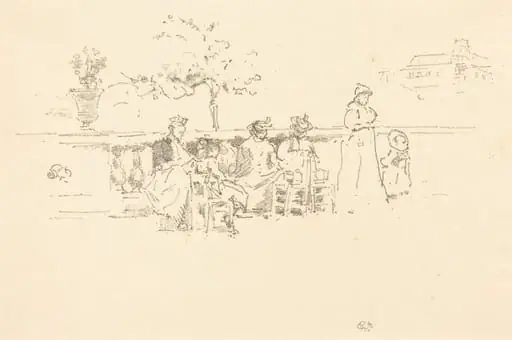
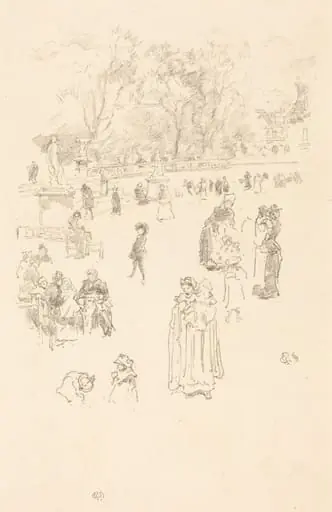
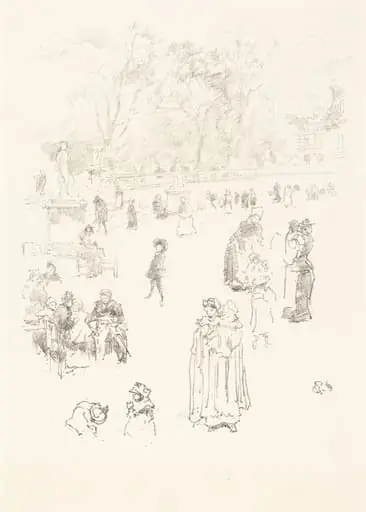
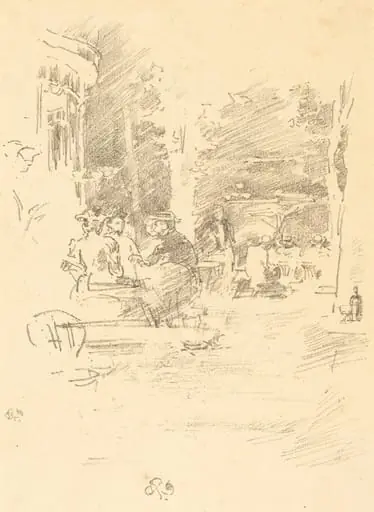
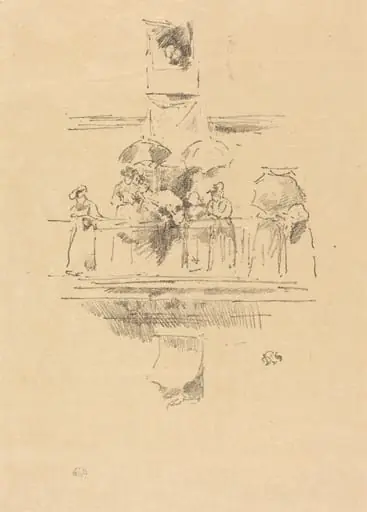
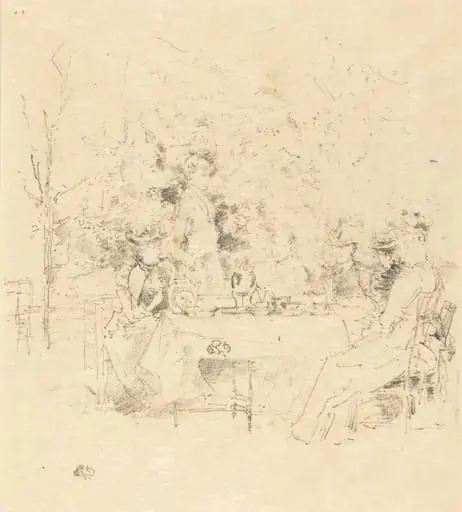
Conversation Under the Statue, Luxembourg Gardens is an ink print by the Impressionist artist James McNeill Whistler. It dates from 1893 and is held in the collection of the National Gallery of Art.
About this work
Overview
Rather than narrating a specific event, it presents a quiet interplay of figures and architecture, emphasizing mood over story.
Created in 1893, this lithograph by James McNeill Whistler captures a moment of stillness in Paris’s Luxembourg Gardens. Executed in black ink on laid paper, the work exemplifies Whistler’s commitment to tonal harmony and compositional balance. Rather than narrating a specific event, it presents a quiet interplay of figures and architecture, emphasizing mood over story. The medium’s capacity for subtle gradations allowed Whistler to achieve a restrained, atmospheric effect.
Subject & Meaning
Two seated figures are positioned beneath a tall, central statue, their postures suggesting quiet contemplation rather than active conversation. The statue, rendered with simplified form, acts as a silent focal point, drawing the eye upward. Whistler avoids overt emotion or narrative detail; instead, the scene invites reflection on solitude within public space. The figures, rendered in shadow, seem absorbed in their own thoughts, reinforcing the work’s meditative tone.
Technique & Style
Whistler employed lithography to exploit the medium’s capacity for soft tonal transitions and sharp linear contrast. The dark, densely inked figures and statue emerge from a lightly worked background, creating depth through value rather than perspective. Delicate hatching and varied line weight define textures in clothing and stone, while the absence of color heightens the focus on form and light. His technique reflects a deliberate economy of means, aligned with his aesthetic philosophy.
History & Provenance
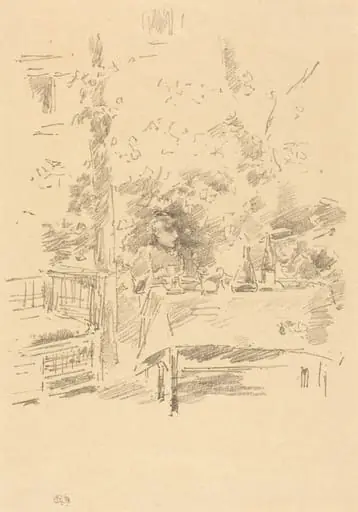
Produced during Whistler’s mature period in Paris, the print was part of a series of garden scenes he made between 1891 and 1894. It was likely printed in small editions for collectors and fellow artists, consistent with his practice of distributing prints as autonomous works. The lithograph remained in private hands through the 20th century before entering institutional collections, where it is now studied for its technical precision and quiet modernity.
Context
Whistler created this work amid a broader European interest in urban leisure spaces and the psychological effects of modern life. While contemporaries like Degas depicted movement and social interaction, Whistler turned inward, focusing on stillness and atmosphere. His choice of the Luxembourg Gardens—a favored refuge for Parisians—reflects his engagement with everyday environments, stripped of sentimentality and rendered as formal compositions.
Legacy
This lithograph exemplifies Whistler’s influence on modern printmaking through its emphasis on tone, restraint, and compositional discipline. It helped redefine lithography as a vehicle for subtle artistic expression rather than mere reproduction. Later artists, particularly those in the tonalist and modernist movements, drew from his approach to mood and minimalism, cementing the work’s role in the evolution of 20th-century graphic art.
Own this work as a print
Artist & collection
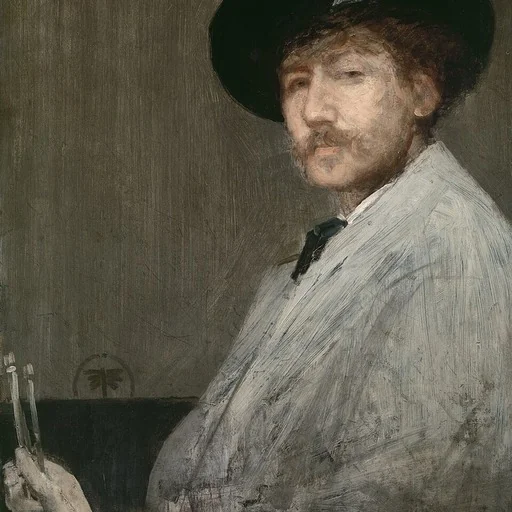
Artist
James Abbott McNeill Whistler was an American painter in oils and watercolor, and printmaker, active during the American Gilded Age and based primarily in the United Kingdom.

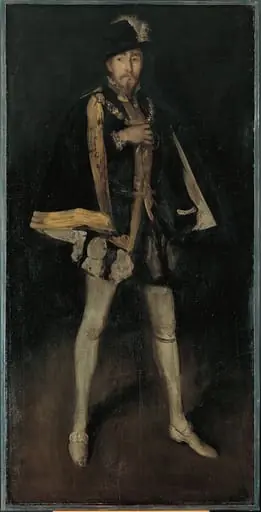 Arrangement in Black, No. 3: Sir Henry Irving as Philip II of Spain
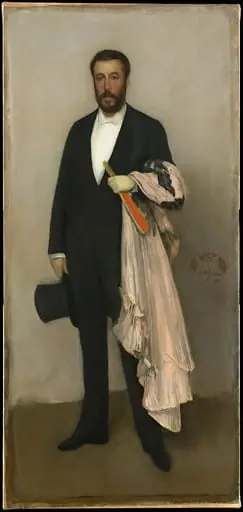 Arrangement in Flesh Colour and Black: Portrait of Theodore Duret
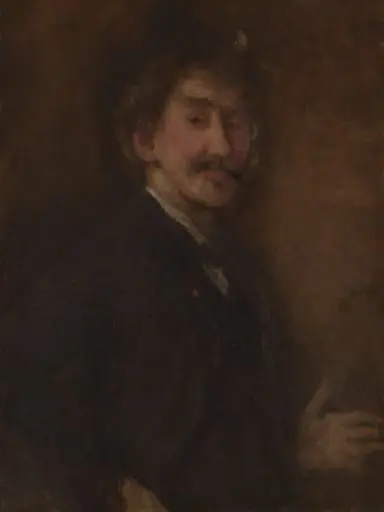 Gold and Brown: Self-Portrait
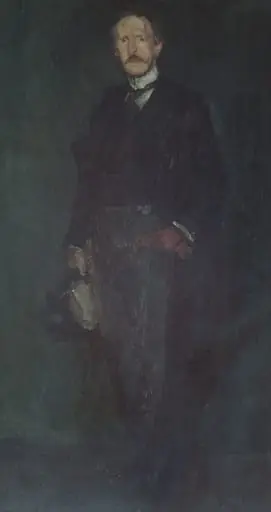 Edward Guthrie Kennedy
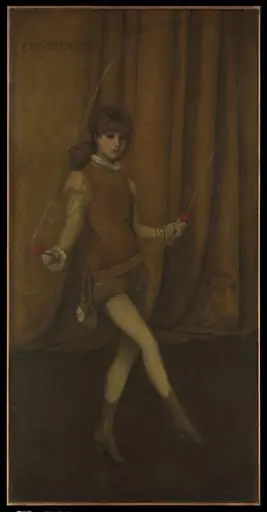 Harmony in Yellow and Gold: The Gold Girl—Connie Gilchrist
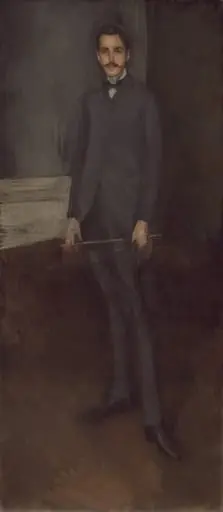 George W. Vanderbilt
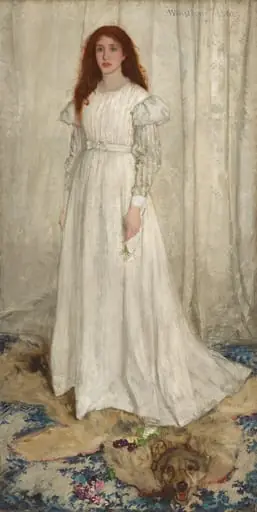 Symphony in White, No. 1: The White Girl
 Henry Irving as Philip II of Spain