Artwork
Elinor Leyland
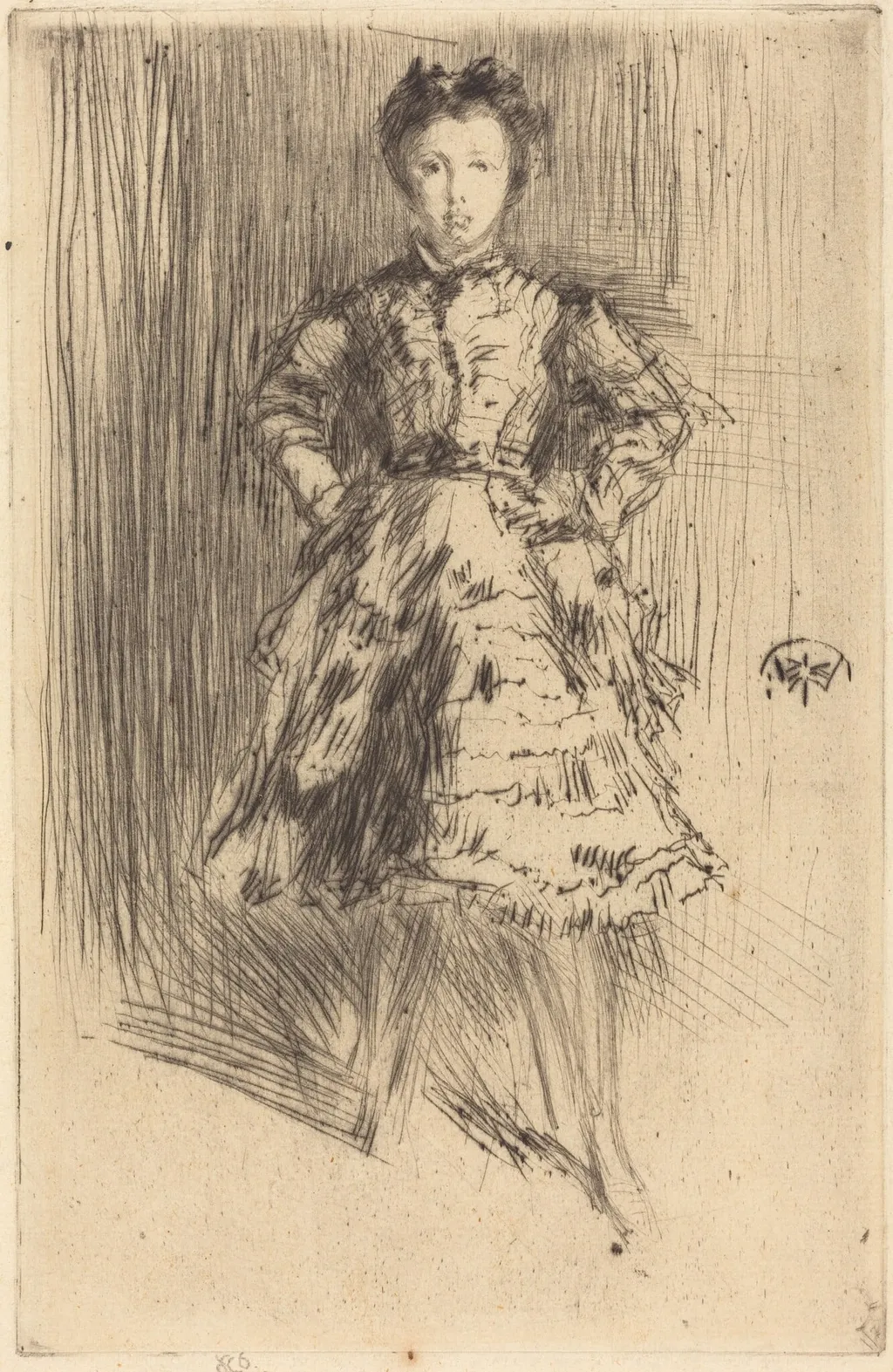
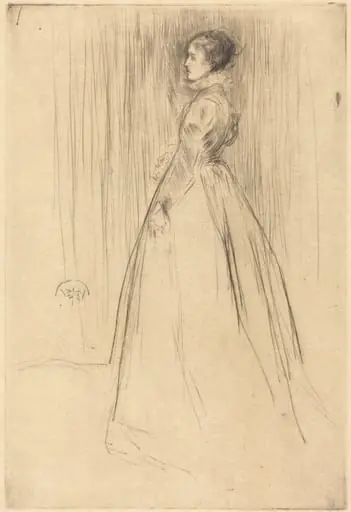
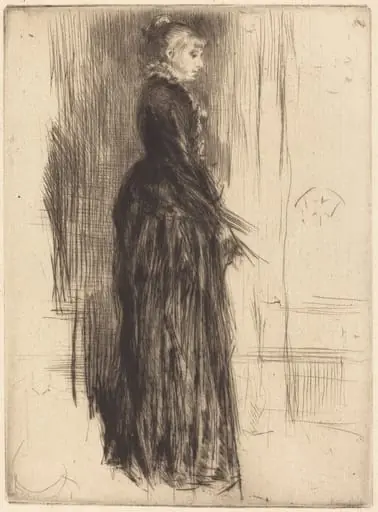
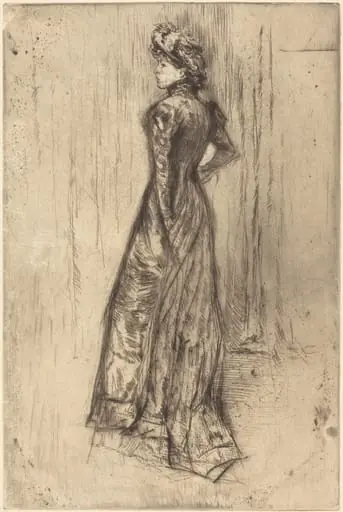
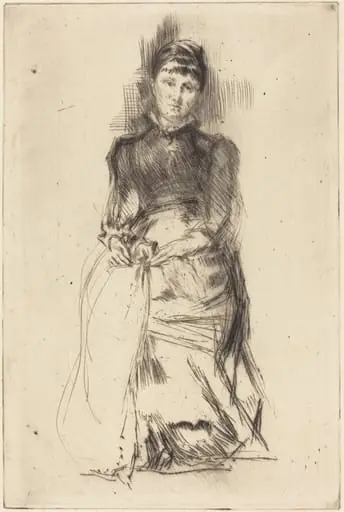
Elinor Leyland is an ink print by the Impressionist artist James McNeill Whistler. It dates from 1873 and is held in the collection of the National Gallery of Art.
About this work
Overview
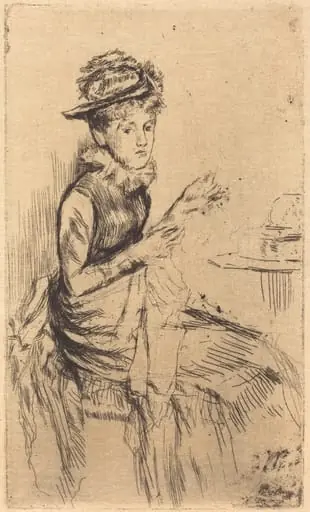
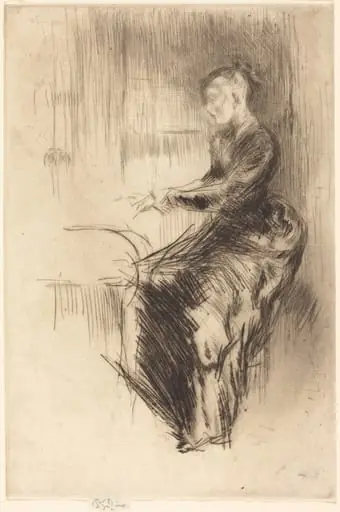
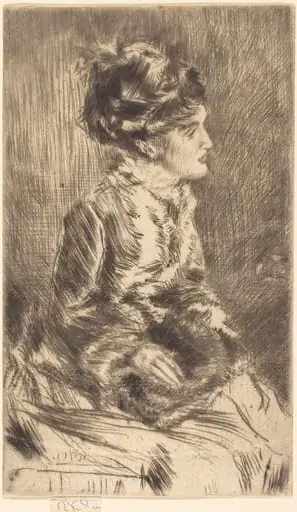
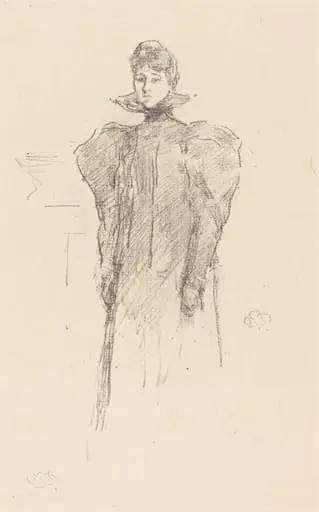
James McNeill Whistler’s 1873 drypoint, titled *Elinor Leyland*, portrays the young daughter of his patron Frederick Leyland. Executed on laid paper, the print presents a standing figure in a modest dress, her hands placed on her hips and her gaze meeting the viewer with a calm, neutral expression.
Subject & Meaning
Elinor is shown in a poised stance, her high‑necked, full‑skirted dress and up‑styled dark hair suggesting the modest fashion of the period. The simplicity of her pose and the restrained expression convey a quiet confidence, leaving interpretation open rather than narrating a specific story.
Technique & Style
The work employs drypoint, a printmaking method that produces fine, controlled lines and a characteristic velvety burr. Whistler’s handling of the medium creates subtle texture on the figure’s face and hands, while the dark, vertically‑lined background suggests drapery without detailing, emphasizing the silhouette of the sitter.
History & Provenance
Created during Whistler’s productive years in Britain, the print reflects his association with the Leyland family, who were significant supporters of his art. The piece bears Whistler’s stylized butterfly signature, a hallmark of his output in the 1870s.
Context
Whistler’s approach aligns with his “art for art’s sake” philosophy, favoring aesthetic composition over overt narrative sentiment. In portraiture, he often prioritized delicate line work and tonal harmony, as seen in this restrained yet finely rendered image of Elinor Leyland.
Artist & collection
Artist
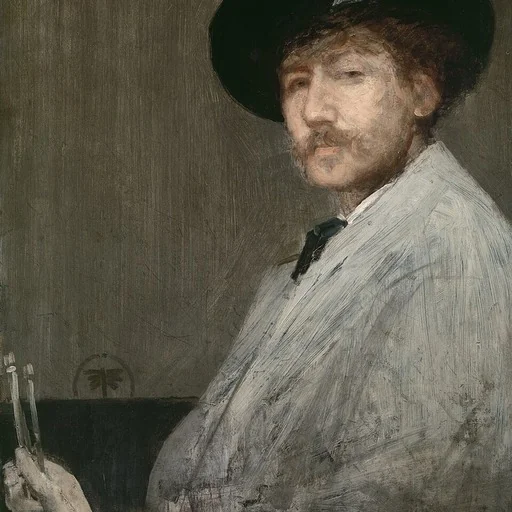
James Abbott McNeill Whistler was an American painter in oils and watercolor, and printmaker, active during the American Gilded Age and based primarily in the United Kingdom.

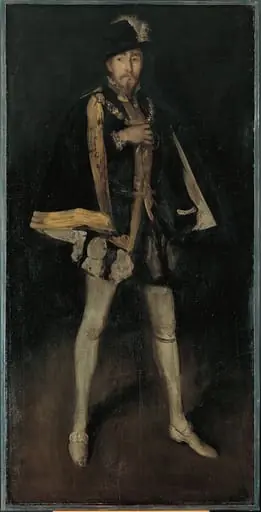 Arrangement in Black, No. 3: Sir Henry Irving as Philip II of Spain
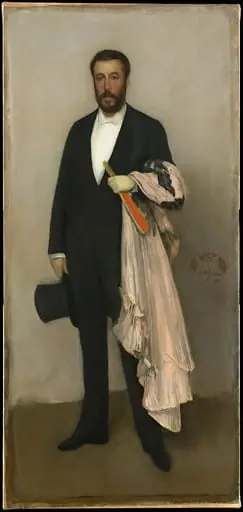 Arrangement in Flesh Colour and Black: Portrait of Theodore Duret
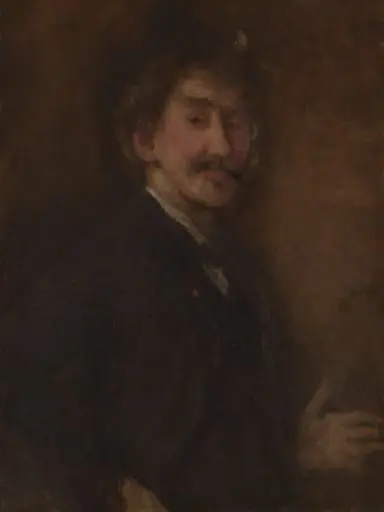 Gold and Brown: Self-Portrait
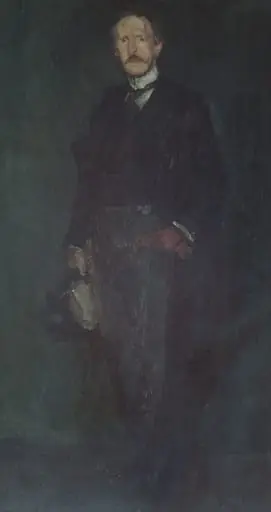 Edward Guthrie Kennedy
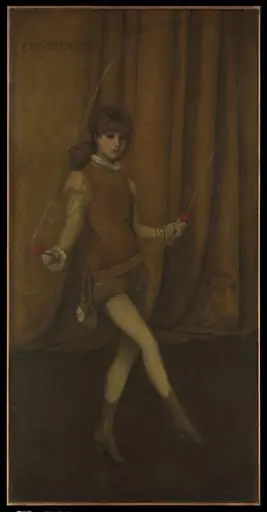 Harmony in Yellow and Gold: The Gold Girl—Connie Gilchrist
 George W. Vanderbilt
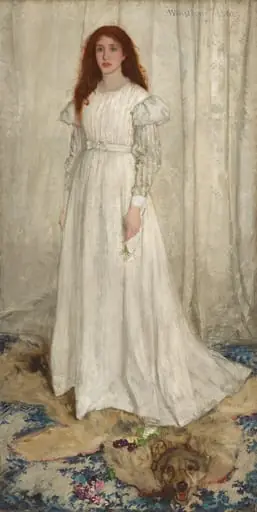 Symphony in White, No. 1: The White Girl
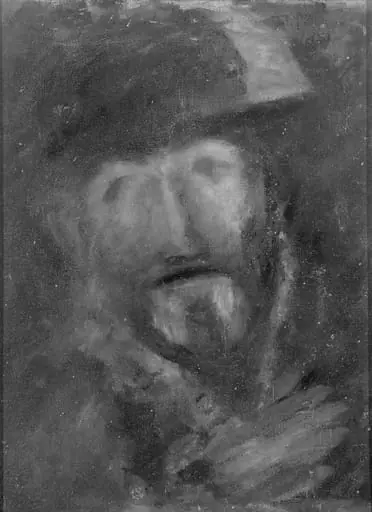 Henry Irving as Philip II of Spain