Artwork
Fanny Leyland
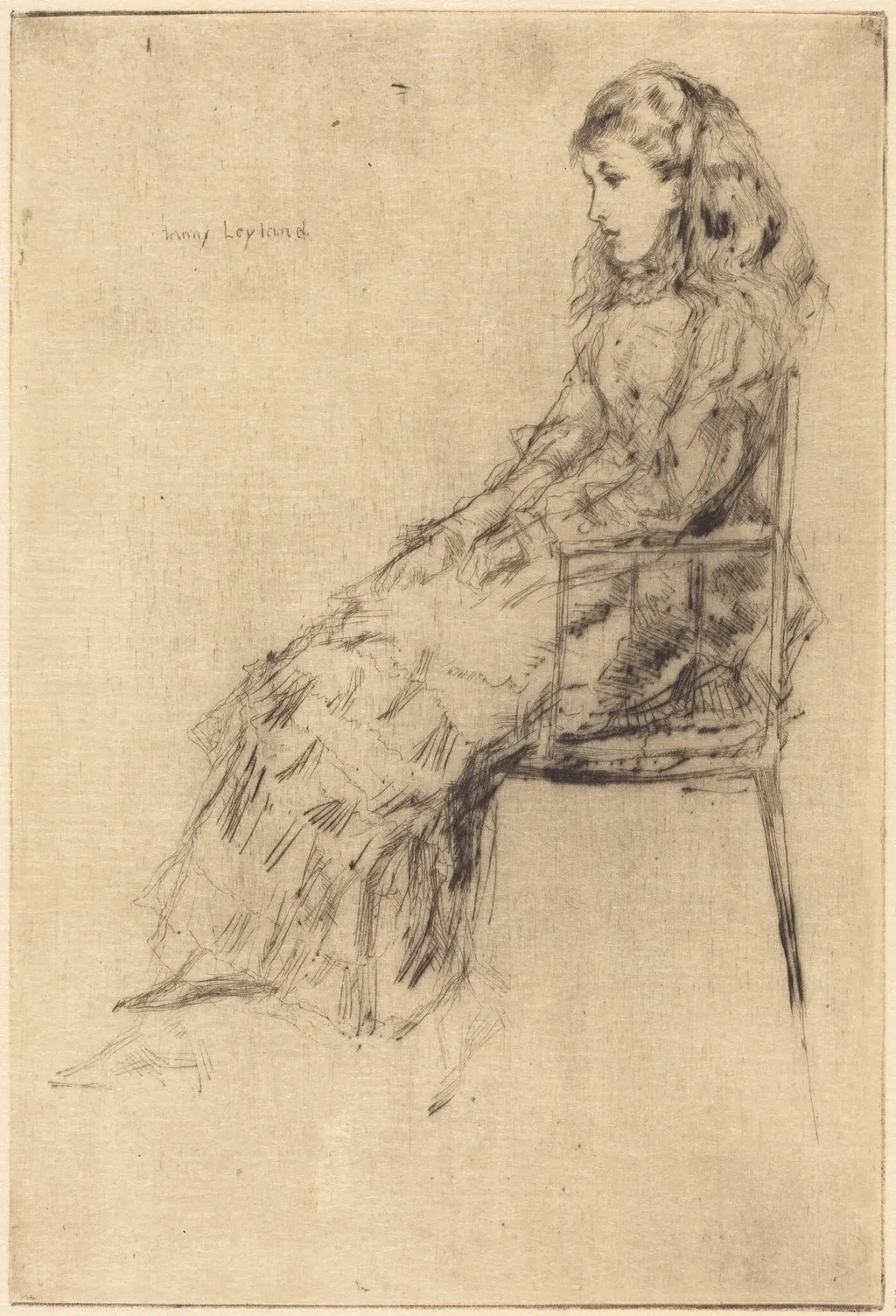
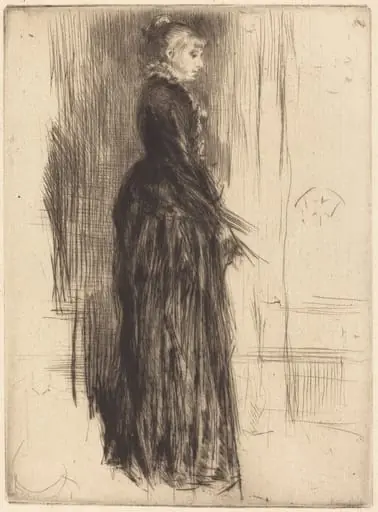
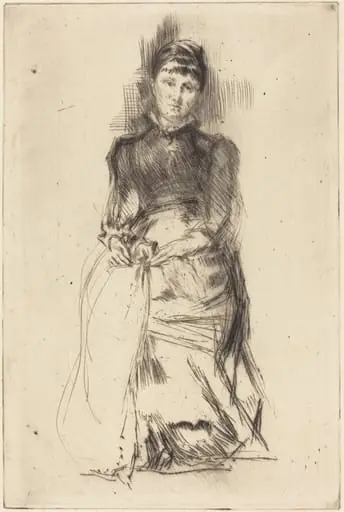
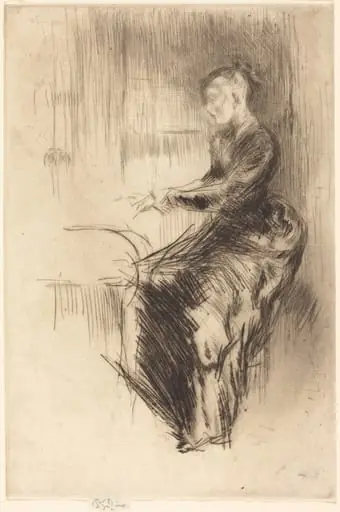
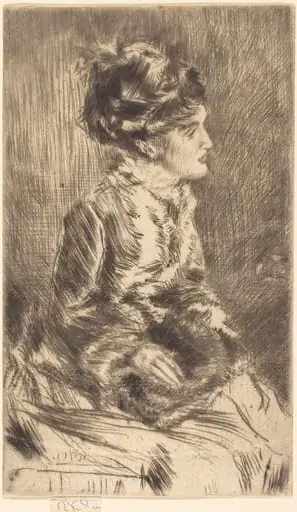
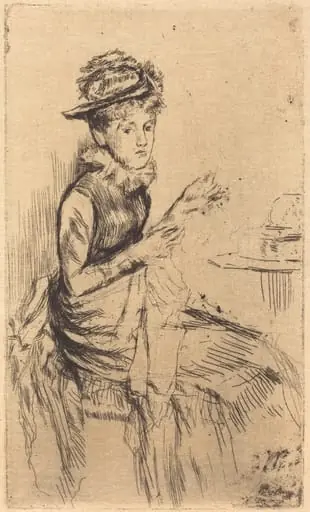
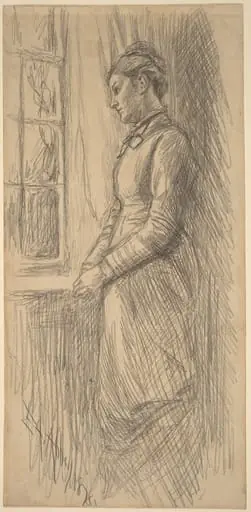
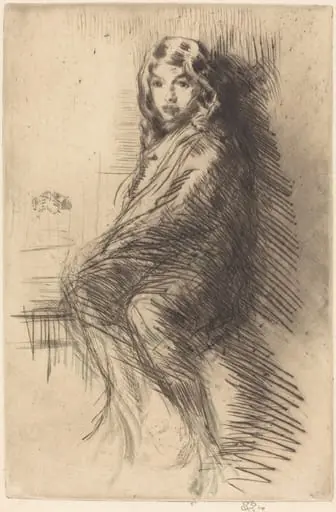
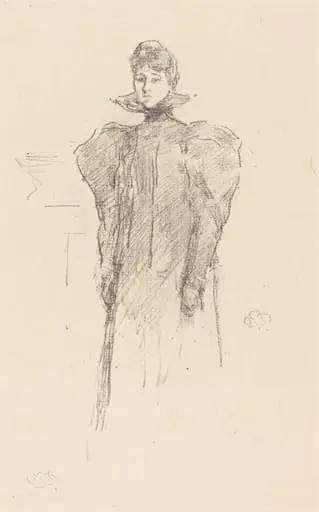
Fanny Leyland is an ink print by the Impressionist artist James McNeill Whistler. It dates from 1873 and is held in the collection of the National Gallery of Art.
About this work
Overview
Created in 1873, *Fanny Leyland* is a drypoint print by American expatriate artist James McNeill Whistler. Executed on Asian laid paper, it belongs to a series of intimate portraits Whistler produced during his time in London. The work exemplifies his commitment to tonal harmony and restrained composition, distinguishing his printmaking from the narrative excesses common in Victorian art.
Subject & Meaning
The subject is Fanny Leyland, wife of the art patron Frederick Leyland. She is depicted seated, gazing away from the viewer with a composed, unadorned expression. Whistler avoids theatricality, presenting her not as a social figure but as a quiet, private individual. The portrait emphasizes presence over narrative, inviting contemplation rather than emotional engagement.
Technique & Style
Whistler employed drypoint to create soft, velvety lines that define Fanny’s features with minimal detail. The technique allows subtle gradations of tone, focusing attention on the contour of her face and the texture of her hair. The composition is sparse, with no background or props, reinforcing a sense of stillness and psychological immediacy.
History & Provenance
The print was made during a period when Whistler was deeply engaged with printmaking, often using Asian laid paper for its fine texture and absorbency. It was likely produced for private circulation among collectors and fellow artists rather than public exhibition. The work remained within circles connected to Whistler and the Leyland family until entering institutional collections.
Context
In the 1870s, Whistler aligned himself with the Aesthetic Movement, prioritizing beauty and formal harmony over moral or sentimental content. His portraits, including this one, responded to the prevailing taste for refined, non-narrative imagery. The use of Asian paper reflects his interest in Japanese aesthetics, which influenced his compositional economy and emphasis on surface.
Legacy
Fanny Leyland stands as an example of Whistler’s influence on modern portraiture through its restraint and psychological subtlety. The print contributed to the redefinition of etching and drypoint as serious artistic media, separate from reproductive illustration. Its quiet intensity continues to inform approaches to intimate portraiture in 20th-century printmaking.
Artist & collection
Artist
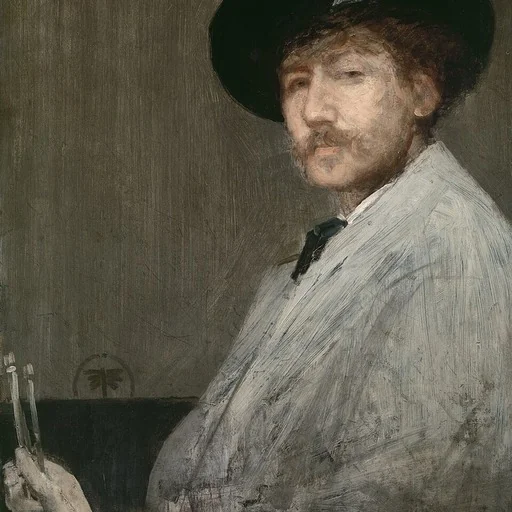
James Abbott McNeill Whistler was an American painter in oils and watercolor, and printmaker, active during the American Gilded Age and based primarily in the United Kingdom.

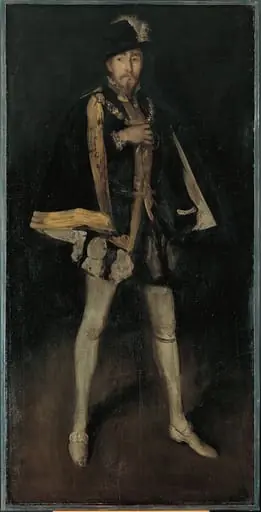 Arrangement in Black, No. 3: Sir Henry Irving as Philip II of Spain
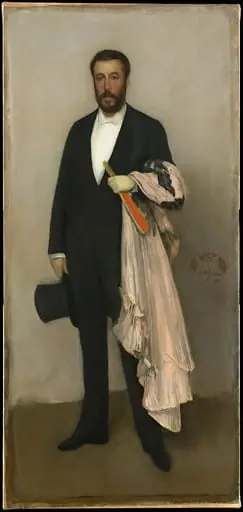 Arrangement in Flesh Colour and Black: Portrait of Theodore Duret
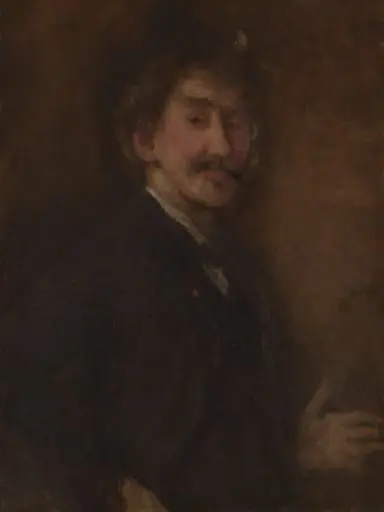 Gold and Brown: Self-Portrait
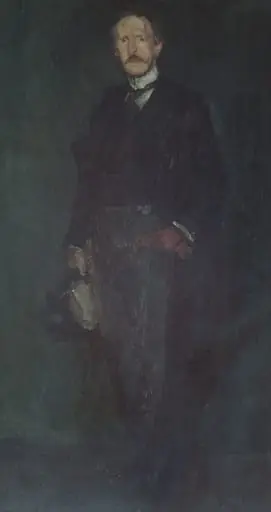 Edward Guthrie Kennedy
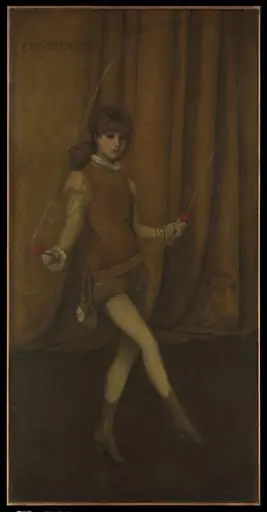 Harmony in Yellow and Gold: The Gold Girl—Connie Gilchrist
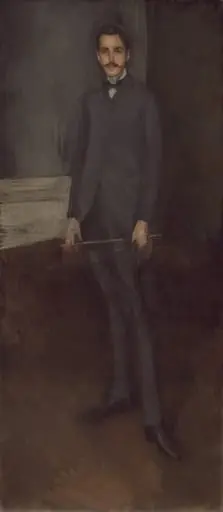 George W. Vanderbilt
 Symphony in White, No. 1: The White Girl
 Henry Irving as Philip II of Spain