Artwork
Fumette
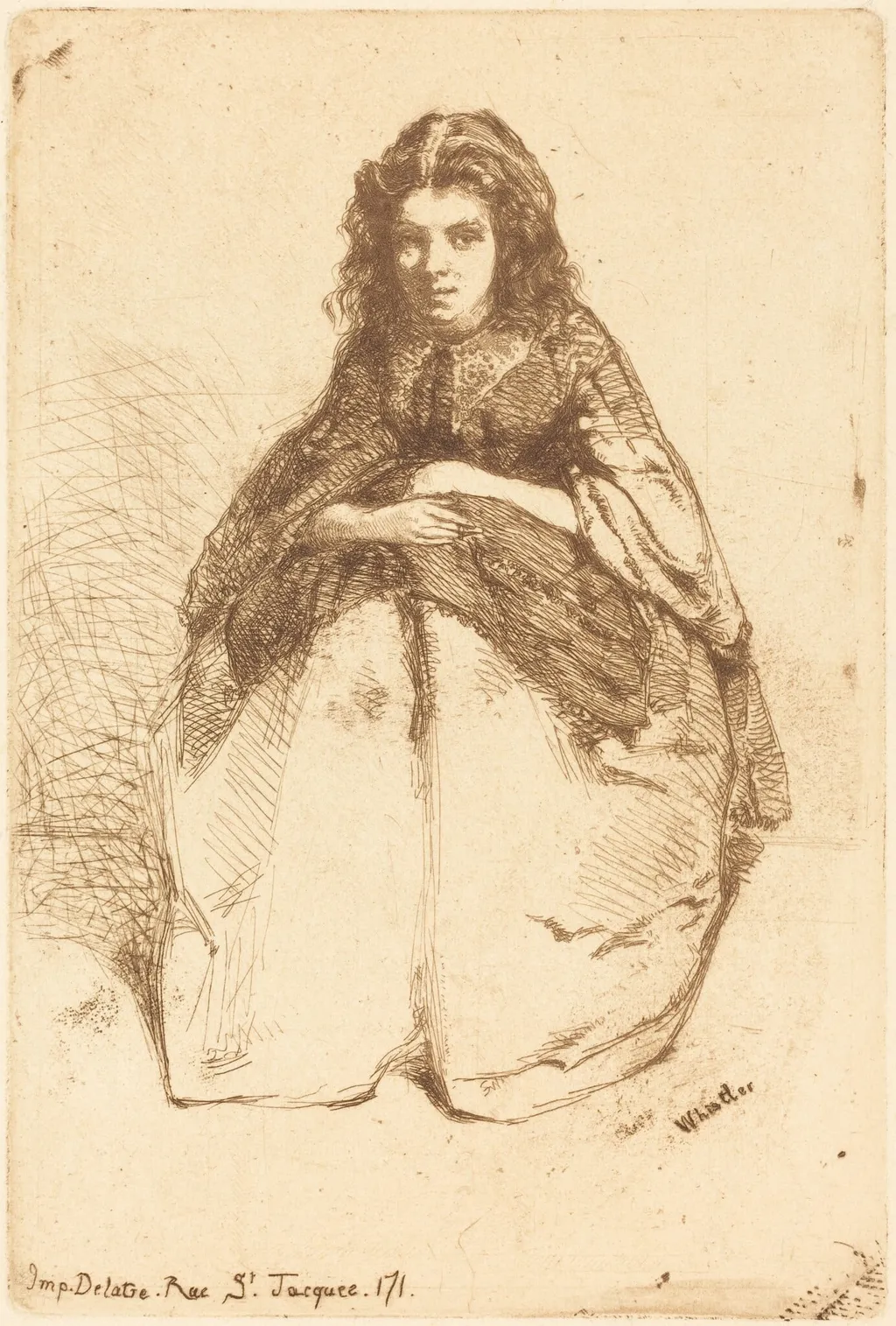
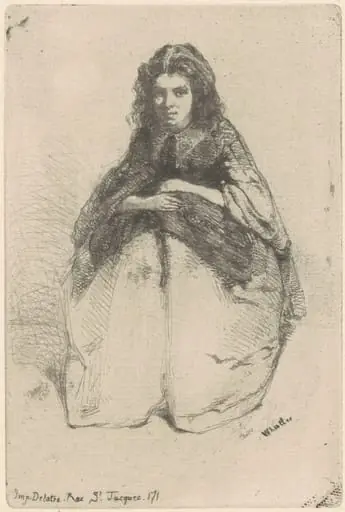
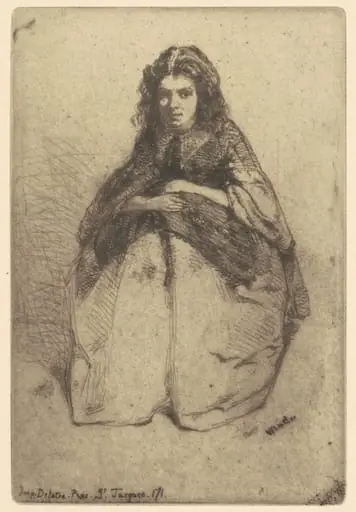
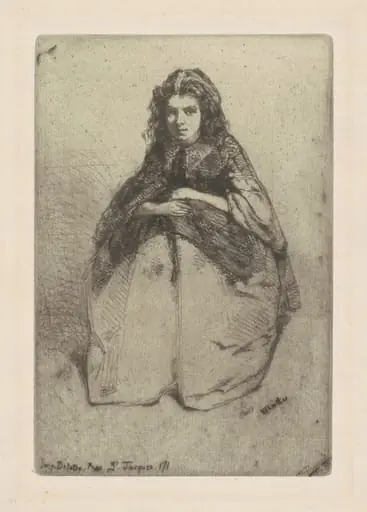
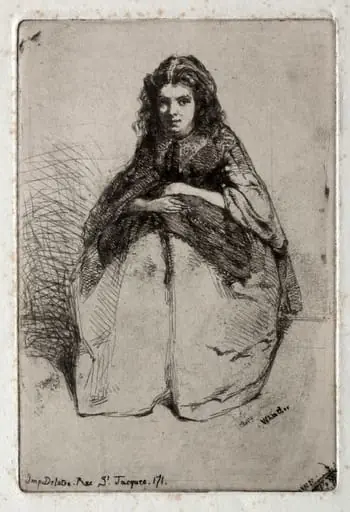
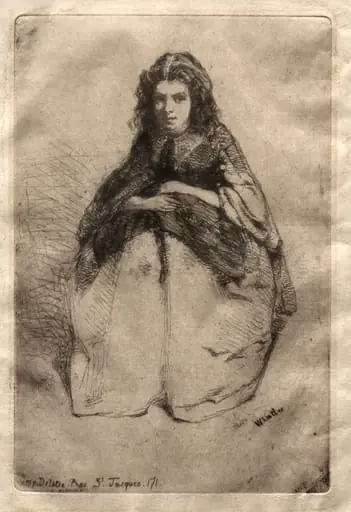
Fumette is an ink print by the Impressionist artist James McNeill Whistler. It dates from 1858 and is held in the collection of the National Gallery of Art.
About this work
Overview
James McNeill Whistler’s *Fumette*, an etching from 1858, represents an early example of his printmaking practice. Created during a period when the artist divided his time between Paris and London, the work reflects his commitment to formal precision over narrative sentiment. Executed in brown ink on wove paper, the composition distills the figure’s presence through controlled, economical lines.
Subject & Meaning
Identified by contemporaries as Whistler’s model and companion, Élise (known as Fumette), the figure’s neutral expression and folded hands evoke introspection.
The etching portrays a seated woman in profile, her posture suggesting quiet absorption rather than overt emotion. Identified by contemporaries as Whistler’s model and companion, Élise (known as Fumette), the figure’s neutral expression and folded hands evoke introspection. The absence of contextual details directs attention to the interplay of light and form, aligning with the artist’s rejection of anecdotal content.
Technique & Style
Whistler’s approach in *Fumette* demonstrates his mastery of etching, a medium he employed to achieve tonal subtlety and textural contrast. Delicate, fluid lines define the woman’s attire and hair, while selective hatching in the background creates depth without overwhelming the composition. The restrained palette and emphasis on linear economy reflect his affiliation with the Aesthetic Movement’s ideals.
History & Provenance
Produced in 1858, *Fumette* emerged during Whistler’s formative years in Paris, where he studied printmaking techniques alongside contemporaries. The etching circulated among collectors and exhibitions, including early showings at the Royal Academy. Its provenance traces through private collections and institutional acquisitions, underscoring its role in establishing Whistler’s reputation as a printmaker.
Context
The work belongs to a series of etchings Whistler created during the late 1850s, a period marked by experimentation with urban and figural subjects. *Fumette* exemplifies his departure from sentimental portraiture, favoring instead a distilled, almost abstract treatment of the human form. This approach resonated with broader artistic shifts toward formalism and the autonomy of visual elements.
Legacy
As one of Whistler’s earliest etchings, *Fumette* contributed to the revival of printmaking as a serious artistic medium in the 19th century. Its technical refinement and compositional restraint influenced subsequent generations of printmakers. The work remains a key example of Whistler’s ability to merge precision with atmospheric effect, reinforcing his lasting impact on graphic arts.
Artist & collection
Artist
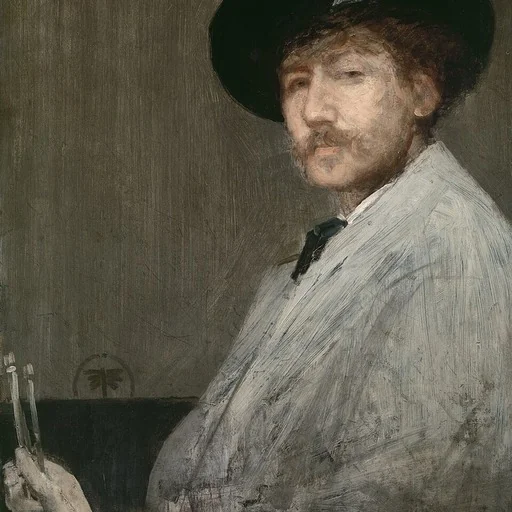
James Abbott McNeill Whistler was an American painter in oils and watercolor, and printmaker, active during the American Gilded Age and based primarily in the United Kingdom.

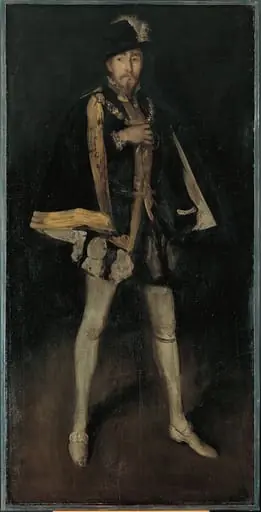 Arrangement in Black, No. 3: Sir Henry Irving as Philip II of Spain
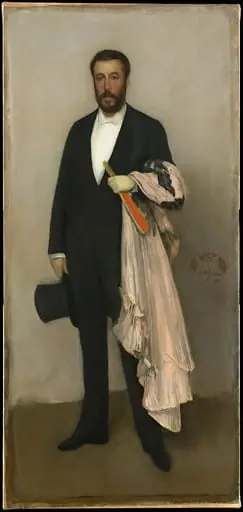 Arrangement in Flesh Colour and Black: Portrait of Theodore Duret
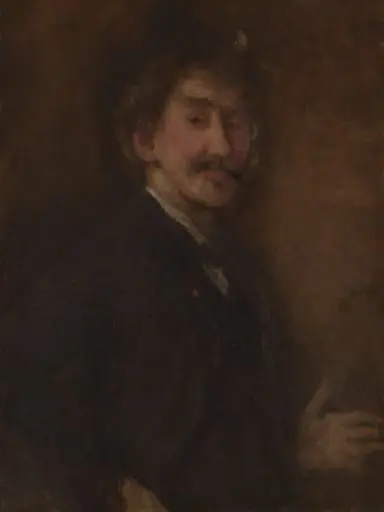 Gold and Brown: Self-Portrait
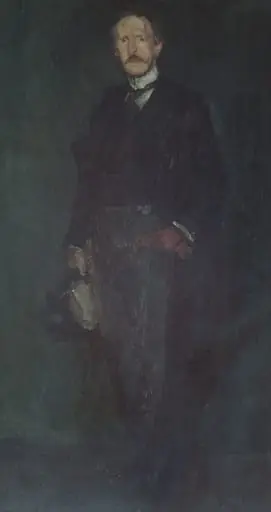 Edward Guthrie Kennedy
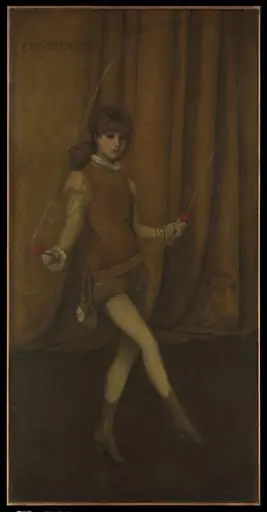 Harmony in Yellow and Gold: The Gold Girl—Connie Gilchrist
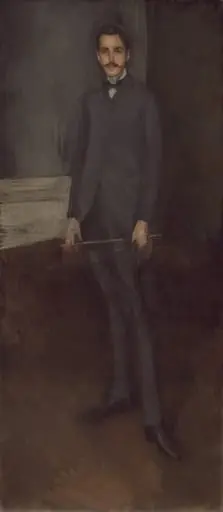 George W. Vanderbilt
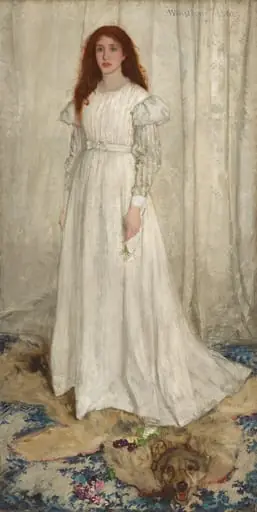 Symphony in White, No. 1: The White Girl
 Henry Irving as Philip II of Spain