Artwork
Gants de Suède
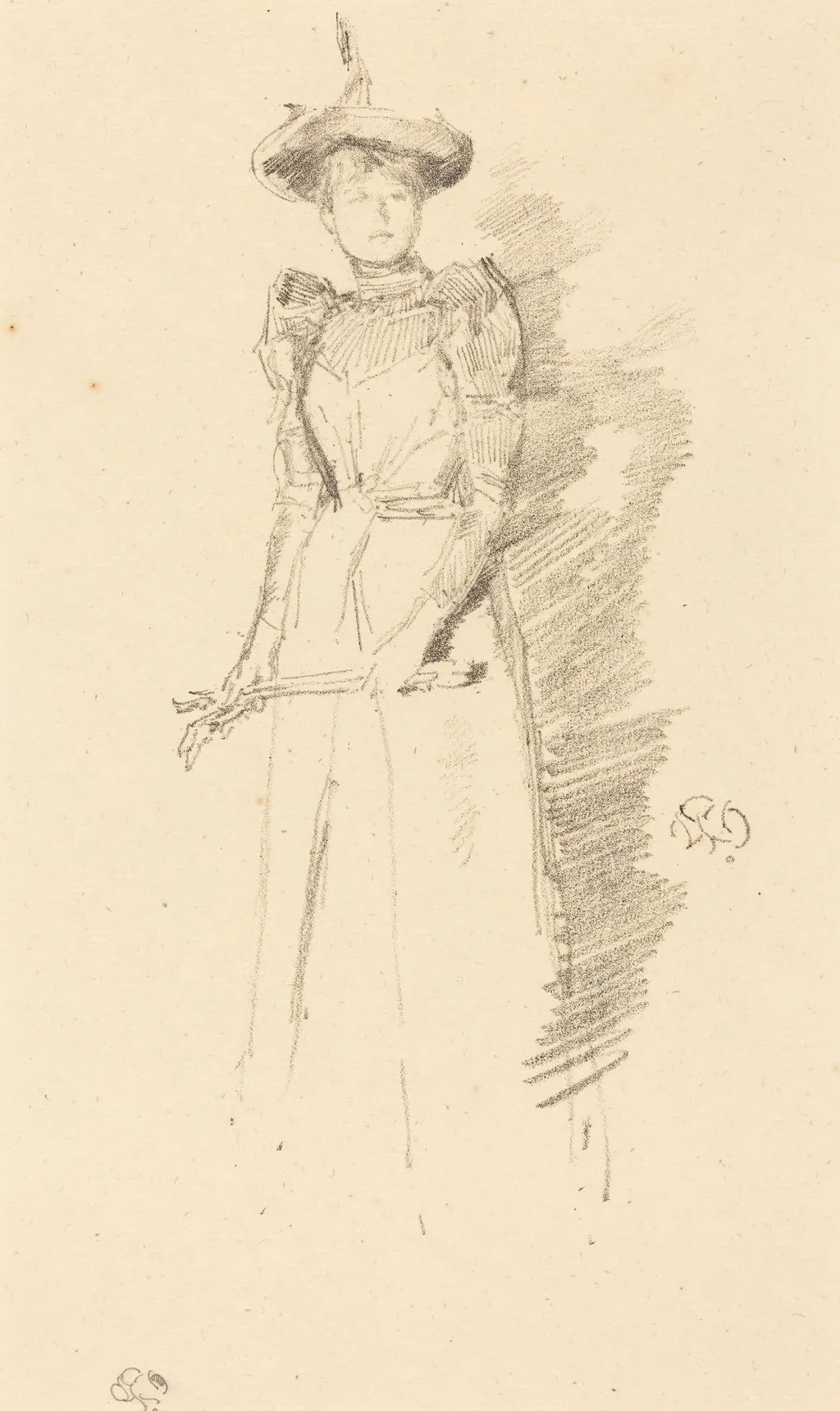
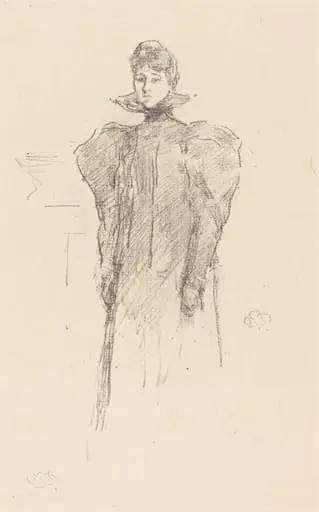
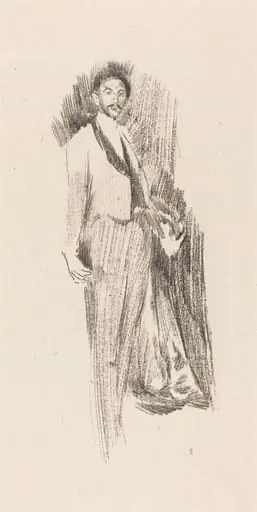
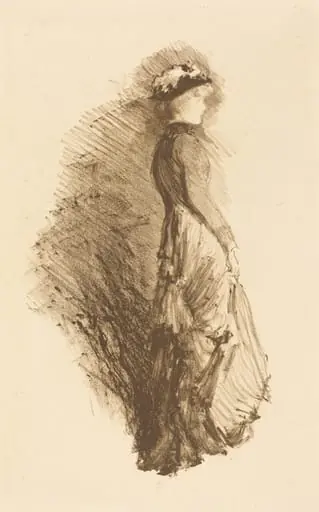
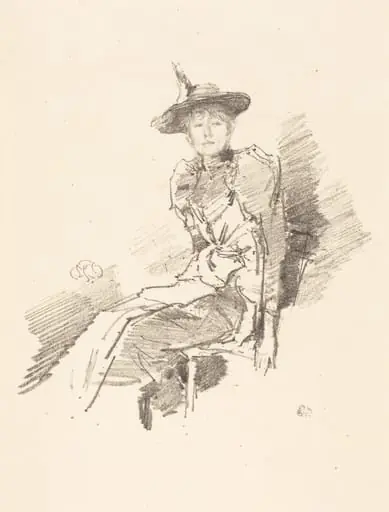
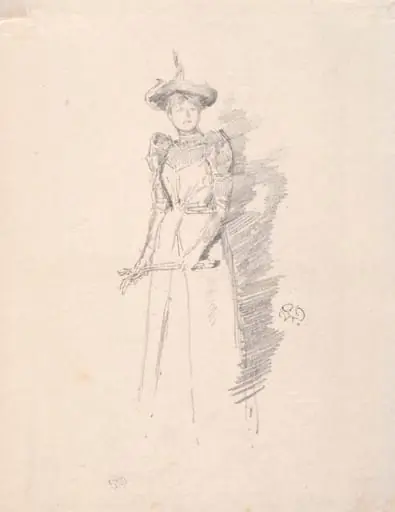
Gants de Suède is an ink print by the Impressionist artist James McNeill Whistler. It dates from 1890 and is held in the collection of the National Gallery of Art.
About this work
Overview
Created in 1890, *Gants de Suède* is a lithograph in black ink on laid paper, part of James McNeill Whistler’s late-period exploration of printmaking.
Created in 1890, *Gants de Suède* is a lithograph in black ink on laid paper, part of James McNeill Whistler’s late-period exploration of printmaking. Unlike traditional portraiture, the work captures a fleeting figure in loose, gestural lines—suggesting motion rather than defining form. The image is minimal, avoiding detail in favor of atmospheric suggestion, consistent with Whistler’s interest in tonal harmony over narrative.
Subject & Meaning
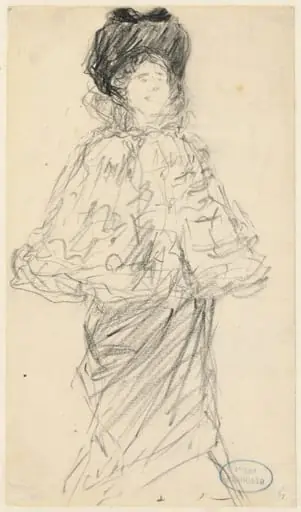
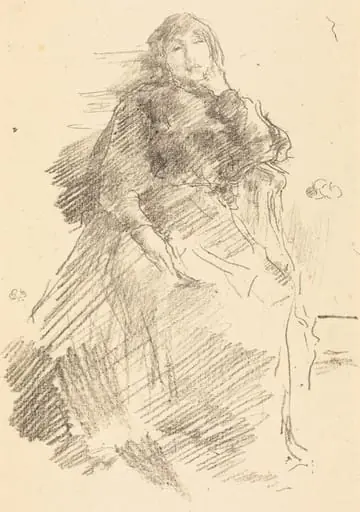
The figure, seen in profile, wears a broad-brimmed hat and a long coat with a cape, one hand resting on a cane, the other dangling loosely. No facial features or identifying traits are rendered, emphasizing anonymity. The title, referencing delicate gloves, may allude to refined manners or transient presence, but the image resists clear symbolism, aligning with Whistler’s preference for evocation over explicit meaning.
Technique & Style
Executed in lithography, the image relies on the medium’s capacity for rapid, fluid mark-making. Whistler employed a sketchy, almost spontaneous technique, using rough shading and simplified contours to suggest volume and movement. The absence of fine detail and the emphasis on broad, economical strokes reflect his belief in the expressive power of suggestion, a hallmark of his mature aesthetic.
History & Provenance
Produced during Whistler’s years in London, the print emerged from a period when he was deeply engaged with printmaking as an independent art form. It coincides with his refinement of the butterfly signature, a personal emblem that signaled both artistic identity and a deliberate distancing from conventional artistic expectations. The work was likely made for private circulation rather than public sale.
Context
In the 1890s, Whistler was increasingly focused on the formal qualities of art—line, tone, and composition—over storytelling or moral messaging. *Gants de Suède* reflects this shift, aligning with broader European trends toward aestheticism and the rejection of academic realism. Its sketch-like quality resonates with contemporary interest in the artist’s process as a subject worthy of study.
Legacy
The print exemplifies Whistler’s influence on modern printmaking by elevating the sketch to the status of finished work. Its restraint and emphasis on atmosphere anticipated later movements that valued implication over detail. Though not widely exhibited in his lifetime, it remains a quiet testament to his commitment to artistic economy and the expressive potential of the line.
Artist & collection
Artist
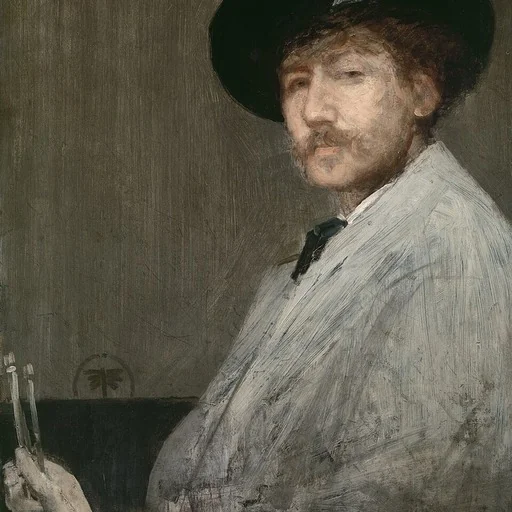
James Abbott McNeill Whistler was an American painter in oils and watercolor, and printmaker, active during the American Gilded Age and based primarily in the United Kingdom.

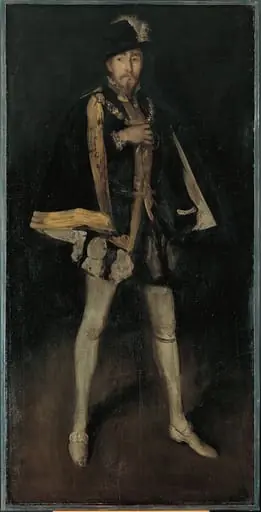 Arrangement in Black, No. 3: Sir Henry Irving as Philip II of Spain
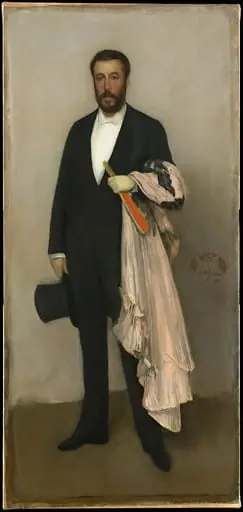 Arrangement in Flesh Colour and Black: Portrait of Theodore Duret
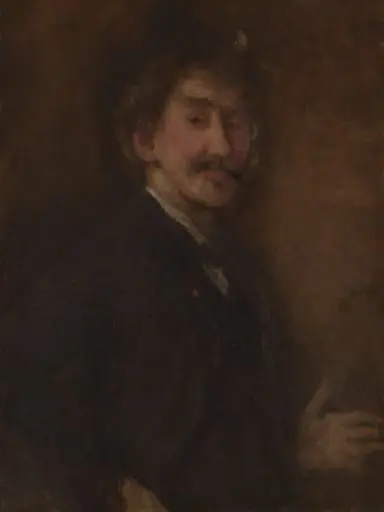 Gold and Brown: Self-Portrait
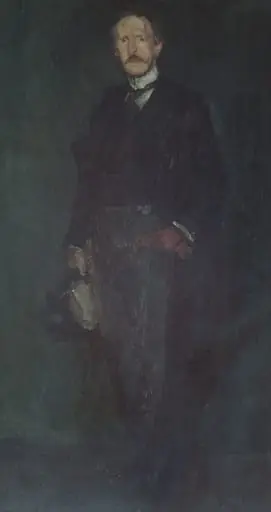 Edward Guthrie Kennedy
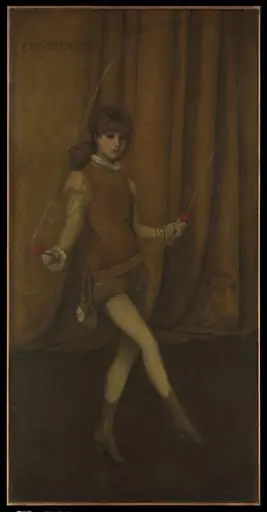 Harmony in Yellow and Gold: The Gold Girl—Connie Gilchrist
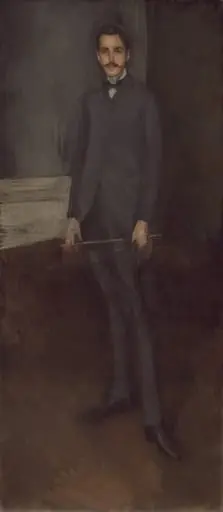 George W. Vanderbilt
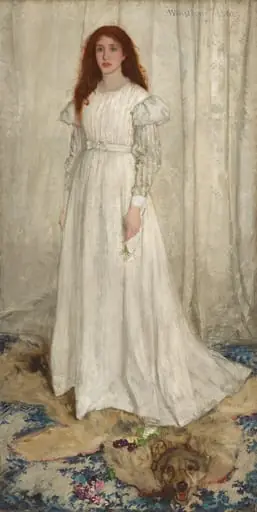 Symphony in White, No. 1: The White Girl
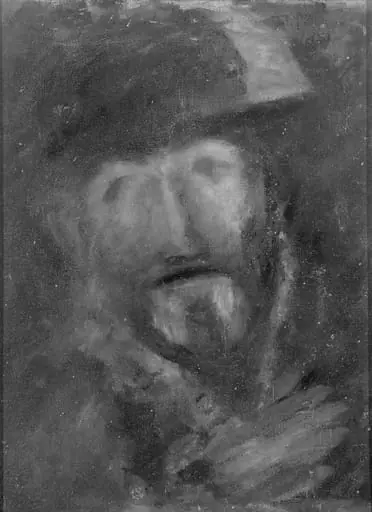 Henry Irving as Philip II of Spain