Artwork
Garden
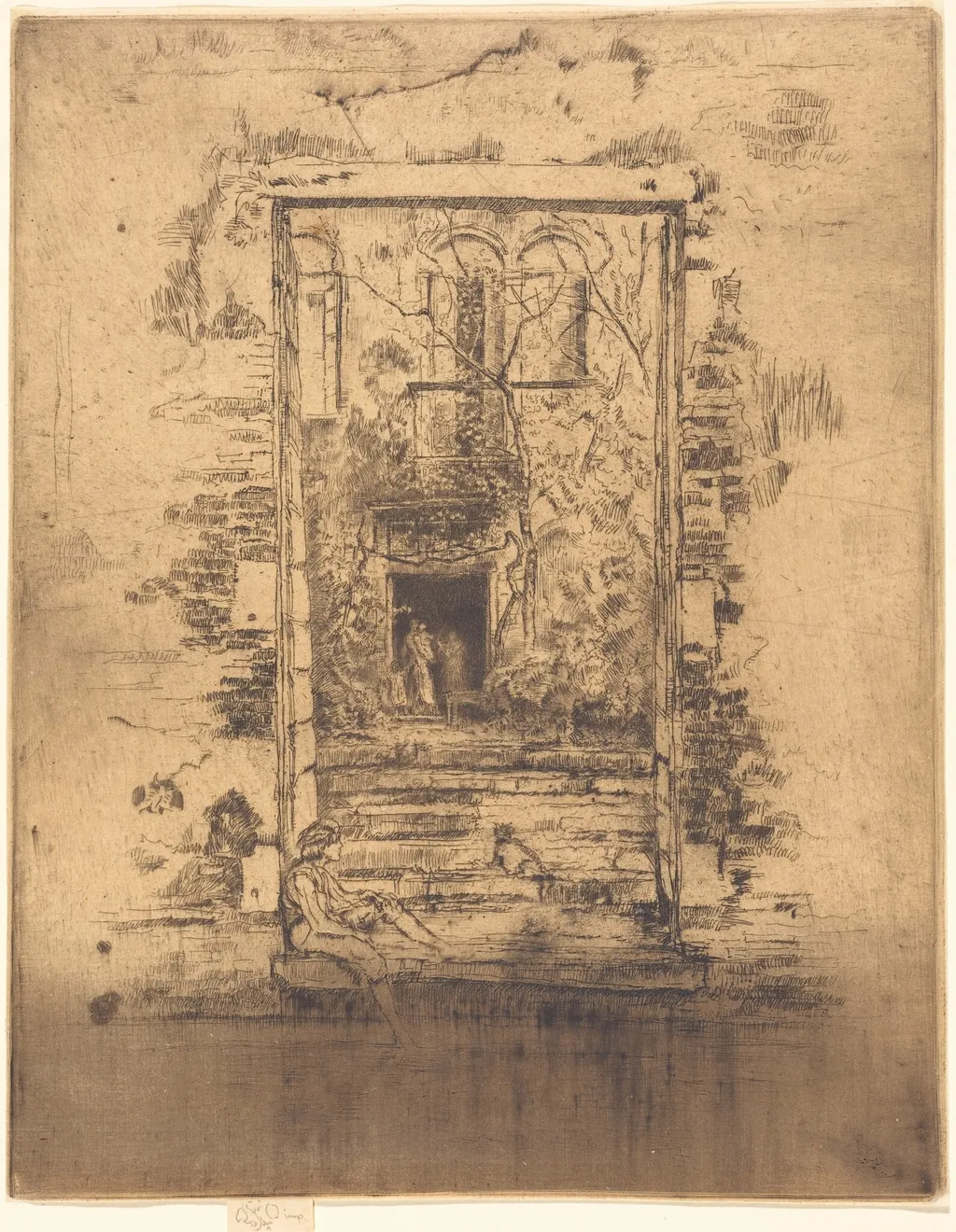
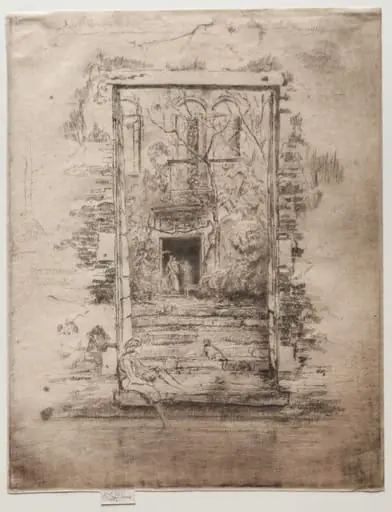
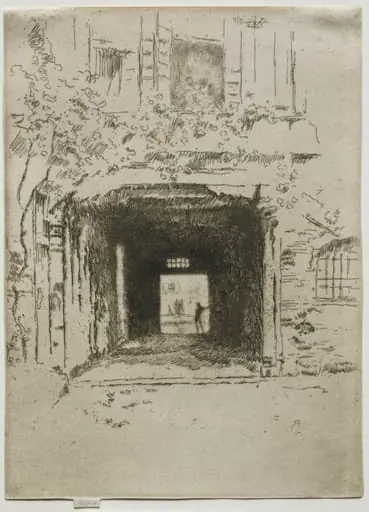
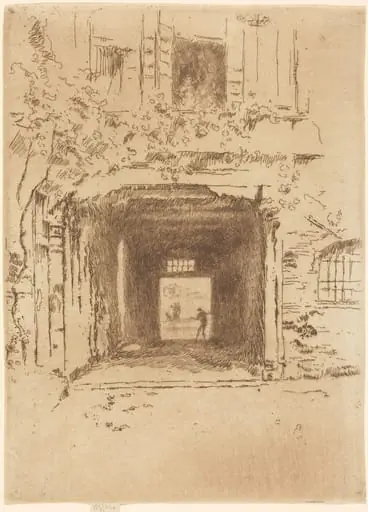
Garden is an ink print by the Impressionist artist James McNeill Whistler. It dates from 1880 and is held in the collection of the National Gallery of Art.
About this work
Overview
The piece exemplifies his commitment to subtle gradations of light and shadow, achieved through meticulous handwork on metal plates and careful ink application.
Created in 1880, *Garden* is an etching and drypoint in dark brown on laid paper by James McNeill Whistler. Unlike narrative-driven works of the period, this print prioritizes atmosphere and tonal harmony. Whistler, based in London, was a leading proponent of aestheticism, favoring visual resonance over storytelling. The piece exemplifies his commitment to subtle gradations of light and shadow, achieved through meticulous handwork on metal plates and careful ink application.
Subject & Meaning
The scene depicts an interior space with a narrow window opening to an indistinct garden. Two faint human figures near the stairs are barely illuminated, their forms suggested rather than defined. The focus lies not in identity or action, but in the quiet interplay between interior and exterior, light and shadow. The ambiguity invites contemplation rather than interpretation, aligning with Whistler’s belief in art’s autonomy from moral or literary content.
Technique & Style
Whistler employed drypoint and etching to build texture and depth, using fine, incised lines to model form and tone. The rough, scratchy marks on the paper evoke uneven surfaces—walls, floor, foliage—without detailing them. Dark brown ink enhances the somber mood, while the limited palette emphasizes tonal nuance. The technique prioritizes atmospheric suggestion over precision, reflecting his interest in the emotional potential of line and shadow.
History & Provenance
Produced during Whistler’s most active period in printmaking, *Garden* belongs to a series of intimate interior scenes he created in the 1870s and 1880s. These works were often distributed in limited editions to collectors and fellow artists. The butterfly monogram, a signature motif he adopted in the 1870s, appears here as a stylized mark of authorship, blending elegance with a defiant personal identity.
Context
In late 19th-century Britain, Whistler’s prints stood apart from the dominant realist and narrative traditions. Influenced by Japanese ukiyo-e and the Aesthetic Movement, he rejected didactic art in favor of sensory experience. *Garden* reflects this shift—its quiet composition and emphasis on mood aligned with contemporary debates about art’s purpose, positioning Whistler as a key figure in the move toward abstraction and emotional resonance.
Legacy
Whistler’s prints, including *Garden*, influenced later generations of printmakers who valued tonal subtlety over detail. His integration of etching and drypoint demonstrated the expressive potential of these techniques beyond reproduction. Though less celebrated than his paintings, his graphic work remains a critical part of his legacy, embodying a quiet revolution in how light, space, and mood could be conveyed through ink and line.
Artist & collection
Artist
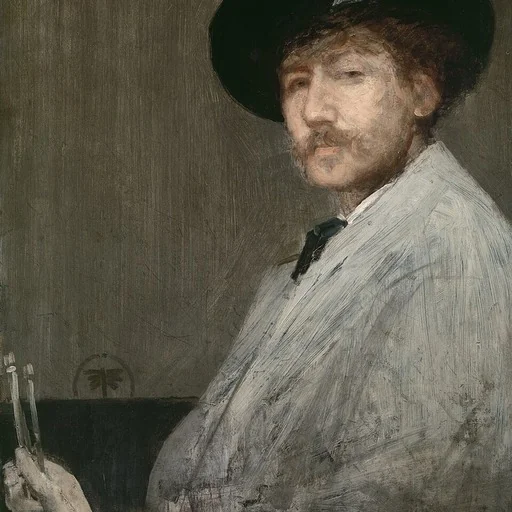
James Abbott McNeill Whistler was an American painter in oils and watercolor, and printmaker, active during the American Gilded Age and based primarily in the United Kingdom.

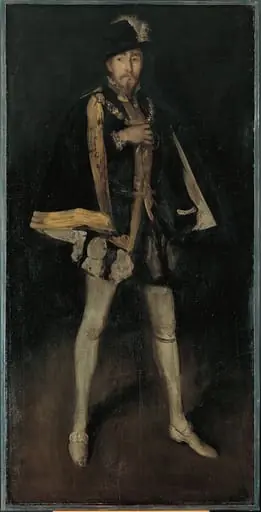 Arrangement in Black, No. 3: Sir Henry Irving as Philip II of Spain
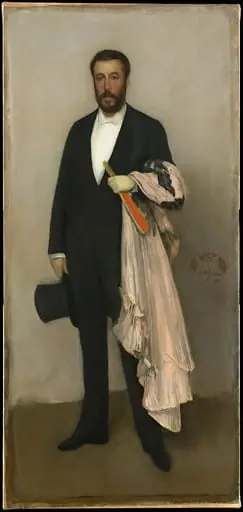 Arrangement in Flesh Colour and Black: Portrait of Theodore Duret
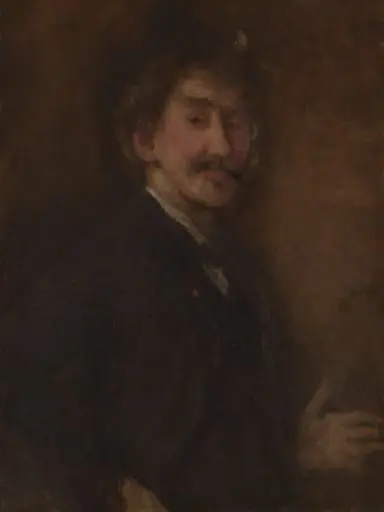 Gold and Brown: Self-Portrait
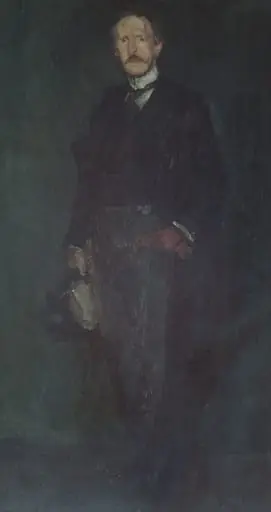 Edward Guthrie Kennedy
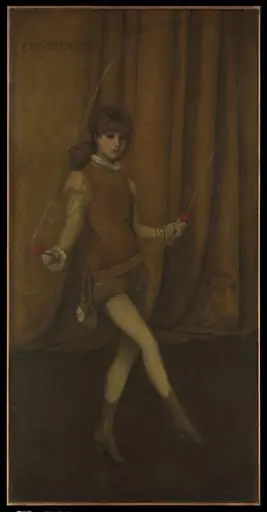 Harmony in Yellow and Gold: The Gold Girl—Connie Gilchrist
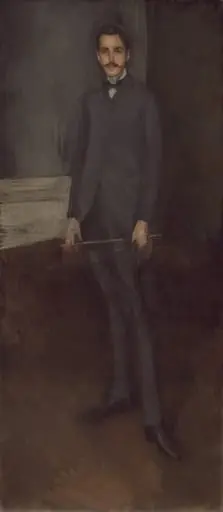 George W. Vanderbilt
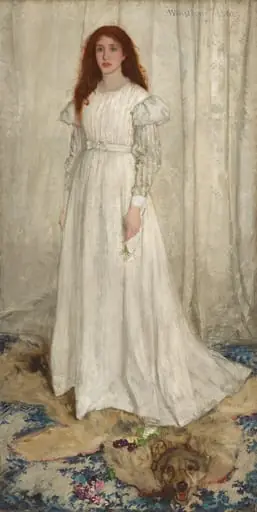 Symphony in White, No. 1: The White Girl
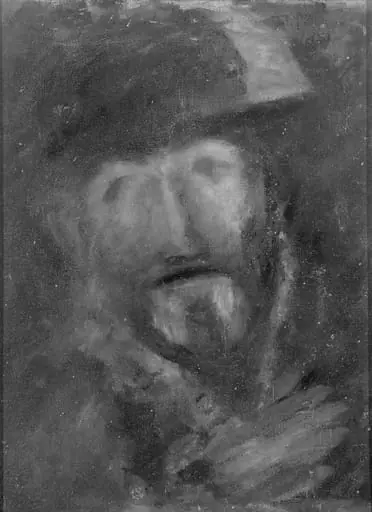 Henry Irving as Philip II of Spain