Artwork
Little Drawbridge, Amsterdam
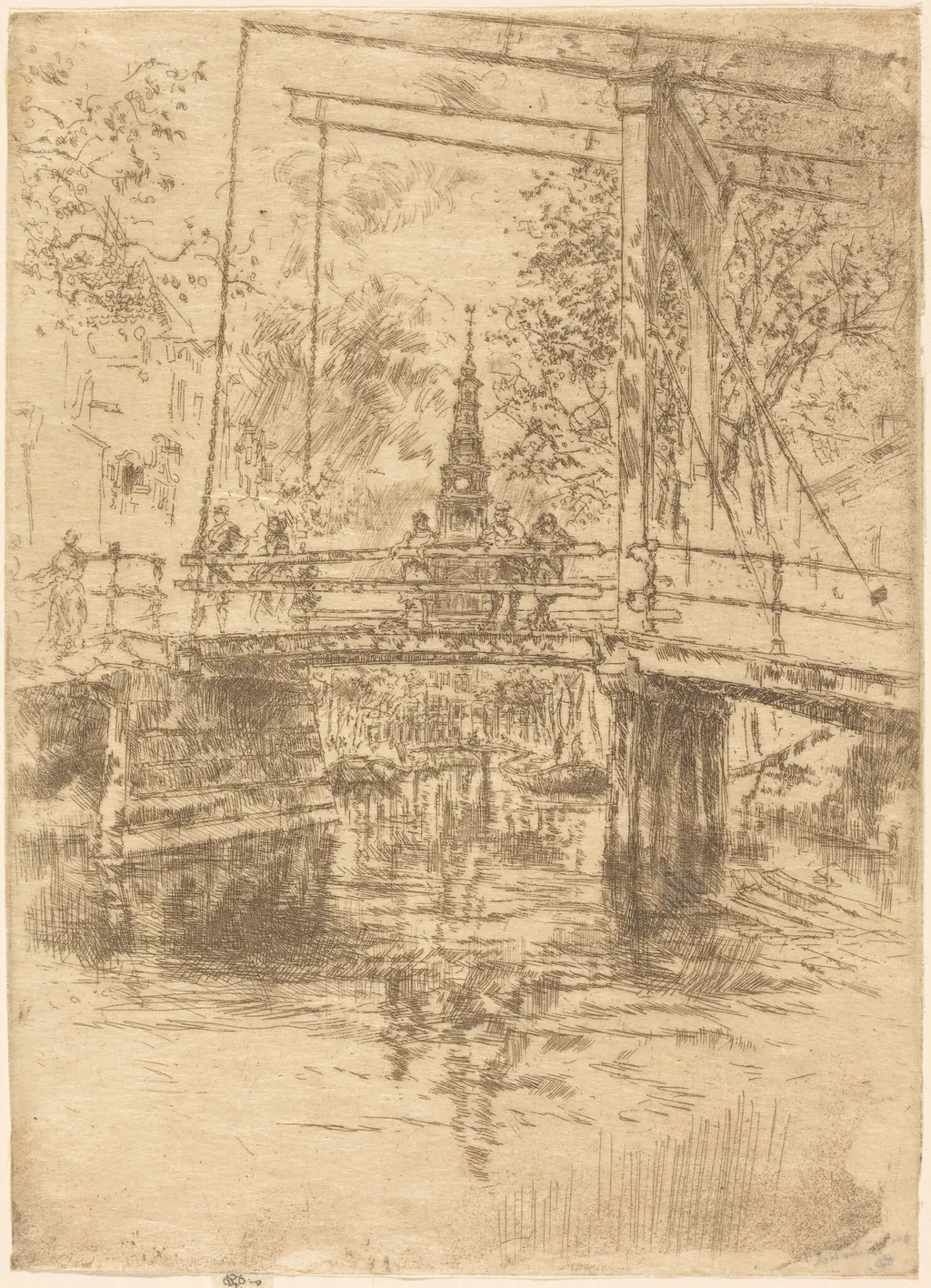
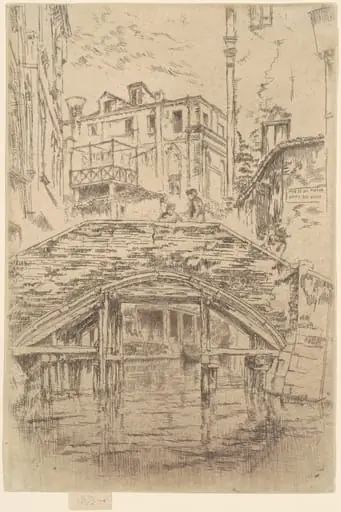
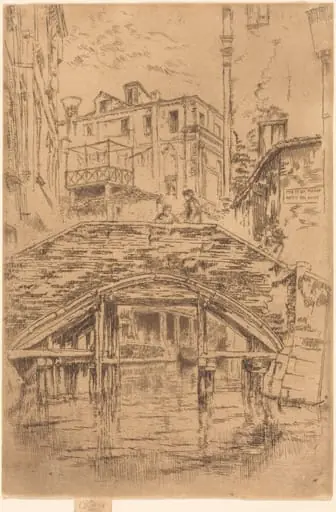
Little Drawbridge, Amsterdam is an ink print by the Impressionist artist James McNeill Whistler. It dates from 1889 and is held in the collection of the National Gallery of Art.
About this work
Overview
Created in 1889, *Little Drawbridge, Amsterdam* is a print by James McNeill Whistler, executed in brown ink using etching and drypoint on Asian wove paper.
Created in 1889, *Little Drawbridge, Amsterdam* is a print by James McNeill Whistler, executed in brown ink using etching and drypoint on Asian wove paper. Though best known for his paintings, Whistler produced a significant body of graphic work during his time in Europe. This piece reflects his interest in capturing fleeting urban moments with minimal means, aligning with his broader philosophy that art should exist for its own formal qualities rather than narrative or moral purpose.
Subject & Meaning
The scene depicts a modest drawbridge spanning a narrow Amsterdam canal, flanked by low, unadorned buildings. No figures are clearly defined—only faint indications of pedestrians and trees suggest human activity. The absence of dramatic detail or emotional emphasis reflects Whistler’s rejection of sentimentality. Instead, the composition invites quiet contemplation, valuing atmosphere and spatial harmony over storytelling or symbolic content.
Technique & Style
Whistler employed etching to incise lines into a metal plate with acid, then added drypoint for richer, softer textures. His marks are loose and economical: rooftops and window openings are suggested with swift strokes, while the bridge’s wooden planks are rendered with parallel lines. The warm tone of the paper enhances the brown ink’s subtlety, creating a sense of muted light. The work reads as a spontaneous observation, prioritizing immediacy over finish.
History & Provenance
Whistler made this print during a period of intense activity in his printmaking career, following his travels through the Netherlands. He often worked quickly in foreign cities, producing etchings that recorded local architecture and canal life. *Little Drawbridge, Amsterdam* was likely made during one of these sketching trips and entered private collections soon after its creation, eventually finding its way into institutional holdings through later acquisitions.
Context
In the late 19th century, European artists increasingly turned to printmaking as a medium for personal expression, moving away from commercial reproduction. Whistler, based in London, was part of this shift, drawing inspiration from Dutch urban scenes and Japanese woodblock prints. His approach to etching emphasized tonal nuance and compositional balance, distinguishing his work from more illustrative traditions and aligning him with aestheticist ideals of the time.
Legacy
Whistler’s Amsterdam etchings, including this one, contributed to the revival of etching as a serious artistic medium in the late 1800s. His restrained, observational style influenced later printmakers who valued subtlety over detail. Though not widely exhibited during his lifetime, these works are now recognized for their quiet precision and their role in redefining the expressive potential of the print medium.
Artist & collection
Artist
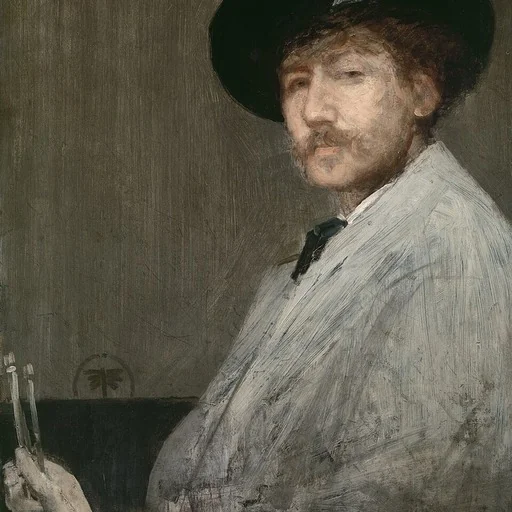
James Abbott McNeill Whistler was an American painter in oils and watercolor, and printmaker, active during the American Gilded Age and based primarily in the United Kingdom.

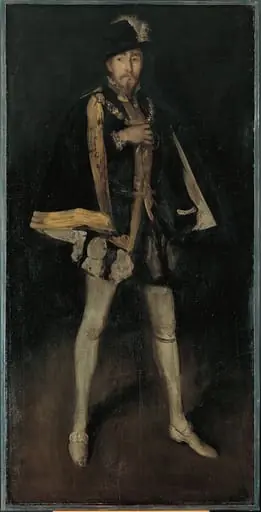 Arrangement in Black, No. 3: Sir Henry Irving as Philip II of Spain
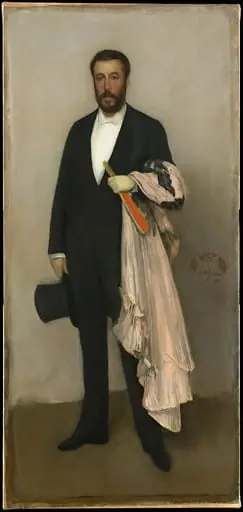 Arrangement in Flesh Colour and Black: Portrait of Theodore Duret
 Gold and Brown: Self-Portrait
 Edward Guthrie Kennedy
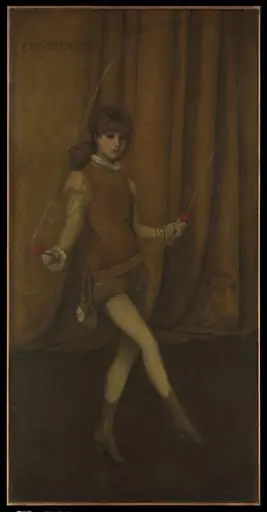 Harmony in Yellow and Gold: The Gold Girl—Connie Gilchrist
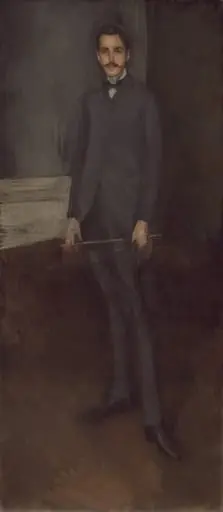 George W. Vanderbilt
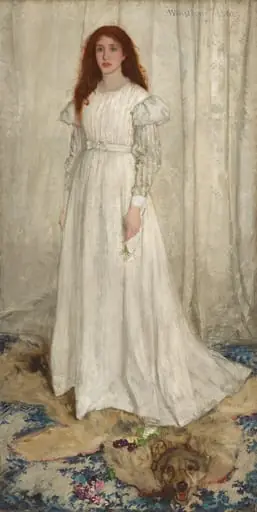 Symphony in White, No. 1: The White Girl
 Henry Irving as Philip II of Spain