Artwork
The Blacksmith
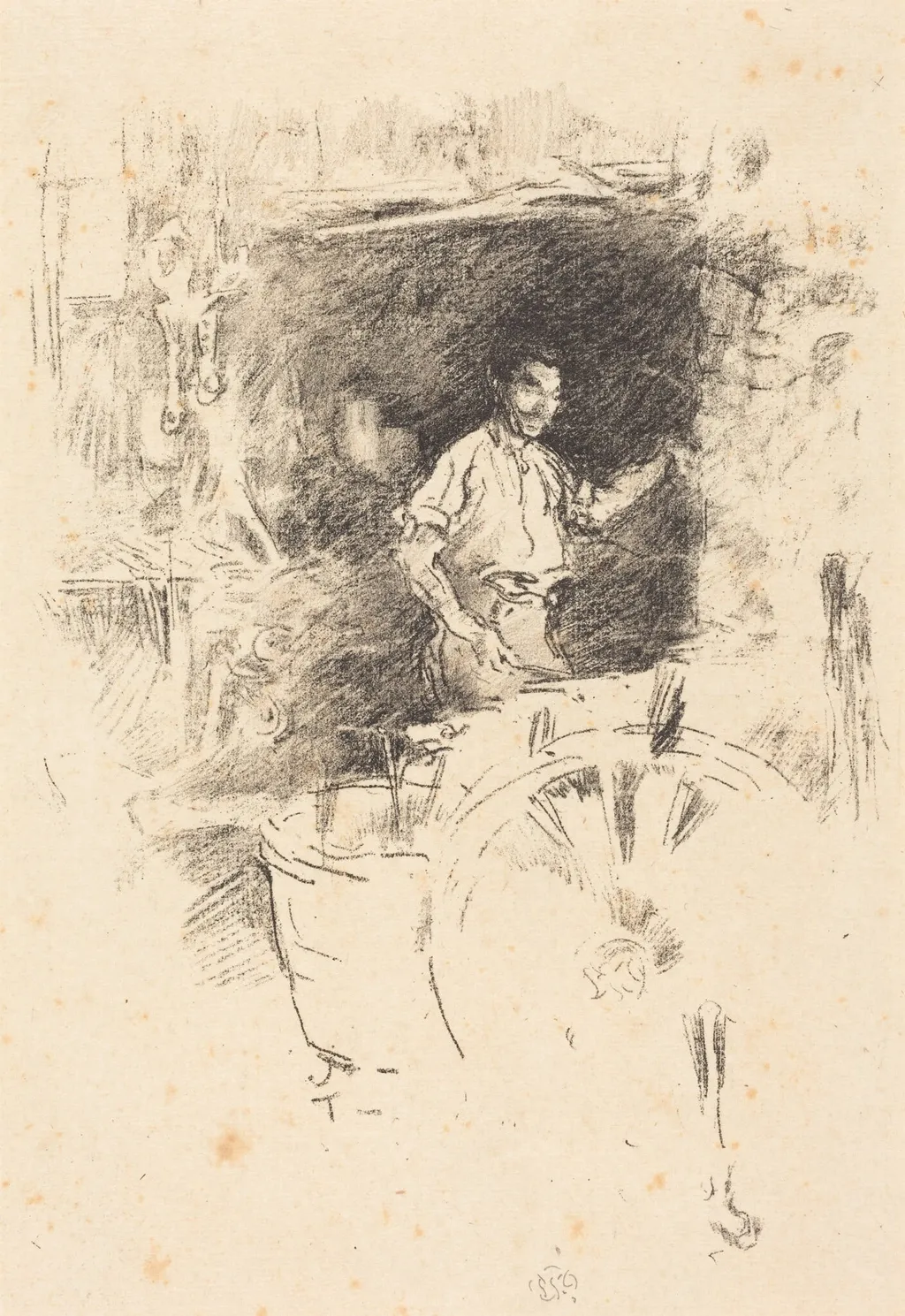
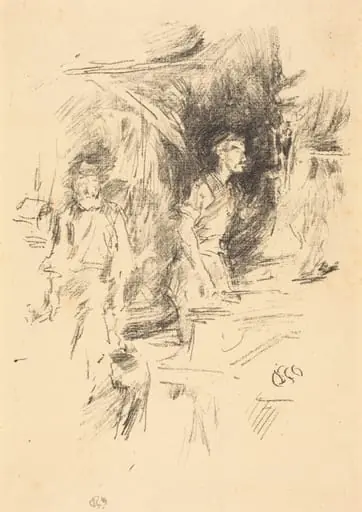
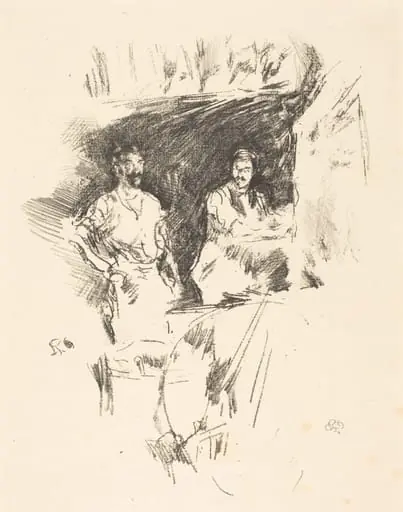
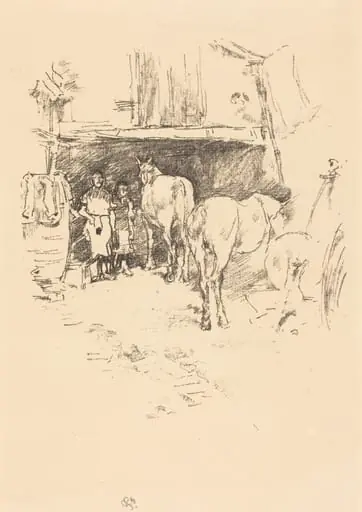
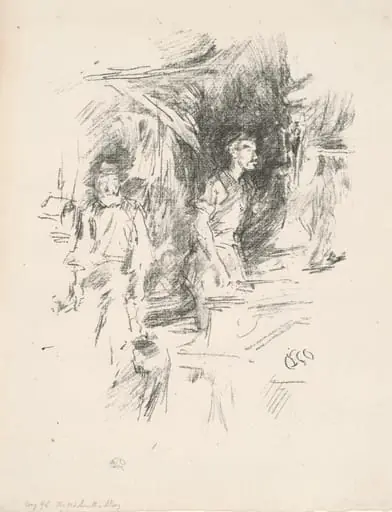
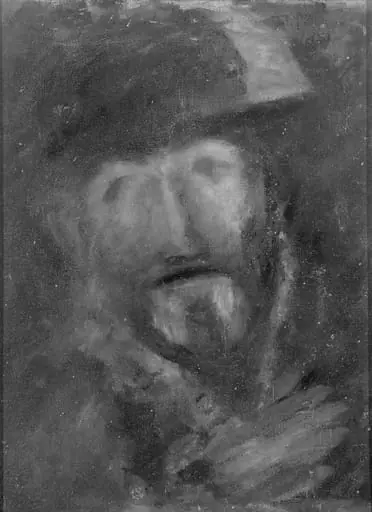
The Blacksmith is a graphite print by the Impressionist artist James McNeill Whistler. It dates from 1896 and is held in the collection of the National Gallery of Art.
About this work
Overview
Created in 1896, *The Blacksmith* is a lithograph by James McNeill Whistler, executed in black ink and graphite on laid paper.
Created in 1896, *The Blacksmith* is a lithograph by James McNeill Whistler, executed in black ink and graphite on laid paper. Though best known for his paintings, Whistler produced a significant body of prints during his years in Britain. This work reflects his commitment to aesthetic precision and his rejection of narrative sentimentality, aligning with the broader 'art for art's sake' philosophy of the period.
Subject & Meaning
The print portrays a blacksmith bent over his forge in a dim, enclosed space. His face is obscured by a broad hat, emphasizing the anonymity of labor rather than individual identity. The glow of the fire and the smoky atmosphere suggest the physicality and isolation of the trade. Whistler avoids moralizing or romanticizing the scene, instead presenting it as a quiet study of form and atmosphere.
Technique & Style
Whistler employed rapid, gestural lines to convey texture and motion—the roughness of the wall, the weight of the boots, the flicker of flame. Lithography allowed him to work directly on stone, preserving the spontaneity of a sketch. Graphite additions enhanced tonal depth and shadow, reinforcing the hazy, low-light environment. The technique prioritizes immediacy over detail, capturing a transient moment with economical marks.
History & Provenance
Made during Whistler’s later years in London, *The Blacksmith* belongs to a series of prints he produced in the 1890s, often depicting working-class subjects. Unlike his earlier etchings of Venice or London streets, this work shows a shift toward more intimate, interior scenes. It was likely printed in a small edition and circulated among collectors interested in his graphic work, though its exact early ownership remains undocumented.
Context
In the late 19th century, industrial labor became a subject of artistic interest across Europe, often treated with social realism. Whistler diverged from this trend, avoiding political or moral commentary. His focus on atmosphere and composition aligned him with aesthetic movements that valued formal harmony over narrative. The print reflects a broader interest in everyday scenes, filtered through a lens of quiet observation rather than social critique.
Legacy
*The Blacksmith* exemplifies Whistler’s influence on modern printmaking, demonstrating how lithography could convey mood and movement with minimal means. It contributed to the redefinition of the print as an autonomous art form, not merely a reproductive medium. Later artists, particularly those drawn to tonal subtlety and restrained composition, found in this work a model for evoking presence without explicit detail.
Own this work as a print
Artist & collection
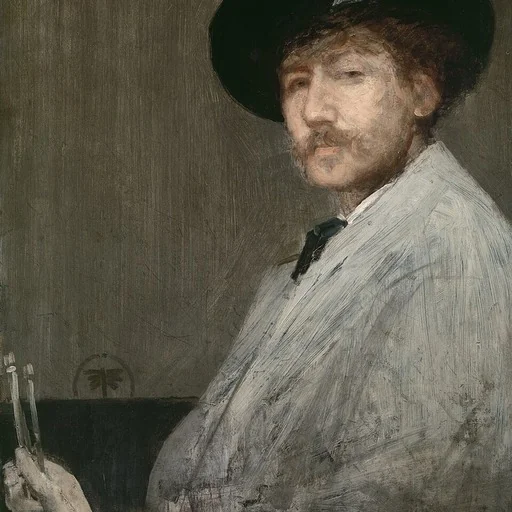
Artist
James Abbott McNeill Whistler was an American painter in oils and watercolor, and printmaker, active during the American Gilded Age and based primarily in the United Kingdom.

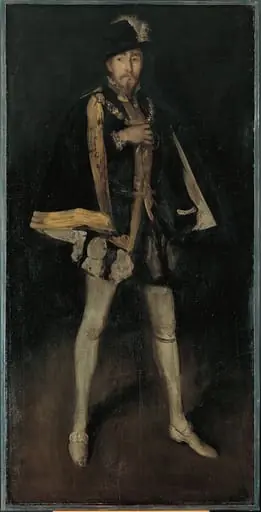 Arrangement in Black, No. 3: Sir Henry Irving as Philip II of Spain
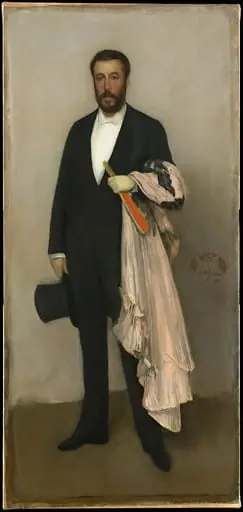 Arrangement in Flesh Colour and Black: Portrait of Theodore Duret
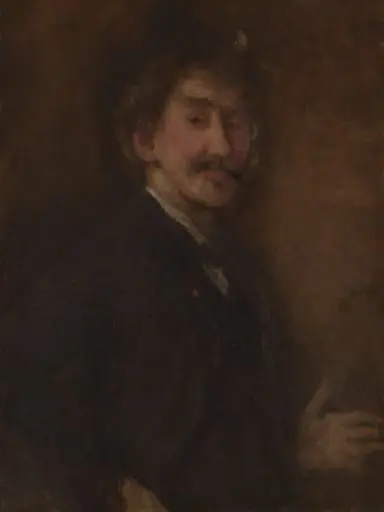 Gold and Brown: Self-Portrait
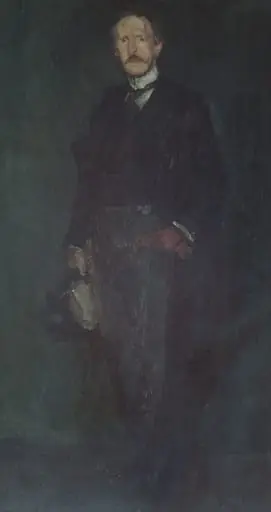 Edward Guthrie Kennedy
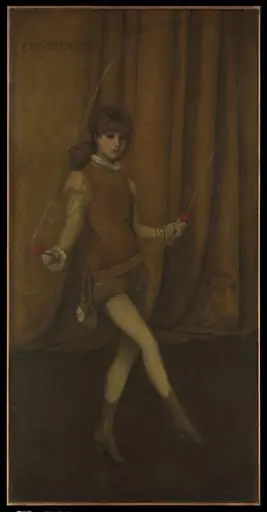 Harmony in Yellow and Gold: The Gold Girl—Connie Gilchrist
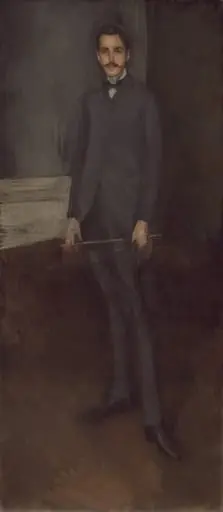 George W. Vanderbilt
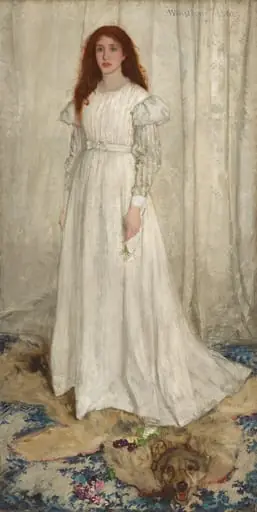 Symphony in White, No. 1: The White Girl
 Henry Irving as Philip II of Spain