Artwork
The Scotch Widow
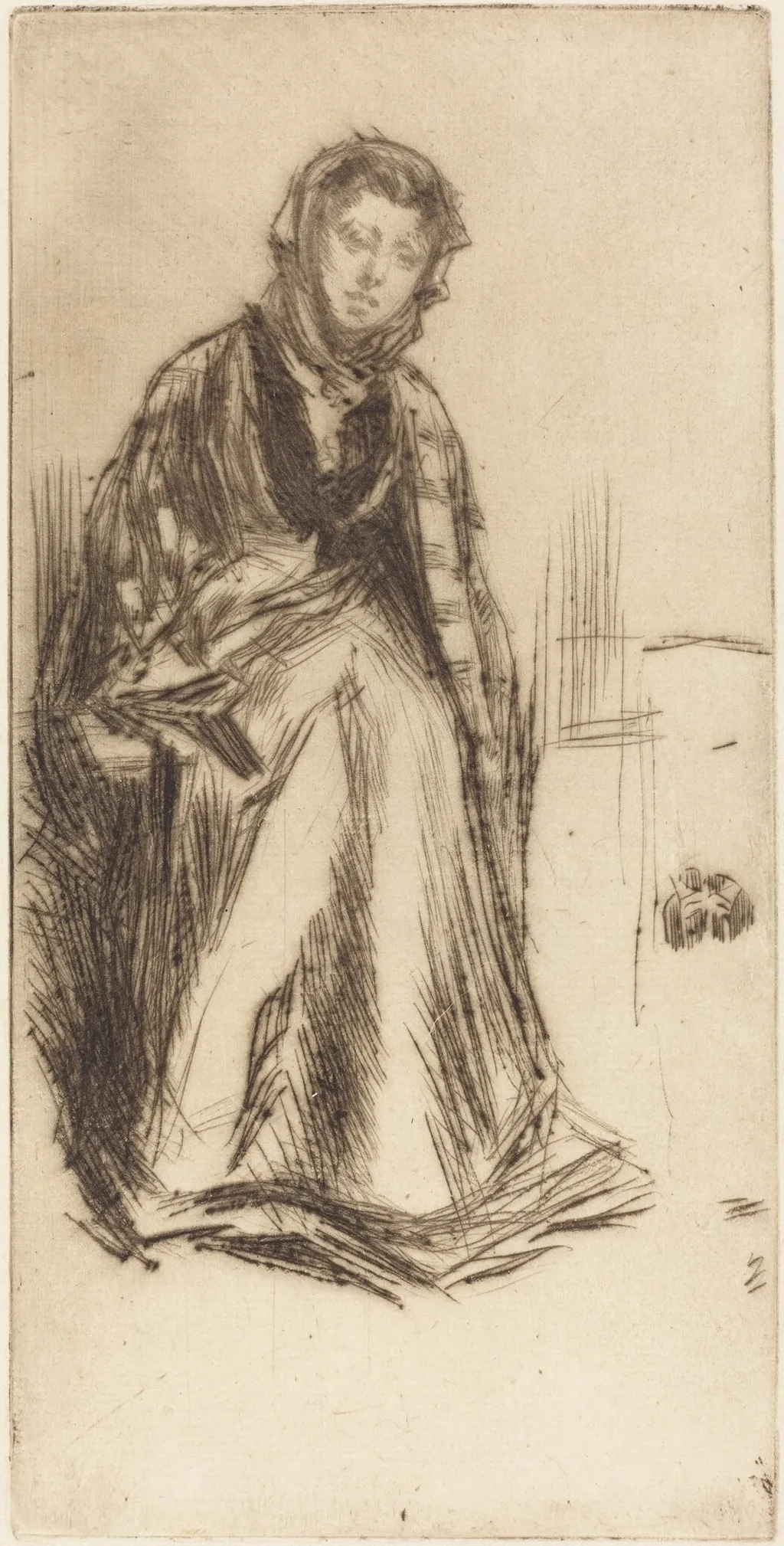
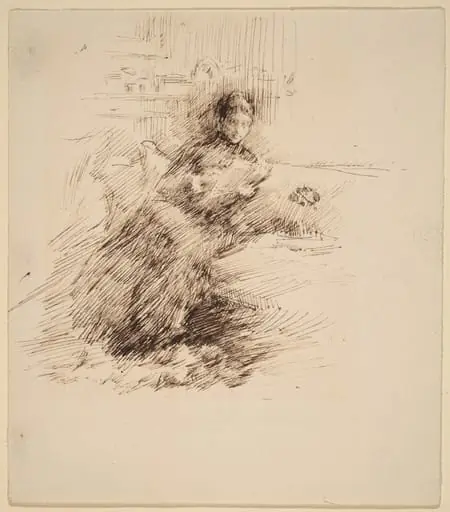
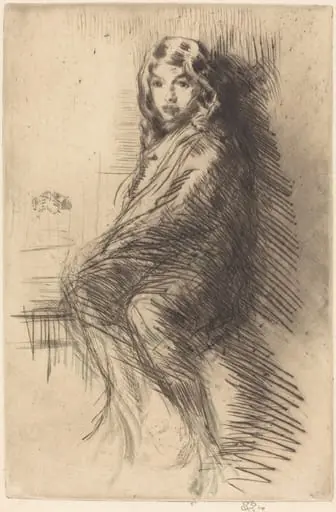
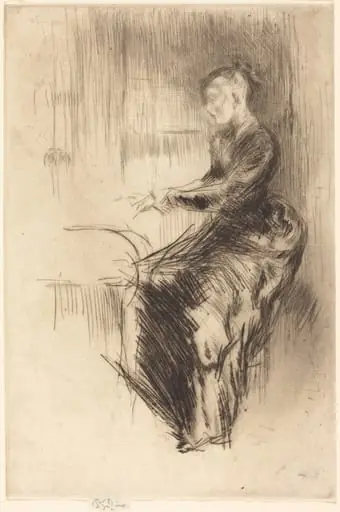
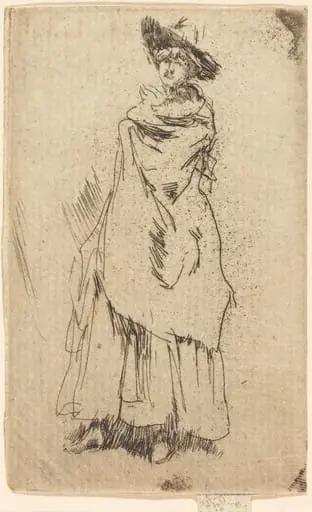
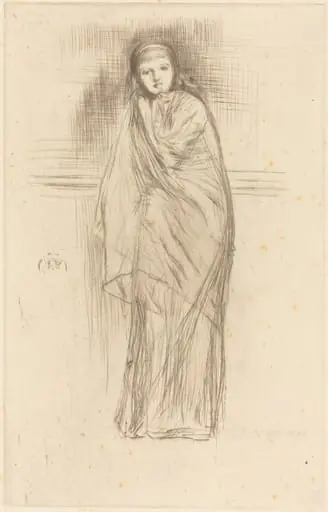
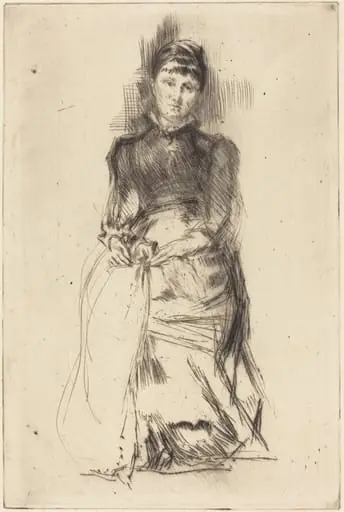
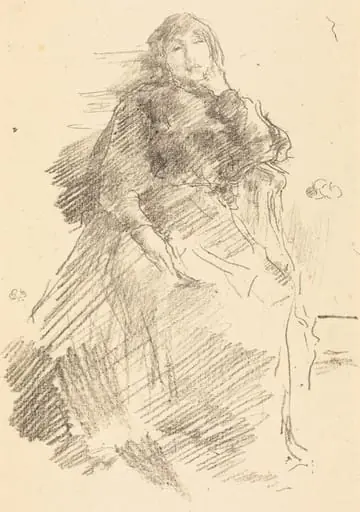
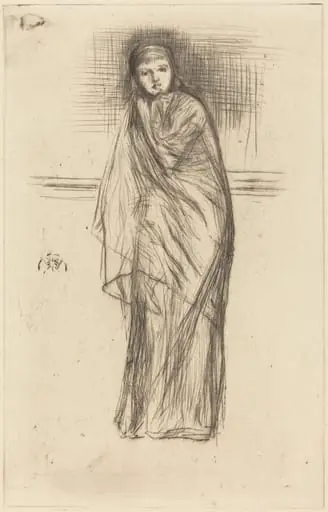
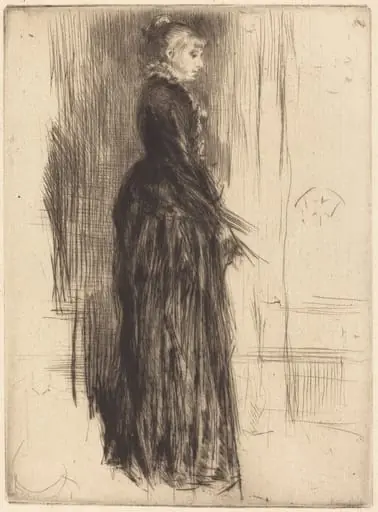
The Scotch Widow is an ink print by the Impressionist artist James McNeill Whistler. It dates from 1875 and is held in the collection of the National Gallery of Art.
About this work
Overview
The work exemplifies his commitment to aesthetic precision, capturing a solitary figure with minimal detail and maximum emotional restraint.
Created in 1875, *The Scotch Widow* is a drypoint print on laid paper by James McNeill Whistler. It belongs to a period when he concentrated on intimate, tonally nuanced prints rather than large-scale paintings. The work exemplifies his commitment to aesthetic precision, capturing a solitary figure with minimal detail and maximum emotional restraint. Its raw, gestural lines reflect Whistler’s interest in the immediacy of the drawn mark.
Subject & Meaning
The figure is a woman dressed in dark, enveloping garments, her hands tucked into her sleeves, suggesting quiet mourning. Though titled *The Scotch Widow*, the image avoids explicit narrative or moral commentary. Whistler deliberately eschewed sentimentality, presenting the figure not as a story but as a study in form, posture, and atmosphere—emphasizing presence over biography.
Technique & Style
Whistler employed drypoint, scratching directly into the plate with a sharp tool to create rich, velvety lines. The resulting print retains the roughness of the initial marks, with uneven burrs that catch ink and produce soft, blurred edges. The loose, urgent strokes convey spontaneity, rejecting polished finish in favor of tactile immediacy and tonal subtlety.
History & Provenance
Made during Whistler’s years in London, the print was part of his broader exploration of etching and drypoint in the 1870s. It was likely produced for private circulation among collectors and fellow artists rather than public exhibition. The work bears his signature butterfly emblem, a personal mark he used consistently across his graphic works to assert authorship and aesthetic identity.
Context
In the 1870s, Whistler distanced himself from narrative-driven art, aligning with the Aesthetic Movement’s ideals. His prints, including this one, responded to Japanese ukiyo-e woodcuts in their flattened space and emphasis on line. *The Scotch Widow* reflects a broader shift in European printmaking toward personal expression and formal experimentation over didactic storytelling.
Legacy
The print stands as an example of Whistler’s influence on modern printmaking, demonstrating how technical simplicity could convey psychological depth. Its unembellished form and emphasis on texture inspired later artists to value the expressive potential of the artist’s hand, paving the way for more subjective, non-narrative approaches in 20th-century graphic art.
Artist & collection
Artist
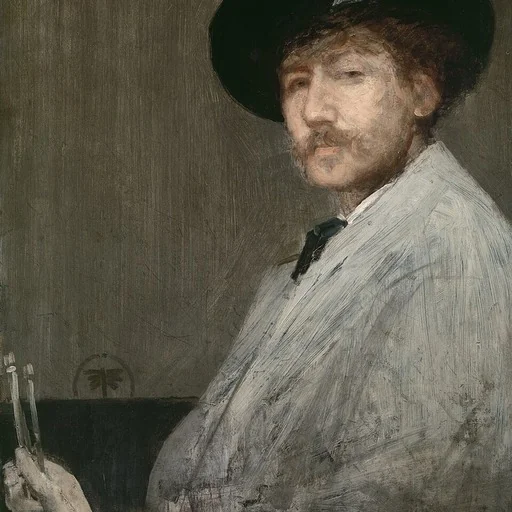
James Abbott McNeill Whistler was an American painter in oils and watercolor, and printmaker, active during the American Gilded Age and based primarily in the United Kingdom.

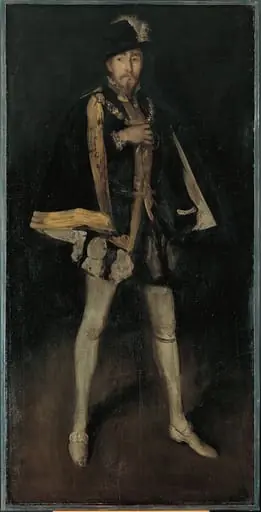 Arrangement in Black, No. 3: Sir Henry Irving as Philip II of Spain
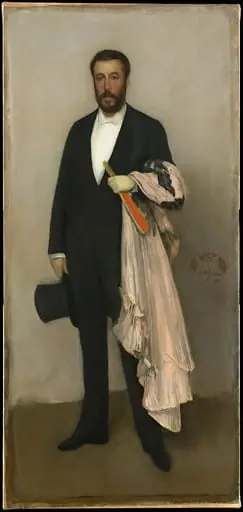 Arrangement in Flesh Colour and Black: Portrait of Theodore Duret
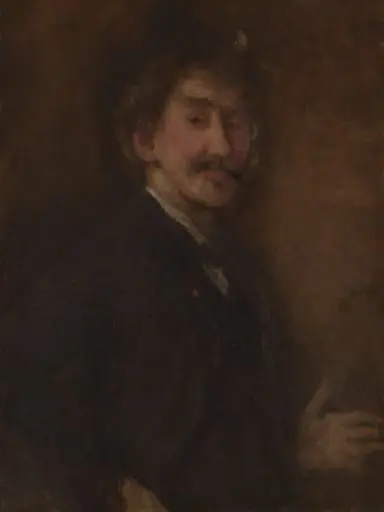 Gold and Brown: Self-Portrait
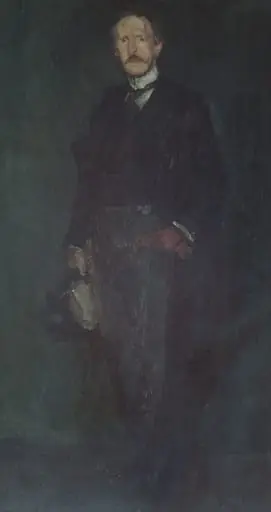 Edward Guthrie Kennedy
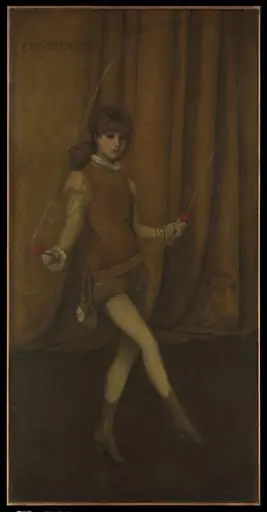 Harmony in Yellow and Gold: The Gold Girl—Connie Gilchrist
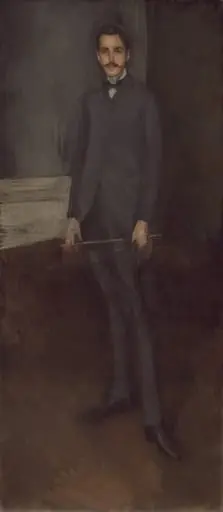 George W. Vanderbilt
 Symphony in White, No. 1: The White Girl
 Henry Irving as Philip II of Spain