Artwork
The Storm
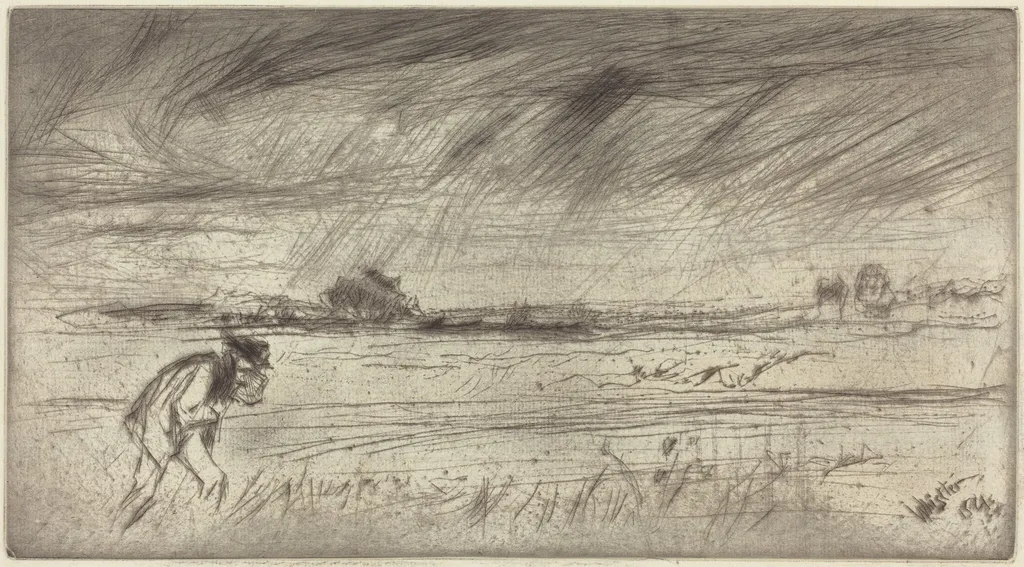
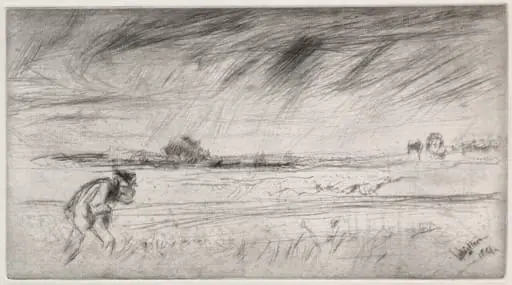
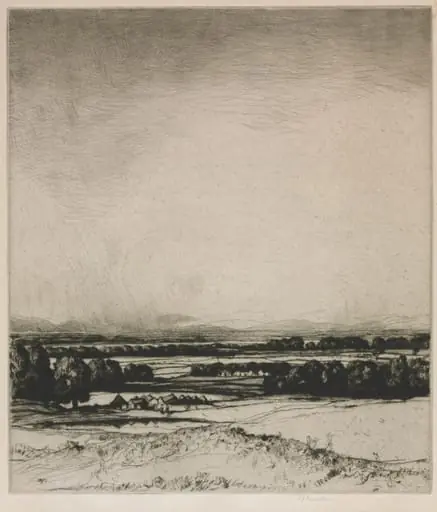
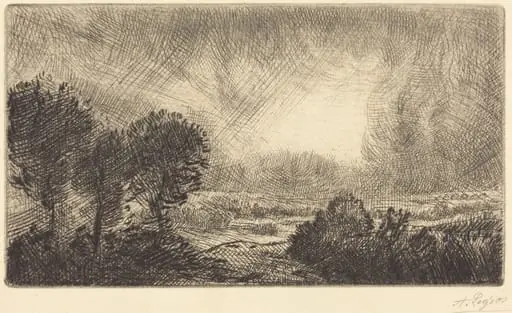
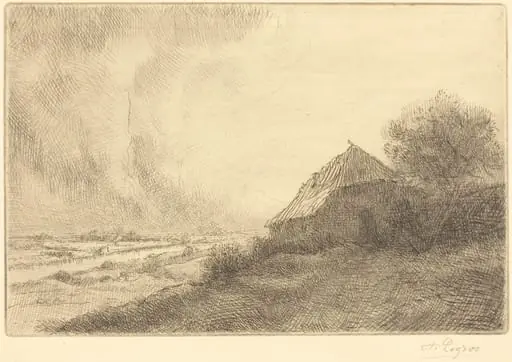
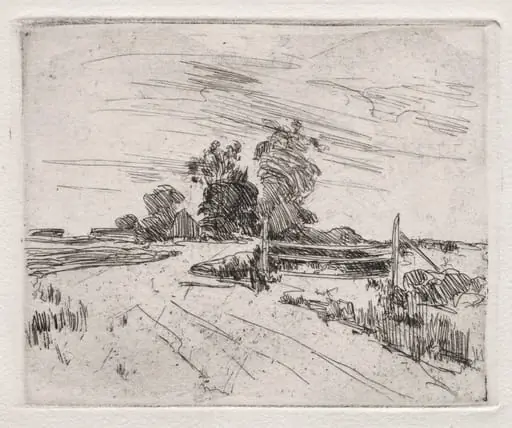
The Storm is an ink print by the Impressionist artist James McNeill Whistler. It dates from 1861 and is held in the collection of the National Gallery of Art.
About this work
Overview
Unlike traditional narrative scenes, it prioritizes tonal balance and atmospheric suggestion over storytelling.
Created in 1861, *The Storm* is a drypoint print on pale green laid paper by James McNeill Whistler. Unlike traditional narrative scenes, it prioritizes tonal balance and atmospheric suggestion over storytelling. Whistler, active across multiple media during the American Gilded Age, used this print to explore mood through minimal, controlled marks, aligning with his broader philosophy that art should exist for its own visual qualities rather than moral or literary intent.
Subject & Meaning
The image depicts a turbulent seascape under a heavy sky, with faint silhouettes of ships and waves rendered in subtle gradations. No human figures are clearly defined, and no event is narrated. Instead, the work evokes the emotional weight of nature’s force through abstraction and restraint. Whistler sought to convey sensation rather than event, inviting contemplation of atmosphere over plot.
Technique & Style
Whistler employed drypoint, a printmaking method involving incised lines on a metal plate, to achieve rich, velvety blacks and delicate textures. The pale green paper enhances the tonal contrasts, allowing the ink to glow with subtle warmth. His brush-like scratching creates soft transitions between shadow and light, avoiding sharp outlines. This technique, rarely used for landscape at the time, became a signature of his experimental approach to printmaking.
History & Provenance
Produced during Whistler’s early years in London, *The Storm* emerged from his engagement with the etching revival of the 1850s–60s. It was likely printed in a small, private run, typical of his practice. The work remained within his personal collection for much of his life, later entering institutional holdings through estate distribution. Its survival in original condition reflects its limited circulation and Whistler’s careful control over reproduction.
Context
In the 1860s, European art was dominated by realism and historical themes. Whistler’s focus on mood and form placed him at odds with prevailing norms. His association with the Aesthetic Movement, which championed beauty over moral instruction, found expression in works like *The Storm*. He aligned with contemporaries who valued artistic autonomy, rejecting didacticism in favor of sensory experience.
Legacy
Whistler’s use of drypoint in *The Storm* expanded the potential of printmaking as a medium for atmospheric expression. His approach influenced later printmakers who prioritized tonal nuance over illustrative clarity. The work remains a key example of how technical innovation can serve aesthetic philosophy, reinforcing his role in redefining printmaking’s place within fine art.
Artist & collection
Artist
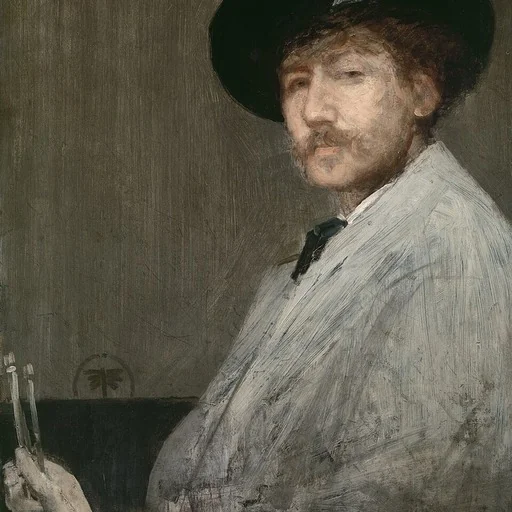
James Abbott McNeill Whistler was an American painter in oils and watercolor, and printmaker, active during the American Gilded Age and based primarily in the United Kingdom.

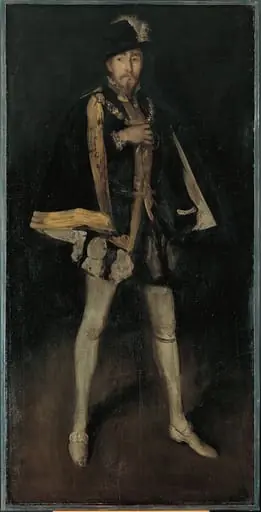 Arrangement in Black, No. 3: Sir Henry Irving as Philip II of Spain
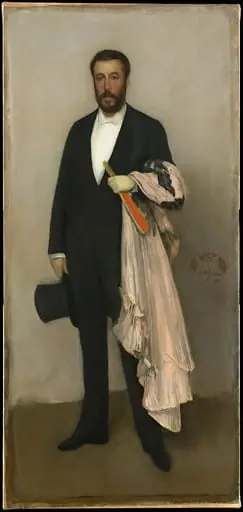 Arrangement in Flesh Colour and Black: Portrait of Theodore Duret
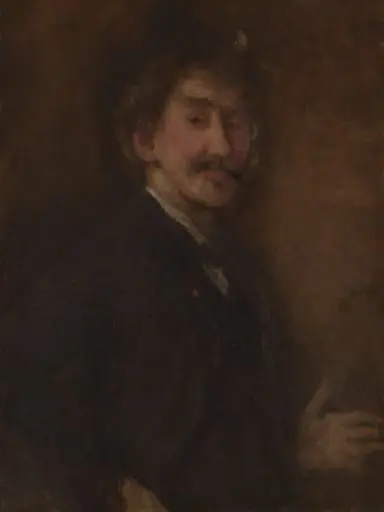 Gold and Brown: Self-Portrait
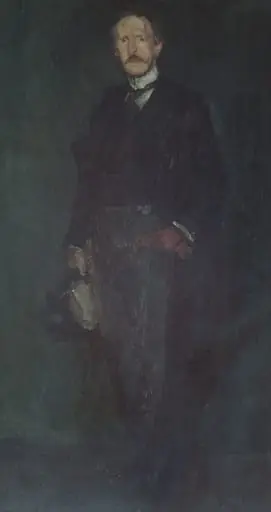 Edward Guthrie Kennedy
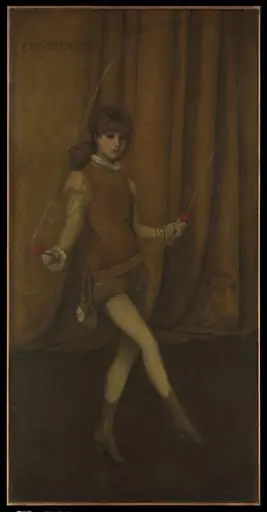 Harmony in Yellow and Gold: The Gold Girl—Connie Gilchrist
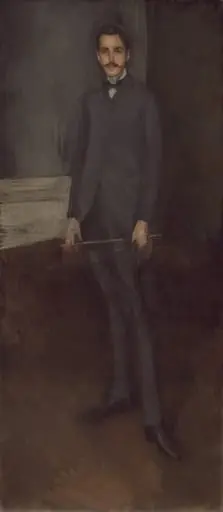 George W. Vanderbilt
 Symphony in White, No. 1: The White Girl
 Henry Irving as Philip II of Spain