Artwork
The Village Sweet-Shop
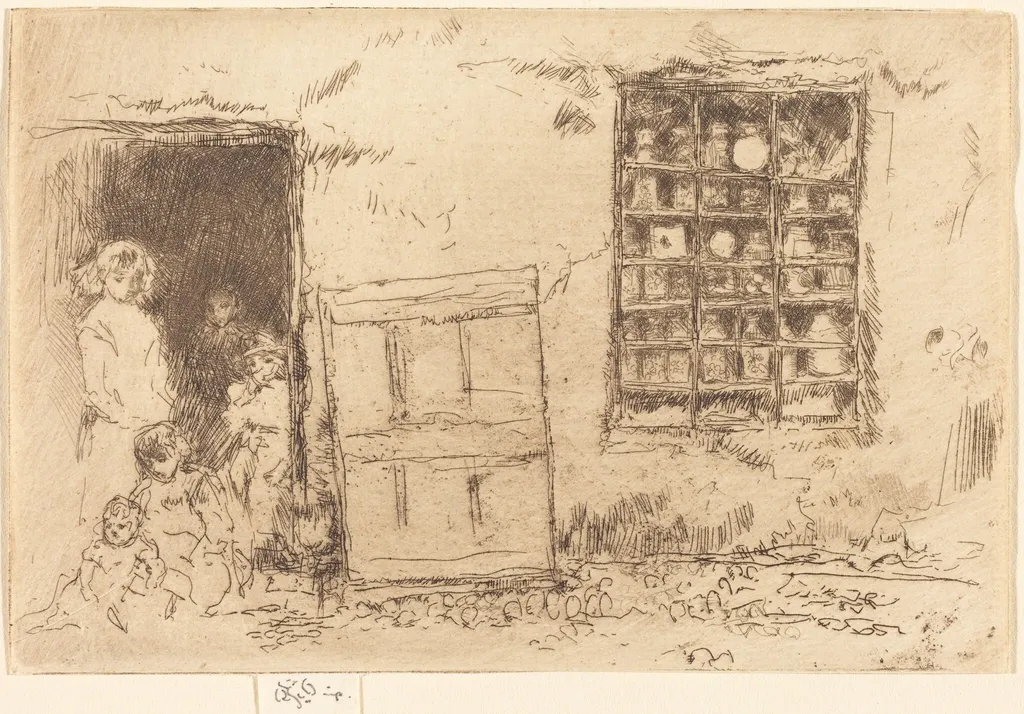
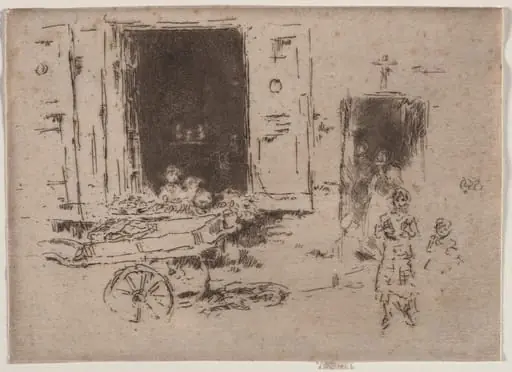
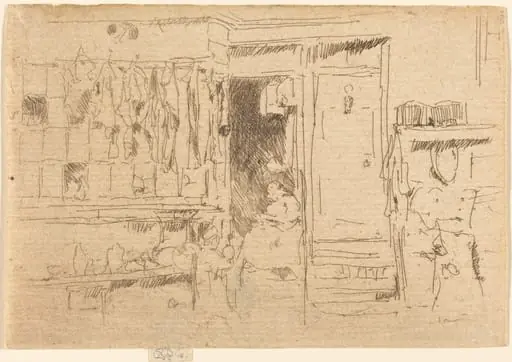
The Village Sweet-Shop is an ink print by the Impressionist artist James McNeill Whistler. It dates from 1887 and is held in the collection of the National Gallery of Art.
About this work
Overview
The Village Sweet-Shop is an 1887 etching by James McNeill Whistler, depicting the interior of a humble confectionery. Characterized by tonal harmony and delicate lines, the work reflects Whistler's distinctive aesthetic.
Subject & Meaning
The etching shows a dimly lit sweet-shop with a woman and child inside, and exterior details visible through the window. The scene conveys a sense of cozy, bustling activity, without sentimental or moralizing overtones, aligning with Whistler's 'art for art's sake' principle.
Technique & Style
Executed in etching on laid paper, the piece features loose, sketchy lines and strategic shading to capture light and shadow, imparting a sense of quick capture. Whistler's restrained compositional approach is evident in the balance of tones and lines.
History & Provenance
Created in 1887, the etching is a product of Whistler's late 19th-century work in the UK, where the American expatriate was active as a painter, watercolorist, and printmaker. Specific provenance details are not provided.
Context
The Village Sweet-Shop situates within the Aesthetic Movement and the American Gilded Age, reflecting Whistler's association with these circles through his advocacy for autonomous art.
Artist & collection
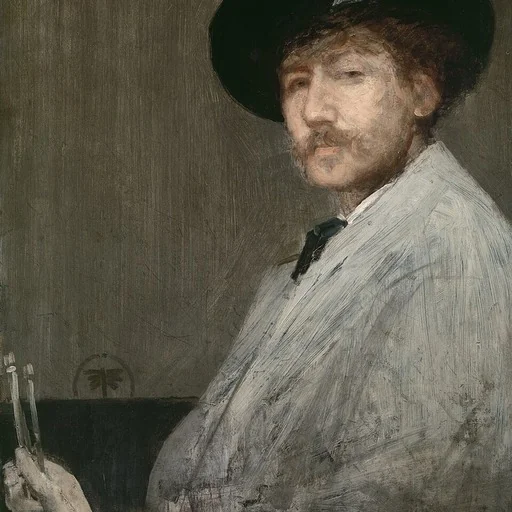
Artist
James Abbott McNeill Whistler was an American painter in oils and watercolor, and printmaker, active during the American Gilded Age and based primarily in the United Kingdom.

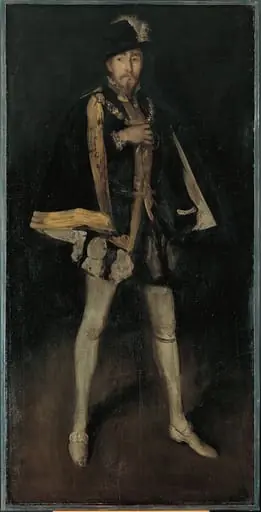 Arrangement in Black, No. 3: Sir Henry Irving as Philip II of Spain
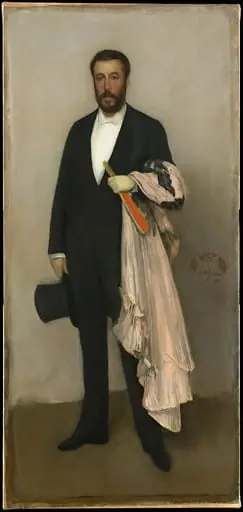 Arrangement in Flesh Colour and Black: Portrait of Theodore Duret
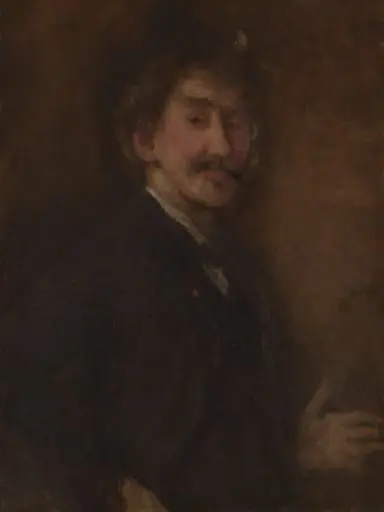 Gold and Brown: Self-Portrait
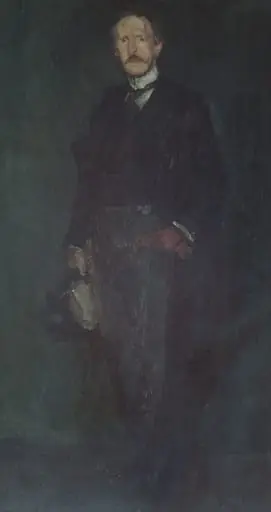 Edward Guthrie Kennedy
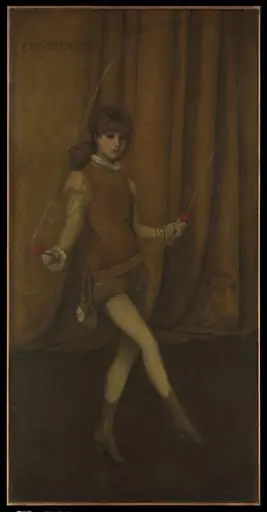 Harmony in Yellow and Gold: The Gold Girl—Connie Gilchrist
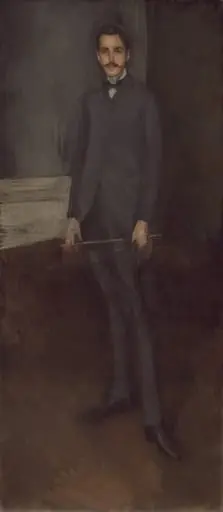 George W. Vanderbilt
 Symphony in White, No. 1: The White Girl
 Henry Irving as Philip II of Spain