Artwork
Upright Venice
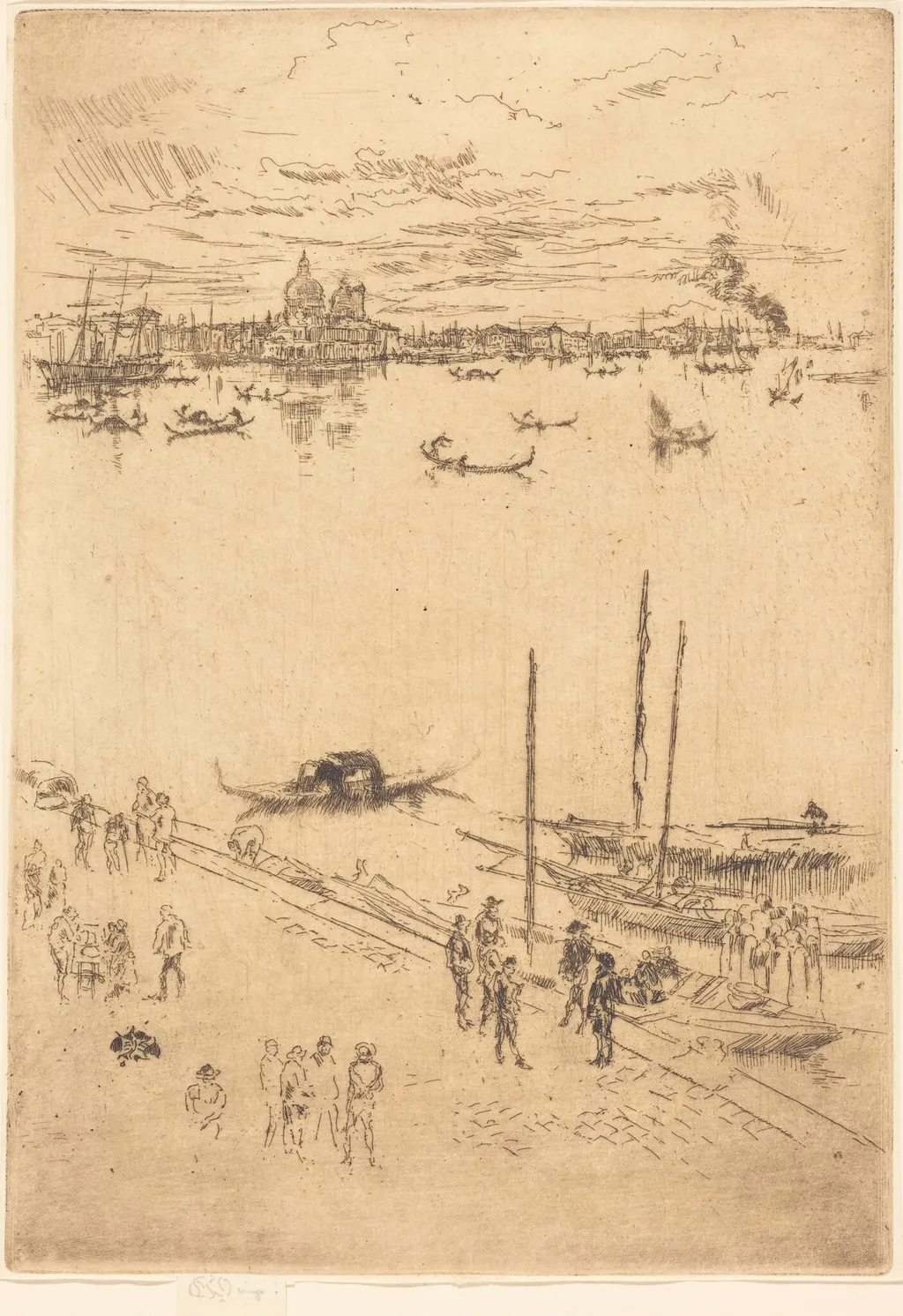
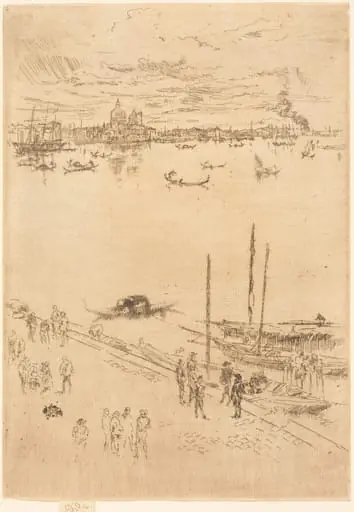
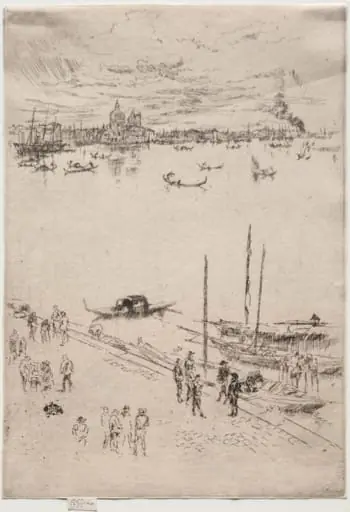
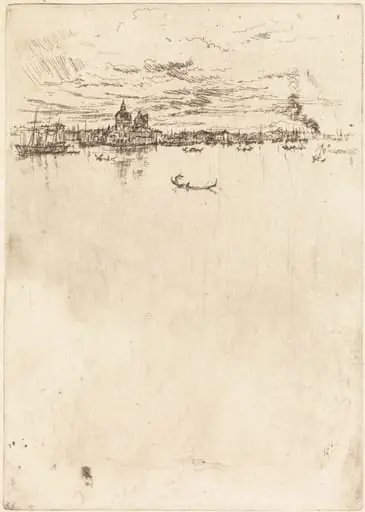
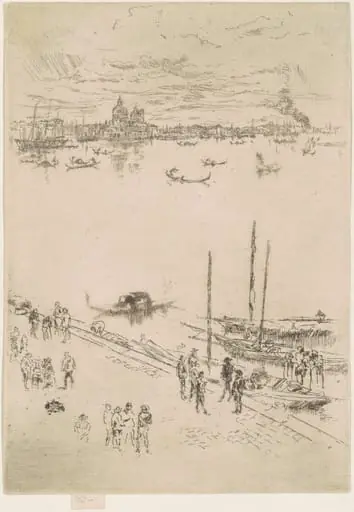
Upright Venice is an ink print by the Impressionist artist James McNeill Whistler. It dates from 1880 and is held in the collection of the National Gallery of Art.
About this work
Overview
Whistler’s approach prioritized visual harmony and mood over storytelling, aligning with his belief in art’s autonomy from moral or narrative function.
Created in 1880, *Upright Venice* is an etching and drypoint on laid paper by James McNeill Whistler, part of a series of Venetian scenes produced during his time in Britain. The work exemplifies his dedication to printmaking as a refined artistic medium, distinct from his paintings. Whistler’s approach prioritized visual harmony and mood over storytelling, aligning with his belief in art’s autonomy from moral or narrative function.
Subject & Meaning
The scene captures a bustling Venetian dock, with clustered boats, figures on the shore, and distant architecture. Rather than depicting a specific landmark, Whistler conveys the rhythm of daily life through suggestion. The composition avoids sentimentality, focusing instead on the interplay of forms, movement, and light. The atmosphere is implied through loose lines and tonal gradations, inviting contemplation rather than narrative interpretation.
Technique & Style
Whistler employed etching and drypoint to achieve fine, expressive lines and subtle tonal variations. The drypoint’s burr creates soft, velvety shadows, while etched lines define structure with economy. The textured laid paper enhances the tactile quality of the image. His sketch-like strokes suggest motion and spontaneity, reflecting his preference for immediacy over detail. The result is a quiet dynamism, where form emerges from minimal, deliberate marks.
History & Provenance
This print belongs to a group of Venetian views Whistler produced between 1879 and 1880 after visiting the city. He made these works primarily in London, relying on sketches and memory. The piece was likely circulated among collectors and print enthusiasts in Britain and Europe. Whistler’s butterfly monogram, a recurring signature, appears here as both a personal mark and a statement of artistic identity.
Context
During the late 19th century, Whistler was part of a broader movement in Europe that elevated printmaking to the status of fine art. His Venetian series responded to the popularity of Japanese woodcuts, which influenced his compositional economy and emphasis on atmosphere. Unlike traditional topographical views, his prints rejected documentary precision in favor of sensory impression, aligning with contemporary aesthetic theories.
Legacy
Whistler’s Venetian prints, including *Upright Venice*, helped redefine etching as a vehicle for modern expression. His emphasis on mood and abstraction over literal representation influenced later printmakers and the development of modernist aesthetics. The work remains a key example of how technical restraint can evoke complex environments, bridging 19th-century tradition and 20th-century abstraction.
Artist & collection
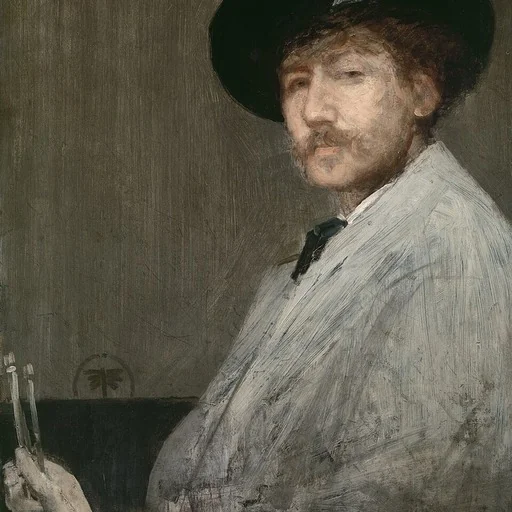
Artist
James Abbott McNeill Whistler was an American painter in oils and watercolor, and printmaker, active during the American Gilded Age and based primarily in the United Kingdom.

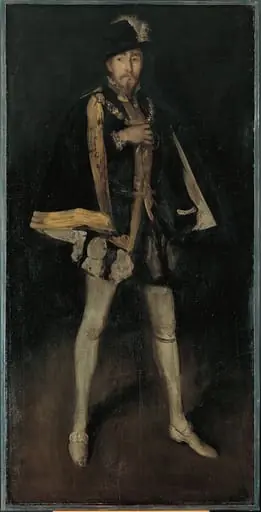 Arrangement in Black, No. 3: Sir Henry Irving as Philip II of Spain
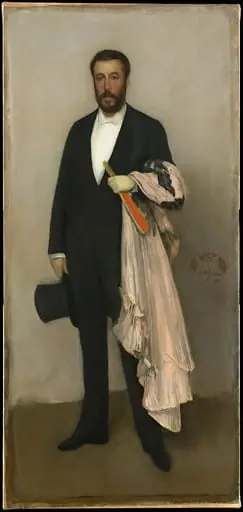 Arrangement in Flesh Colour and Black: Portrait of Theodore Duret
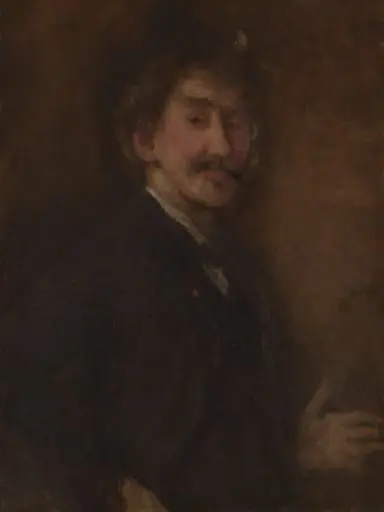 Gold and Brown: Self-Portrait
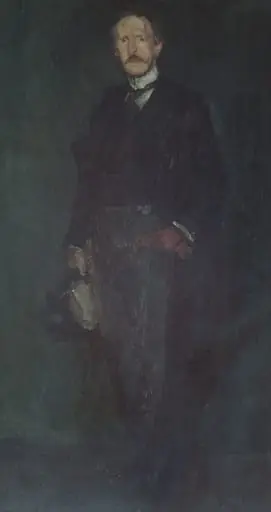 Edward Guthrie Kennedy
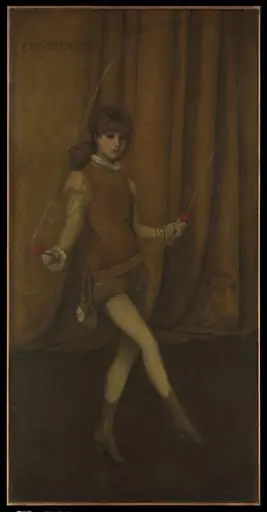 Harmony in Yellow and Gold: The Gold Girl—Connie Gilchrist
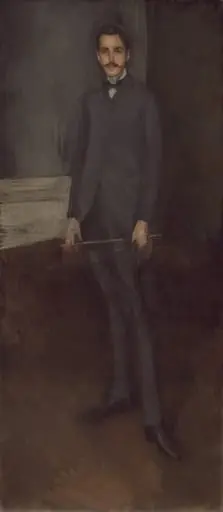 George W. Vanderbilt
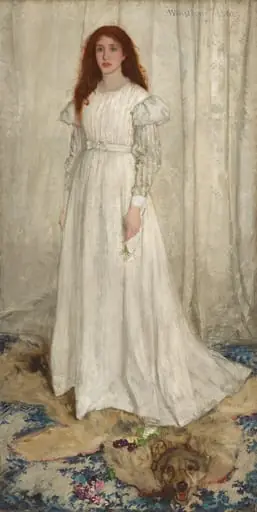 Symphony in White, No. 1: The White Girl
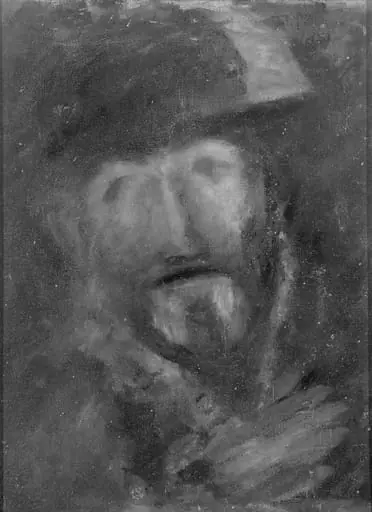 Henry Irving as Philip II of Spain