Artwork
Watermill and Cottages, Stoke Gabriel, Devonshire
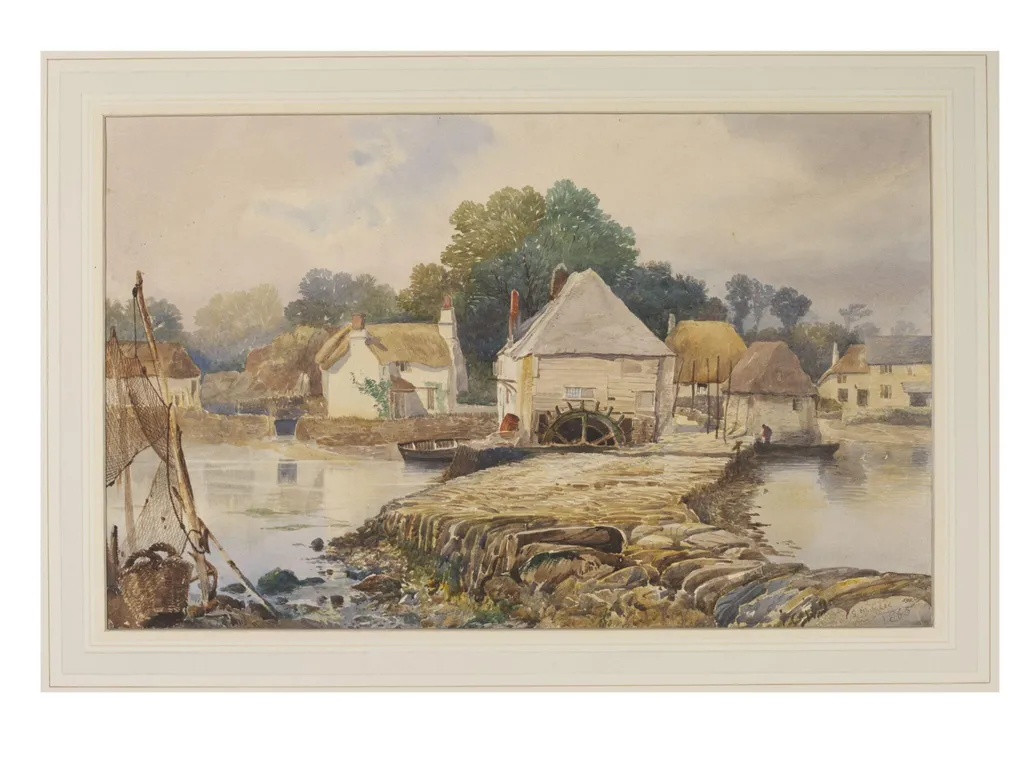
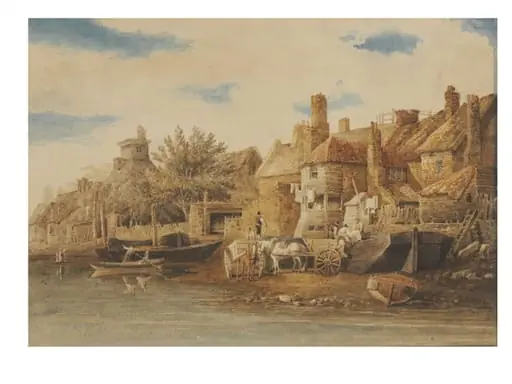
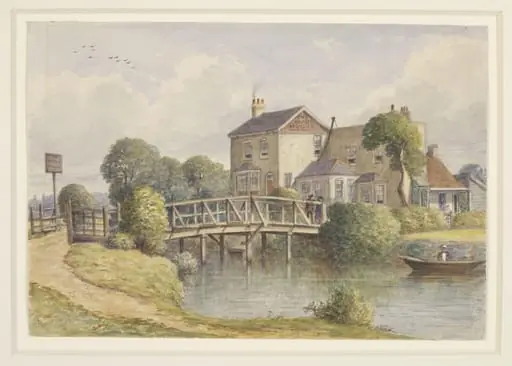
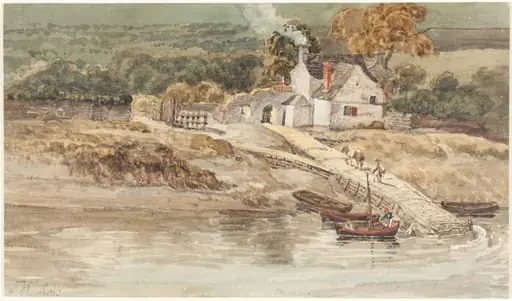
Watermill and Cottages, Stoke Gabriel, Devonshire is a watercolor work on paper by the Impressionist artist George Whitaker. It dates from 1865 and is held in the collection of the Victoria and Albert Museum. Painted in 1865, this watercolour captures a quiet riverside scene in Stoke Gabriel, Devonshire.
About this work
Overview
Painted in 1865, this watercolour captures a quiet riverside scene in Stoke Gabriel, Devonshire. The work is signed and dated by the artist, confirming its origin and timing. Rendered in delicate washes, it presents a restrained yet precise view of a working rural landscape, emphasizing stillness and everyday detail over dramatic effect.
Subject & Meaning
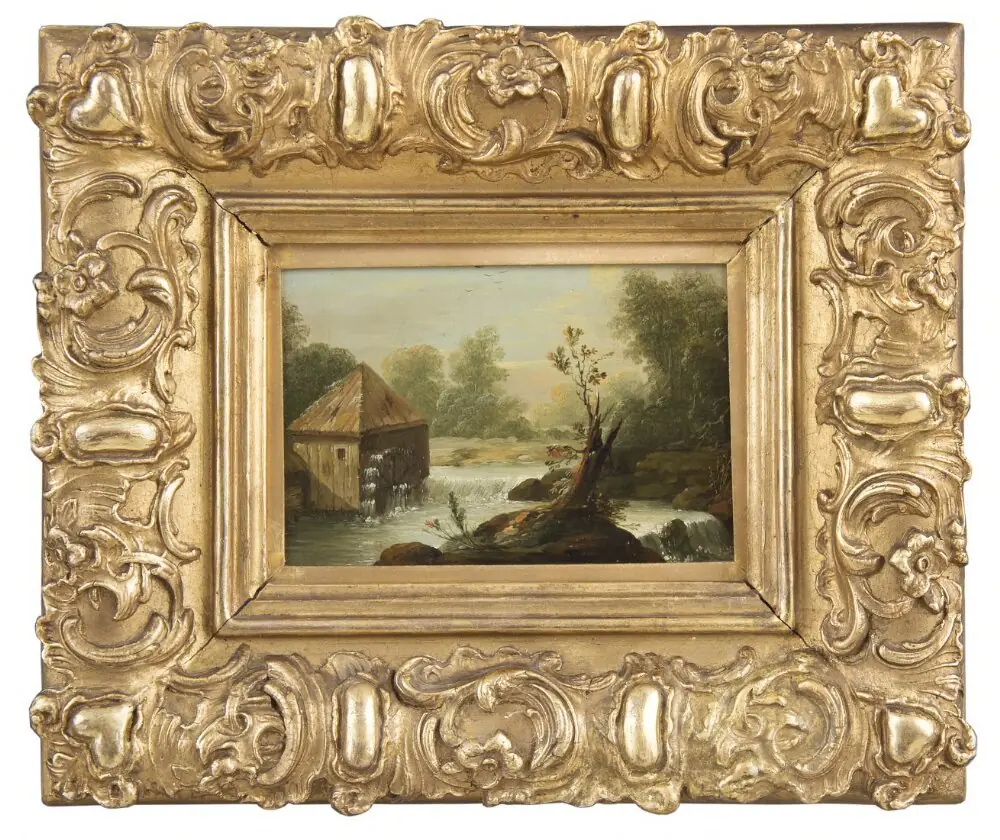
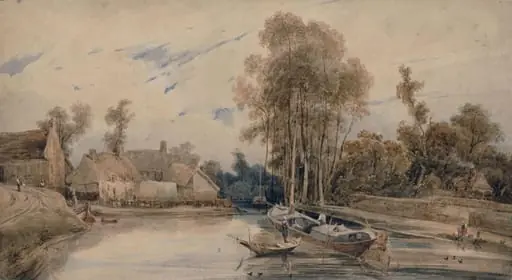
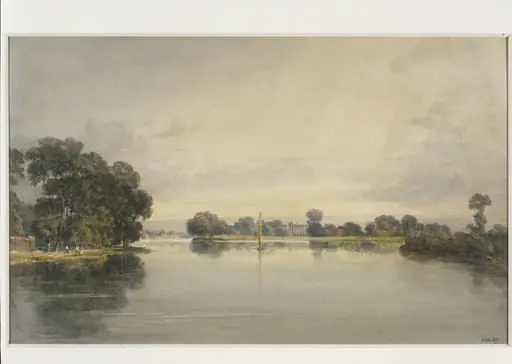
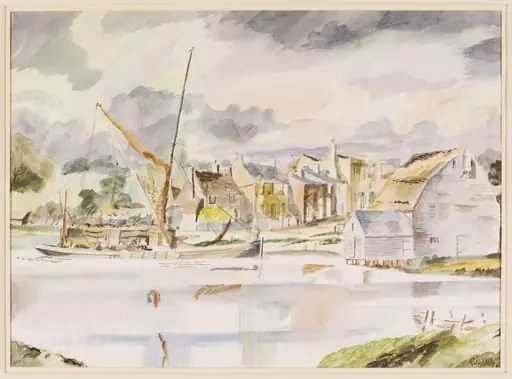
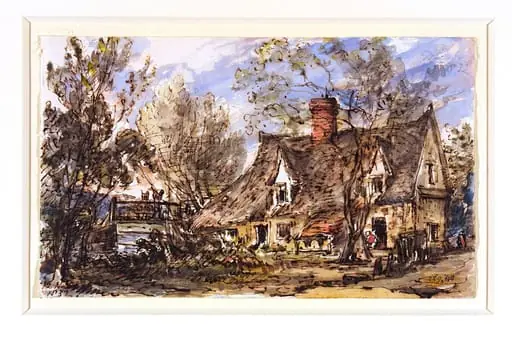
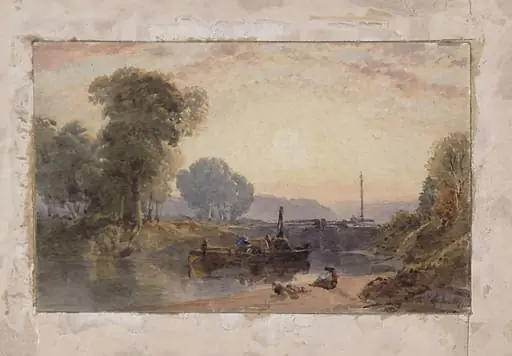
The composition centers on a stone watermill with its wooden wheel partially submerged, flanked by thatched cottages and modest gardens sloping toward the river. A small boat rests nearby, and drying fishing nets suggest local livelihoods. The scene conveys no narrative drama, instead offering a quiet testament to the rhythms of rural life in mid-Victorian England.
Technique & Style
The artist employed light, transparent watercolour washes to achieve a soft, atmospheric tone. Details in the mill’s stonework and the riverbank are carefully rendered, while distant cottages and foliage are muted to suggest depth. The sky is pale and barely clouded, enhancing the calm mood. Brushwork is controlled, avoiding bold contrasts in favor of naturalistic harmony.
History & Provenance
Created in 1865, the painting remained in private hands until entering a public collection. Its documented signature and date provide clear attribution. It is now held by the Victoria and Albert Museum, where it is preserved as an example of 19th-century British topographical watercolour.
Context
In the mid-1860s, watercolour was widely used for landscape studies and topographical records, particularly among artists documenting rural England. This work aligns with a broader interest in capturing unidealized, everyday scenes, reflecting a shift away from romanticized vistas toward observational realism in domestic settings.
Legacy
The painting contributes to a body of work that records the material culture of rural Devon before industrialization transformed the landscape. Its quiet precision and lack of sentimentality make it a valuable document of vernacular architecture and river-based livelihoods in mid-Victorian England.
Artist & collection
Artist
George Whitaker’s watercolors feel like postcards a traveler forgot to mail. He painted the same Devonshire hamlet for decades, chasing the way light turned the millstream into liquid silver between the stone bridges…