Artwork
Dover Castle
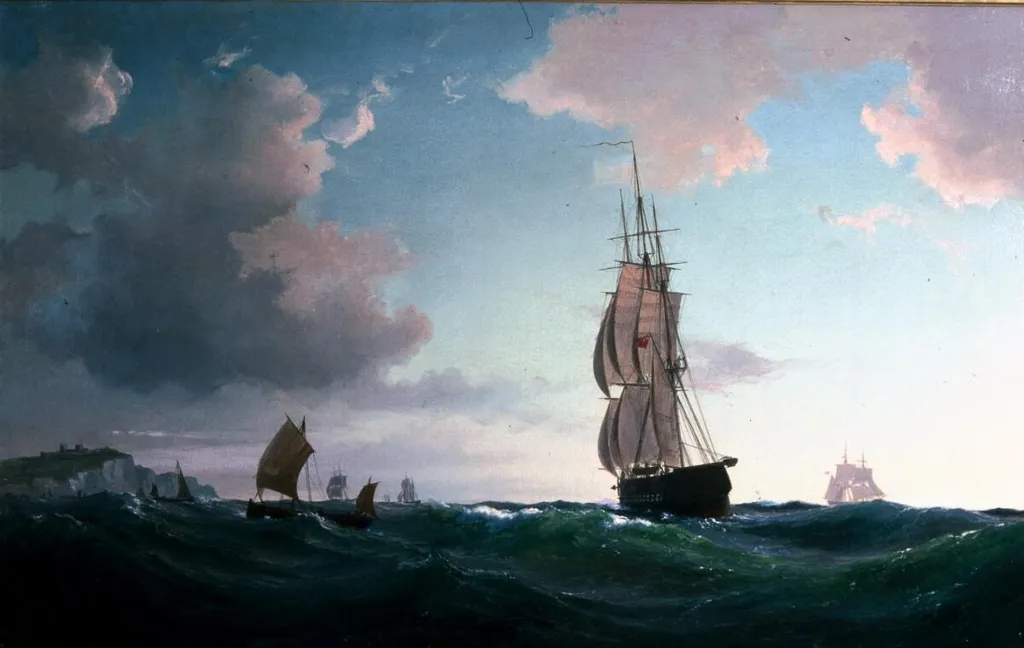
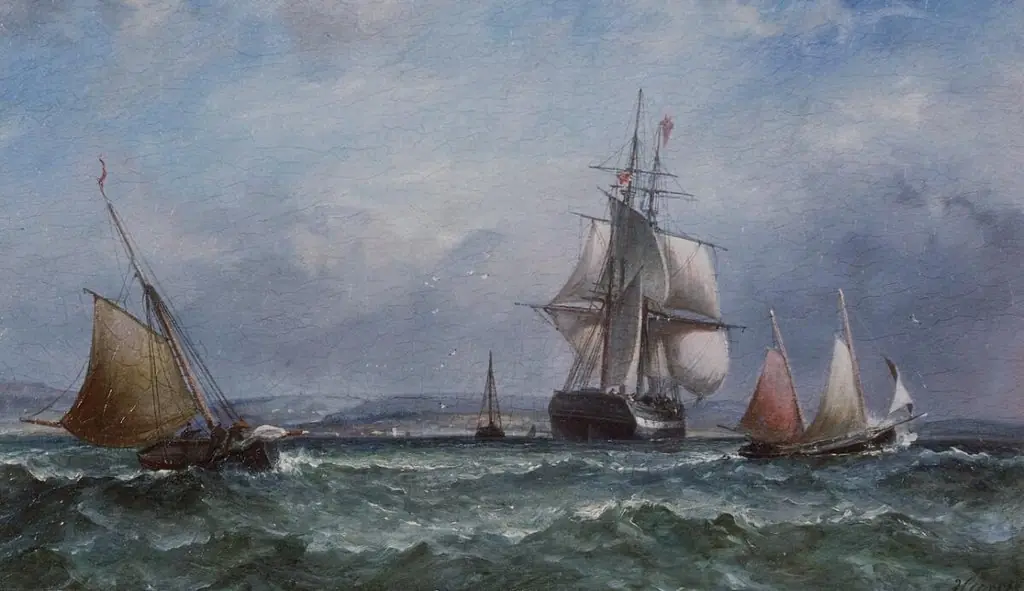
Dover Castle is an oil painting by Wilhelm Melby. It dates from 1852 and is held in the collection of the National Library of Wales.
About this work
Overview
The composition centers on a large sailing vessel battling rough seas, with the distant silhouette of Dover Castle rising above the cliffs.
Painted in 1852 by Wilhelm Melby, this oil-on-canvas work captures a maritime scene off the coast of Dover. The composition centers on a large sailing vessel battling rough seas, with the distant silhouette of Dover Castle rising above the cliffs. The sky is heavy with storm clouds, pierced by a narrow band of light, reinforcing the tension between human endeavor and natural force. The painting is part of the National Library of Wales’s collection.
Subject & Meaning
The painting portrays a merchant or naval vessel struggling against strong winds and turbulent waters, its sails partially furled to manage the storm. The castle in the distance, barely distinct, serves as a silent witness rather than a focal point. The emphasis on the ship’s vulnerability suggests a meditation on resilience and the unpredictability of sea travel in the mid-19th century, without overt symbolism or narrative.
Technique & Style
Melby employs thick, textured brushwork to render the churning sea and the ship’s weathered hull. The sky is layered with dark pigments, gradating into a faint glow near the horizon, enhancing the sense of impending weather. Details like rigging and wave foam are suggested rather than meticulously rendered, prioritizing mood over precision. The palette is muted, dominated by grays, blues, and earth tones, reinforcing the scene’s somber atmosphere.
History & Provenance
Created in 1852, the painting entered the National Library of Wales’s collection at an unknown date, likely through donation or acquisition in the late 19th or early 20th century. There is no record of public exhibition prior to its inclusion in the library’s holdings. Melby, a lesser-known artist of the period, produced few documented works, making this piece a rare surviving example of his maritime subjects.
Context
In the mid-1800s, Britain’s maritime economy relied heavily on sailing vessels, and coastal scenes were common in British art. Dover, as a key port and defensive site, held symbolic weight. Melby’s focus on a ship in distress reflects broader cultural awareness of seafaring dangers, even as steam technology began to emerge. The painting aligns with Romantic-era tendencies to depict nature’s power over human activity.
Legacy
Though not widely exhibited or reproduced, the painting remains a quiet testament to 19th-century British maritime life. Its preservation in a national institution underscores its value as a regional artifact rather than a celebrated work. It contributes to the understanding of lesser-known artists who documented everyday seascapes, offering insight into the visual culture of coastal Britain beyond major artistic movements.
Artist & collection
Artist
Wilhelm Melby painted quiet coastal scenes in oil, most famously the chalk cliffs and sea lanes around southern England in the mid-1800s.

 Marine
 Marine
 South Sea Whale Fishing II
 Ship Southern Cross in Boston Harbor, 1851
 Brig "Antelope" in Boston Harbor
 Marină
 New York Harbor
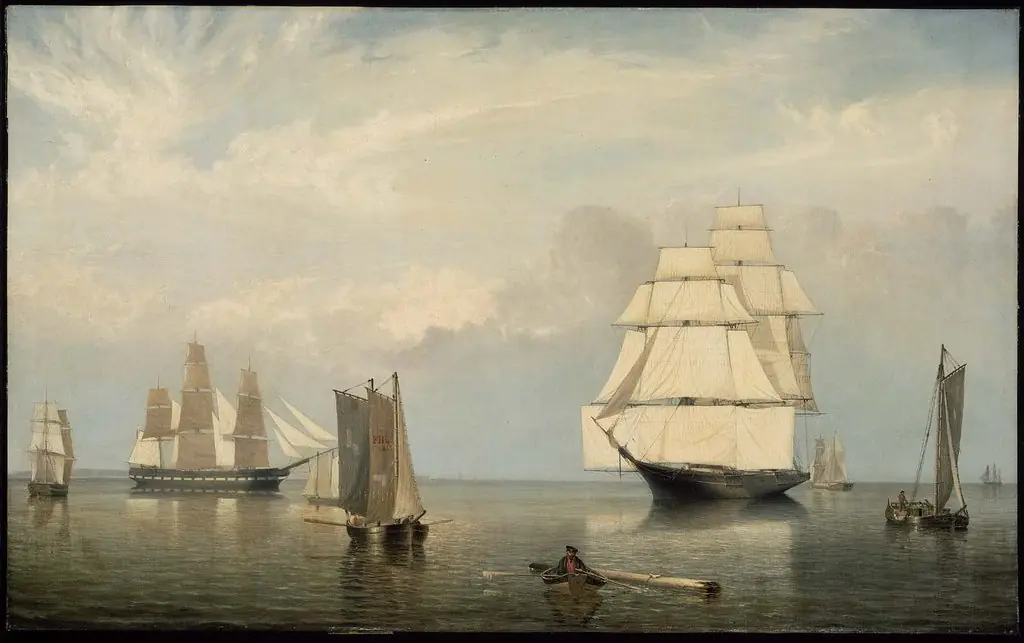 Salem Harbor
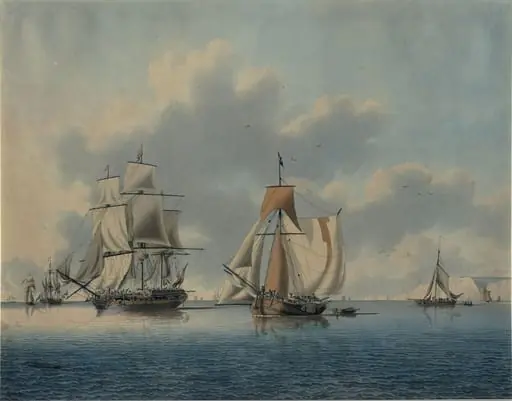 A frigate and Dutch fishing boats off the Isle of Wight
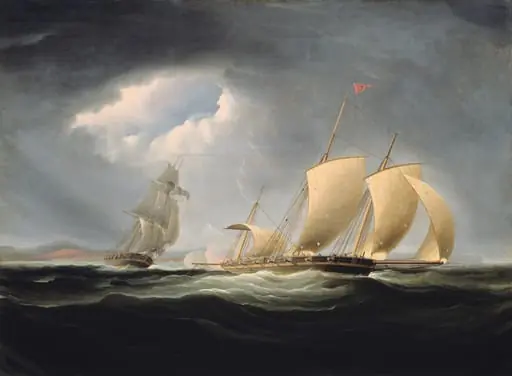 Capture of the Tripoli by the Enterprise
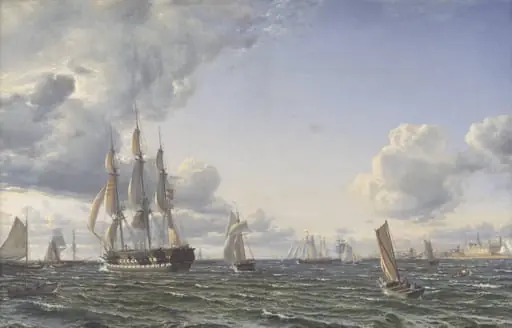 Linieskibet "Valdemar" krydser Sundet ind for en frisk bramsejlskuling
 'Man of War' - Sailing Ships