Artwork
View of the Coffee Plantation Marienbosch in Surinam
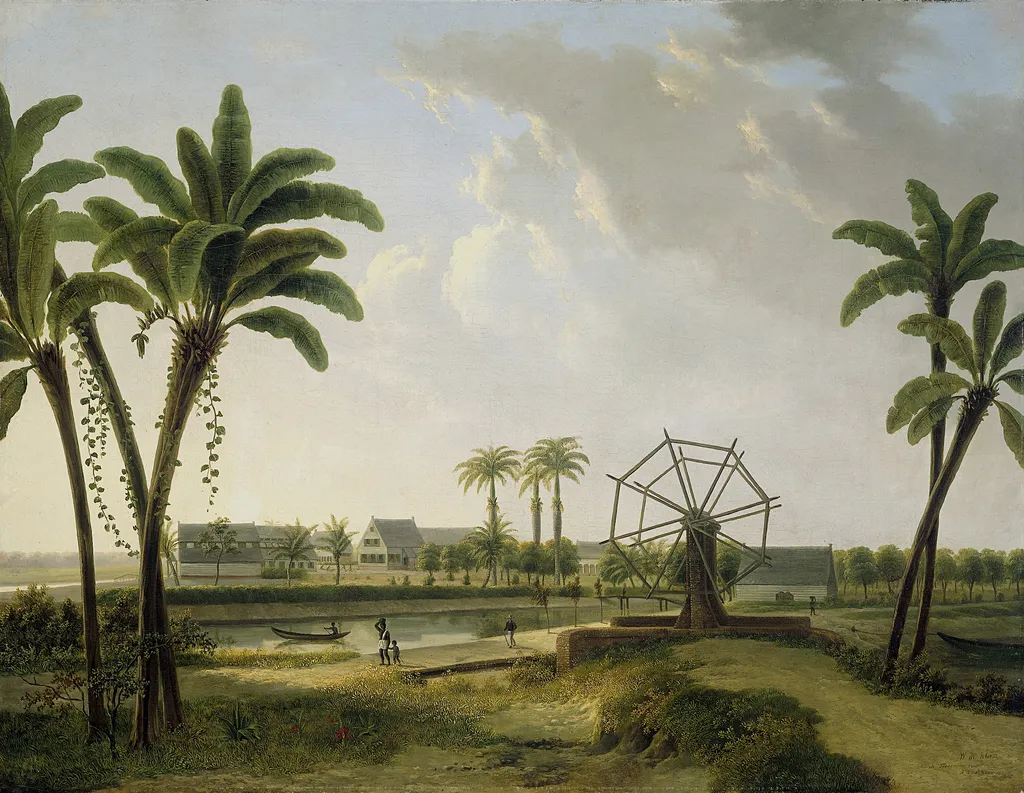
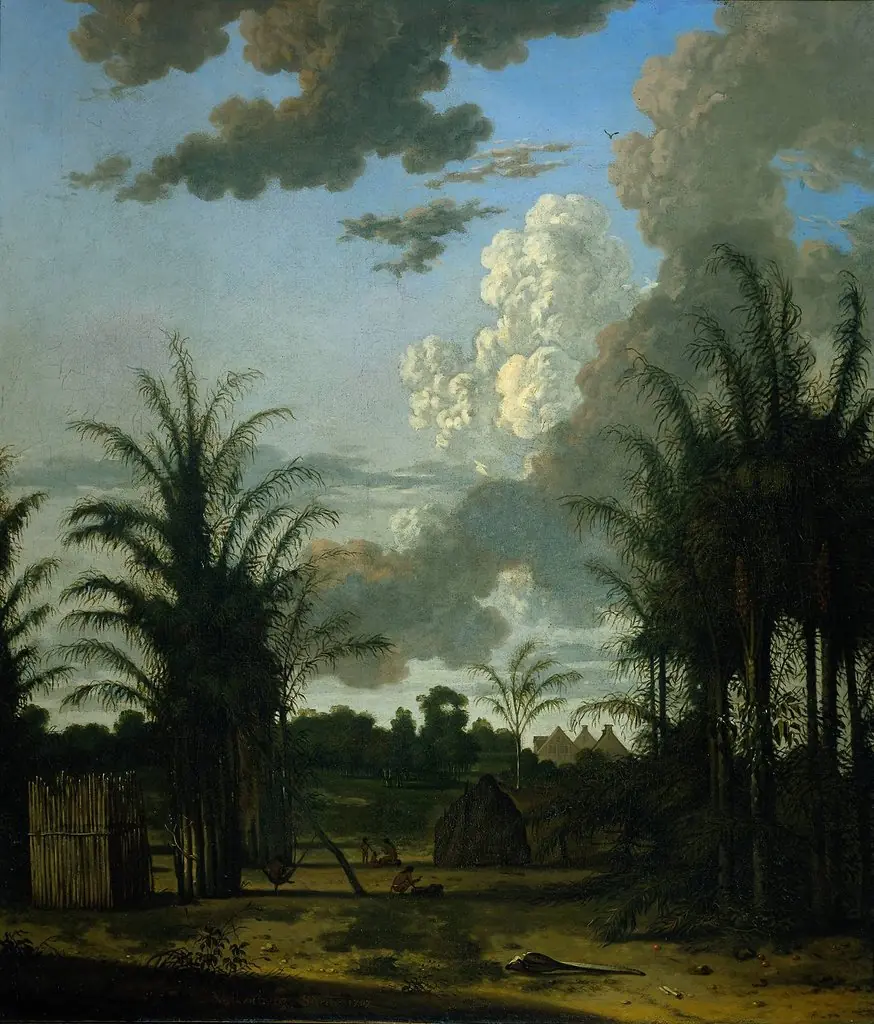
View of the Coffee Plantation Marienbosch in Surinam is an oil painting by the Realist artist Willem de Klerk. It dates from 1850 and is held in the collection of the Rijksmuseum.
About this work
Overview
Two figures are shown strolling along the water’s edge, while a small boat drifts nearby, conveying a sense of calm daily life on the plantation.
Willem de Klerk’s oil on canvas, painted around 1850, presents a tranquil view of the Marienbosch coffee estate in Suriname. The composition centers on a spacious plantation landscape, with a windmill, a pond, and a modest white building set amid tropical vegetation. Two figures are shown strolling along the water’s edge, while a small boat drifts nearby, conveying a sense of calm daily life on the plantation.
Subject & Meaning
The work records the functional elements of a mid‑nineteenth‑century coffee plantation: a wooden windmill likely employed for grinding beans, a pond supplying water, and the main house where the overseer or owner resided. The inclusion of pedestrians suggests routine activity, while the surrounding palms and trees emphasize the tropical environment that defined Suriname’s agricultural economy.
Technique & Style
De Klerk employs a muted palette and soft brushwork to render the interplay of light and shadow on foliage and architecture. The rendering of the windmill’s wooden texture and the reflective surface of the pond demonstrates careful observation. Atmospheric perspective is used to recede the distant structures, creating depth without dramatic contrast.
History & Provenance
Created circa 1850, the painting entered the collection of the Rijksmuseum in the Netherlands, where it remains on display. Its acquisition reflects the museum’s interest in documenting Dutch colonial holdings and the visual record of overseas plantations during the period of Dutch imperial activity.
Context
During the mid‑1800s Suriname was a Dutch colony whose economy relied heavily on coffee and other cash crops. Artists like de Klerk traveled to the colonies to document landscapes and economic enterprises, providing metropolitan audiences with visual information about distant territories and their productive capacities.
Own this work as a print
Artist & collection