Artwork
Still Life with Columbine Goblet
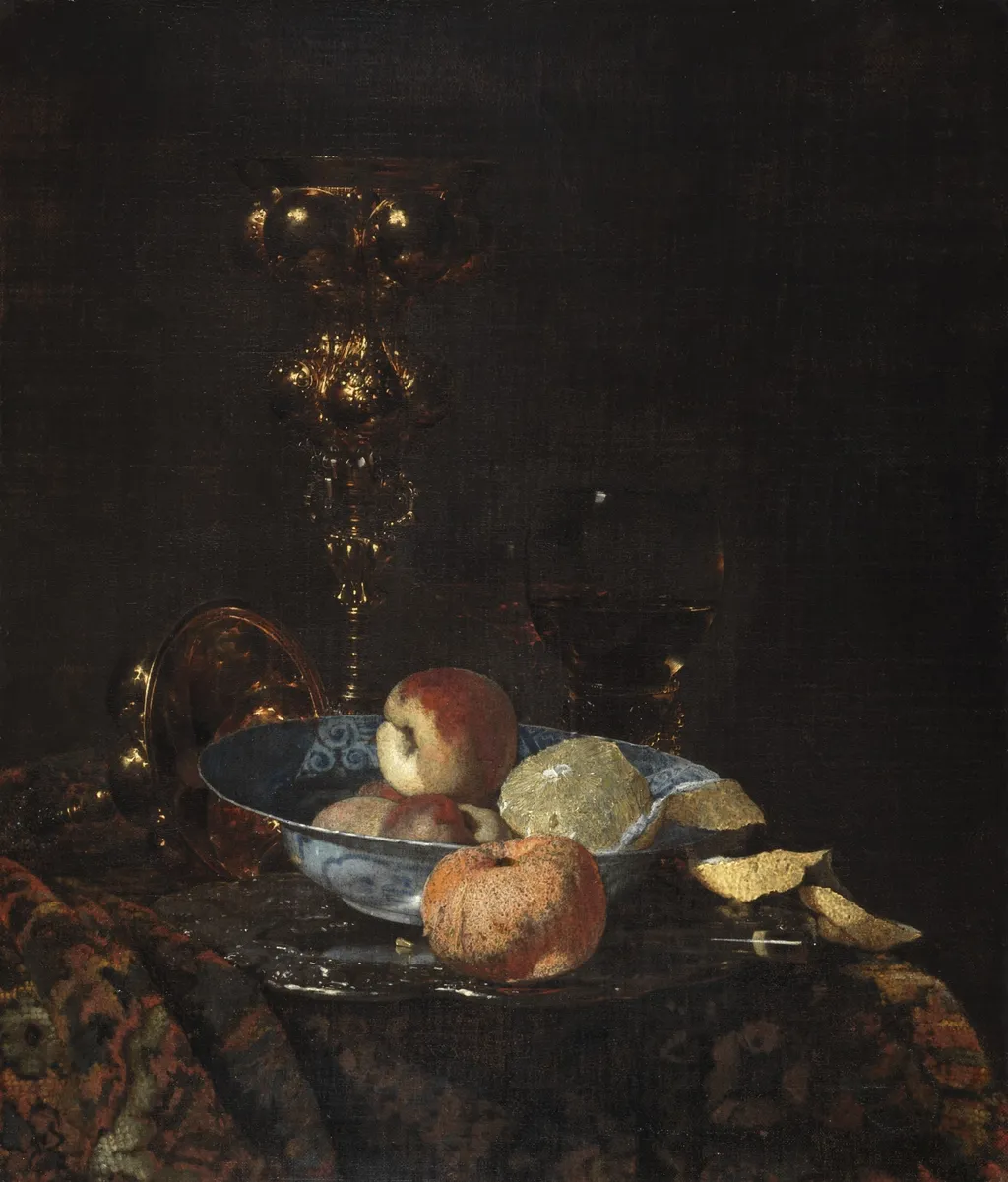
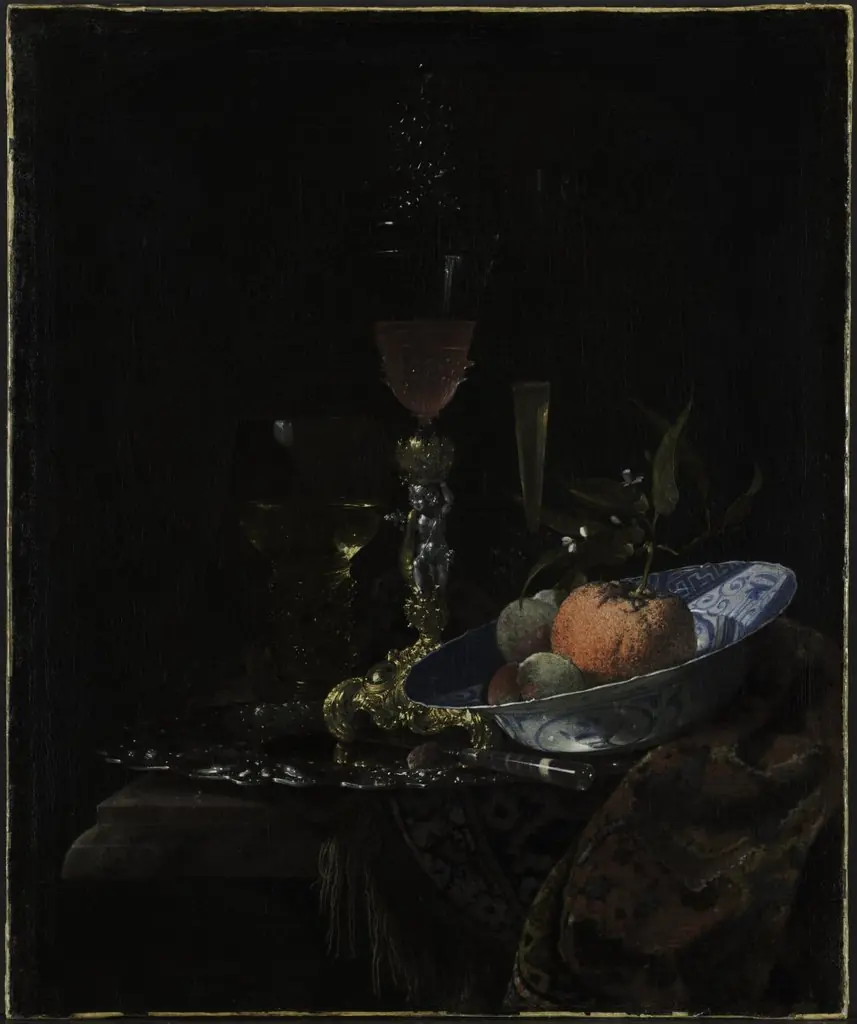
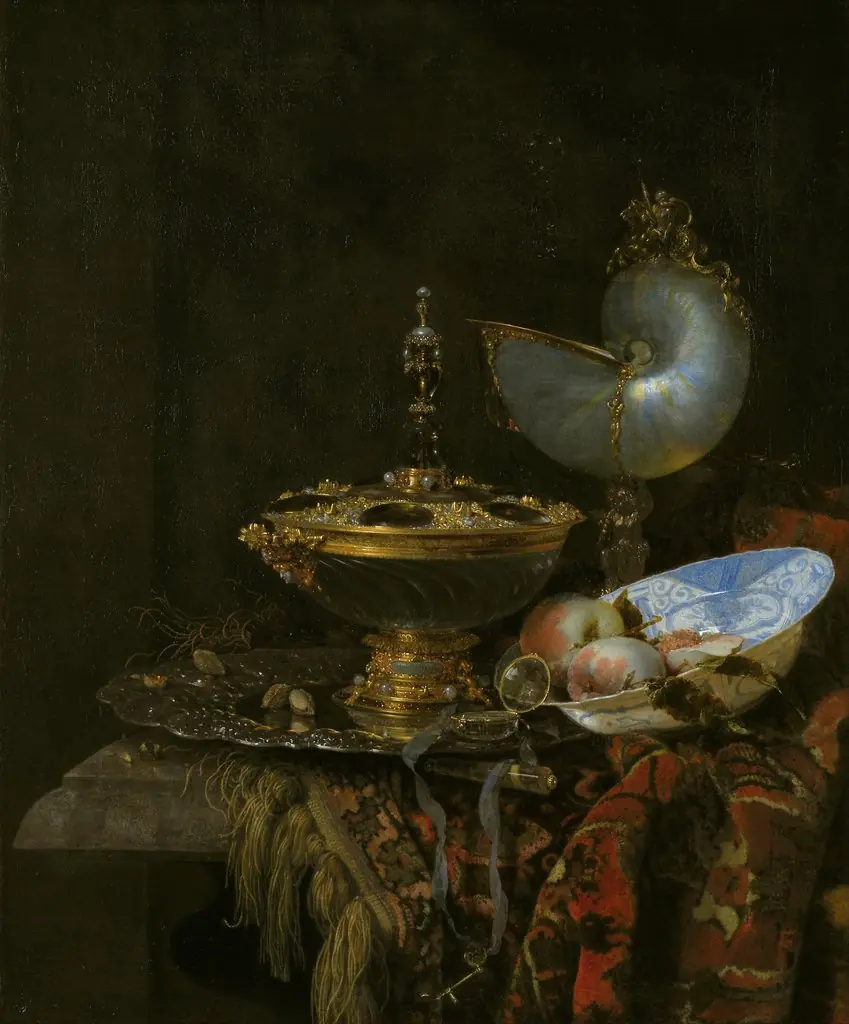
Still Life with Columbine Goblet is an oil painting by the Dutch Golden Age artist Willem Kalf. It dates from 1660 and is held in the collection of the Detroit Institute of Arts.
About this work
Overview
Created in 1660 by Dutch painter Willem Kalf, *Still Life with Columbine Goblet* is an oil on canvas that presents a modest grouping of everyday luxury items.
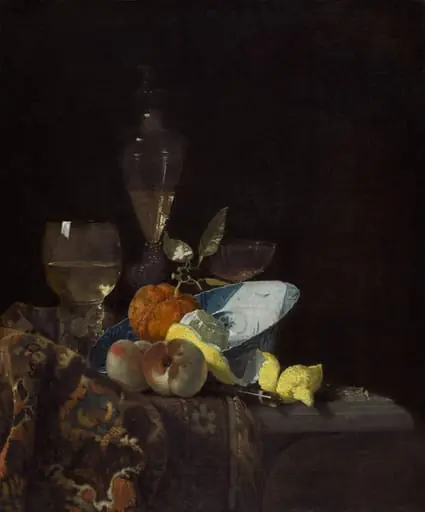
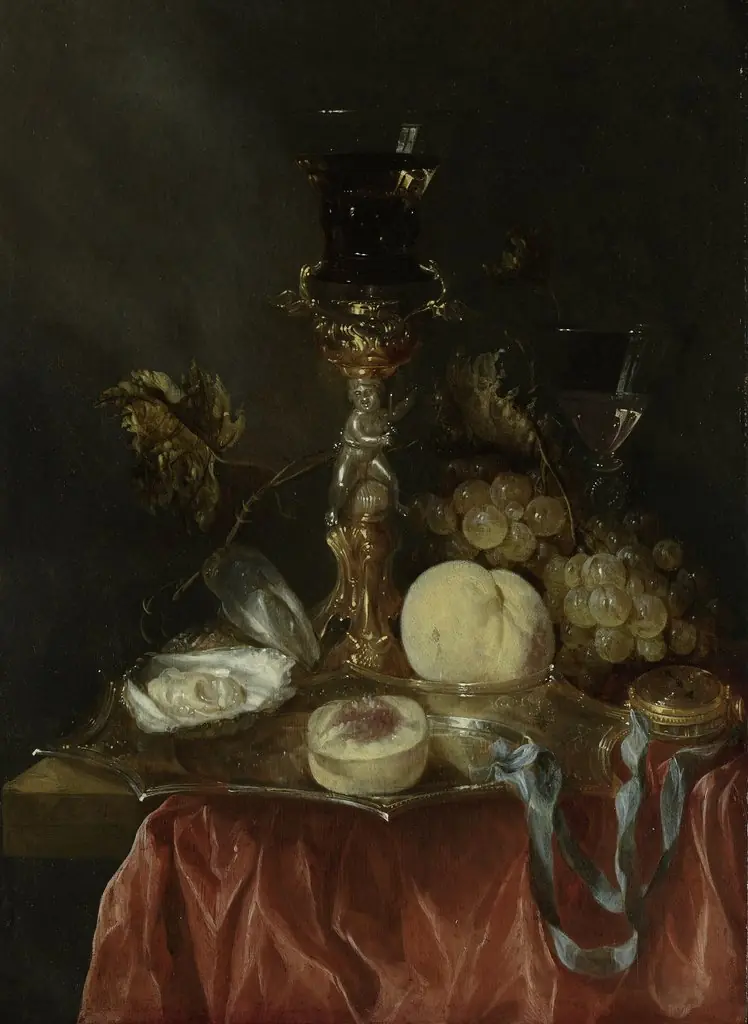
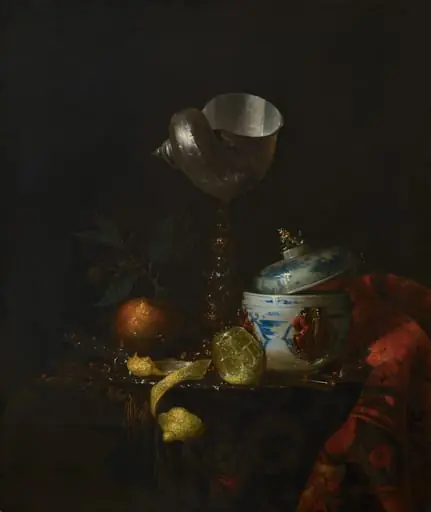
Created in 1660 by Dutch painter Willem Kalf, *Still Life with Columbine Goblet* is an oil on canvas that presents a modest grouping of everyday luxury items. A darkened tabletop supports a blue‑and‑white bowl containing peaches, a peeled orange, a lemon, and a tall, reflective goblet whose twisted stem catches the light. The composition is set against an almost black background, allowing the objects to appear illuminated and three‑dimensional.
Subject & Meaning
The work assembles a limited selection of fruit and a glass vessel, typical of Kalf’s later still‑lifes that explore the fleeting nature of material wealth. By juxtaposing the smooth sheen of the goblet with the textured skins of the fruit, the painting invites contemplation of transience and the sensory pleasures of taste and sight, themes common in 17th‑century Dutch vanitas traditions.
Technique & Style
Kalf employs a pronounced chiaroscuro, using deep shadows to isolate each item while strategic highlights render the glass and fruit surfaces with a tactile realism. The careful modulation of light across the bowl, goblet stem, and citrus skins creates a sense of volume and depth, demonstrating the artist’s mastery of oil’s capacity for subtle gradations and reflective effects.
History & Provenance
After remaining in private collections for several centuries, the painting entered the holdings of the Detroit Institute of Arts, where it is displayed as part of the museum’s European paintings. Its acquisition reflects the institution’s commitment to representing the Dutch Golden Age and the evolution of still‑life painting within that period.
Context
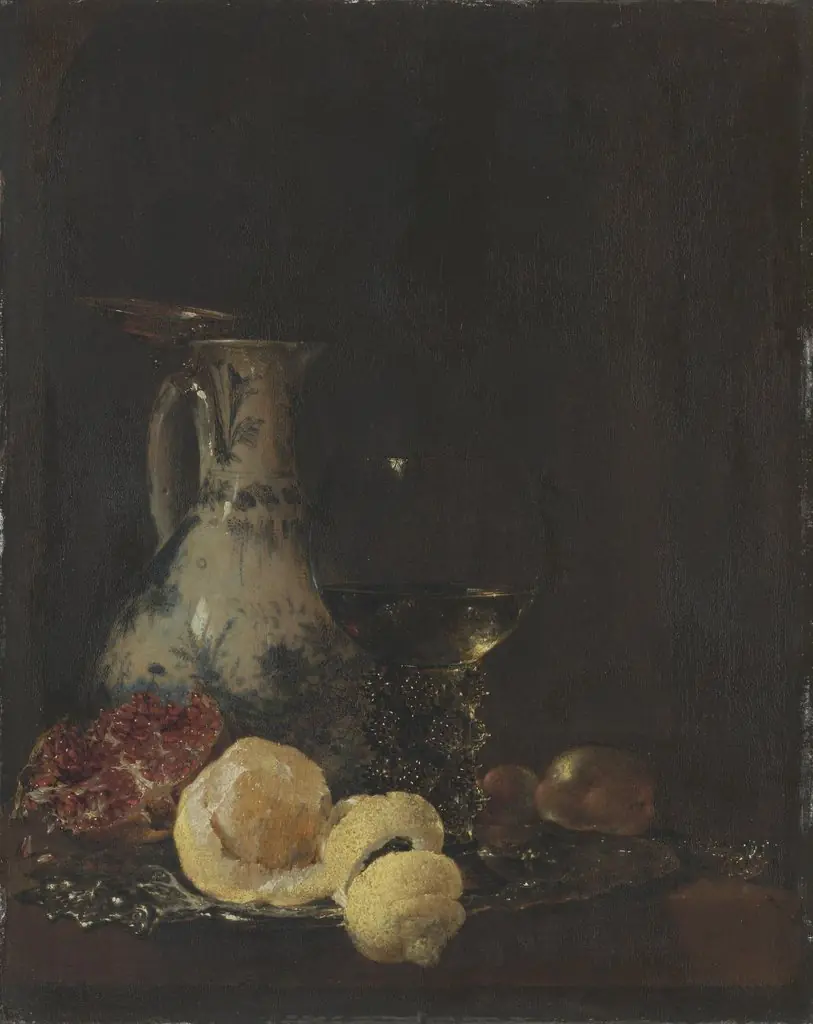
Kalf was a leading exponent of pronkstilleven, a genre that celebrated opulent objects from domestic and exotic sources. By 1660, his mature style favored restrained arrangements that emphasized the interplay of light and material rather than sheer abundance, marking a shift from earlier, more crowded Dutch banquet scenes toward a more contemplative visual language.
Own this work as a print
Artist & collection
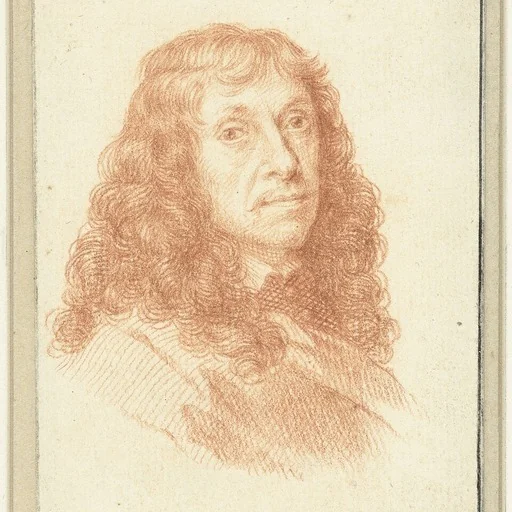
Artist
Willem Kalf (1619 – 31 July 1693) was one of the most prominent Dutch still-life painters of the 17th century, the Dutch Golden Age.