Artwork
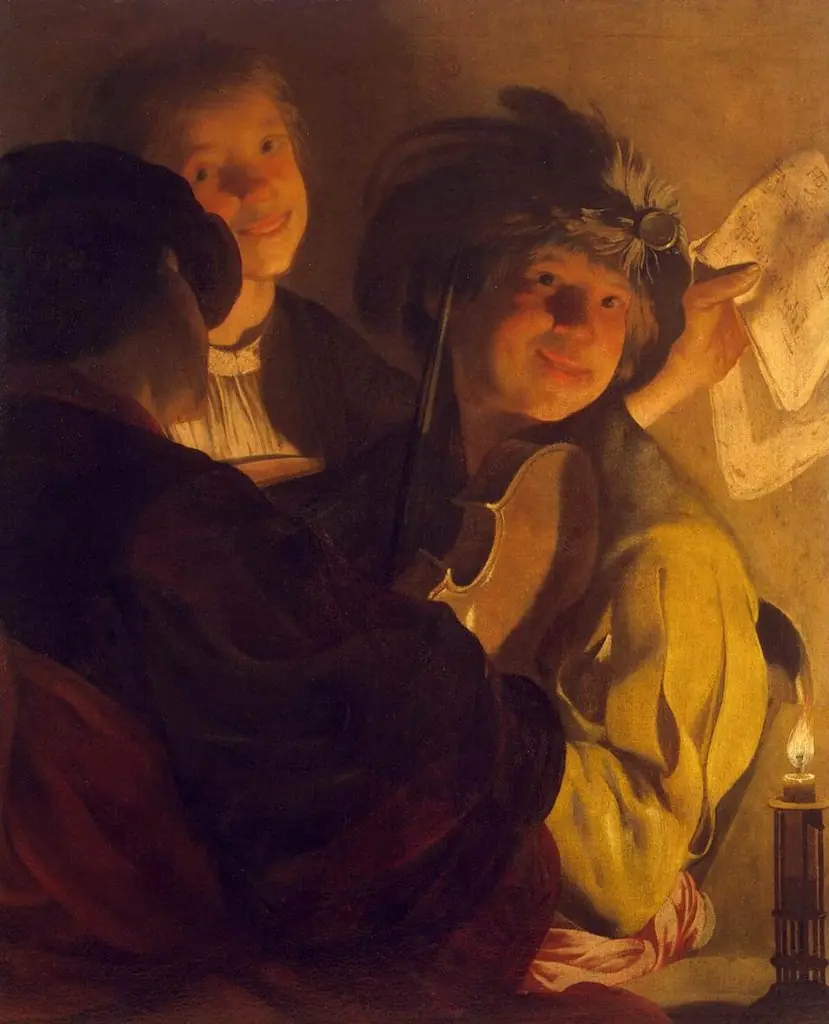
A Man Smoking and Another Man Eating by Candlelight
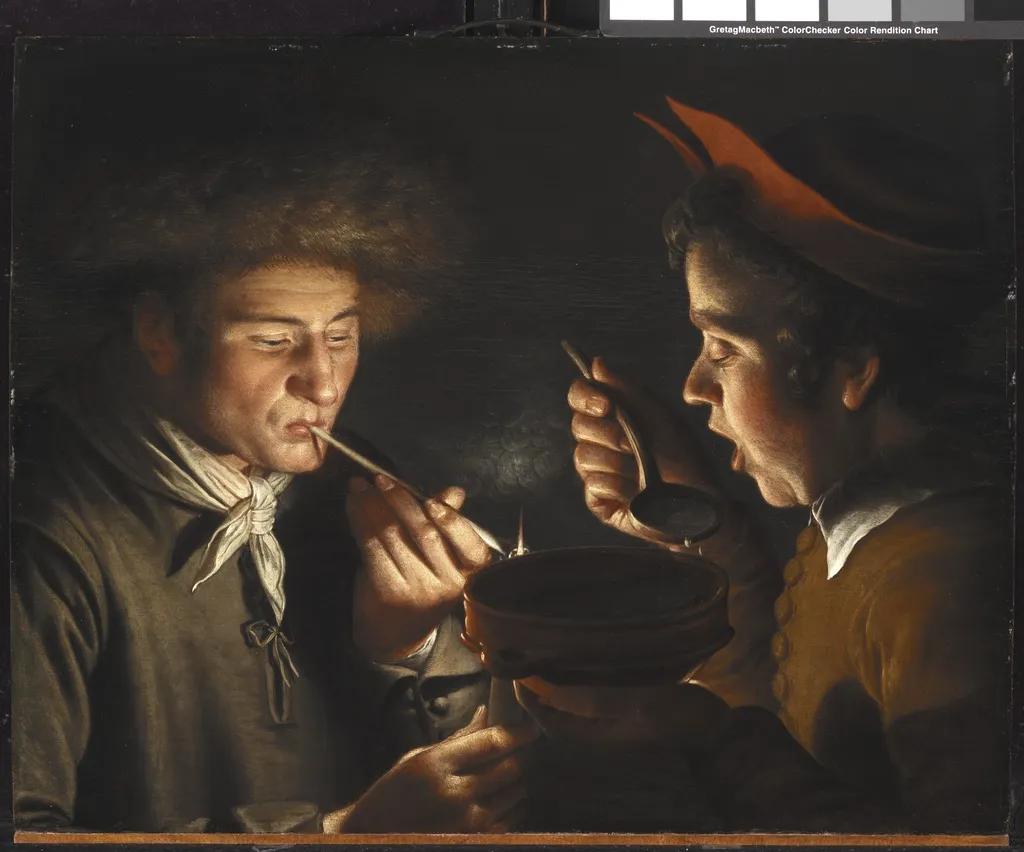
A Man Smoking and Another Man Eating by Candlelight is an oil painting by the Dutch Golden Age artist Willem van der Vliet. It dates from 1624 and is held in the collection of the Detroit Institute of Arts.
About this work
Overview
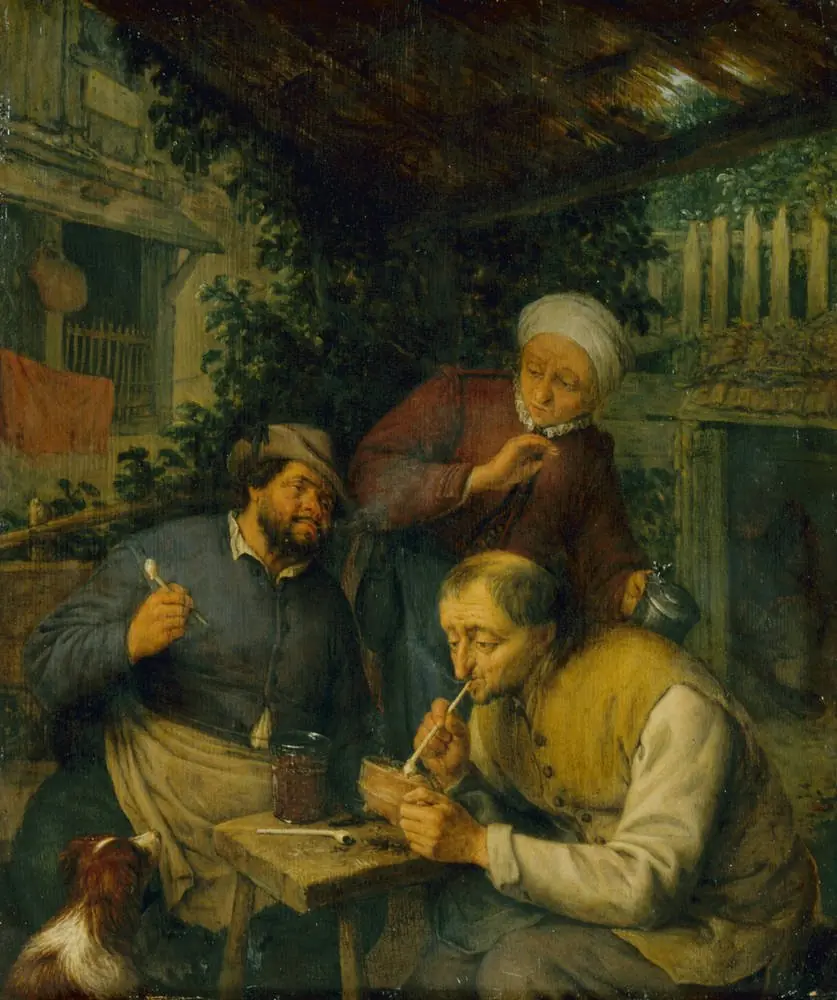
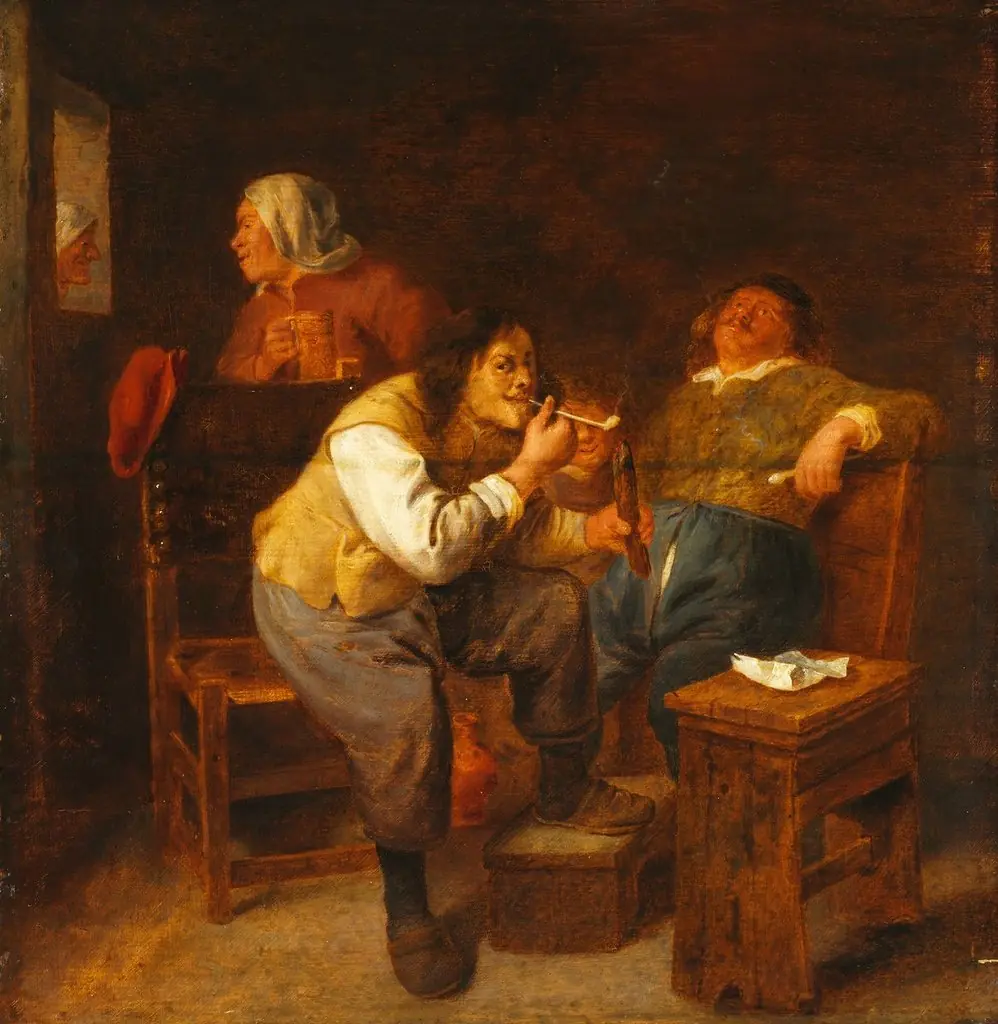
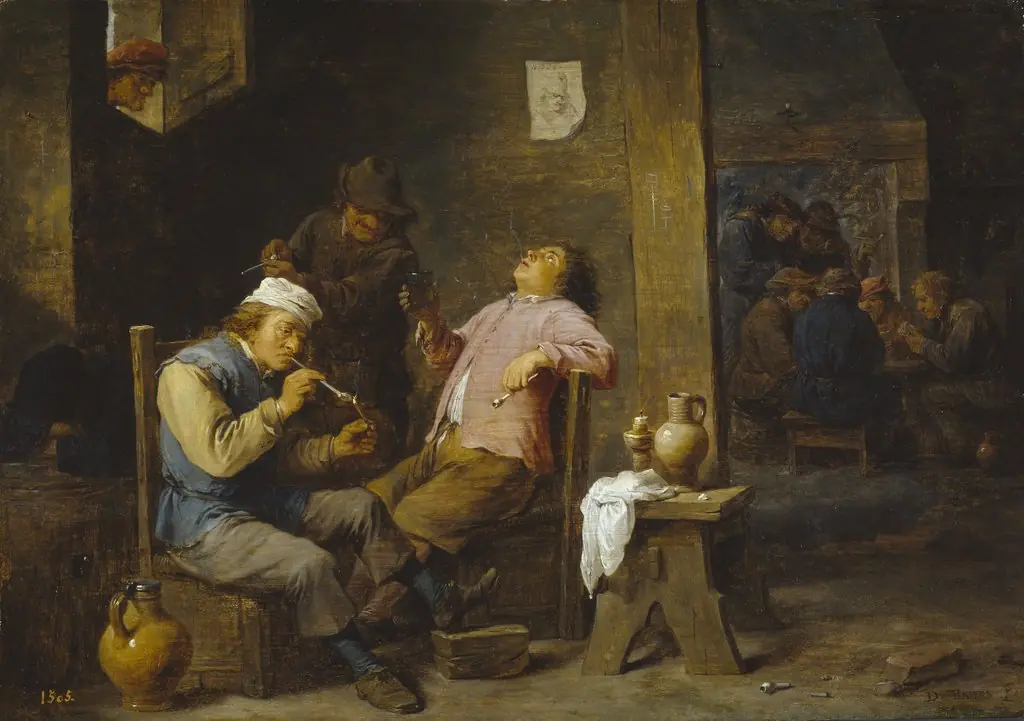
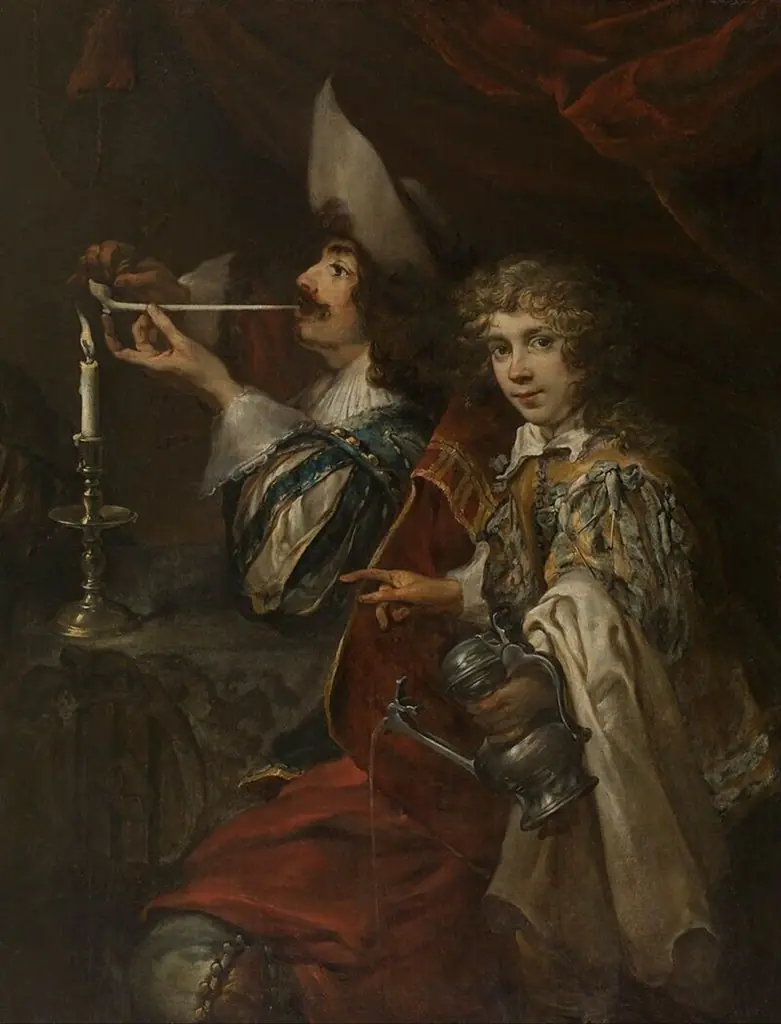
Willem van der Vliet’s oil painting, dated 1624, depicts an intimate interior where two men share a quiet moment. One figure, seated with a pipe, exhales smoke, while his companion, holding a bowl, appears to be eating. The composition is bathed in the gentle illumination of a single candle, creating a subdued atmosphere that draws attention to the figures and their actions.
Subject & Meaning
The work presents a domestic scene that invites contemplation of everyday routines. The contrast between the act of smoking and the act of eating may suggest a pause between leisure and sustenance, emphasizing a moment of personal reflection. The subdued setting and lack of overt narrative allow viewers to infer a sense of calm introspection shared by the two men.
Technique & Style
Van der Vliet employs chiaroscuro, using the candle’s soft light to model forms and generate depth.
Van der Vliet employs chiaroscuro, using the candle’s soft light to model forms and generate depth. The interplay of light and shadow defines the textures of clothing—a dark jacket with a white neckerchief opposite a yellow jacket and red hat—while the surrounding darkness recedes, enhancing the three‑dimensional presence of the figures. The brushwork remains controlled, reinforcing the genre‑scene tradition of the Dutch Golden Age.
History & Provenance
Created in the early seventeenth century, the painting entered the collection of the Detroit Institute of Arts, where it remains on display. Its provenance prior to acquisition by the museum is not extensively documented, but the work is recognized as a representative example of van der Vliet’s output during his active period in Delft.
Context
The painting belongs to the Dutch genre tradition that focused on quotidian life, often rendered with moral or reflective undertones. In the 1620s, artists frequently explored the effects of artificial light, and van der Vliet’s choice of candle illumination aligns with contemporary interests in atmospheric effects and the study of human behavior within domestic interiors.
Artist & collection