Artwork
The Tinkers
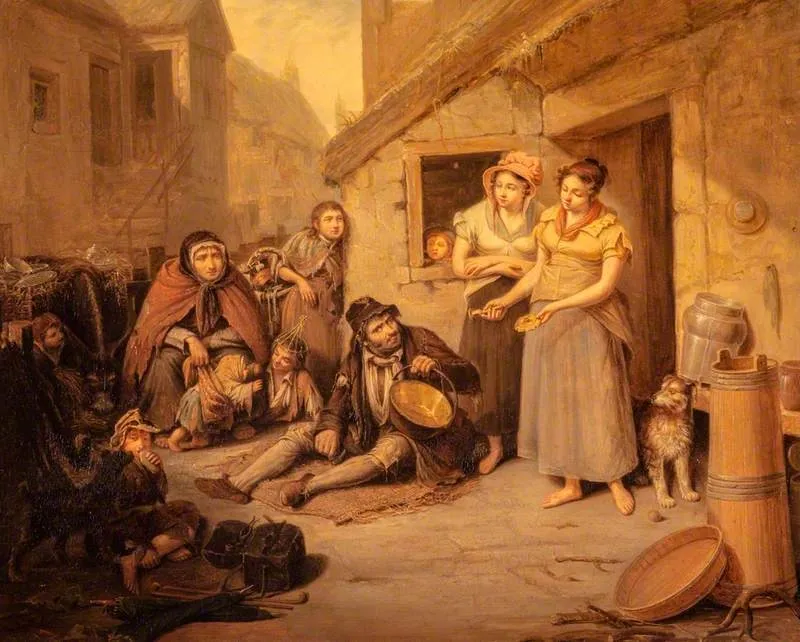
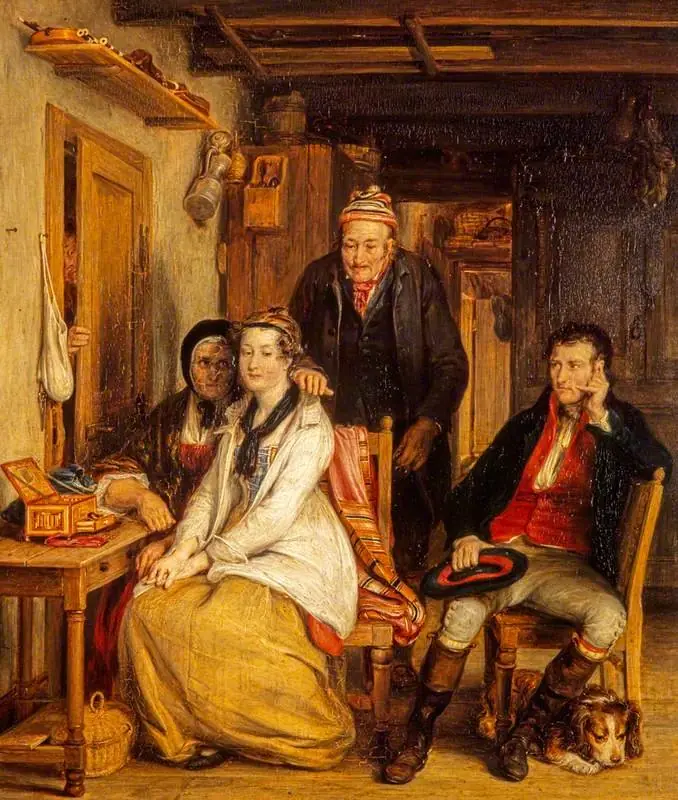
The Tinkers is an oil painting by the British Romanticist artist William Bonnar. It dates from 1825 and is held in the collection of the National Galleries Scotland.
About this work
Overview
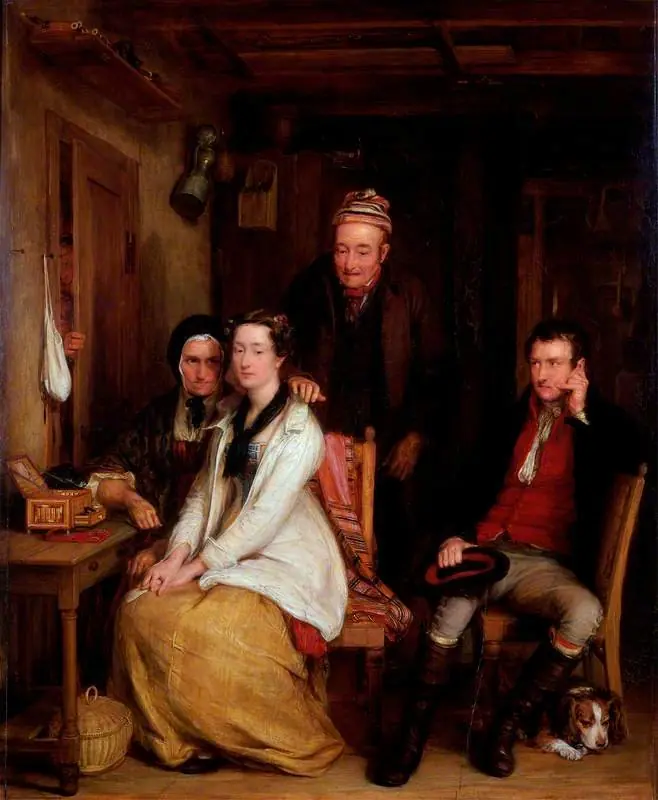
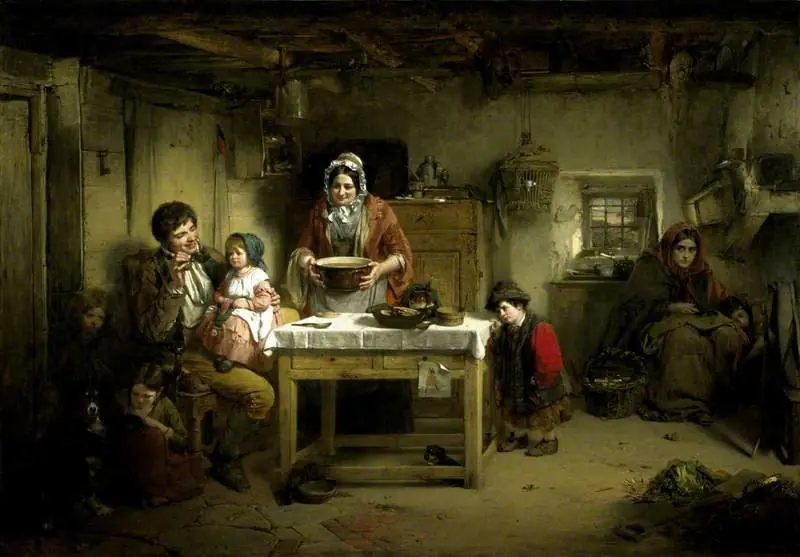
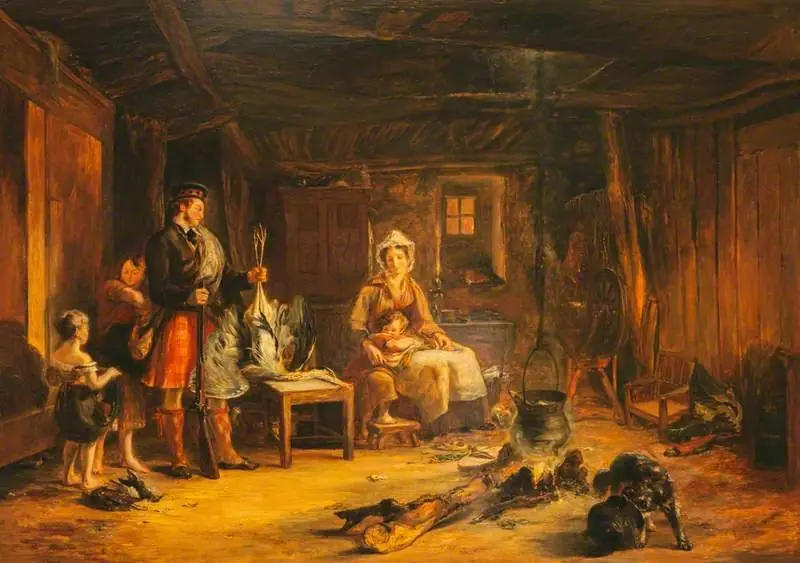
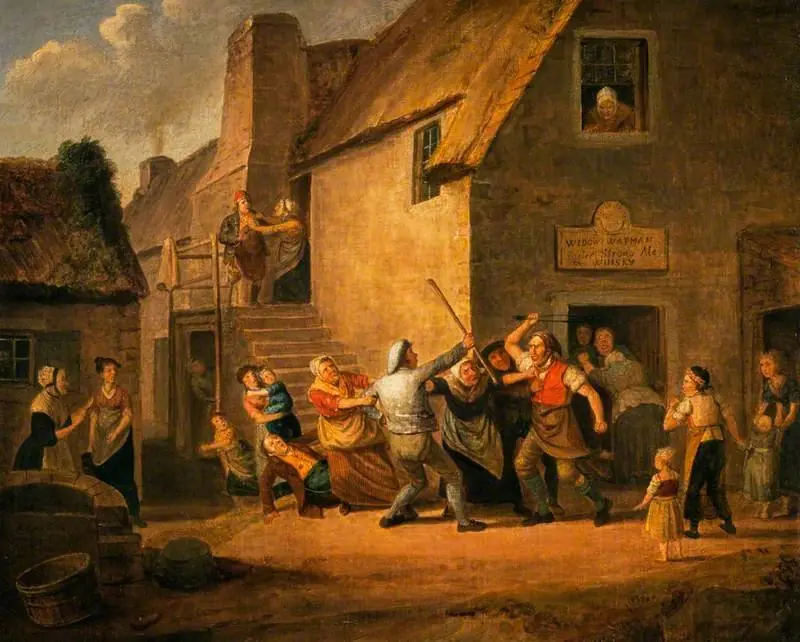
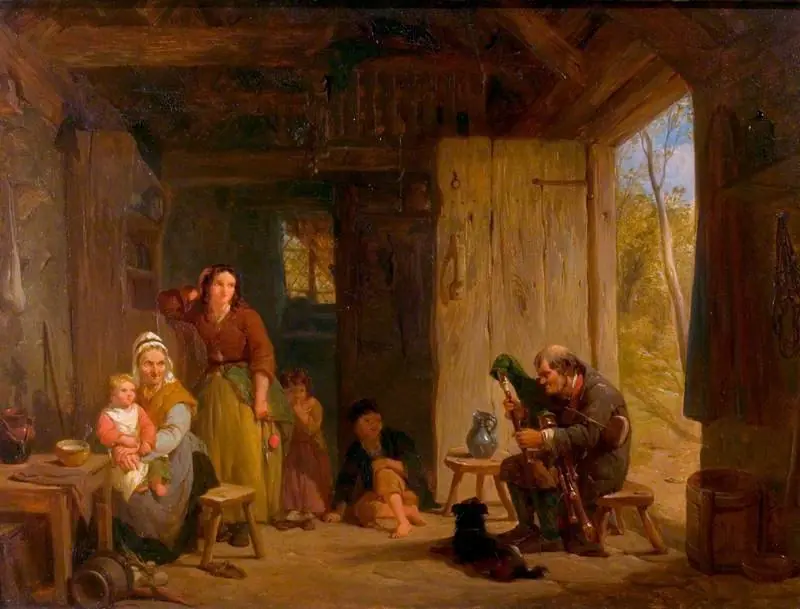
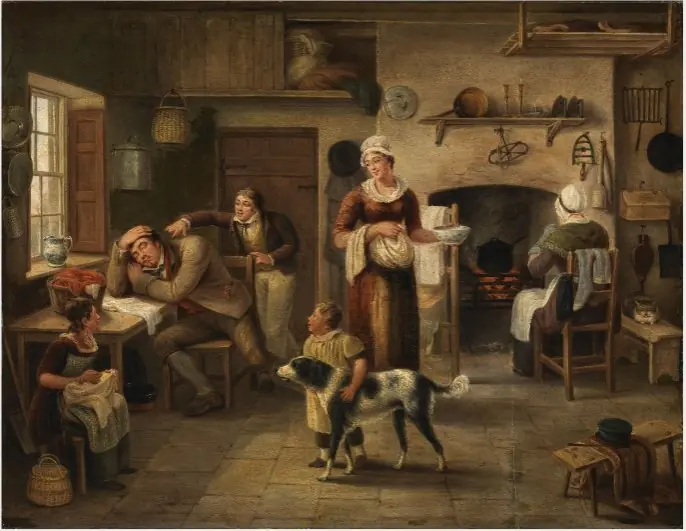
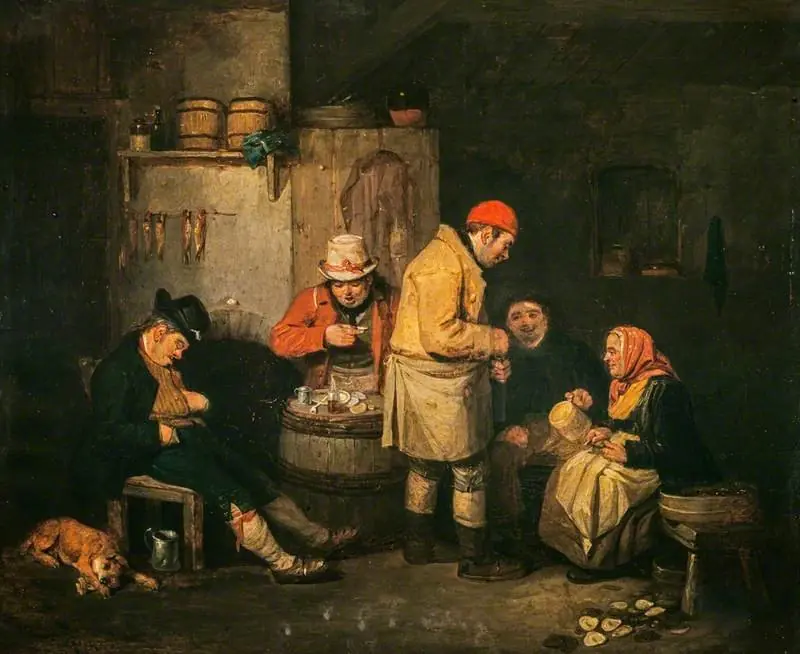
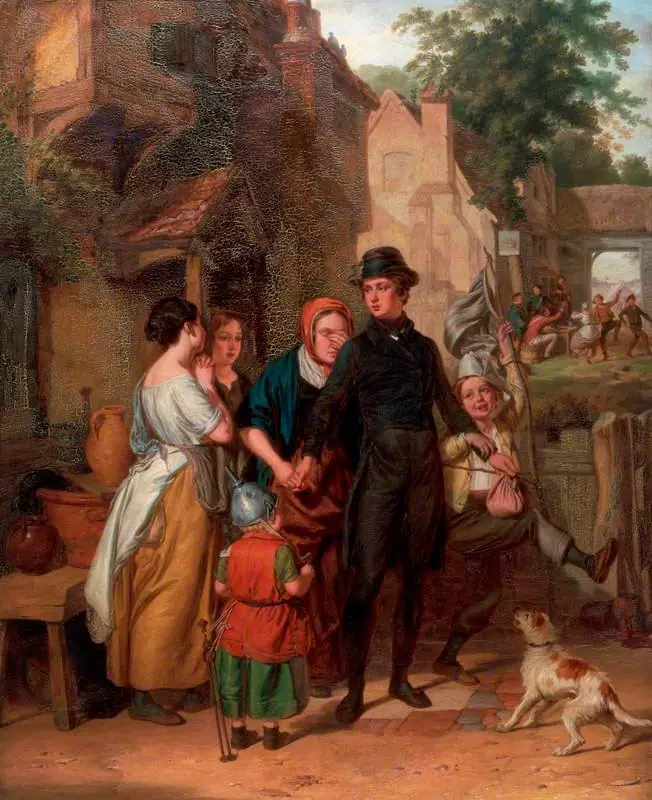
William Bonnar’s oil painting titled The Tinkers, completed in 1825, is part of the collection of the Scottish National Gallery. The work presents a modest, everyday scene set in a stone‑walled courtyard, where a small group of figures are gathered around a man who lies on the ground clutching a large bowl. The composition captures a moment of quiet domestic activity within a rural environment.
Subject & Meaning
The canvas depicts a handful of individuals engaged in simple tasks: a woman standing nearby offers a modest portion of food from a small bowl, while others sit or stand around the central figure. The arrangement suggests a communal sharing of sustenance, perhaps reflecting the social bonds and informal economies of itinerant workers or “tinkers” in early nineteenth‑century Scotland.
Technique & Style
Bonnar employs a warm, earthy palette that emphasizes the rough textures of stone walls, weathered clothing, and the muted light of an outdoor setting. Brushwork is attentive to the fabric’s folds and the surfaces of the bowls, creating a tactile sense of materiality. The overall approach aligns with genre painting traditions that foreground ordinary life over heroic or mythic subjects.
History & Provenance
Created in 1825, The Tinkers entered the Scottish National Gallery’s holdings at an unspecified later date, where it remains on display. Its acquisition reflects the institution’s interest in representing Scottish social history through visual art, and the painting has been cited in surveys of early nineteenth‑century Scottish genre works.
Context
During the early 1800s, Scottish artists increasingly turned to scenes of rural labor and everyday community life, moving away from grand historical narratives. Bonnar’s work fits within this broader movement, offering a visual record of the lived experience of itinerant craftsmen and their interactions within a modest domestic space.
Artist & collection