Artwork
Mary Fairlie Cooper
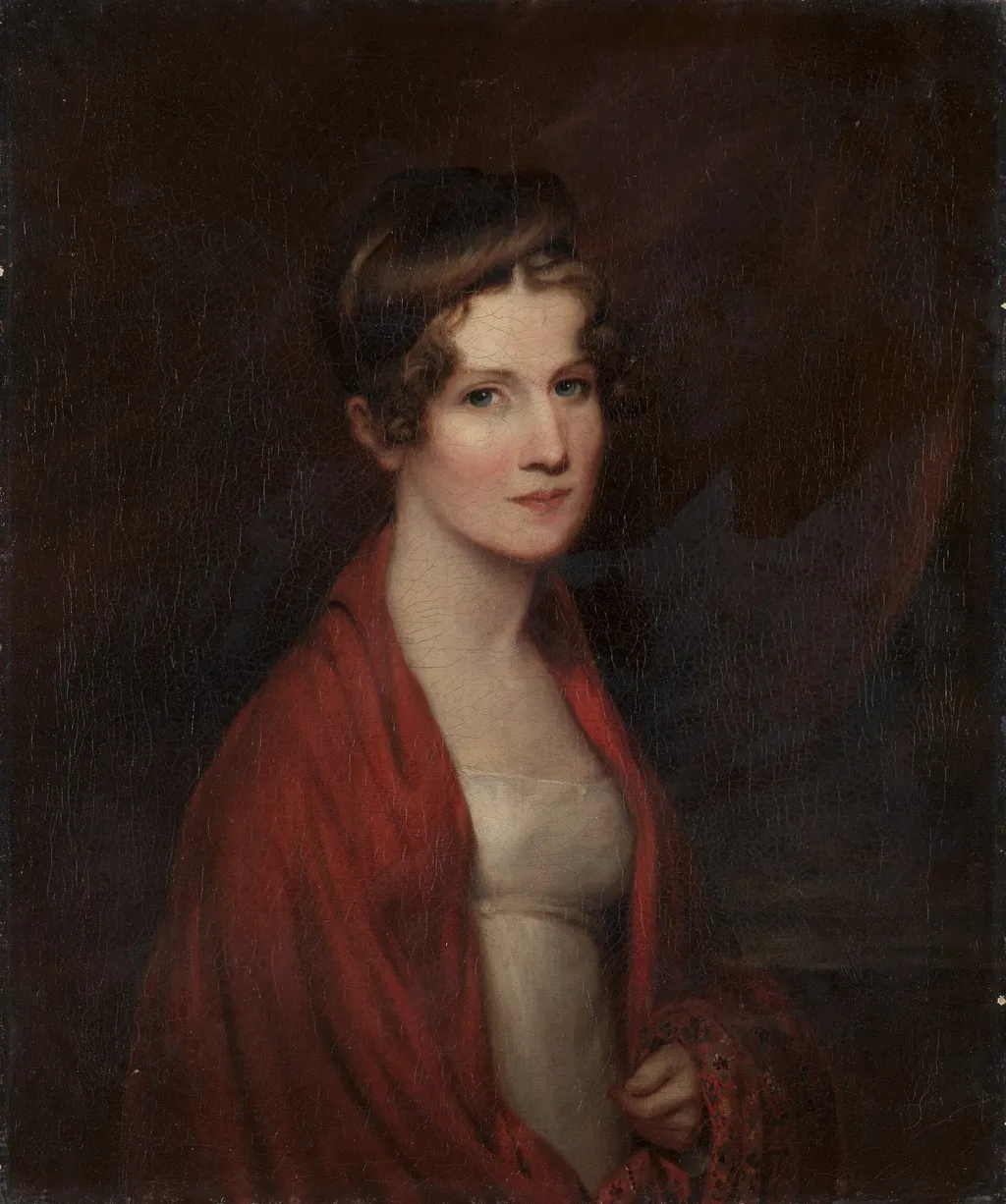
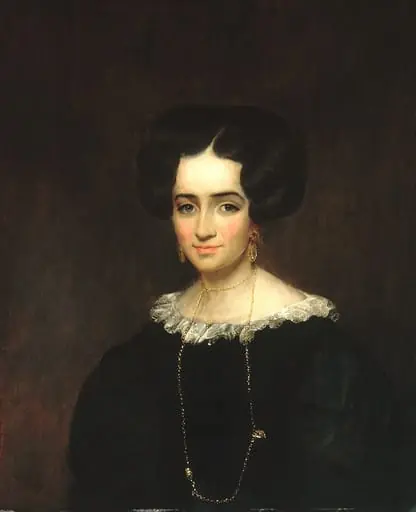
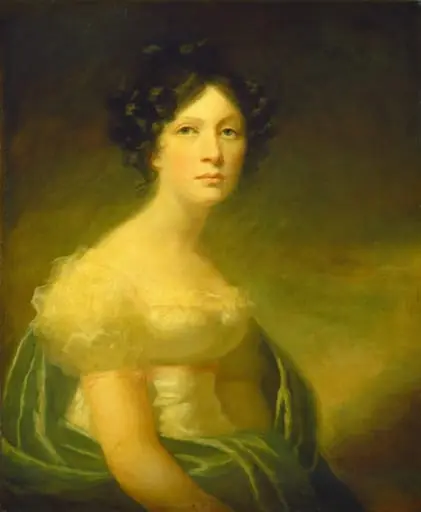
Mary Fairlie Cooper is an oil painting by the American Folk Art artist William Dunlap. It dates from 1814 and is held in the collection of the Cleveland Museum of Art.
About this work
The artist's use of light and shadow creates a sense of volume and texture in the subject's clothing and features.
This portrait depicts a woman with fair skin and dark, curly hair pulled back. She wears a white dress with a square neckline and a red shawl draped over her shoulders. Her gaze is directed to the right of the viewer. The background is dark, with subtle shading that suggests depth.
The woman's attire and hairstyle are characteristic of the early 19th century. Her expression is serene, with a hint of introspection. The artist's use of light and shadow creates a sense of volume and texture in the subject's clothing and features.
For more information on the artist who created this portrait, look up William Dunlap.
Overview
William Dunlap’s 1814 oil portrait of Mary Fairlie Cooper presents a seated woman in a modest white dress accented by a red shawl. Set against a darkened backdrop, the composition emphasizes the sitter’s fair complexion and dark, curled hair, which is gathered away from her face. Her gaze turns slightly to the right, lending the work a quiet, contemplative presence.
Subject & Meaning
The figure’s attire—a simple square‑necked gown and shawl—reflects the fashion of the early nineteenth‑century American middle class. Her serene expression and restrained pose suggest personal modesty rather than overt status, aligning with the folk‑art tradition’s focus on everyday individuals rather than aristocratic grandeur.
Technique & Style
Executed in oil on canvas, Dunlap employs chiaroscuro to model the sitter’s features, allowing light to illuminate the dress and face while the background recedes into shadow. The brushwork is modest, with careful attention to the texture of fabric and hair, characteristic of American folk portraiture that balances realism with a straightforward, unembellished aesthetic.
History & Provenance
Born in 1766 in Perth Amboy, New Jersey, Dunlap was active as a playwright, actor, and theatre producer before turning to visual art, despite losing an eye in childhood. This portrait entered the Cleveland Museum of Art’s collection, where it remains part of the institution’s holdings of early American painting.
Own this work as a print
Artist & collection

Artist
William Dunlap (February 19, 1766 – September 28, 1839) was a pioneer of American theater.