Artwork
The Violin Maker
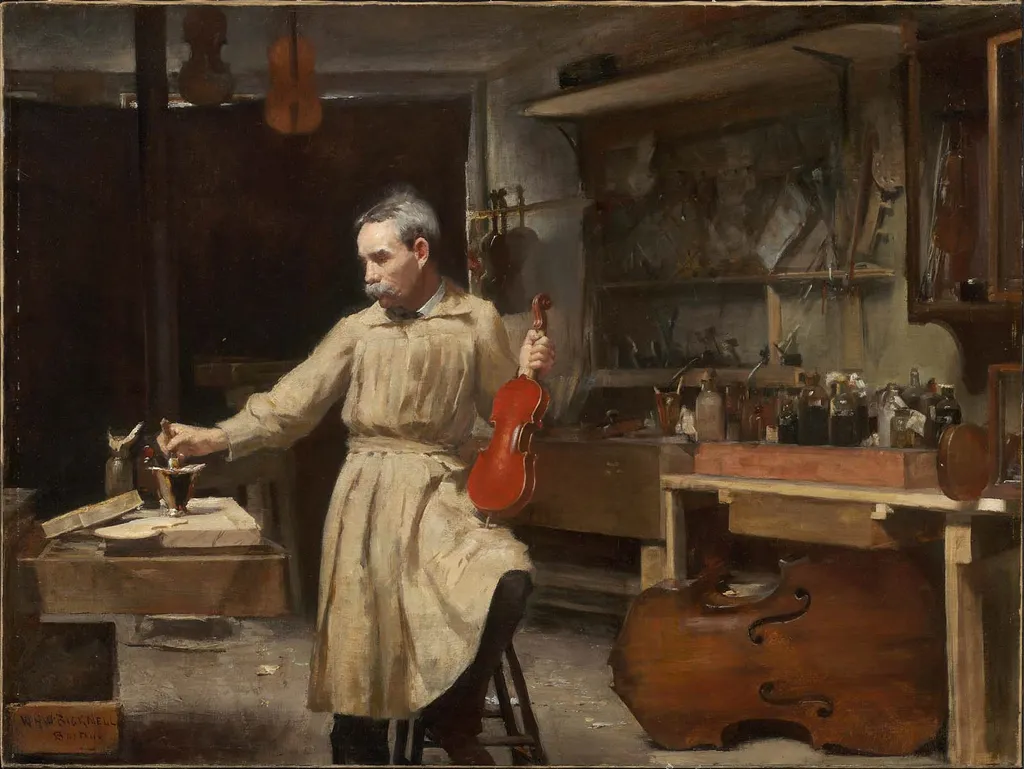
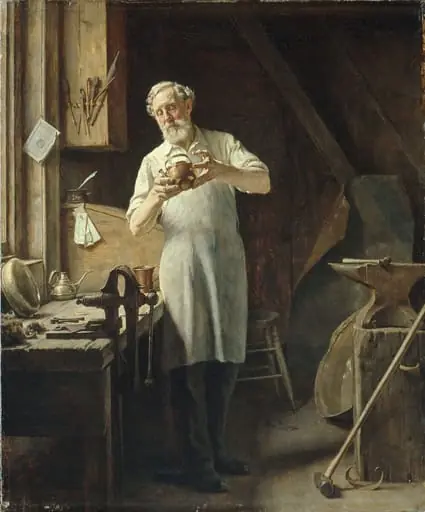
The Violin Maker is an oil painting by the American Impressionist artist William H. W. Bicknell. It dates from 1894 and is held in the collection of the Museum of Fine Arts Boston. Painted in 1894 by William H.
About this work
Overview
Painted in 1894 by William H. W. Bicknell, this oil on canvas depicts a violin maker at work in his workshop. The painting resides in the Museum of Fine Arts, Boston. It captures a moment of quiet labor, emphasizing the artisan’s专注 and the intimate scale of his craft. The composition is tightly framed, drawing attention to the figure and his tools without extraneous detail.
Subject & Meaning
The subject is a solitary craftsman engaged in the meticulous process of violin restoration or finishing. His focused gaze and still posture suggest deep immersion in his task. The absence of narrative context or human interaction underscores the dignity of manual labor, presenting the maker not as a performer but as a silent steward of tradition and precision.
Technique & Style
Bicknell employs chiaroscuro to model the figure and objects with strong light-dark contrasts, lending volume and texture to the wooden surfaces, apron, and tools. The palette is muted, dominated by browns and grays, with a single shaft of light illuminating the violin’s curve. Brushwork is restrained, favoring subtle transitions over detail, enhancing the atmosphere of quiet concentration.
History & Provenance
The painting was completed in 1894 and entered the Museum of Fine Arts, Boston’s collection shortly thereafter. Its acquisition reflects late 19th-century interest in genre scenes that honored skilled labor. No significant changes in ownership are recorded, and it has remained in the museum’s care since its initial acquisition.
Context
Created during a period when industrialization was transforming craft traditions, the painting quietly honors artisanal practice. While European realists often depicted laborers in urban or rural settings, Bicknell’s focus on a solitary craftsman in a private workshop aligns with American tendencies toward intimate, introspective genre scenes of the era.
Legacy
Though not widely exhibited beyond institutional circles, the painting endures as a thoughtful representation of craftsmanship in transition. It contributes to a modest but persistent tradition in American art that values quiet dignity over spectacle, preserving the visual memory of skills increasingly displaced by mechanization.
Own this work as a print
Artist & collection
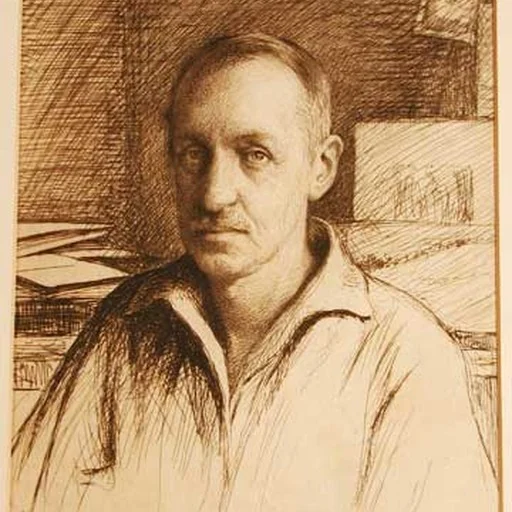
Artist
William H. W. Bicknell (1860–1947) was an American artist, born in Boston.