Artwork
Pinapple with other fruit
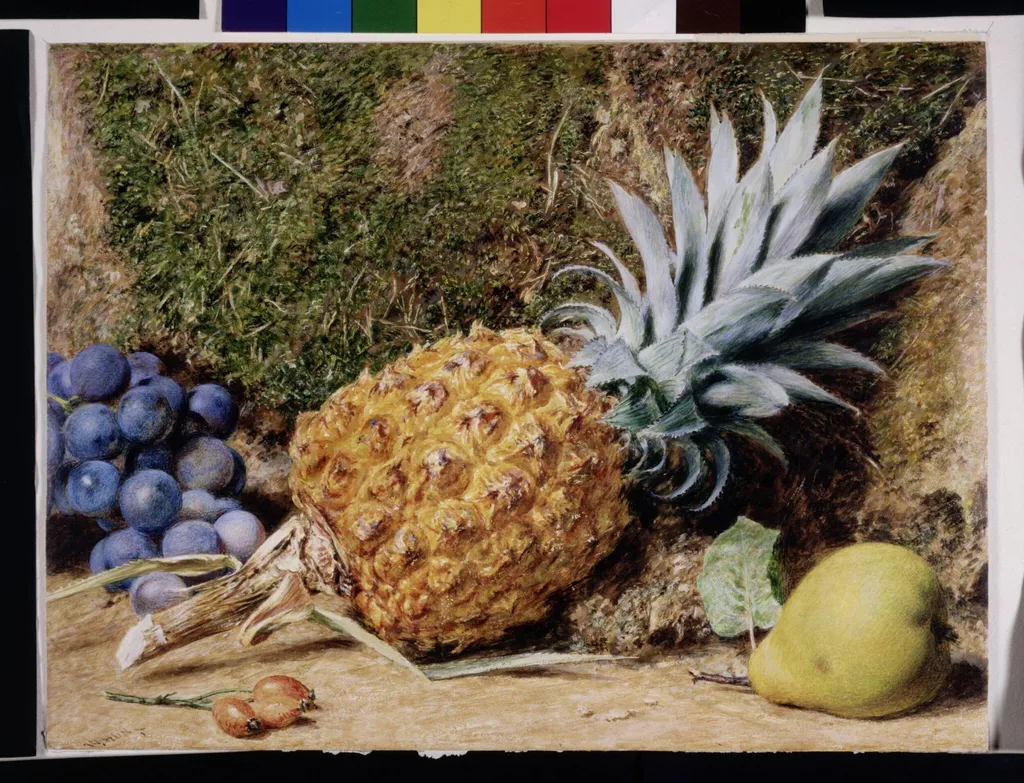
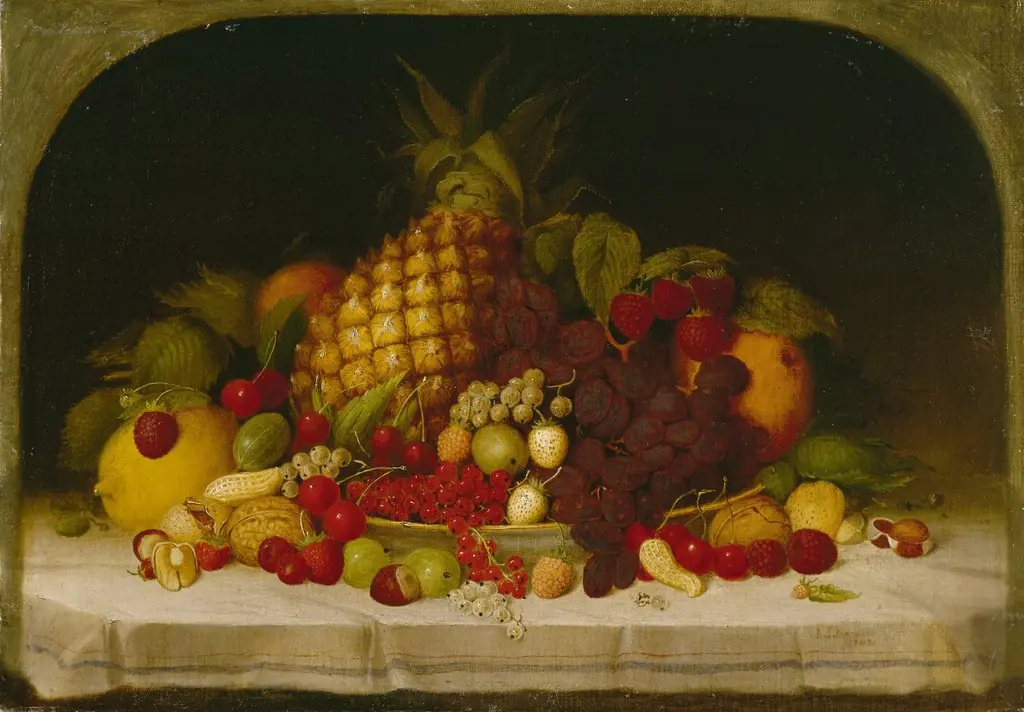
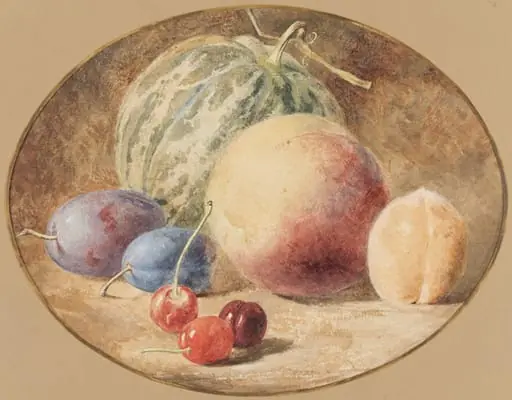
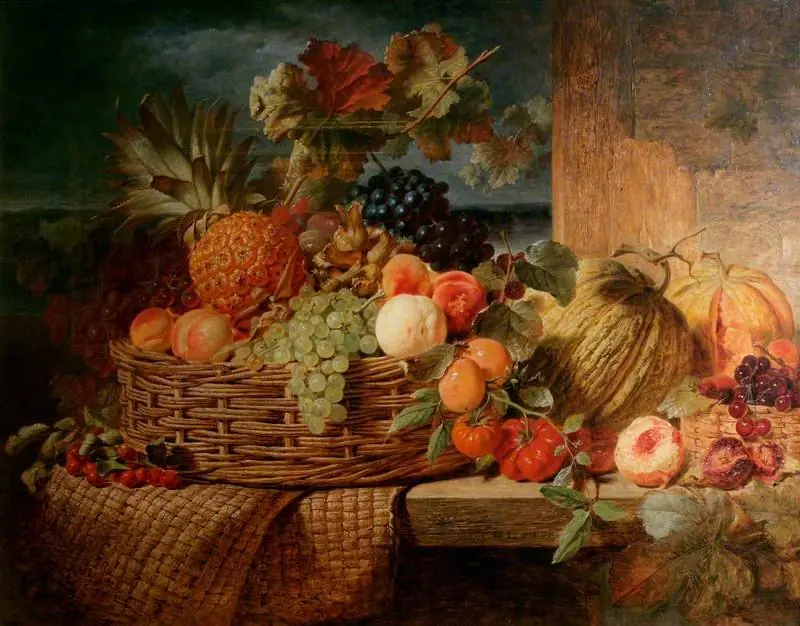
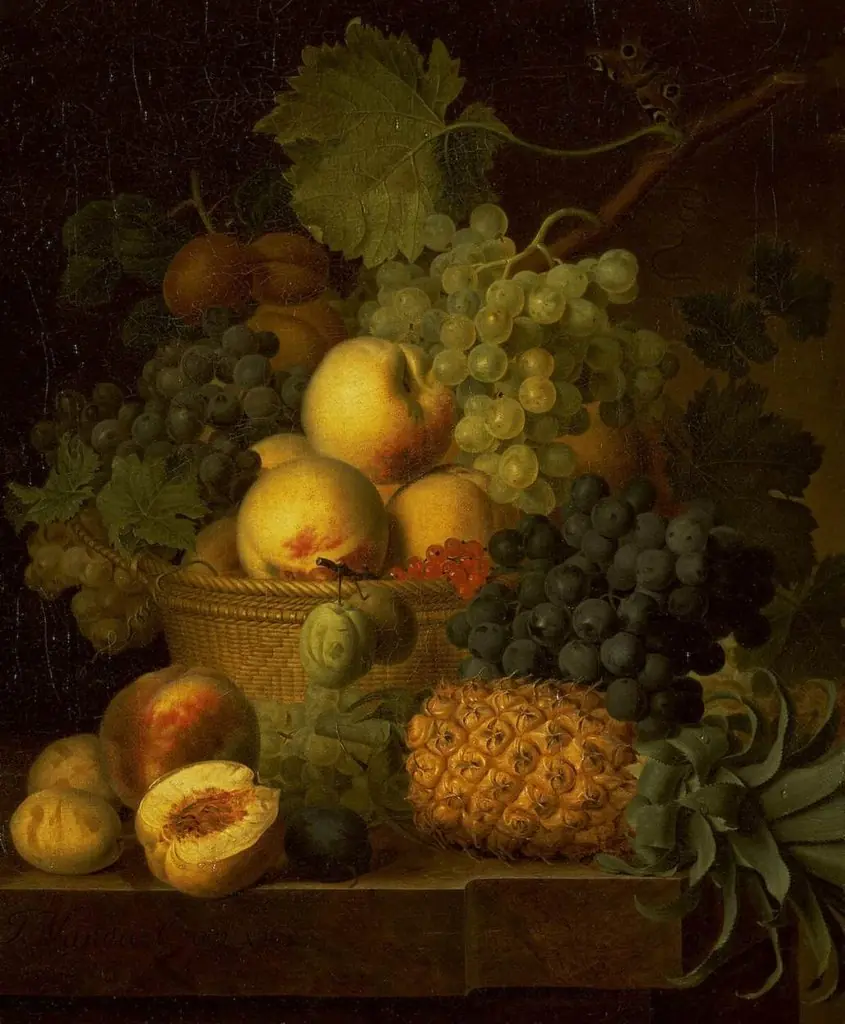
Pinapple with other fruit is a watercolor work on paper by William Henry Hunt. It dates from 1837 and is held in the collection of the Victoria and Albert Museum.
About this work
Overview
The work exemplifies his dedication to capturing the physical presence of everyday natural objects.
Painted around 1837 by the English artist William Henry Hunt, this watercolour depicts a still life of tropical and temperate fruits arranged on a naturalistic ground. Hunt, known for his precise observation of botanical forms, rendered the scene with quiet intensity, focusing on texture and subtle tonal shifts rather than dramatic composition. The work exemplifies his dedication to capturing the physical presence of everyday natural objects.
Subject & Meaning
The composition centers on a pineapple, a symbol of rarity and exoticism in early 19th-century Britain, surrounded by common fruits like plums, a pear, and berries. The grouping reflects both the colonial trade networks that made such fruits accessible to the middle class and Hunt’s interest in the quiet dignity of ordinary things. No allegory is overt; meaning arises from the careful attention paid to each object’s form and surface.
Technique & Style
Hunt employed fine, controlled brushwork to build up layers of translucent watercolour, capturing the glossy sheen of fruit skin and the fibrous texture of the pineapple’s rind. The leaves are rendered with delicate, precise strokes, while the background suggests earth and dried vegetation through loose, dry washes. His technique avoids bold outlines, relying instead on tonal gradations to define form and spatial relationships.
History & Provenance
The painting entered the collection of the Victoria and Albert Museum in the 19th century, likely through acquisition or donation during a period when the museum actively expanded its holdings of decorative and fine arts. It has remained in the museum’s care since, consistently displayed as an example of British watercolour practice in the decades following the Royal Watercolour Society’s founding.
Context
In the 1830s, watercolour was gaining recognition as a medium for serious artistic expression, not merely sketching. Hunt’s work aligned with a broader interest in natural history and botanical accuracy, influenced by scientific illustration and the growing middle-class appetite for domesticated nature. His still lifes stood apart from romantic landscapes, offering instead a contemplative focus on the material world.
Legacy
Hunt’s meticulous approach to still life influenced later generations of British watercolourists who valued precision over sentiment. Though less celebrated than his landscape contemporaries, his fruit studies remain important for their technical discipline and quiet realism. The painting continues to serve as a reference for the potential of watercolour to convey tactile presence without embellishment.
Own this work as a print
Artist & collection
Artist
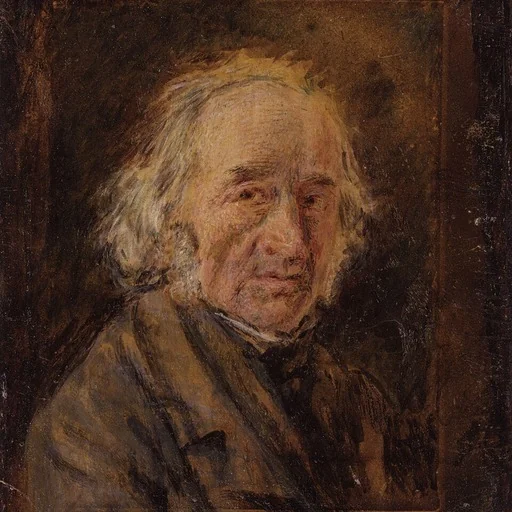
William Henry Hunt (London 28 March 1790 – 10 February 1864), was an English watercolourist.