Artwork
A Man on Horseback and other Figures
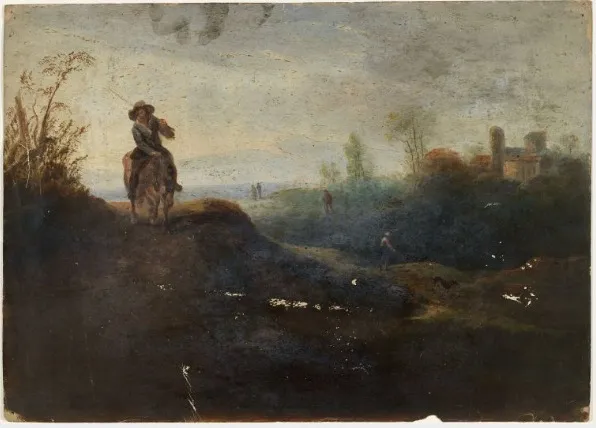
A Man on Horseback and other Figures is an unspecified painting by the Realist artist William Howis senior. It dates from 1857 and is held in the collection of the National Gallery of Ireland.
About this work
Overview
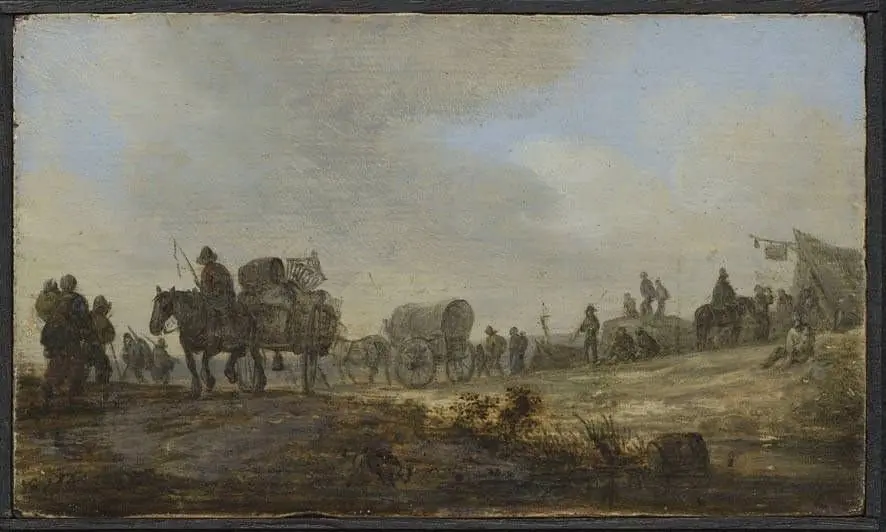
Painted in 1857 by William Howis senior, this work presents a solitary equestrian figure amid a quiet rural landscape. The composition centers on a man in dark attire mounted on a pale horse, with additional figures and structures receding into the background. Rendered in subdued tones under a gray sky, the scene conveys stillness and spatial depth without dramatic action or narrative emphasis.
Subject & Meaning
The central figure, cloaked and motionless, suggests a traveler or local resident paused in transit. The presence of distant figures and buildings implies a lived environment, but no specific event or identity is indicated. The painting avoids symbolism or storytelling, instead focusing on the quiet dignity of ordinary rural life in mid-19th-century Ireland.
Technique & Style
Howis employed a restrained palette of earth tones and muted grays to unify the scene. Brushwork is deliberate but not detailed, favoring atmospheric effect over precision. The horse and rider are rendered with slight contrast against the softer background, guiding the viewer’s gaze through tonal gradation rather than sharp definition, reflecting a sensitivity to light and mood.
History & Provenance
The painting has remained in the collection of the National Gallery of Ireland since its acquisition. No records indicate prior ownership or exhibition history beyond its inclusion in the gallery’s holdings. Its modest scale and unassuming subject suggest it was not commissioned for public display, possibly created as a personal study or local scene.
Context
Created during a period of agricultural and social change in Ireland, the painting reflects a quiet observation of rural life rather than political or historical commentary. Howis, active in Dublin, often depicted everyday scenes without idealization, aligning with a broader trend among Irish artists of the time who sought to document ordinary existence with restraint.
Legacy
While not widely reproduced or critically prominent, the work contributes to the corpus of 19th-century Irish genre painting. It exemplifies a quiet, observational approach that contrasts with more theatrical or romanticized depictions of the era. Its preservation in a national collection underscores its value as a record of regional artistic practice.
Artist & collection

 Landschaft mit Bauernkarren
 Seated Man by a Road
 Landscape with Figures
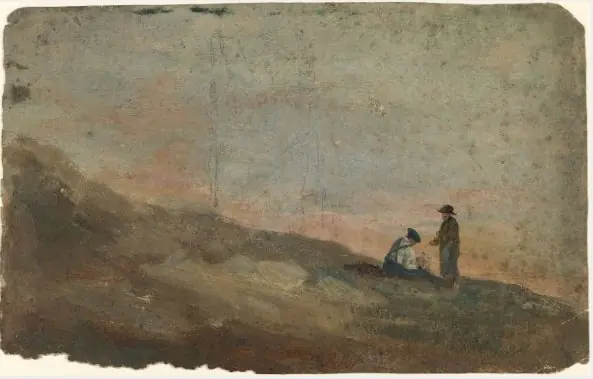 Figures against the Sky
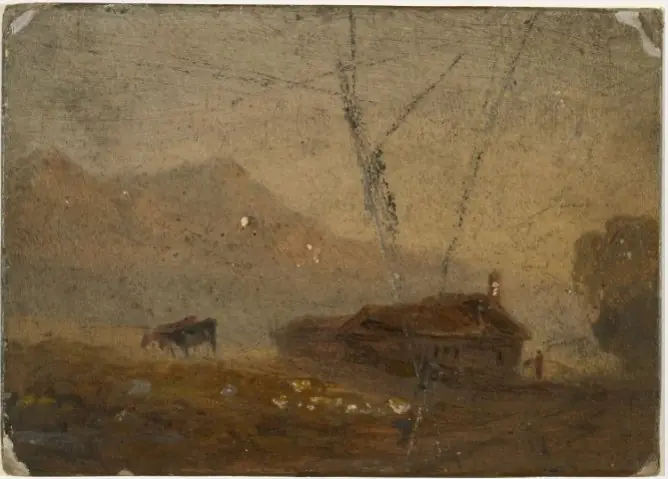 Farmhouse and Cattle near Mountains
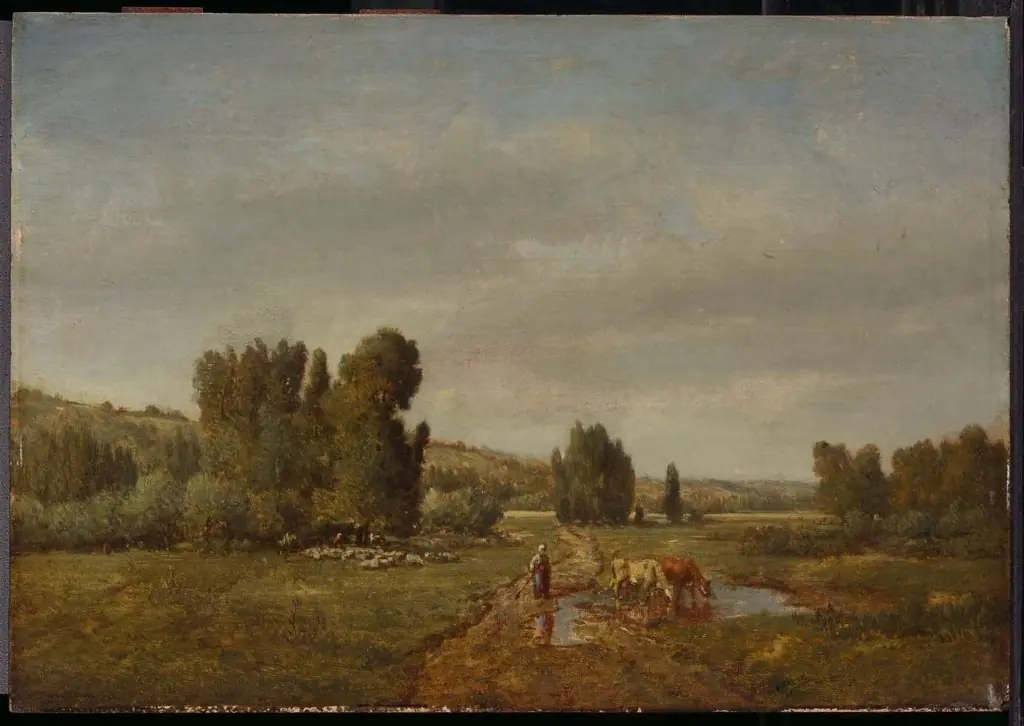 Landscape with a Peasant Watering her Cows
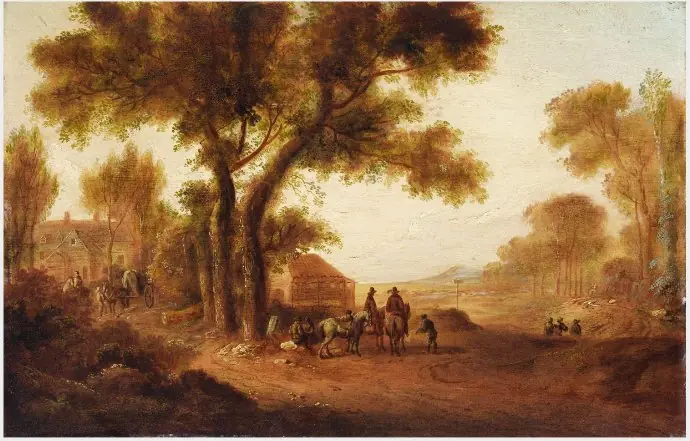 An Inn Scene in a Landscape
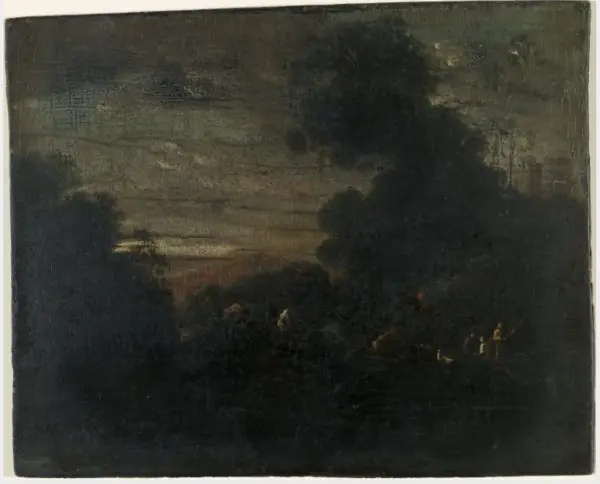 Fishermen by Moonlight
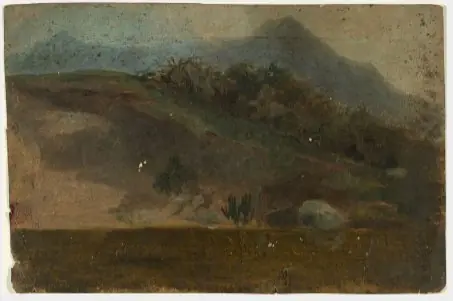 Riverbank below the Great and Little Sugarloaf Mountains, County Wicklow
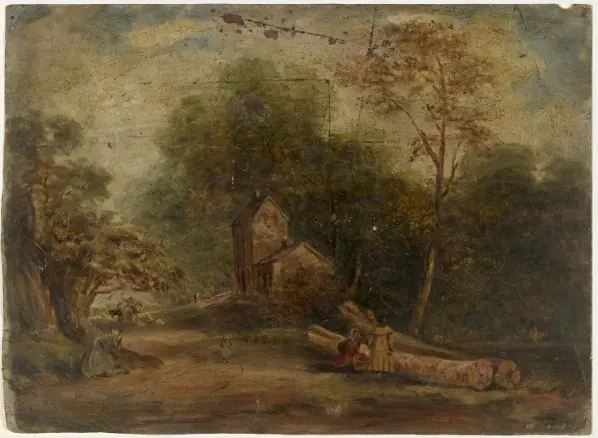 Woman and Coachman Talking beside a Road
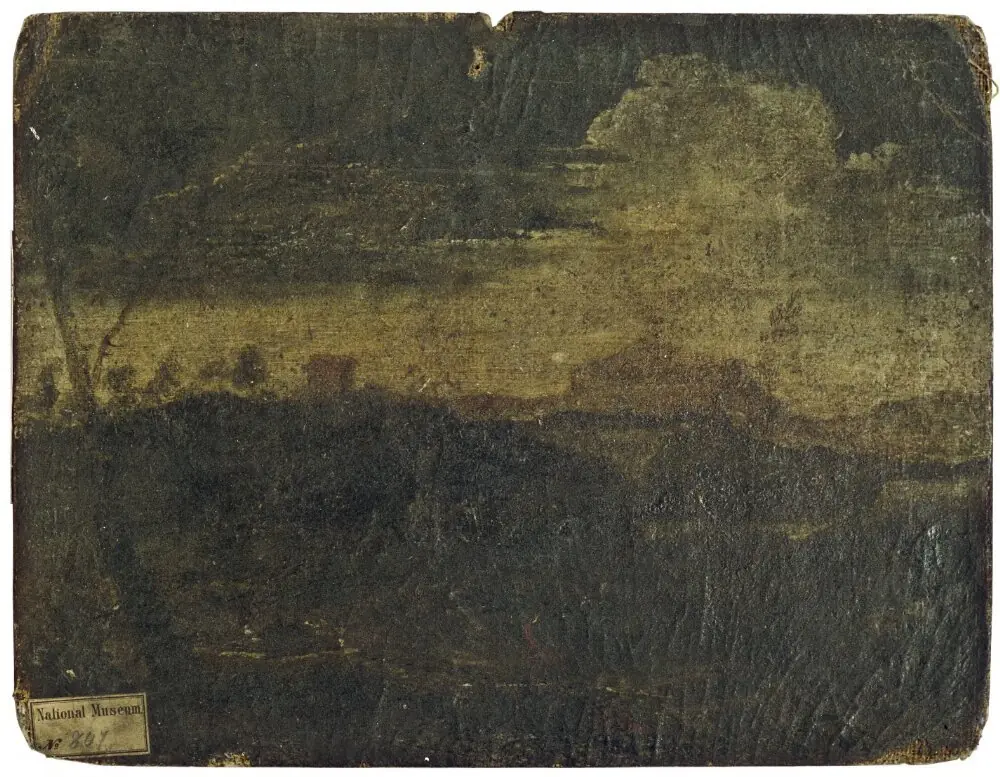 Landscape